Cat breed · Egypt
Egyptian Mau
Mèo Mau Ai Cập

Contents (10 sections)
Quick facts
- Origin
- Egypt; developed in Italy and then the US from the 1950s
- Weight
- ~3.2–4.1 kg
- Lifespan
- ~12–15 years
- Coat
- short, spotted
- Energy
- high
Details & sources
Traits (scale 1–5)
- Energy
- 4/5
- Shedding
- 1/5
- Grooming needs
- 1/5
- Good with kids
- 4/5
- Vocal
- 2/5
- Independence
- 3/5
Basis: Editorial estimate based on CFA's description, not a measurement
Registry recognition
| CFA | Yes |
|---|---|
| TICA | Yes |
| FIFe | Yes |
| GCCF | Yes |
History
In Ancient Egyptian, "Mau" meant cat or sun [1]. Papyri and frescoes from as early as 1550 BC show spotted cats resembling today's Maus [1]. For years, cats believed to descend from ancient Egypt's felines were kept by the country's nobility and diplomats [1]. Nathalie Troubetskoy, a Russian princess living in Rome, acquired one and began a breeding programme [1]. When she emigrated to the US in 1956, three Maus came with her [1]. CFA accepted the breed for registration in 1970 and for championship in 1977 [1].
Appearance
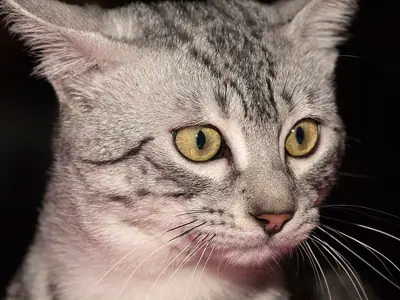
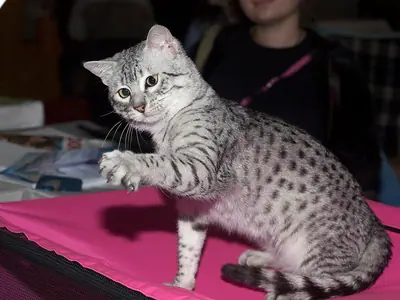
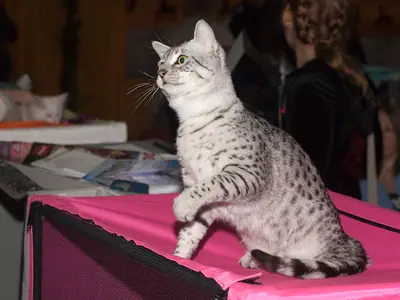
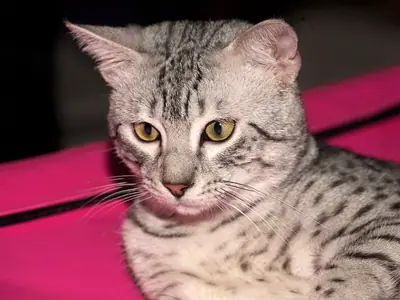
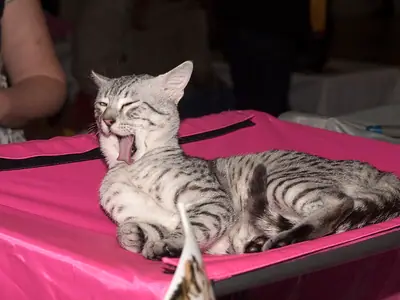
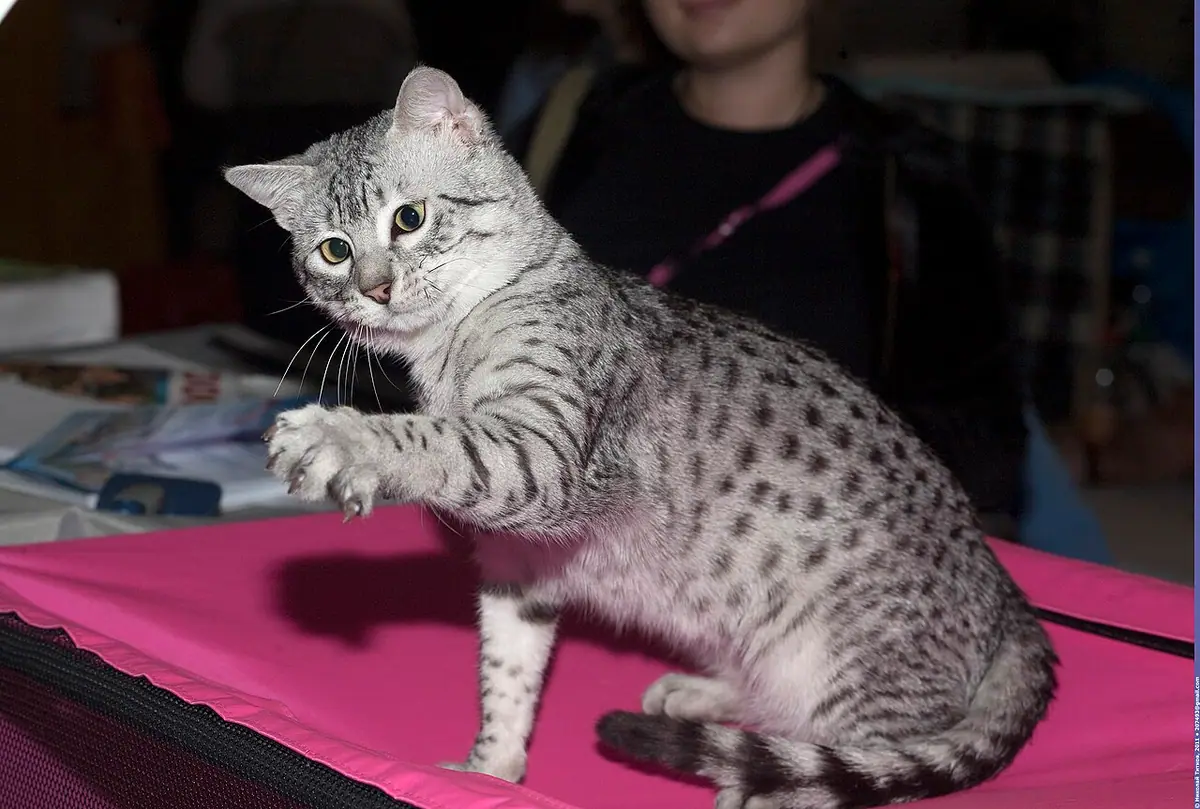
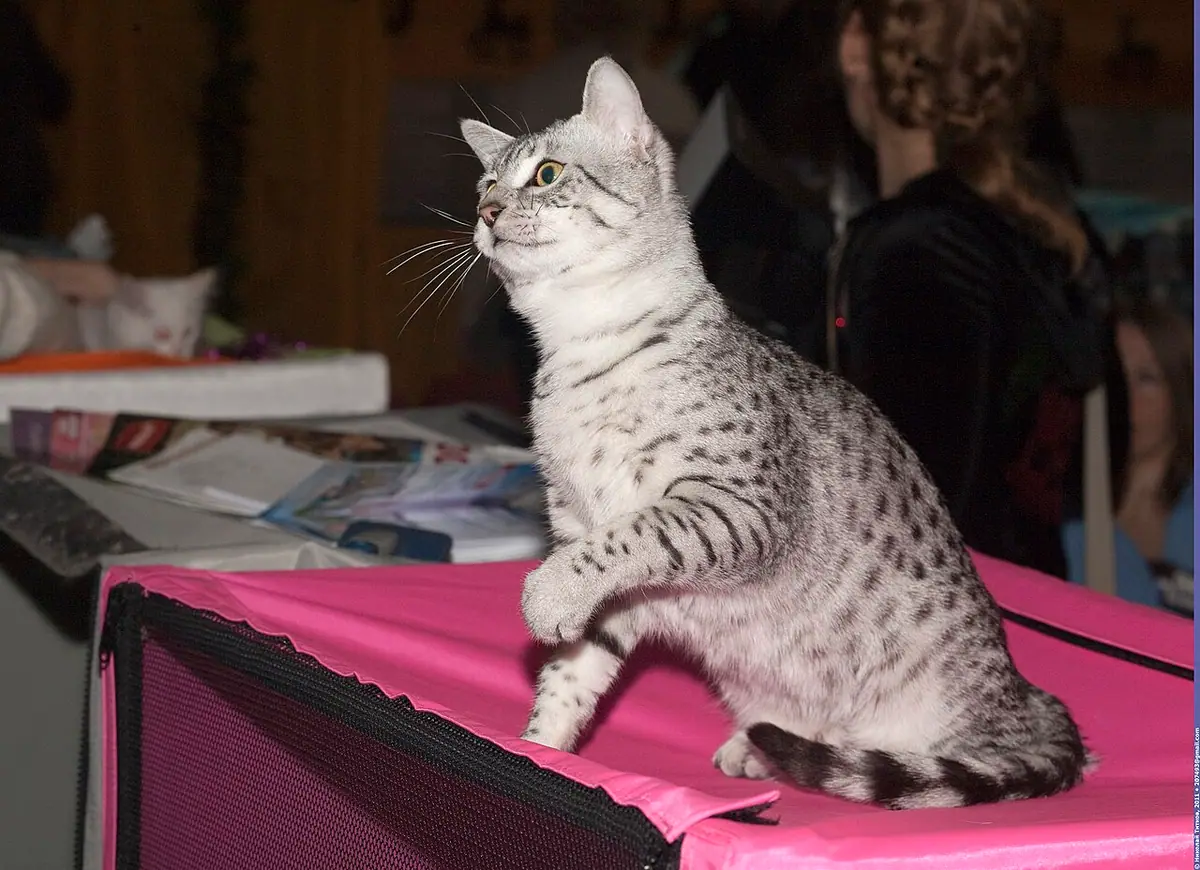
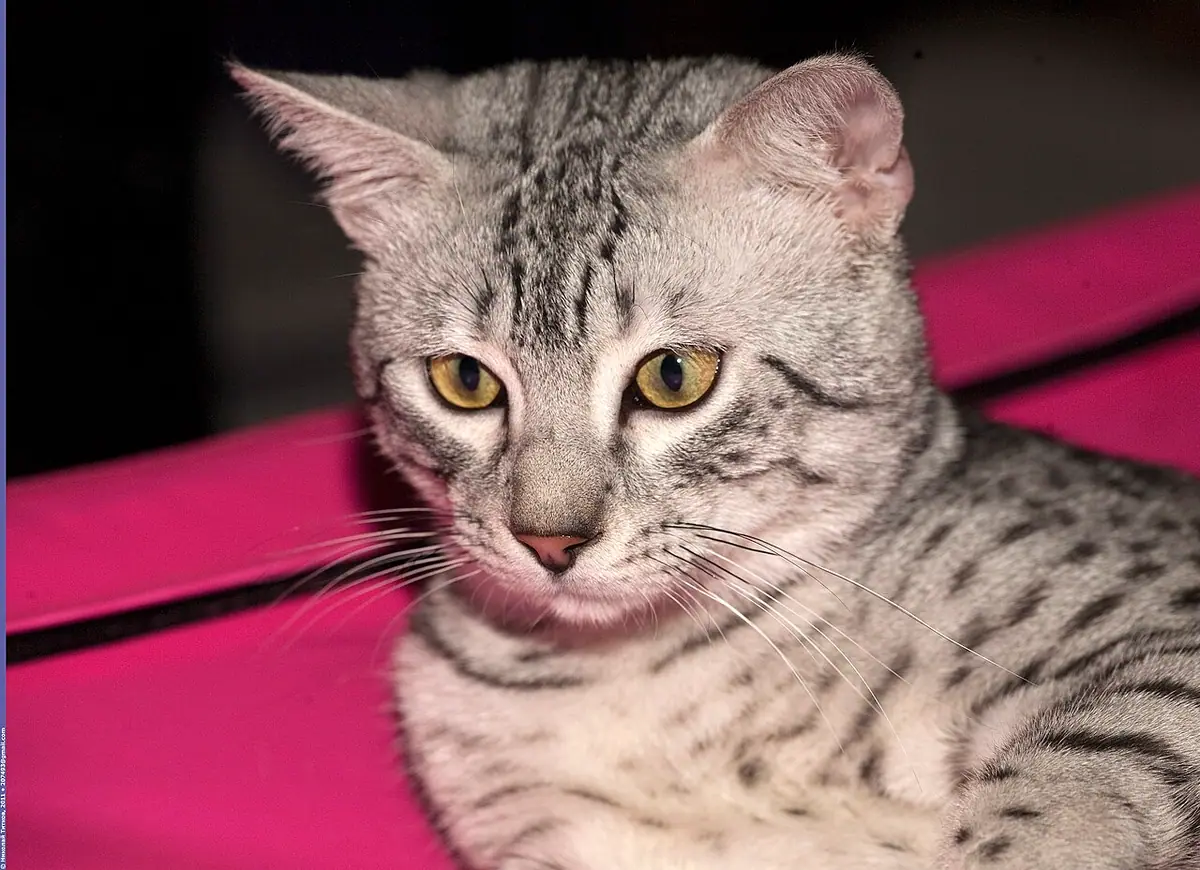
- Spots: randomly scattered with no set pattern, varying in size and shape [1].
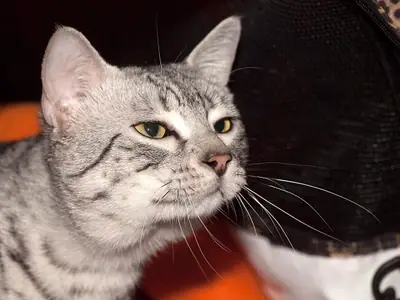
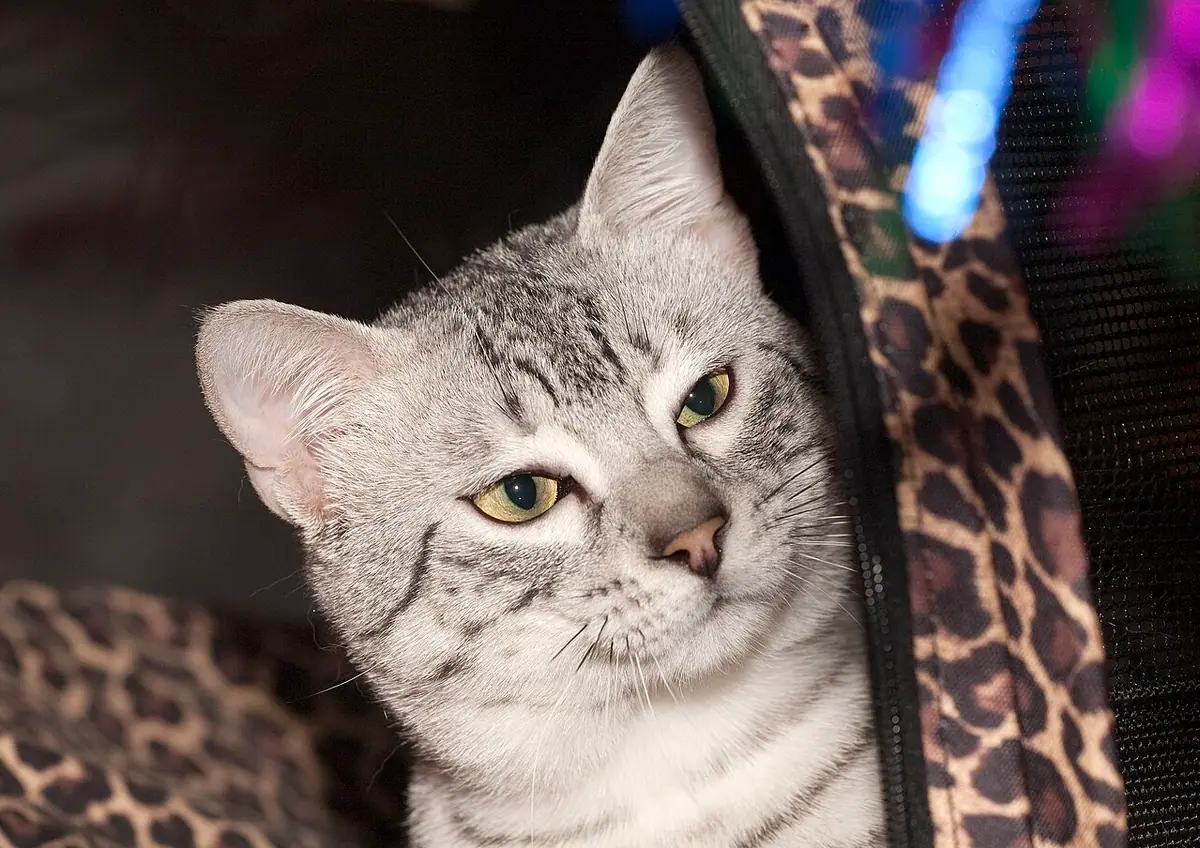
- Colours: silver, bronze and smoke, all with a lustrous sheen. Black and dilutes can occur and may be registered but not shown [1].
- Body: sleek and muscular, with a loose skin flap from flank to hind leg for twisting and jumping [1].
- Gait: high shoulder blades and longer hind legs give a cheetah-like stride [1].
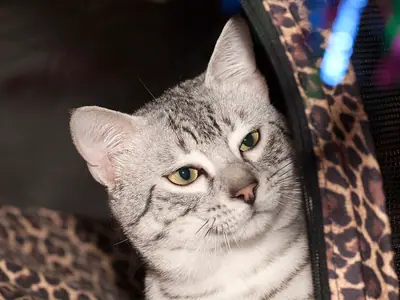
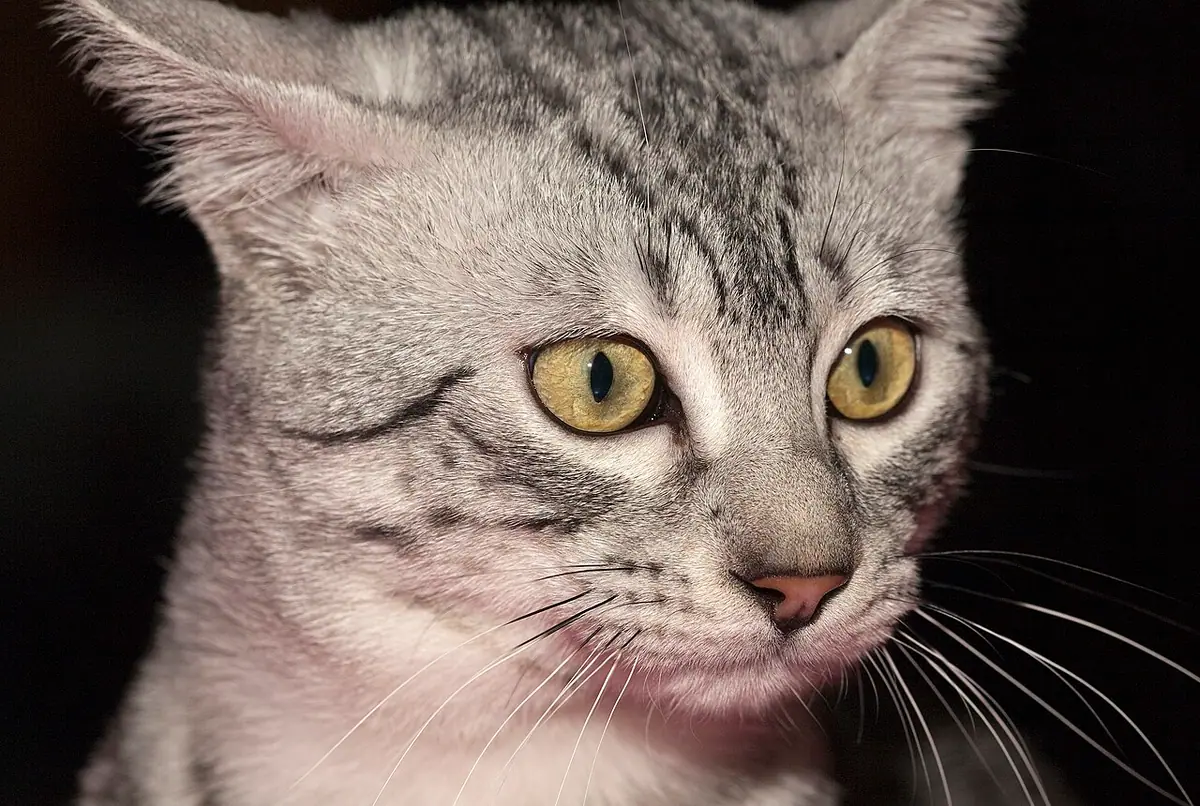
- Face: green eyes framed by mascara lines and facial markings, giving a characteristic "worried" look [1].
Photo gallery
7 photos · tap to enlarge- (enlarge, photo 1/7)
- (enlarge, photo 2/7)
- (enlarge, photo 3/7)
- (enlarge, photo 4/7)
- (enlarge, photo 5/7)
- (enlarge, photo 6/7)
- (enlarge, photo 7/7)
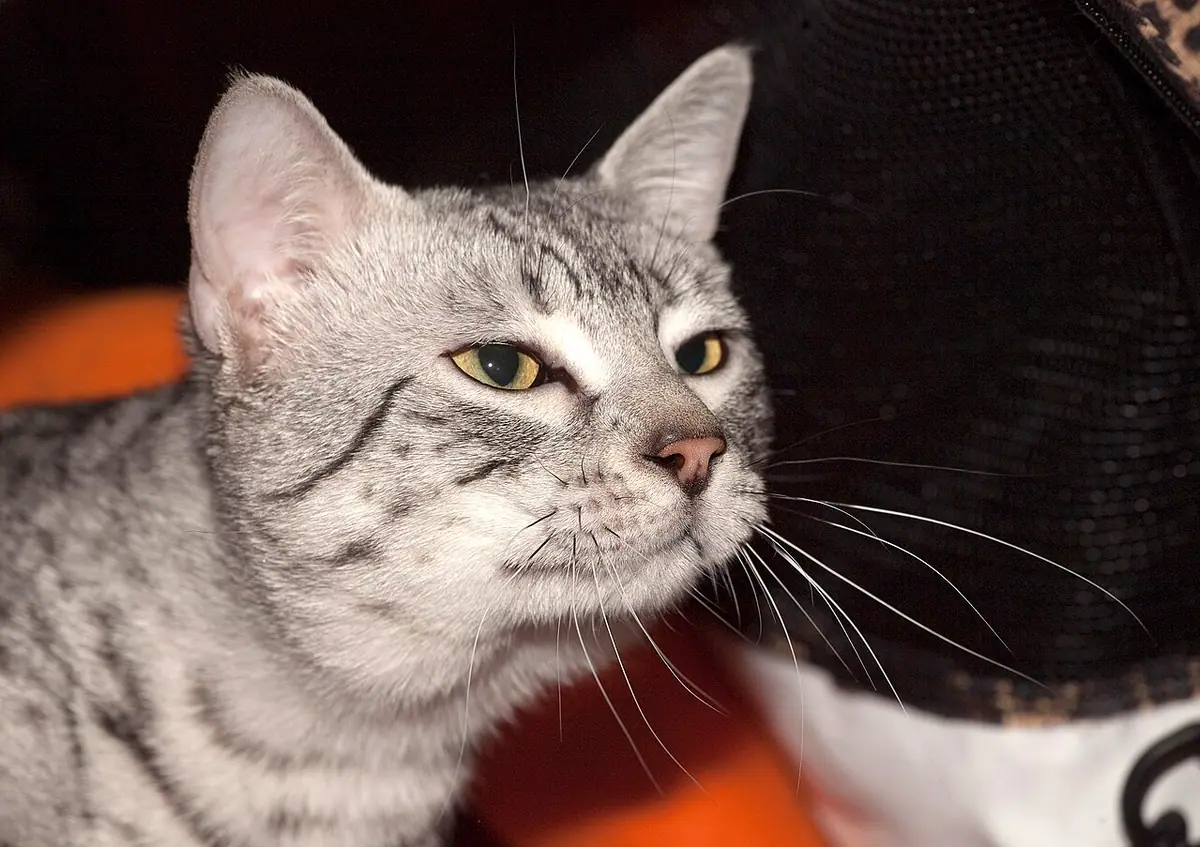
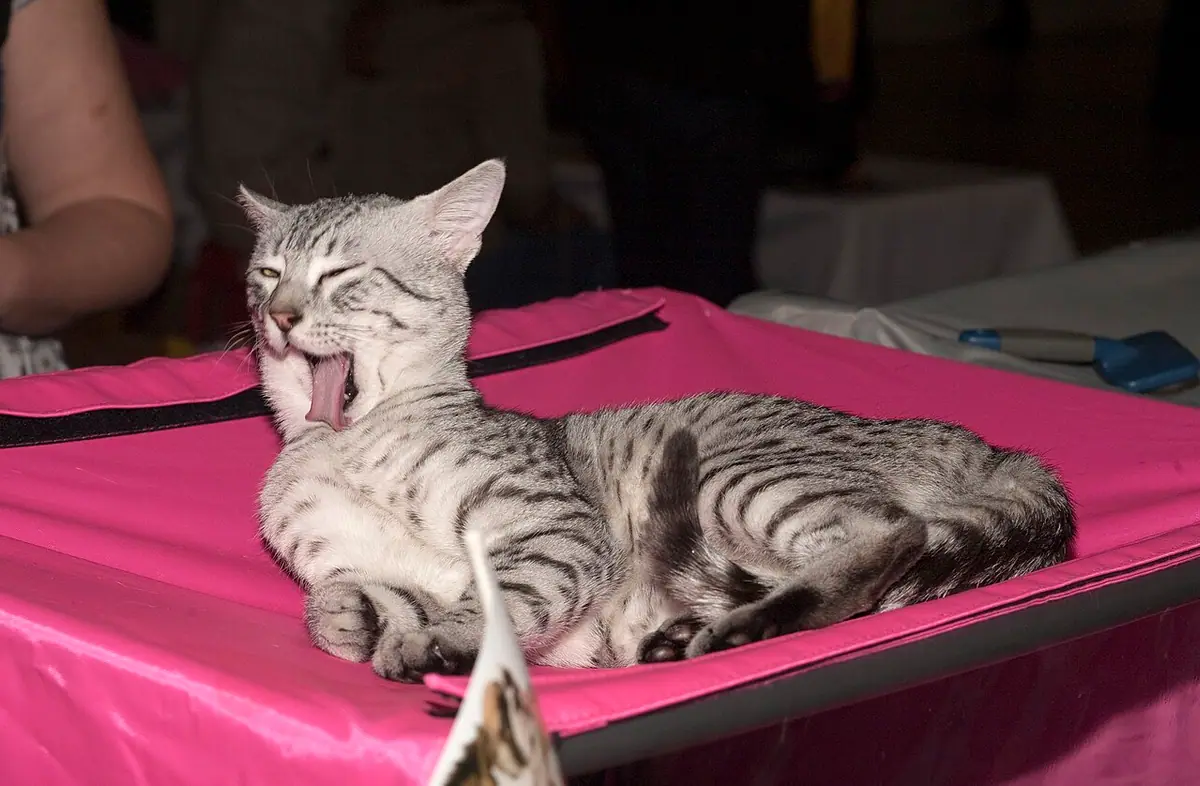
Photos: Wikimedia Commons – author & licence shown when enlarged and on the Photo credits page.
Temperament
Maus are exceptionally intelligent and devoted, and expect to be full members of the household [1]. Their senses of smell, hearing and sight are extremely sharp [1]. They're sensitive to moods and tend to turn up with a soft purr when you're down [1]. Expect a shoulder rider, refrigerator vulture and furry alarm clock [1]. Strong-willed, they may be reserved with strangers, but with their people they're affectionate, loyal, outgoing and fearless [1]. Their voices are low and melodious, and they may chirp in greeting [1].
Care
Health
- Pyruvate kinase deficiency: can cause anaemia; breeders test for it [1].
- Urolithiasis: stones in the kidneys and urinary tract may occur [1].
- Testing: genetic tests don't exist for every heritable condition yet; ask about health history in the kitten's lines [1].
- Lifespan: GCCF estimates 12–15 years [3]. We found no breed-specific longevity study.
This is general information; talk to your vet about any specific concern.
Don't confuse with…
Ask your vet. This information is for reference only and does not replace a veterinary diagnosis.
Fun facts
Frequently asked questions
Is the "Egyptian cat" the Sphynx or the Egyptian Mau?
The breed linked to Egypt is the Egyptian Mau: short-haired, spotted and green-eyed [1]. The Sphynx is a different breed: nearly hairless, it began in Toronto, Canada, in 1966 [4].
Are Egyptian Maus friendly with strangers?
Often reserved. They have firm ideas about who handles them and when. With their own people they're affectionate, loyal, outgoing and fearless [1].
Do Egyptian Maus need lots of activity?
Yes. They're active and agile, love interactive games, may play fetch and enjoy walks on a harness and leash [1].
Similar breeds


.jpg)
Breed photos: Wikimedia Commons (CC0 / CC BY / CC BY-SA) – authors & licences on the Photo credits page.
References
- CFA, Egyptian Mau (breed profile & standard)
- FIFe, Breeds (MAU Egyptian Mau, fully recognised)
- GCCF, Cat Breeds (Egyptian Mau breed card)
- CFA, Sphynx (breed profile & standard)
- CFA, Bengal (breed profile & standard)
- CFA, Ocicat (breed profile)
- TICA, Browse All Breeds (Egyptian Mau listed)
Accessed: 2026-10-02
Written by Catopidia from the sources above. Photos credit their author and licence under each image and on the Photo credits & licences.