Cat breed · United States
Bengal
Mèo Bengal

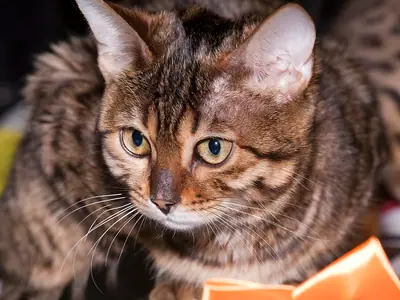
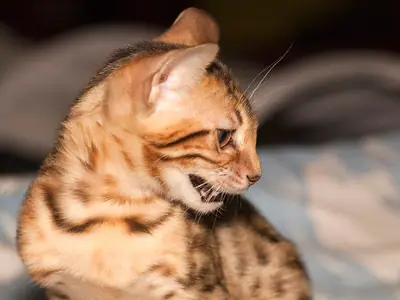
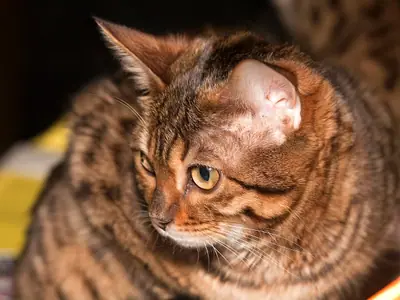
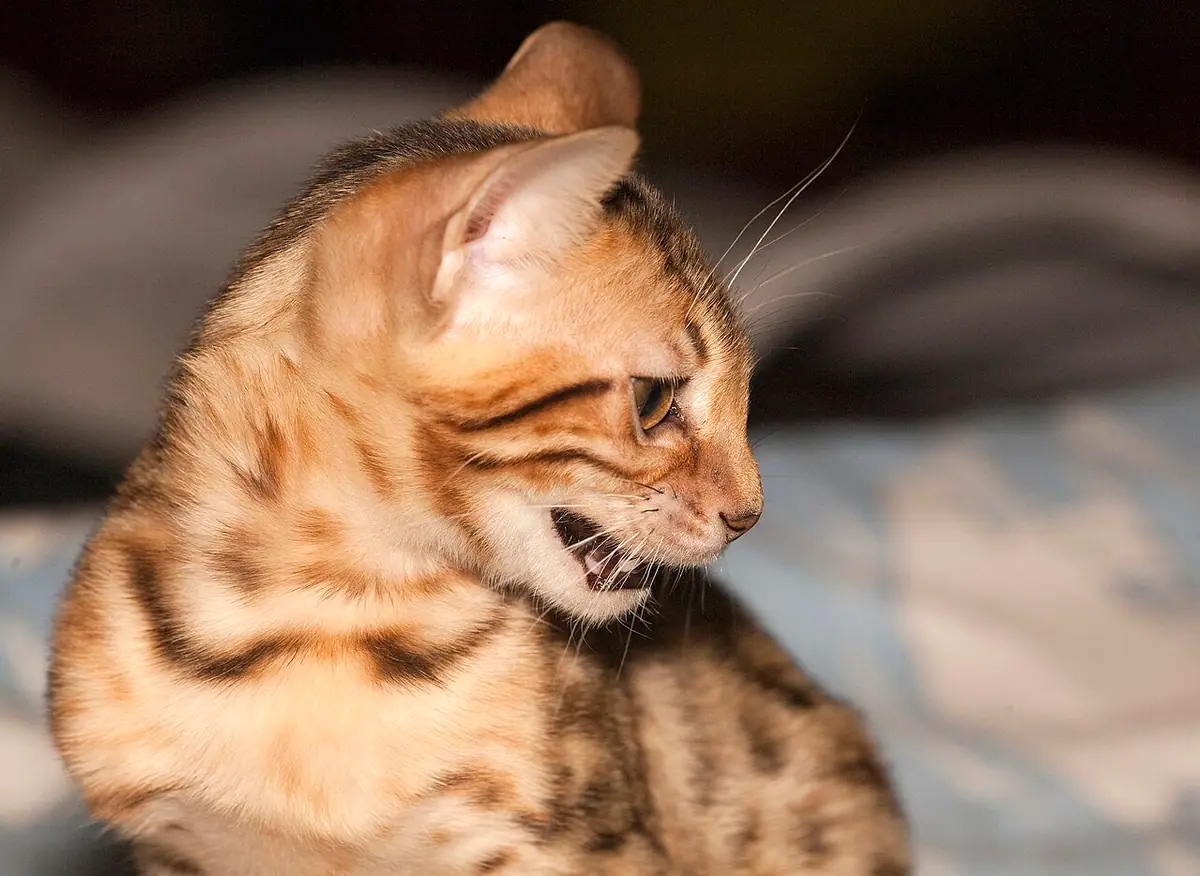
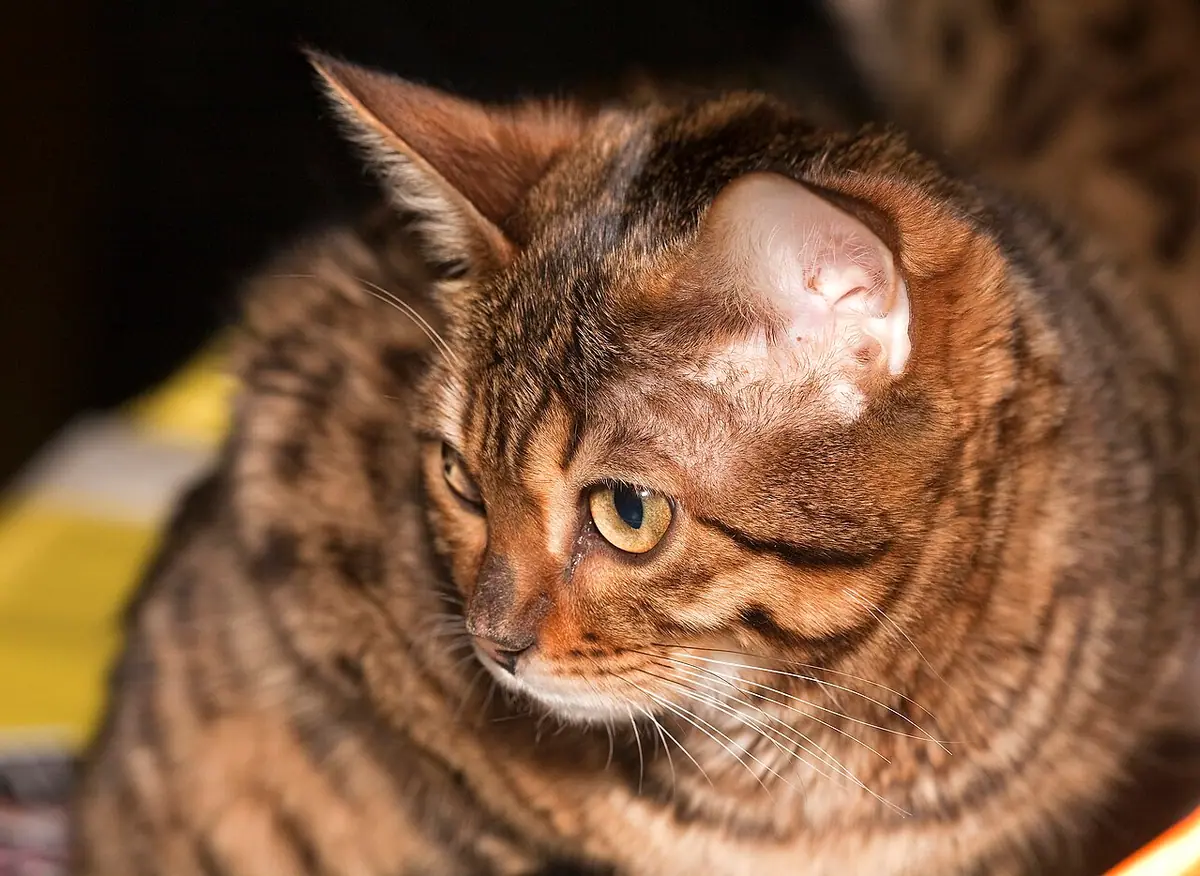
The Bengal wears a spotted or rosetted coat with dark outlines, like a miniature leopard, and the coat is so soft it may even sparkle in the light [1]. It does have a wild ancestor, the Asian leopard cat, but today's Bengal is a domestic breed carefully selected for temperament: confident, curious, athletic and very bright [1]. It's in TICA's top five [4] and recognised by CFA [1], FIFe [5] and GCCF [6].
Contents (10 sections)
Quick facts
- Origin
- United States (from 1963, domestic cat × Asian leopard cat)
- Weight
- ~3.6–6.8 kg
- Lifespan
- ~12–16 years
- Coat
- short
- Energy
- high
Details & sources
- Size
- Medium to large, sleek and muscular; males generally larger [1]
- Weight
- GCCF gives about 8–15 lb (3.6–6.8 kg) [6]
- Lifespan
- Median age at death 7.3 years in an English study, from a very small sample (15 cats), so not conclusive [3]; GCCF estimates 12–16 years [6]
- Coat
- Short (a longhair also exists), close-lying, very soft, may be glittered [1]
Traits (scale 1–5)
- Energy
- 5/5
- Shedding
- 2/5
- Grooming needs
- 1/5
- Good with kids
- 4/5
- Vocal
- 3/5
- Independence
- 2/5
Basis: Editorial estimate based on CFA's description, not a measurement; vocal set to neutral because CFA says it varies widely between cats
Registry recognition
| CFA | Yes |
|---|---|
| TICA | Yes |
| FIFe | Yes |
| GCCF | Yes |
History
Two separate goals produced the Bengal [1]. In 1963 conservationist Jean Mill crossed a black domestic tom with a female Asian leopard cat. Around the same time, Dr Willard Centerwall was making similar crosses in the hope of producing a domestic cat with the leopard cat's natural immunity to feline leukaemia [1]. Mill later took cats from Centerwall's programme and, together with spotted domestic cats, developed the Bengal, eventually producing sweet-tempered cats five generations from the wild [1]. CFA accepted Bengals for registration in 2016, requiring five generations of purely domestic ancestry, and granted championship status in 2018 [1].
Appearance
- Body: medium to large, sleek and muscular with substantial bone; hindquarters slightly higher than the shoulders; a thick tail [1].
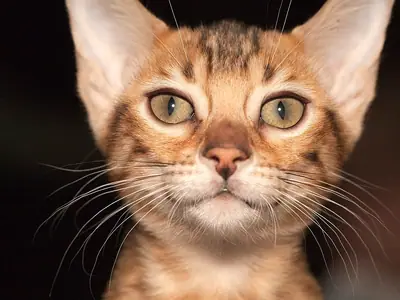
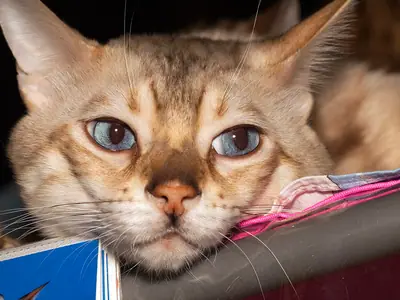
- Head: a modified wedge with rounded contours, longer than wide, with high cheekbones, large luminous eyes, a wide nose, prominent whisker pads and small to medium ears [1].
- Coat: close-lying and very soft, sometimes with "glitter" at the hair tips. Both short- and longhaired Bengals exist [1].
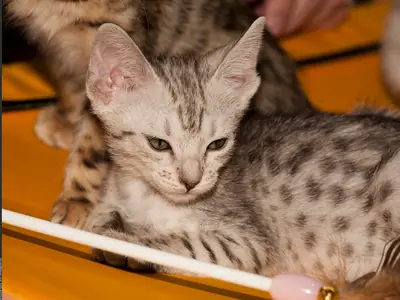
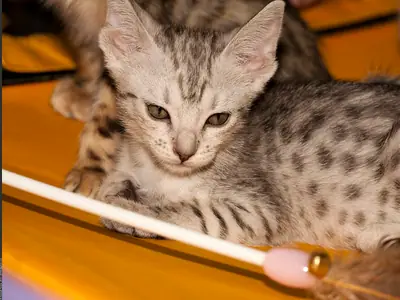
- Patterns: brown spotted or rosetted tabby is the best known; there's also a marbled pattern with bold, less symmetrical, outlined markings [1].
- Weight: GCCF gives about 8–15 lb [6].
Photo gallery
7 photos · tap to enlarge- (enlarge, photo 1/7)
- (enlarge, photo 2/7)
- (enlarge, photo 3/7)
- (enlarge, photo 4/7)
- (enlarge, photo 5/7)
- (enlarge, photo 6/7)
- (enlarge, photo 7/7)
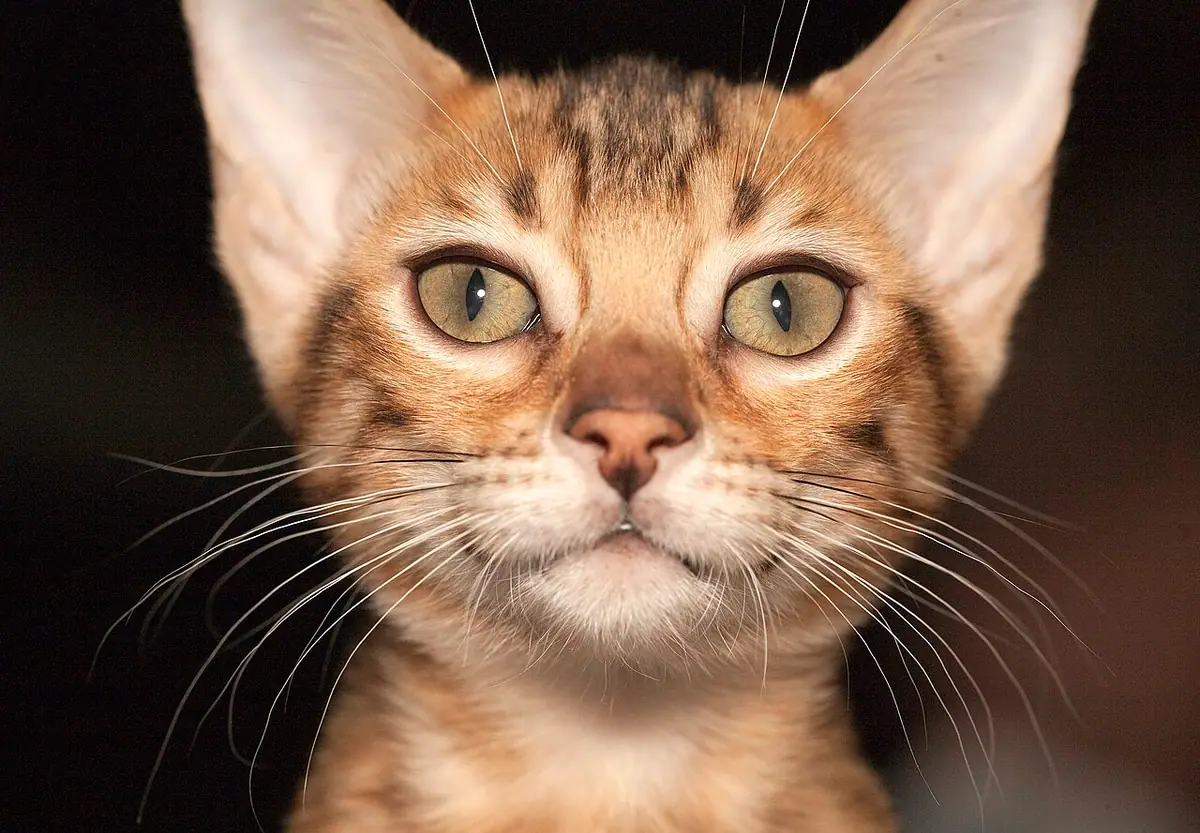
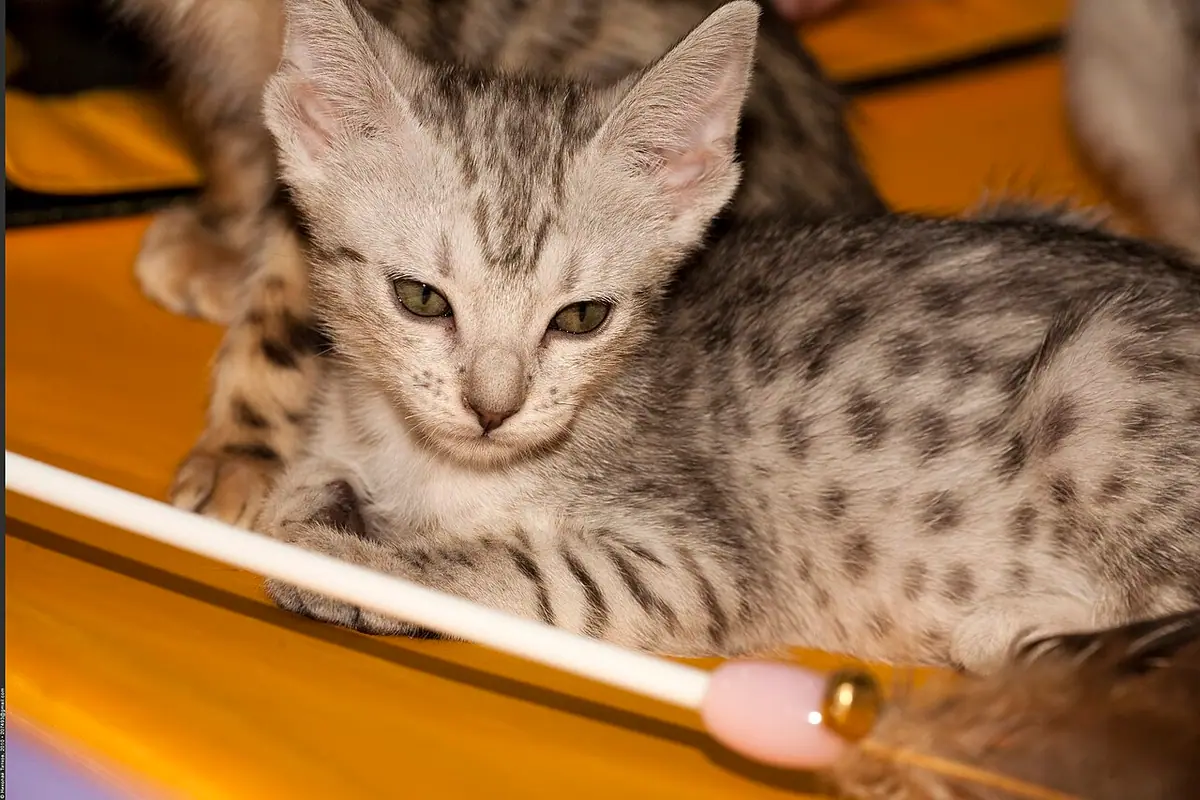
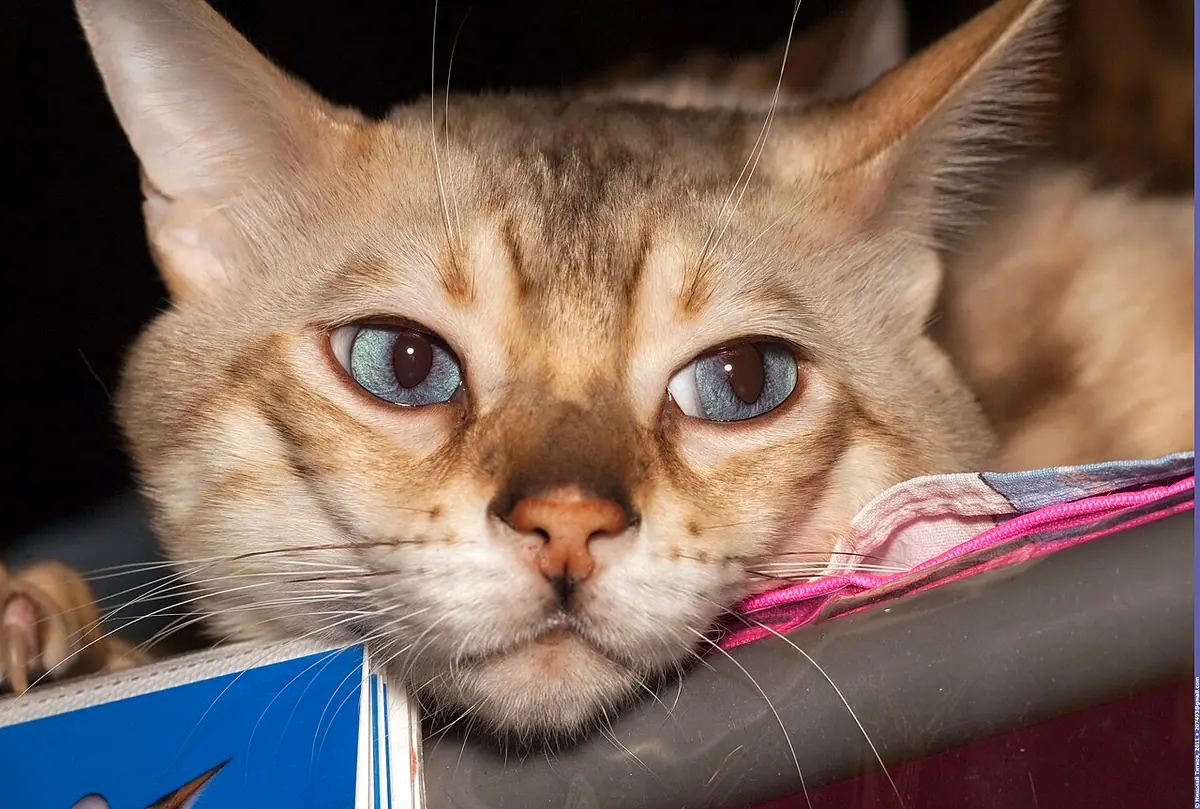
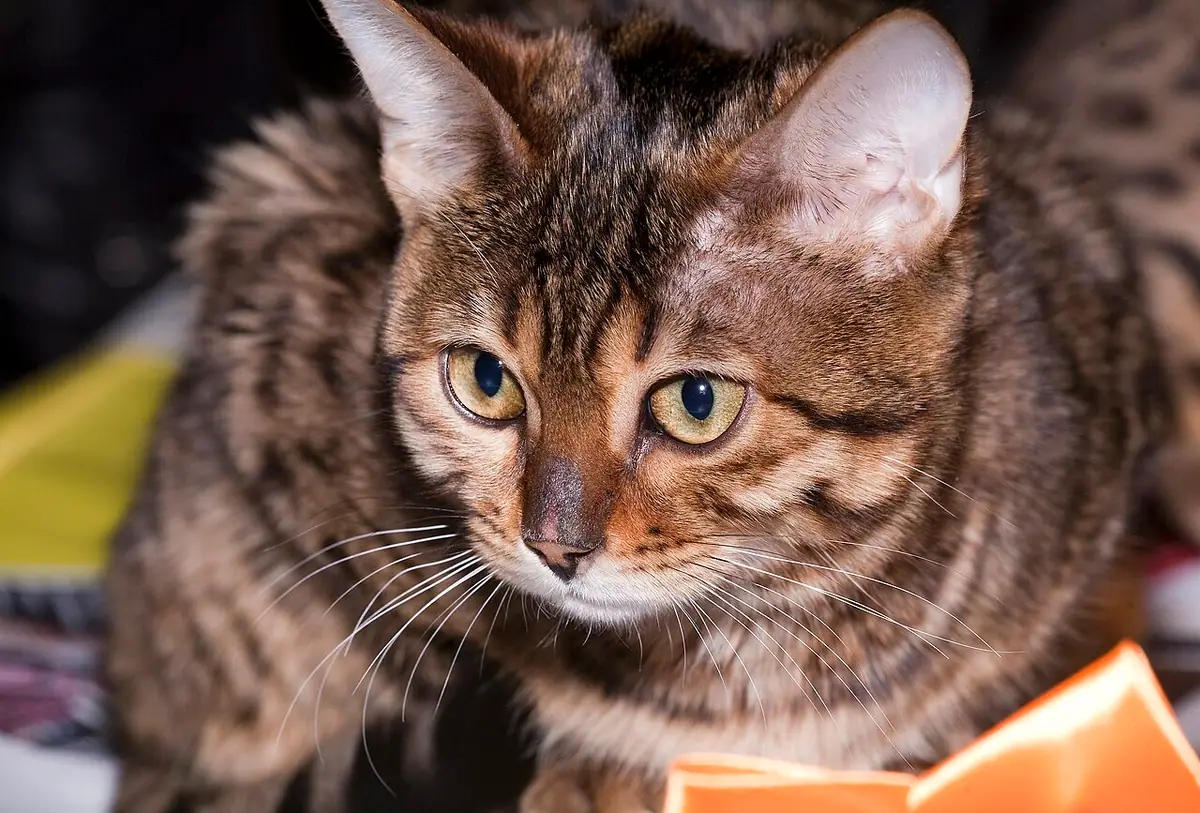
.jpg)
Photos: Wikimedia Commons – author & licence shown when enlarged and on the Photo credits page.
Temperament
Bengals are confident, curious, athletic and very smart, and they keep a kitten's energy well into their senior years [1]. They love water, are easy to train, pick up tricks, and many enjoy walks on a harness [1]. They have a reputation for chattiness, but CFA says individual cats vary a lot [1]. Properly introduced, they get along with other pets, and their curious, affectionate nature suits families with children [1].
Care
Health
- Hypertrophic cardiomyopathy (HCM): needs an echocardiogram to detect. Most breeders scan breeding cats before their first litter and at intervals afterwards [1].
- Progressive retinal atrophy (PRA-b): an early-onset, recessively inherited retinal degeneration described in Bengals in 2015 [2].
- Other inherited diseases: CFA says genetic testing lets breeders screen for several and remove carriers from breeding [1].
- Lifespan: an English study recorded a median of 7.3 years, but from only 15 cats, so it isn't conclusive [3]. GCCF estimates 12–16 years [6].
Ask breeders for the parents' heart-scan and DNA results, and talk to your vet about any specific concern.
Don't confuse with…
- Savannah: bred from the serval, with long legs and tall upright ears [7].
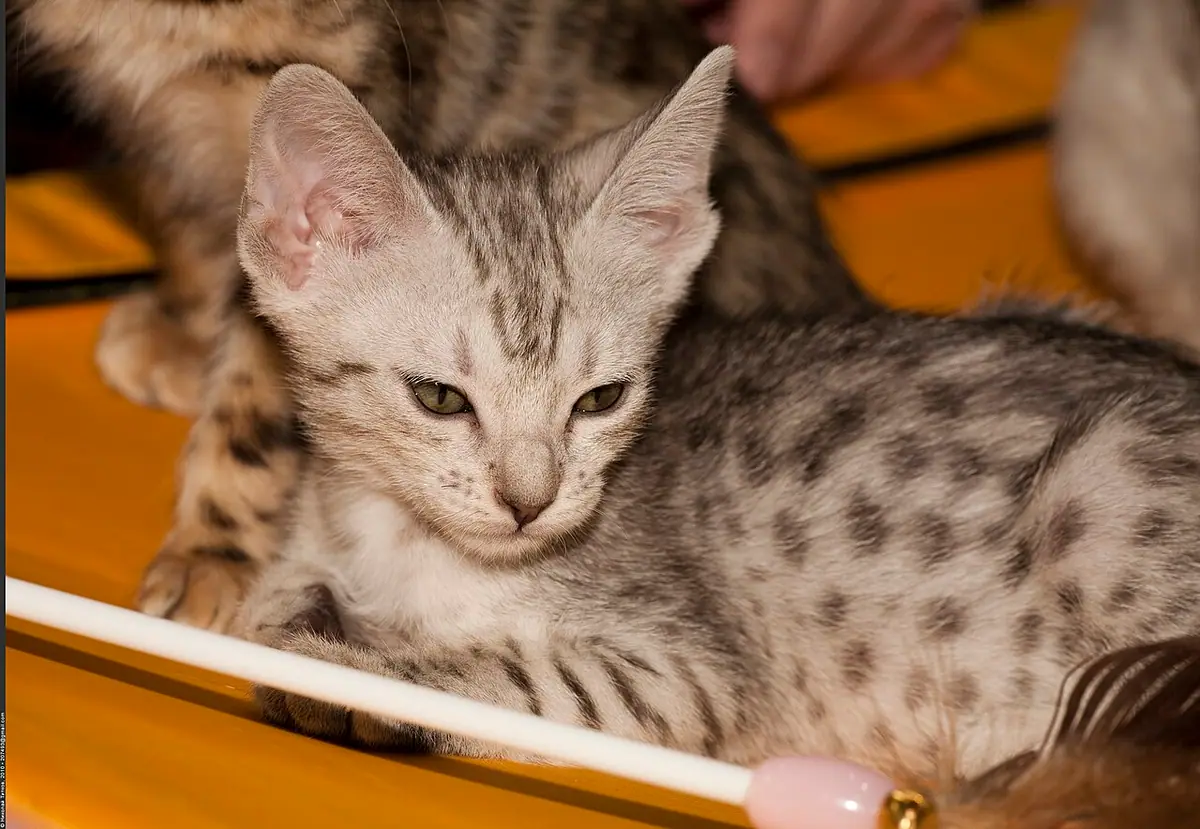
- Egyptian Mau: naturally spotted, with randomly scattered spots rather than outlined rosettes [8].
Ask your vet. This information is for reference only and does not replace a veterinary diagnosis.
Fun facts
Frequently asked questions
Is a Bengal a wild cat?
No. Bengals have an Asian leopard cat ancestor but are a domestic breed. CFA registers only Bengals with at least five generations of purely domestic ancestry [1]. The Cat Group notes that most UK Bengals are more than five generations from the wild cat, while early-generation Bengals raise the same welfare concerns as other hybrids [9].
Are Bengals easy to keep?
The coat is easy: soft, unlikely to mat, low-shedding, and fine with a weekly brush [1]. The challenge is energy. Bengals are very smart and active, stay kitten-like into old age, and need plenty of play and puzzles; many enjoy walking on a harness [1].
Are Bengals vocal?
It depends on the cat. Bengals have a talkative reputation, but CFA says there's a lot of variation between individuals [1].
Similar breeds


Breed photos: Wikimedia Commons (CC0 / CC BY / CC BY-SA) – authors & licences on the Photo credits page.
References
- CFA, Bengal (breed profile & standard)
- Ofri R et al. (2015). Characterization of an early-onset, autosomal recessive, progressive retinal degeneration in Bengal cats. Invest Ophthalmol Vis Sci
- O'Neill DG et al. (2015). Longevity and mortality of cats attending primary care veterinary practices in England. J Feline Med Surg
- TICA, Top Five Most Registered Cat Breeds
- FIFe, Breeds (BEN Bengal, fully recognised)
- GCCF, Cat Breeds (Bengal breed card)
- TICA, Savannah (breed profile)
- CFA, Egyptian Mau (breed profile & standard)
- The Cat Group, Position statement on hybrid cats (published on iCatCare, updated 26 Sep 2025)
Accessed: 2026-10-02
Written by Catopidia from the sources above. Photos credit their author and licence under each image and on the Photo credits & licences.