Cat breed · United Kingdom
British Longhair
Mèo Anh lông dài

The British Longhair is the long-coated sibling of the British Shorthair. It has the same round face, chubby cheeks and teddy-bear build, wrapped in a medium-long, very dense coat [1]. Blue is still the favourite colour [1]. These are gentle cats, a little reserved with strangers, that prefer sitting beside you to sitting on you [1]. The breed is recognised by TICA [1] and FIFe [2], and was the sixth most-registered breed at the UK's GCCF in 2025 [3].
Contents (10 sections)
Quick facts
- Origin
- United Kingdom
- Weight
- ~3.6–7.3 kg
- Lifespan
- ~12–20 years
- Coat
- medium-long, dense
- Energy
- low
Details & sources
- Size
- Medium to large, stocky and muscular [1]
- Weight
- Per TICA: females about 8–11 lb (3.6–5 kg), males about 10–16 lb (4.5–7.3 kg) [1]
- Lifespan
- TICA estimates 12–20 years depending on background and circumstances [1]; no breed-specific longevity study found
- Coat
- Medium-long, very dense, standing away from the body [1]
Traits (scale 1–5)
- Energy
- 2/5
- Shedding
- 4/5
- Grooming needs
- 4/5
- Good with kids
- 4/5
- Vocal
- 2/5
- Independence
- 4/5
Basis: Editorial estimate based on TICA's description, not a measurement
Registry recognition
| CFA | — |
|---|---|
| TICA | Yes |
| FIFe | Yes |
| GCCF | Yes |
History
TICA traces British cats back to those that came to Britain with the Romans [1]. The longhair gene arrived when breeders crossed British cats with Persians between 1914 and 1918. Short-coated kittens stayed in British programmes, and long-coated ones went to Persian breeders [1]. Longhaired kittens kept turning up in British litters, but they languished in obscurity for decades. The British Longhair finally reached championship status in TICA in May 2009 [1].
Appearance
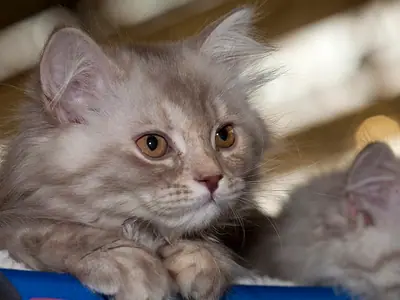
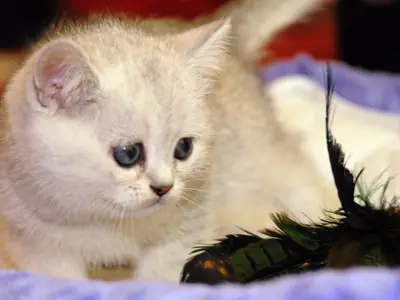
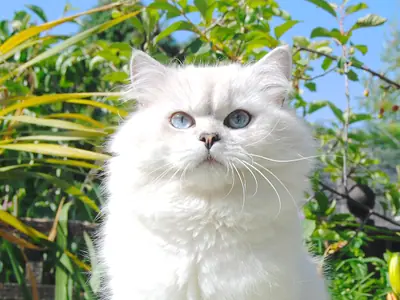
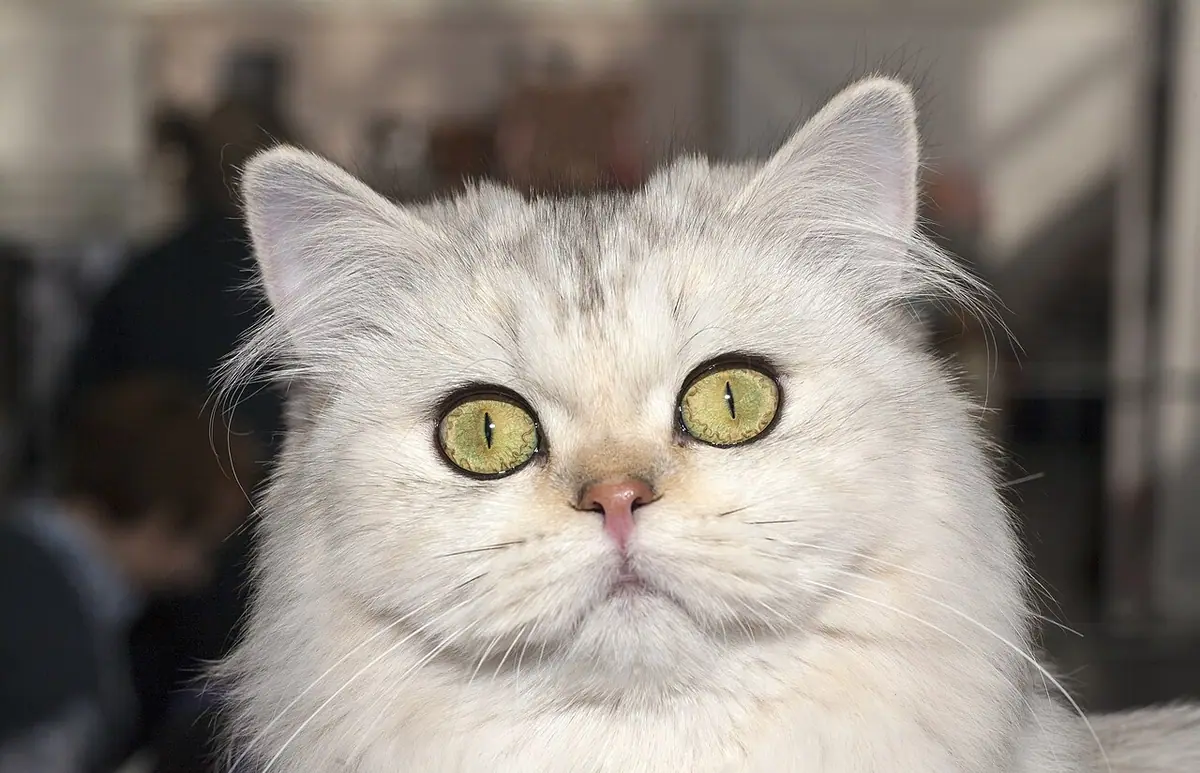
- Body: medium to large and cobby, with a broad chest, short strong legs and a short, thick tail [1].
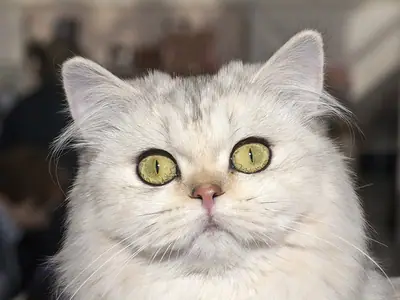
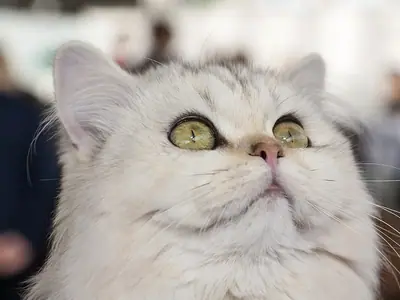
- Head: round, with a short nose, chubby cheeks and prominent whisker pads that give a "smiling" look [1].
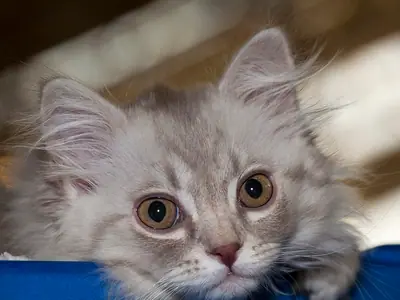
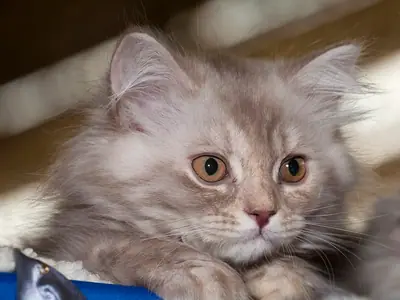
- Coat: medium-long and dense, standing away from the body and emphasising its imposing lines [1].
- Eyes: mostly deep gold to copper. Pointed cats have blue eyes and silvers have green [1].
- Size: TICA gives about 8–11 lb for females and 10–16 lb for males [1].
Photo gallery
7 photos · tap to enlarge- (enlarge, photo 1/7)
- (enlarge, photo 2/7)
- (enlarge, photo 3/7)
- (enlarge, photo 4/7)
- (enlarge, photo 5/7)
- (enlarge, photo 6/7)
- (enlarge, photo 7/7)
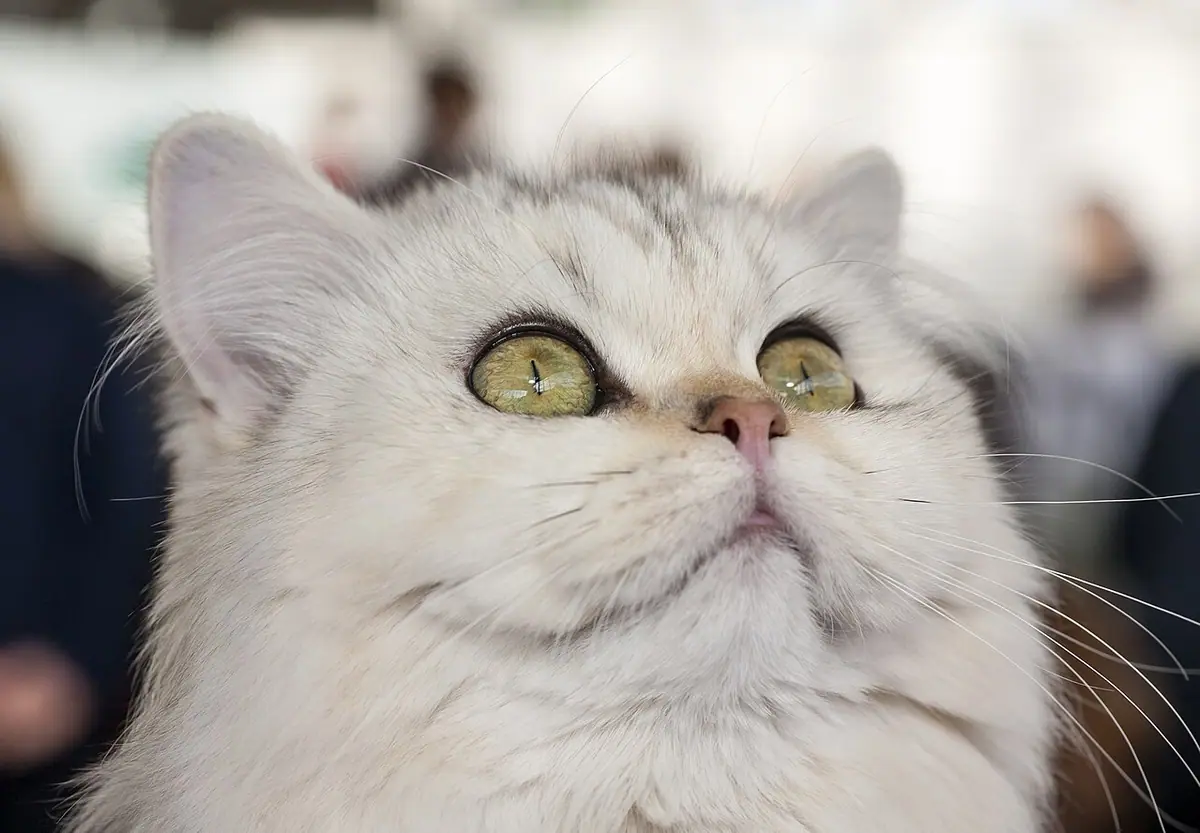
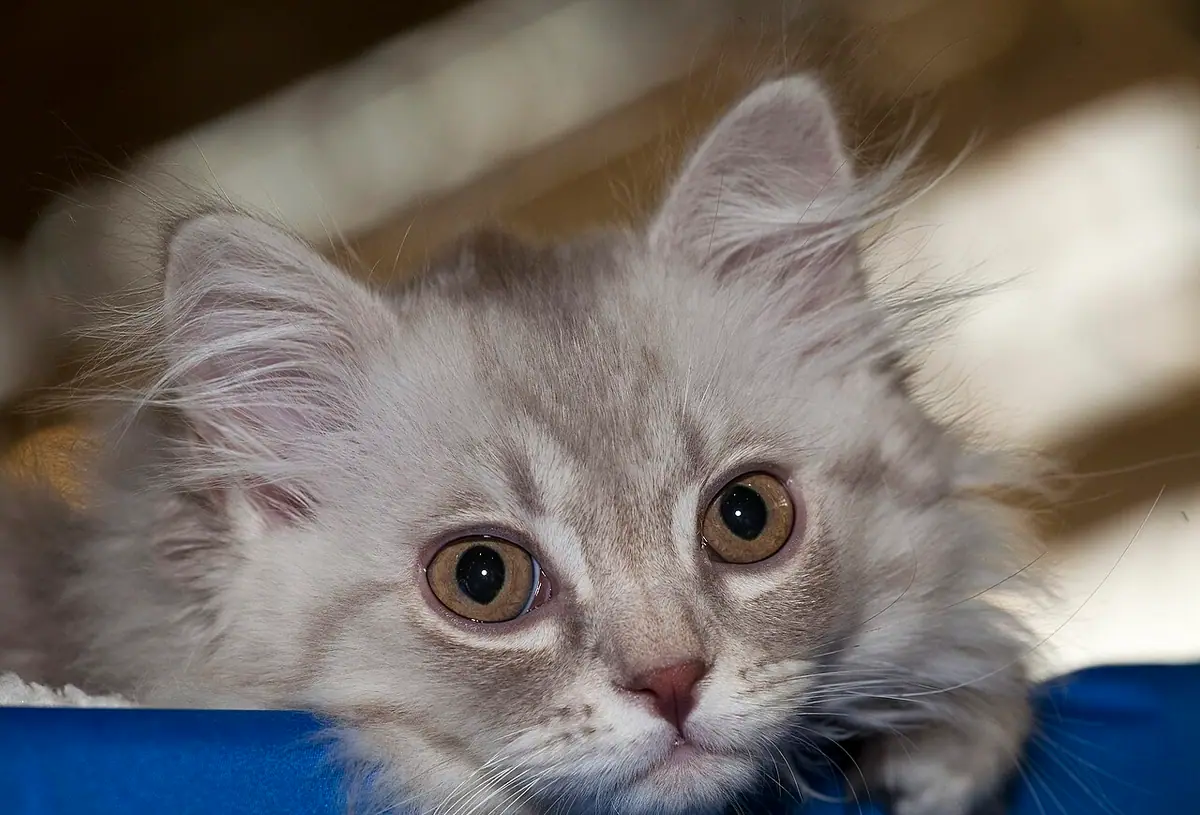
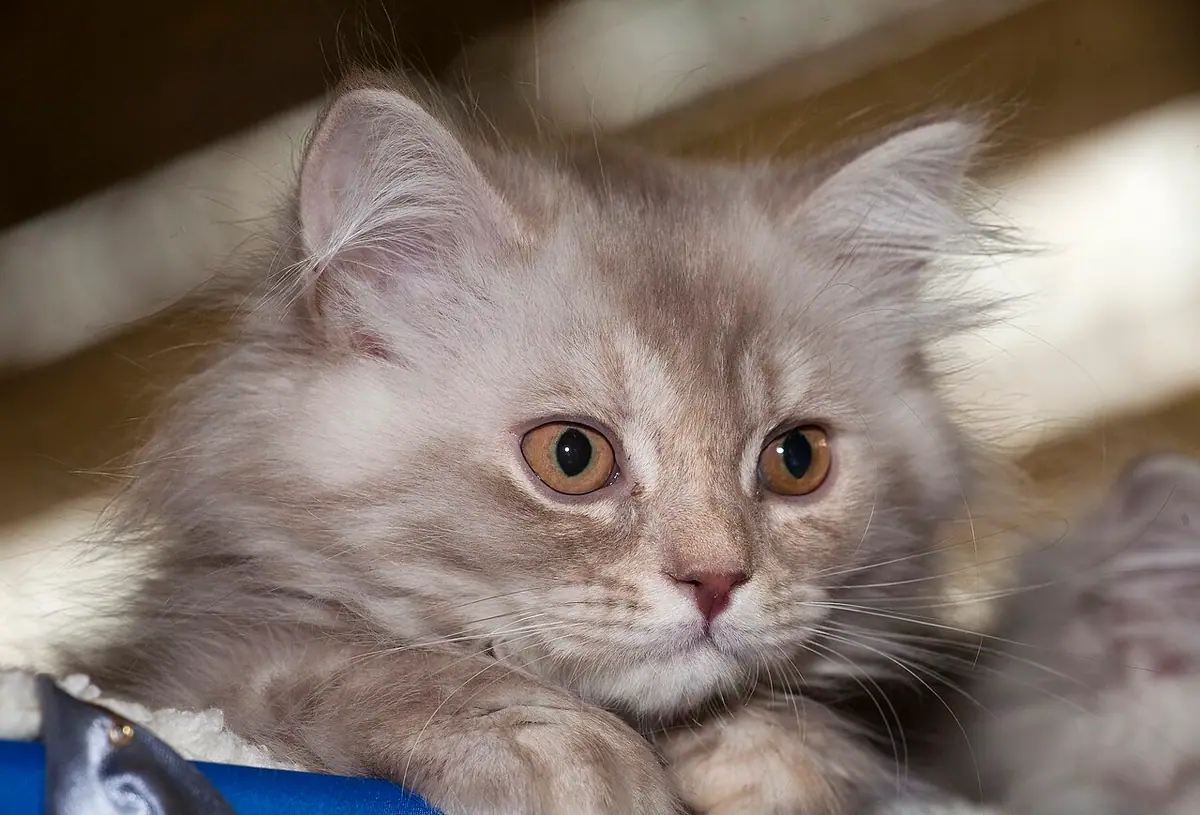
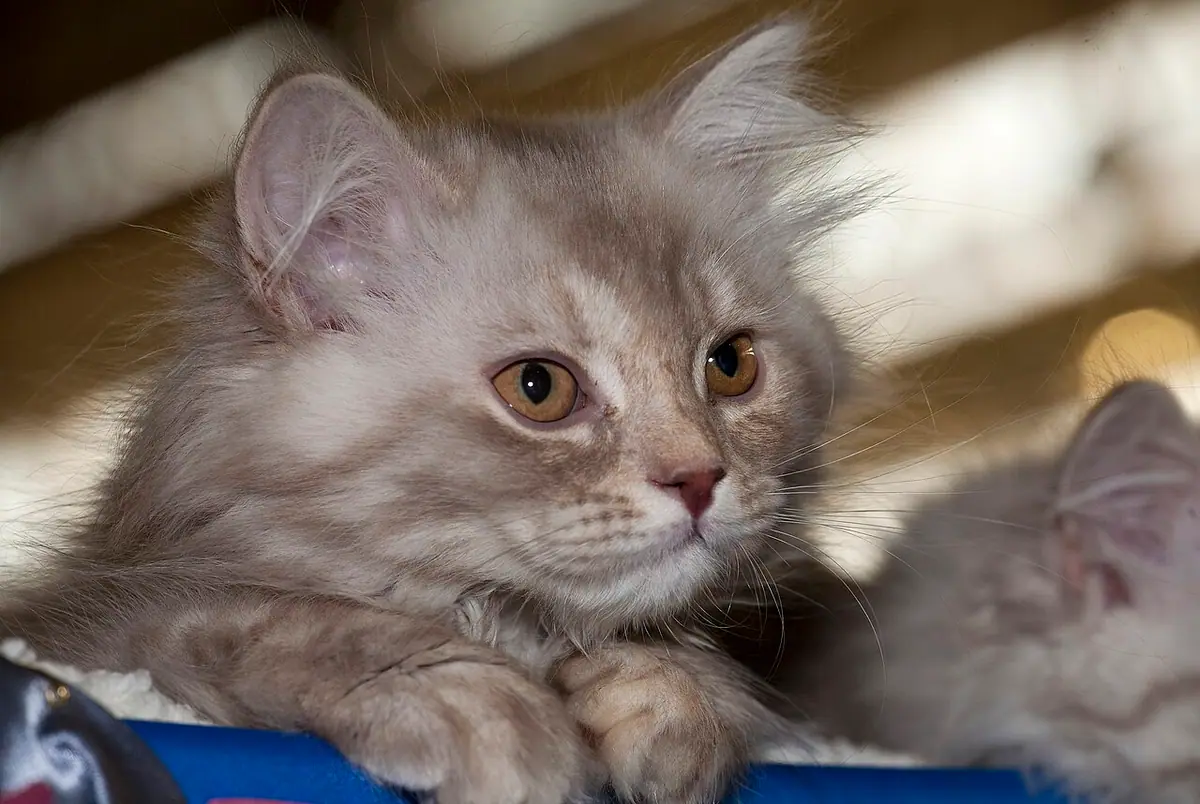
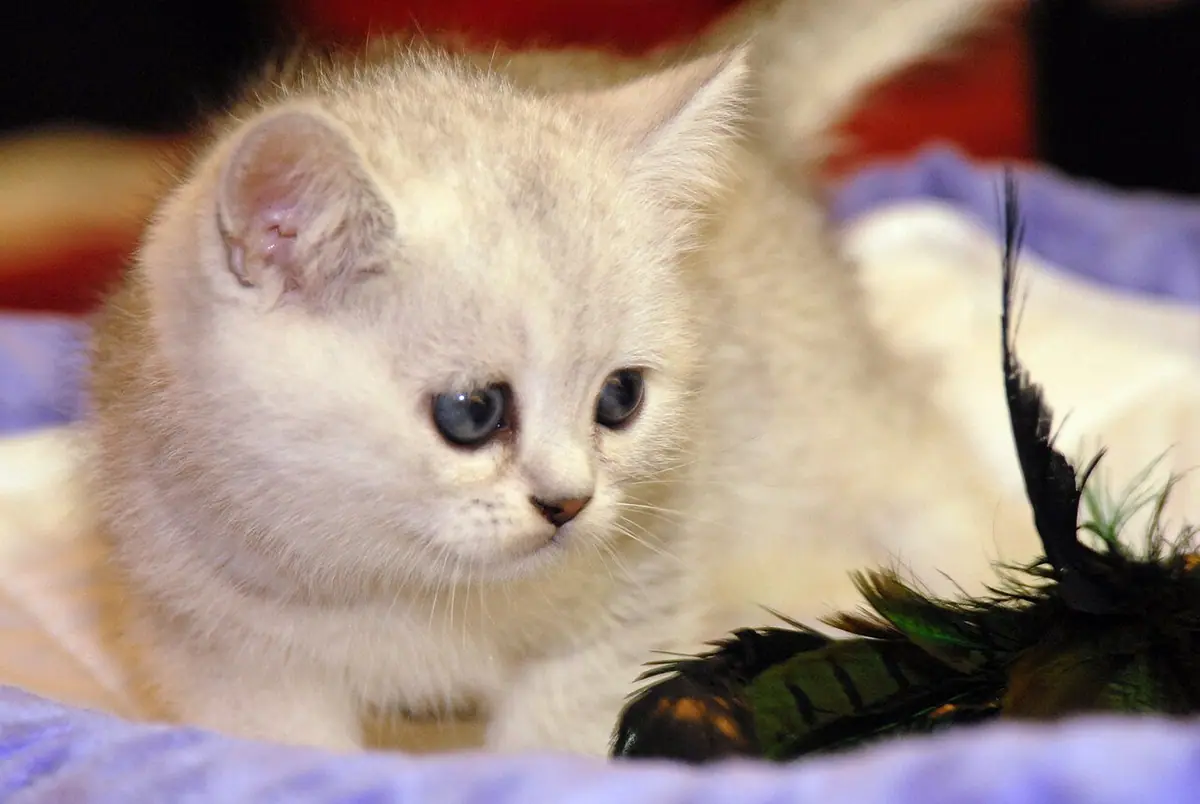
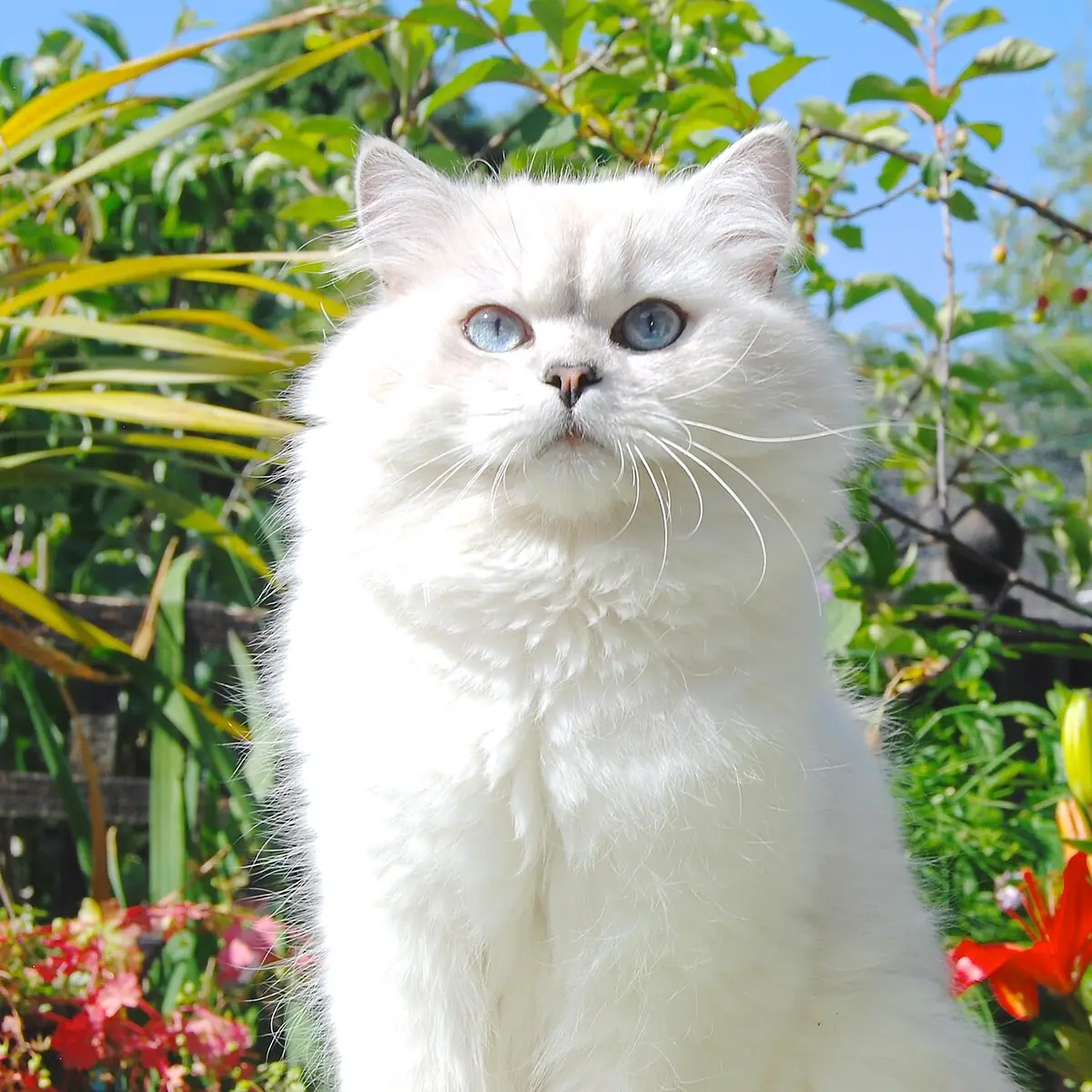

Photos: Wikimedia Commons – author & licence shown when enlarged and on the Photo credits page.
Temperament
British Longhairs are affectionate in an undemanding way. TICA describes the males as happy-go-lucky with everyone, and the females as more serious and selective about whose attention they accept [1]. They're not lap cats, but they want to be where you are, usually right next to you on the sofa [1]. They're fairly inactive, with the odd mad kitten moment, and don't go in for high-flying acrobatics [1]. They tolerate children and dogs, don't like being carried around, and are happy to amuse themselves while you're out [1].
Care
- Comb daily to prevent tangles. Regular baths keep the coat in top shape, so start the routine in kittenhood [1].
- Trim nails about every two weeks, clean ears, and brush teeth with a pet toothpaste [1].
- Watch portions and encourage play with teaser toys or fetch to burn calories [1].
- Keep your cat at a healthy weight. Across all cats, a non-ideal weight is linked to shorter lives [5].
Health
- Hypertrophic cardiomyopathy (HCM): TICA urges breeders to screen by echocardiogram with a veterinary cardiologist. Owners should screen too, because HCM may not appear in the first years of life [1].
- Dental health: schedule yearly vet checks, since untreated dental disease can lead to other problems [1].
- Obesity: a food-loving, sedentary breed that gains weight easily [1].
- Lifespan: TICA estimates 12–20 years depending on background and circumstances [1]. We found no breed-specific longevity study.
Ask breeders for the parents' heart-screening results, and talk to your vet about any specific concern.
Don't confuse with…
- Persian: a much shorter, snub nose and a longer coat [4]. The British Longhair has a short nose but not a flat face [1].
- British Shorthair: the same body standard with a short coat [1].
- Selkirk Rex (longhair): also sturdy and round-faced, but curly-coated [6].
Ask your vet. This information is for reference only and does not replace a veterinary diagnosis.
Fun facts
Frequently asked questions
What's the difference between a British Longhair and a British Shorthair?
They share the same body standard and temperament. The difference is the coat: the Longhair's is medium-long, dense and stands away from the body, so it needs daily combing, while the Shorthair needs only a quick weekly comb [1].
Do British Longhairs shed a lot?
The coat is very dense, so expect shedding, especially at seasonal changes. TICA suggests daily combing to prevent tangles and regular baths, starting when the cat is a kitten [1].
How big do British Longhairs get?
TICA puts females at about 8–11 lb and males at about 10–16 lb. That weight should come from muscle, not excess food [1].
Do British Longhairs like being held?
Usually not. They prefer all four feet on the floor and tolerate children and dogs, but don't like being carried around. If you do pick one up, support it firmly [1].
Similar breeds


Breed photos: Wikimedia Commons (CC0 / CC BY / CC BY-SA) – authors & licences on the Photo credits page.
References
- TICA, British Longhair (breed profile)
- FIFe, Breeds (BLH British Longhair, fully recognised)
- GCCF, Registered Cats By Breed 2024–2025 (PDF; read via search-index copy, re-verify)
- CFA, Persian (breed profile & standard)
- Teng KT et al. (2024). Life tables of annual life expectancy and risk factors for mortality in cats in the UK. J Feline Med Surg
- CFA, Selkirk Rex (breed profile & standard)
Accessed: 2026-10-02
Written by Catopidia from the sources above. Photos credit their author and licence under each image and on the Photo credits & licences.