Cat breed
Savannah
Mèo Savannah

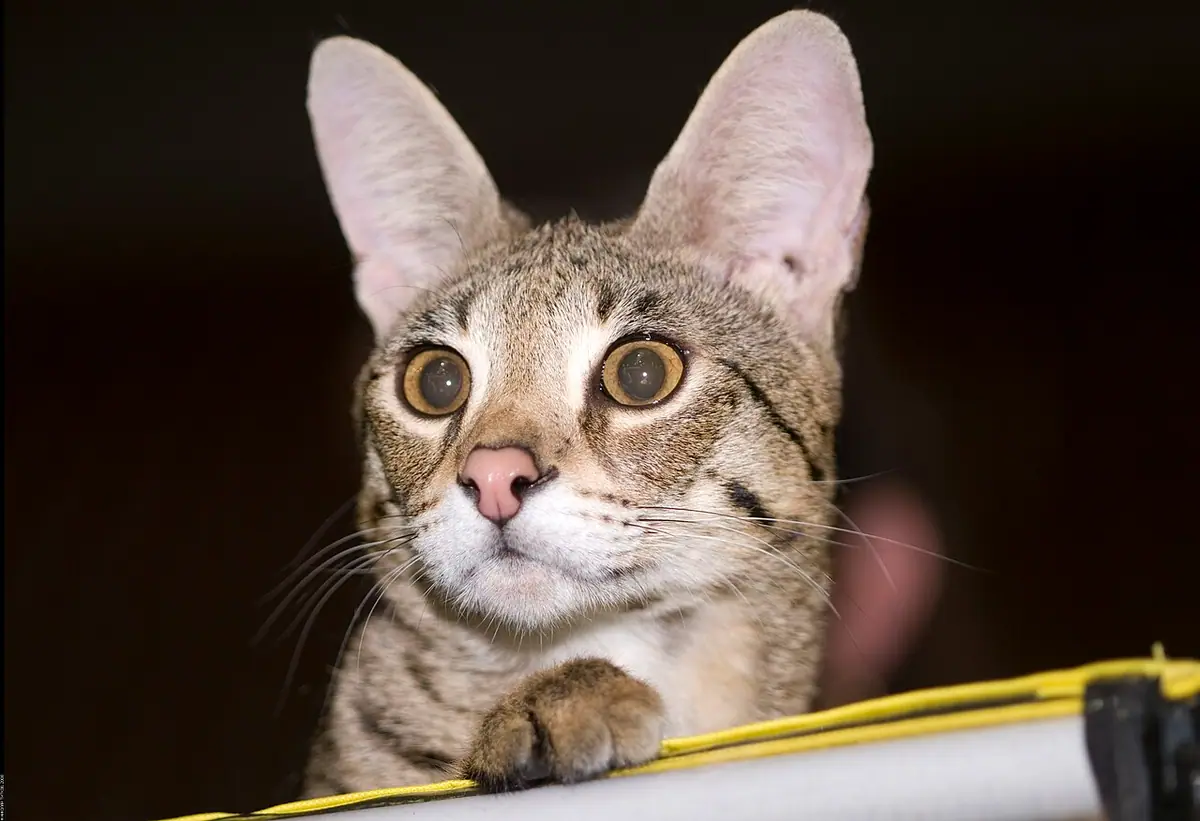
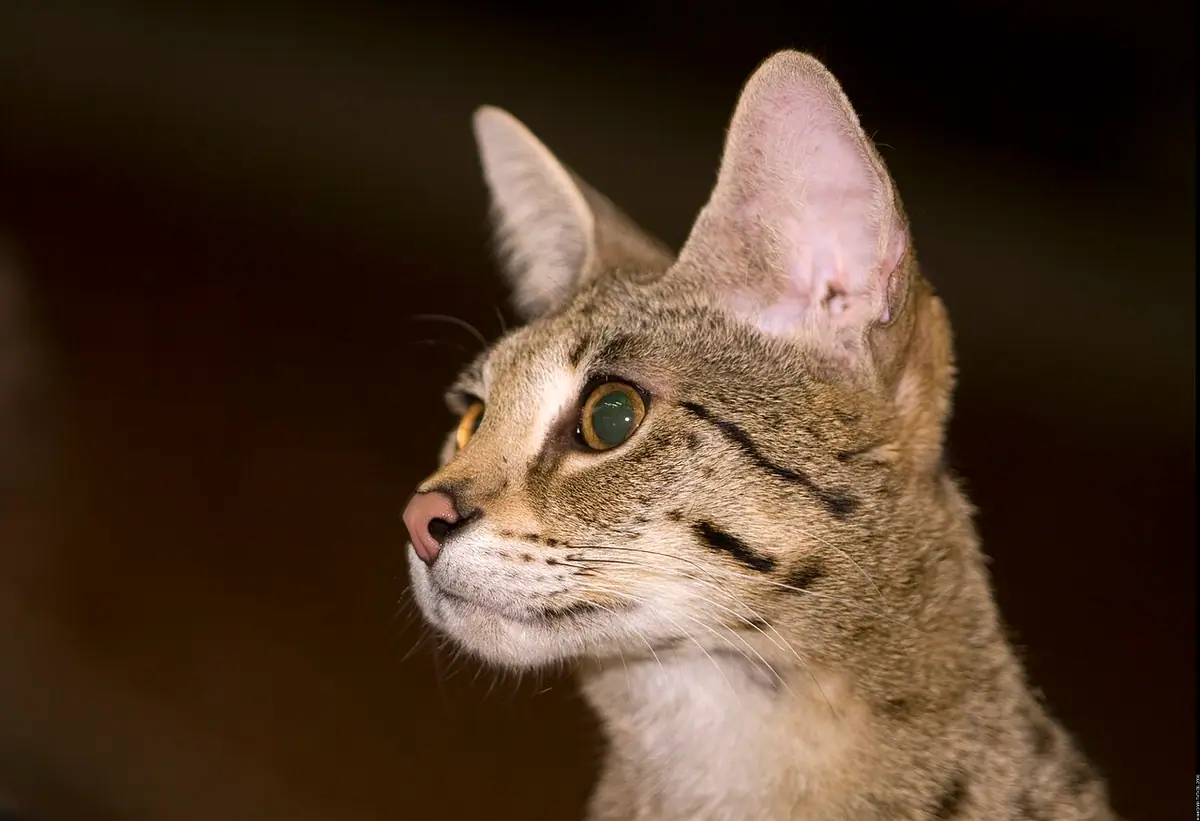
The Savannah is a hybrid of the domestic cat and the African serval [1]. It's tall and lean, with a long neck and legs, tall ears set on top of the head and bold spots [1]. Savannahs are very energetic, bore easily and need daily interaction [1]. Of the four major registries, only TICA recognises the breed [1]; FIFe does not list it [2]. Breeding wild-cat hybrids is a live animal-welfare debate [3].
Contents (10 sections)
Quick facts
- Origin
- United States (1986), from a domestic cat crossed with an African serval
- Weight
- no data
- Lifespan
- ~12–15+ years
- Coat
- short, spotted
- Energy
- high
Details & sources
Traits (scale 1–5)
- Energy
- 5/5
- Shedding
- 2/5
- Grooming needs
- 1/5
- Good with kids
- 3/5
- Vocal
- 3/5
- Independence
- 3/5
Basis: Editorial estimate based on TICA's description, not a measurement. Behaviour may differ between hybrid generations
Registry recognition
| CFA | No |
|---|---|
| TICA | Yes |
| FIFe | No |
| GCCF | No |
History
The first known Savannah was born on 7 April 1986, from a domestic female and an African serval sire. The F1 female kitten was named Savannah [1]. Patrick Kelly and Joyce Sroufe wrote the original TICA breed standard [1]. TICA accepted the breed for registration in 2001 and for championship in 2012 [1].
Appearance
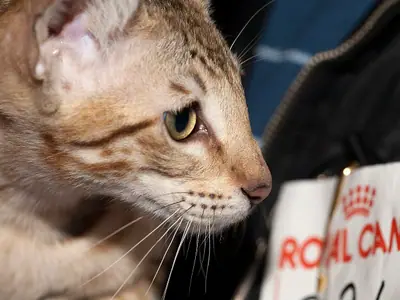
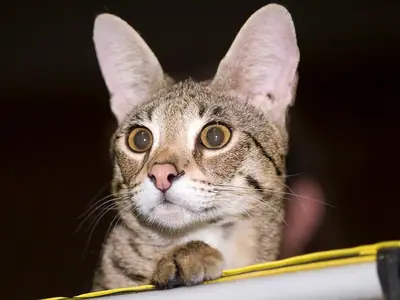
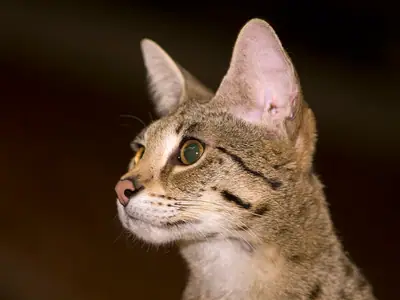
- Build: tall and lean, with a long neck and long legs; looks heavier than it is [1].
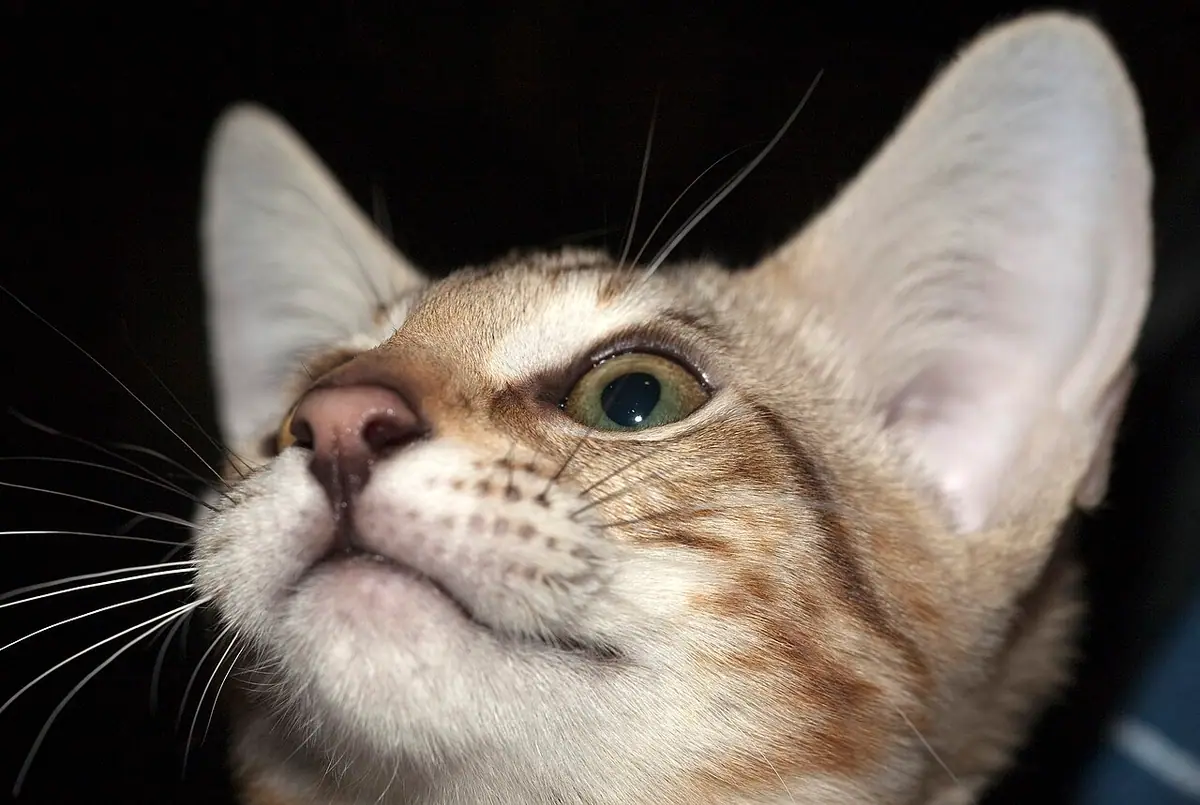
- Head: tall ears set on top of the head; hooded eyes, flat on top [1].
- Coat: short, without a heavy undercoat [1].
- TICA standard colours: brown (black) spotted tabby, silver spotted tabby, black and black smoke [1].
- Size: most are only the size of a large domestic cat [1].
Photo gallery
7 photos · tap to enlarge- (enlarge, photo 1/7)
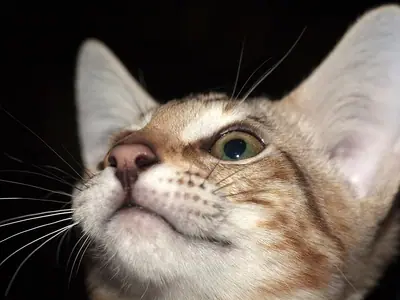
- (enlarge, photo 2/7)
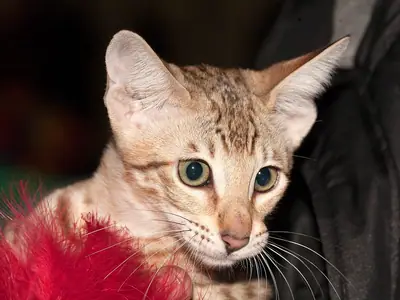
- (enlarge, photo 3/7)
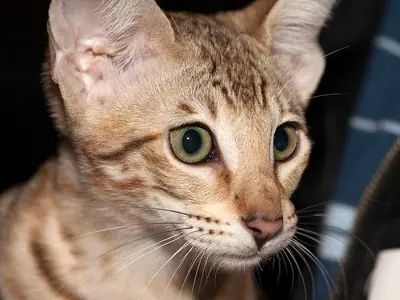
- (enlarge, photo 4/7)
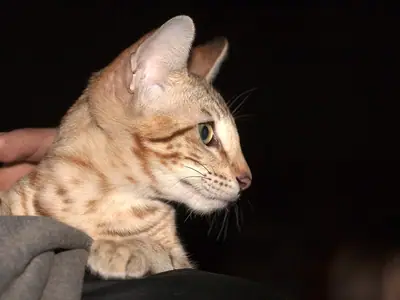
- (enlarge, photo 5/7)
- (enlarge, photo 6/7)
- (enlarge, photo 7/7)
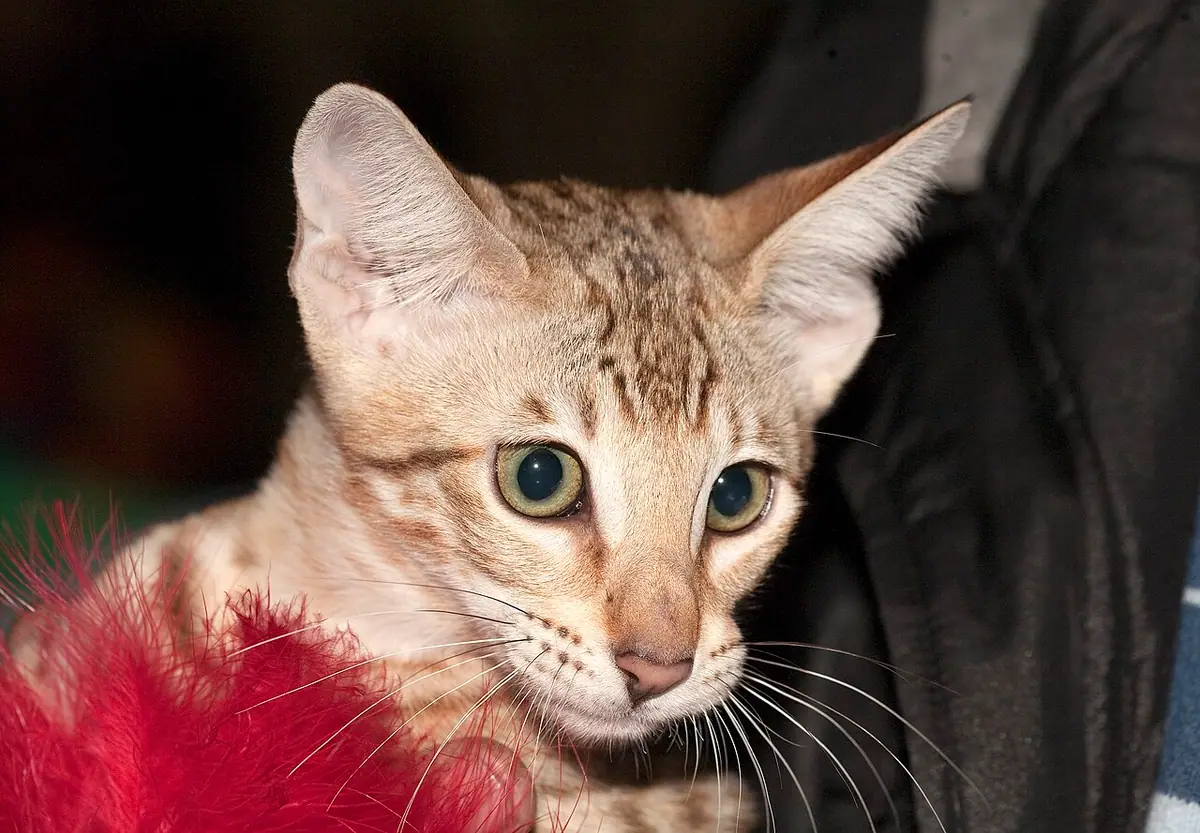
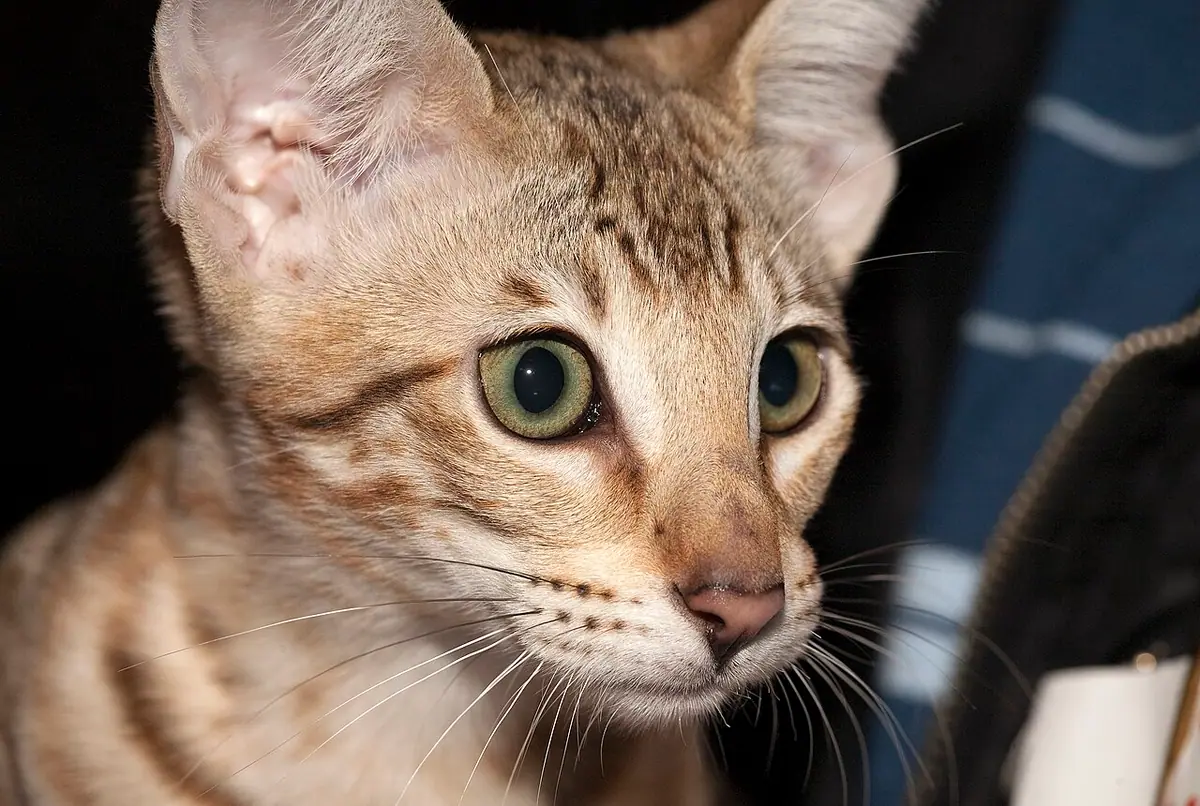
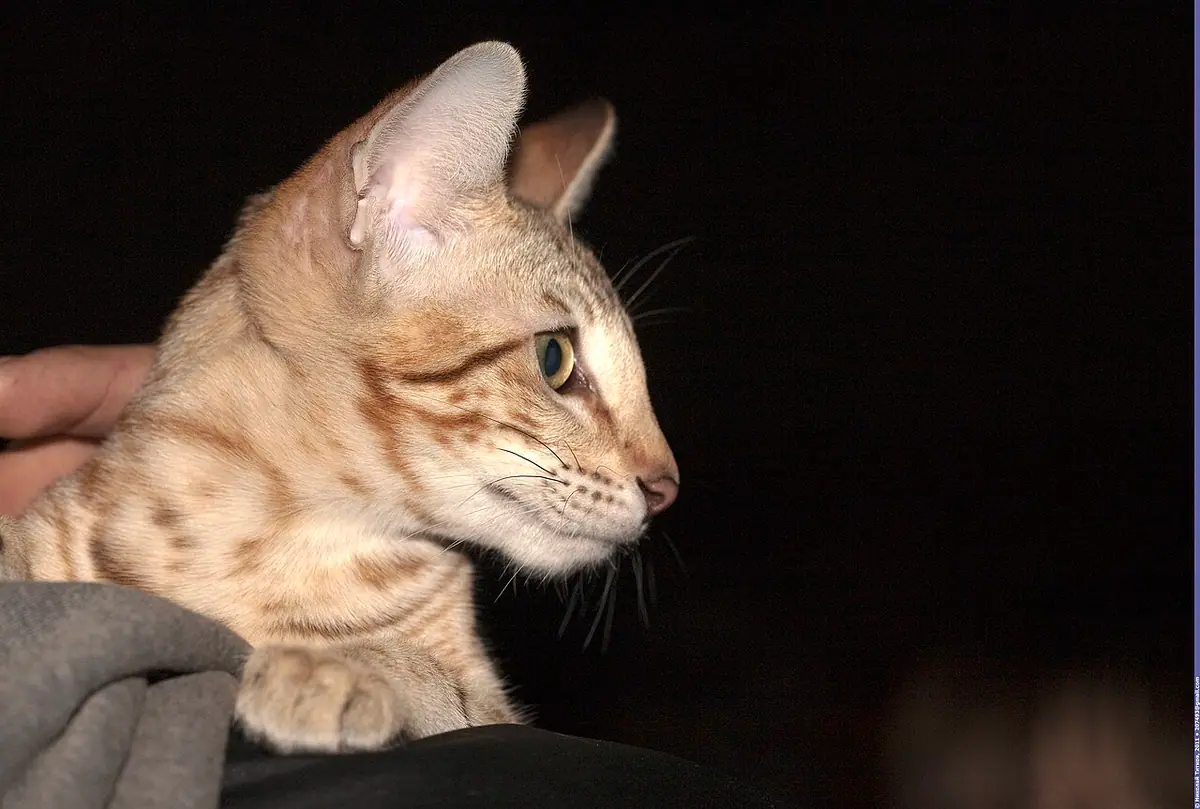
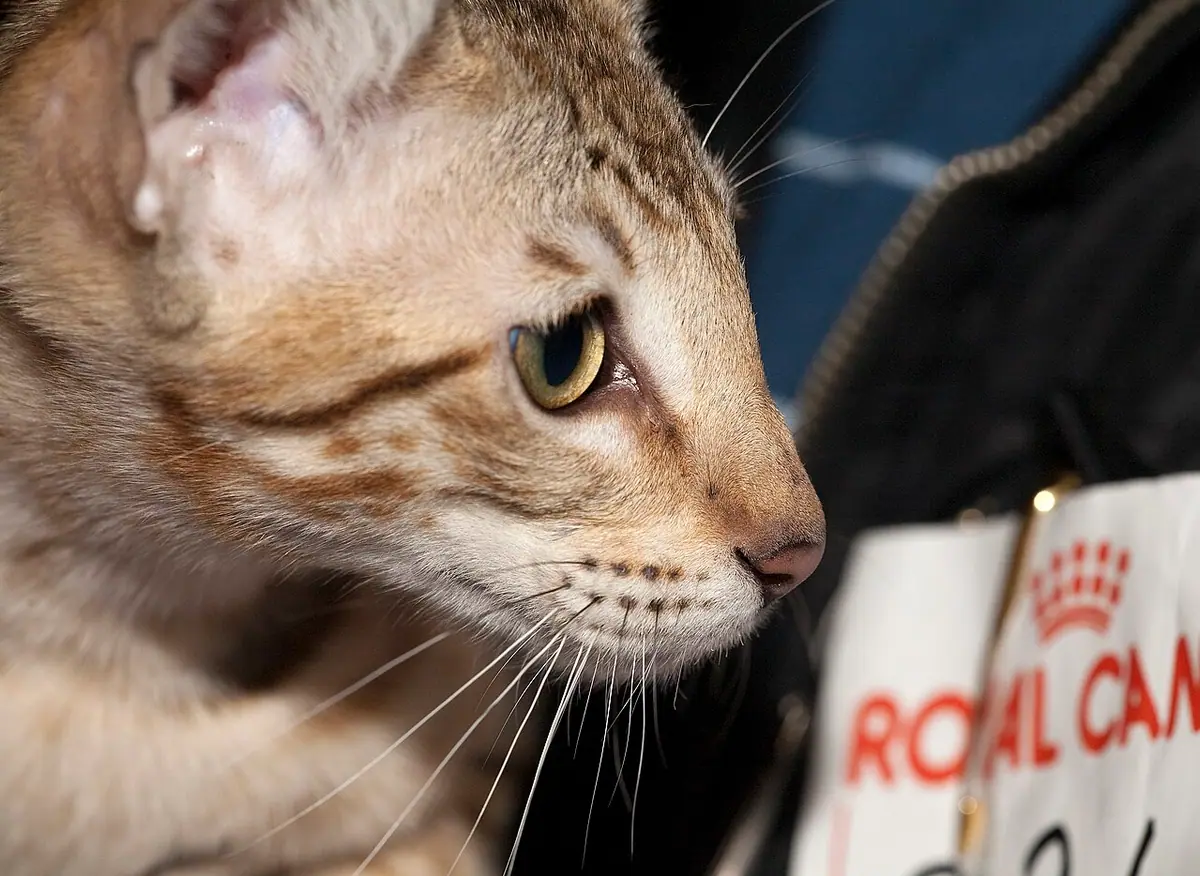
.jpg)
Photos: Wikimedia Commons – author & licence shown when enlarged and on the Photo credits page.
Temperament
Savannahs are high-energy, get bored easily and need daily interaction [1]. They're great jumpers and like perching on doors and fridges [1]. They aren't lap cats, but they're loyal and greet people with headbutts [1]. Many like water and can learn to walk on a leash and play fetch [1]. TICA says they suit families with older children [1]. The Cat Group notes that hybrids keep many wild-type behaviours, and owners may struggle with some of them [3].
Care
Health
- Screening: TICA recommends screening for pyruvate kinase (PK) deficiency and progressive retinal atrophy (PRA) [1].
- HCM: TICA notes some history of hypertrophic cardiomyopathy, with no specific genetic test [1].
- Lifespan: TICA estimates 12–15+ years [1]. We found no breed-specific longevity study.
Ask the breeder about the parents' screening results, and talk to your vet about any specific concern.
A note on welfare
The Cat Group, a coalition of cat welfare organisations, does not support breeding wild-cat hybrids or keeping them as pets, on welfare grounds [3]. It considers hybrids fewer than five generations from the wild cat most at risk. Servals can weigh up to about 15 kg against 4–5 kg for a domestic cat, so mating risks injury to the domestic parent; many hybrid pregnancies don't reach full term; and no commercial test can confirm a cat's generation [3]. TICA notes the breed is still illegal in some states and countries [1].
Don't confuse with…
Ask your vet. This information is for reference only and does not replace a veterinary diagnosis.
Fun facts
Frequently asked questions
Is it legal to own a Savannah cat?
It depends where you live. TICA notes the breed is still illegal in some states and countries because of its serval ancestry [1]. In the UK, early-generation crosses need a licence under dangerous wild animals law [3]. Check with your local authorities.
What do F1 and F2 mean for Savannahs?
They count generations from the serval ancestor: an F1 has a serval parent, an F2 is the next generation. The Cat Group considers hybrids fewer than five generations from the wild cat most at risk, and backs a UK proposal to ban breeding from F1 and F2 cats [3].
Are Savannahs good with young children?
TICA says they suit families with older children. They're very energetic, bore easily and need daily interaction [1].
How big do Savannah cats get?
According to TICA, most are only the size of a large domestic cat, but long legs, a long neck and tall ears make them look bigger and heavier than they are [1].
Similar breeds


Breed photos: Wikimedia Commons (CC0 / CC BY / CC BY-SA) – authors & licences on the Photo credits page.
References
- TICA, Savannah (breed profile & standard)
- FIFe, Breeds (Savannah not listed)
- The Cat Group, Position statement on hybrid cats (via International Cat Care)
- CFA, Bengal (breed profile & standard)
- CFA, Ocicat (breed profile)
Accessed: 2026-10-02
Written by Catopidia from the sources above. Photos credit their author and licence under each image and on the Photo credits & licences.