Cat breed · Egypt
Abyssinian
Mèo Abyssinian

The Abyssinian has a short "ticked" coat in which every hair carries several bands of colour, giving it a glowing, wild look [1]. CFA calls it one of the oldest and most intelligent cat breeds [1]. Abys are extremely active, inquisitive and affectionate [1]. The breed ranked sixth in CFA's most popular breeds for 2026 [4] and is recognised by CFA, TICA [7] and FIFe [2].
Contents (10 sections)
Quick facts
- Origin
- Developed in England; genetic research points to coastal Indian Ocean and Southeast Asian origins
- Weight
- no data
- Lifespan
- ~10 years (small sample)
- Coat
- short
- Energy
- high
Details & sources
Traits (scale 1–5)
- Energy
- 5/5
- Shedding
- 2/5
- Grooming needs
- 1/5
- Good with kids
- 5/5
- Vocal
- 2/5
- Independence
- 2/5
Basis: Editorial estimate based on CFA's description, not a measurement
Registry recognition
| CFA | Yes |
|---|---|
| TICA | Yes |
| FIFe | Yes |
| GCCF | — |
GCCF: pending verification.
History
Ethiopia was once called Abyssinia, but the name doesn't mean the breed is African. It just reflects that the first Abys shown in England were imports from Ethiopia [1]. Despite their resemblance to cats in ancient Egyptian art, genetic research places their origin in coastal areas of the Indian Ocean and Southeast Asia; returning soldiers probably brought them to England [1]. The first Abyssinian at a cat show was "Zula", at the Crystal Palace in 1871 [1]. Abys reached the US in the early 1900s and were among CFA's original breeds in 1906 [1]. They were also one of FIFe's founding breeds in 1949 [2].
Appearance
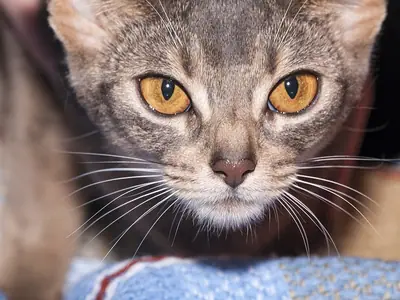
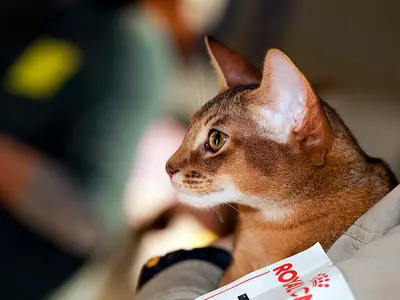
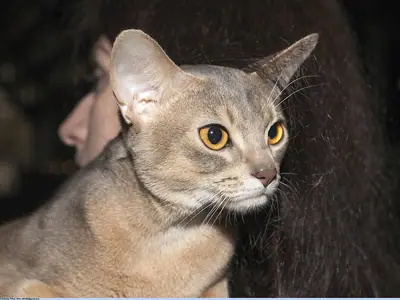
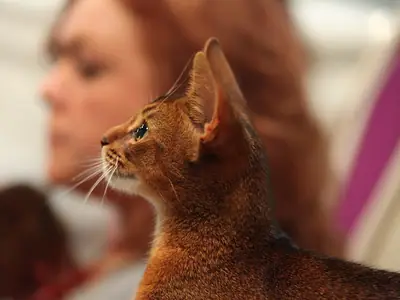
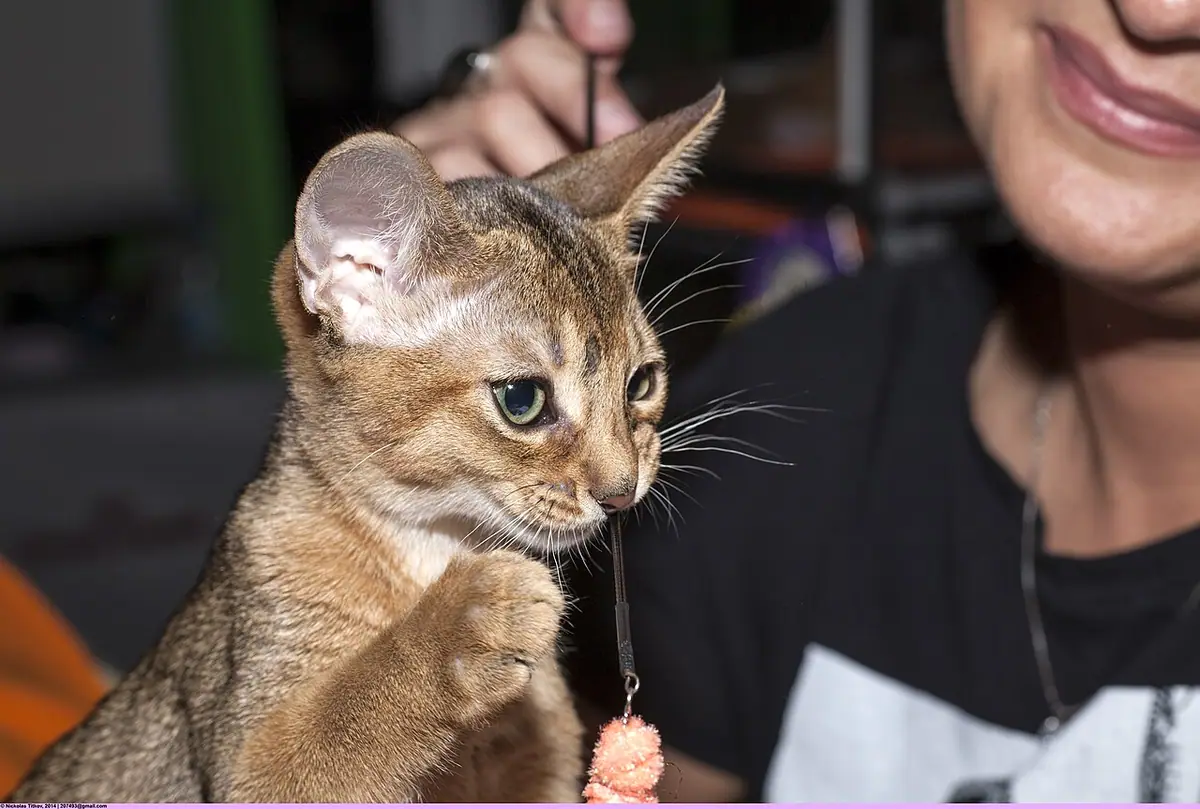
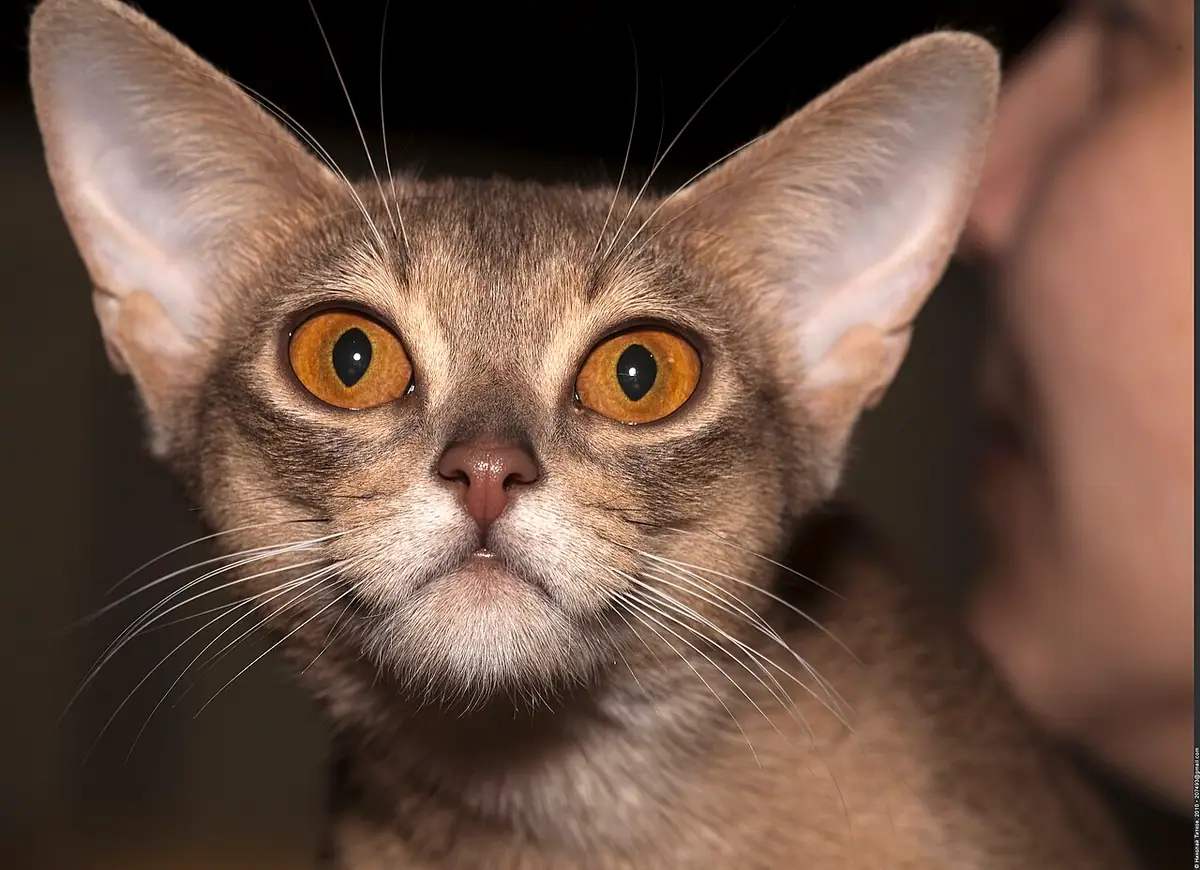
- Coat: short, dense and resilient, glowing with colour from the ticking on each hair [1].
- Body: medium-sized, with a beautifully arched neck and a lithe, muscular feel; Abys look as if they're on tiptoe [1].
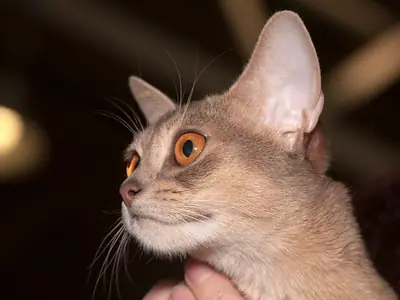
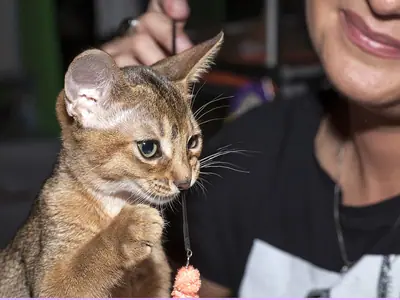
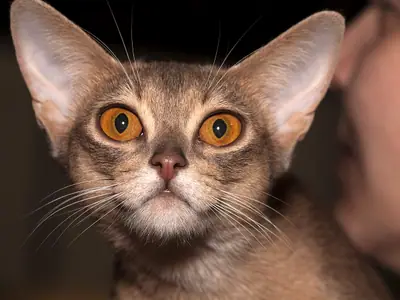
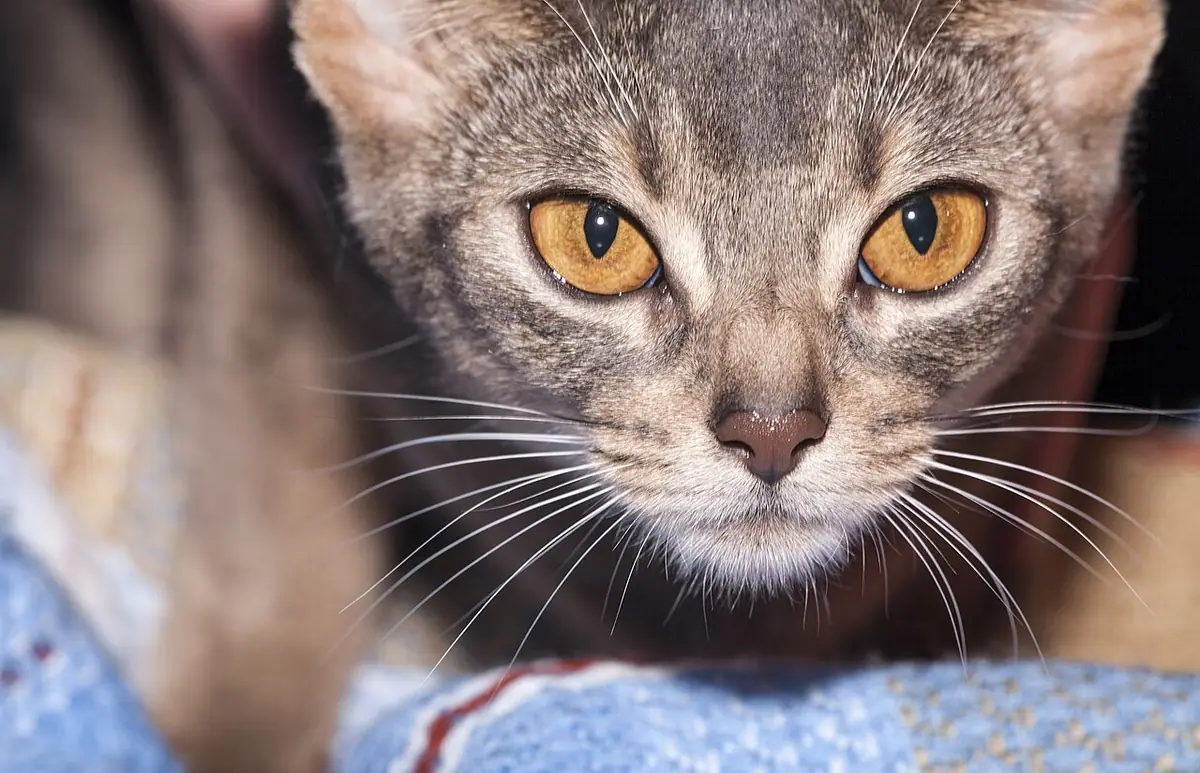
- Head: a slightly rounded modified wedge, large cupped ears, expressive almond eyes and facial markings [1].
- Colours: most often ruddy (a burnished red-brown), plus cinnamon, blue and fawn [1].
Photo gallery
7 photos · tap to enlarge- (enlarge, photo 1/7)
- (enlarge, photo 2/7)
- (enlarge, photo 3/7)
- (enlarge, photo 4/7)
- (enlarge, photo 5/7)
- (enlarge, photo 6/7)
- (enlarge, photo 7/7)
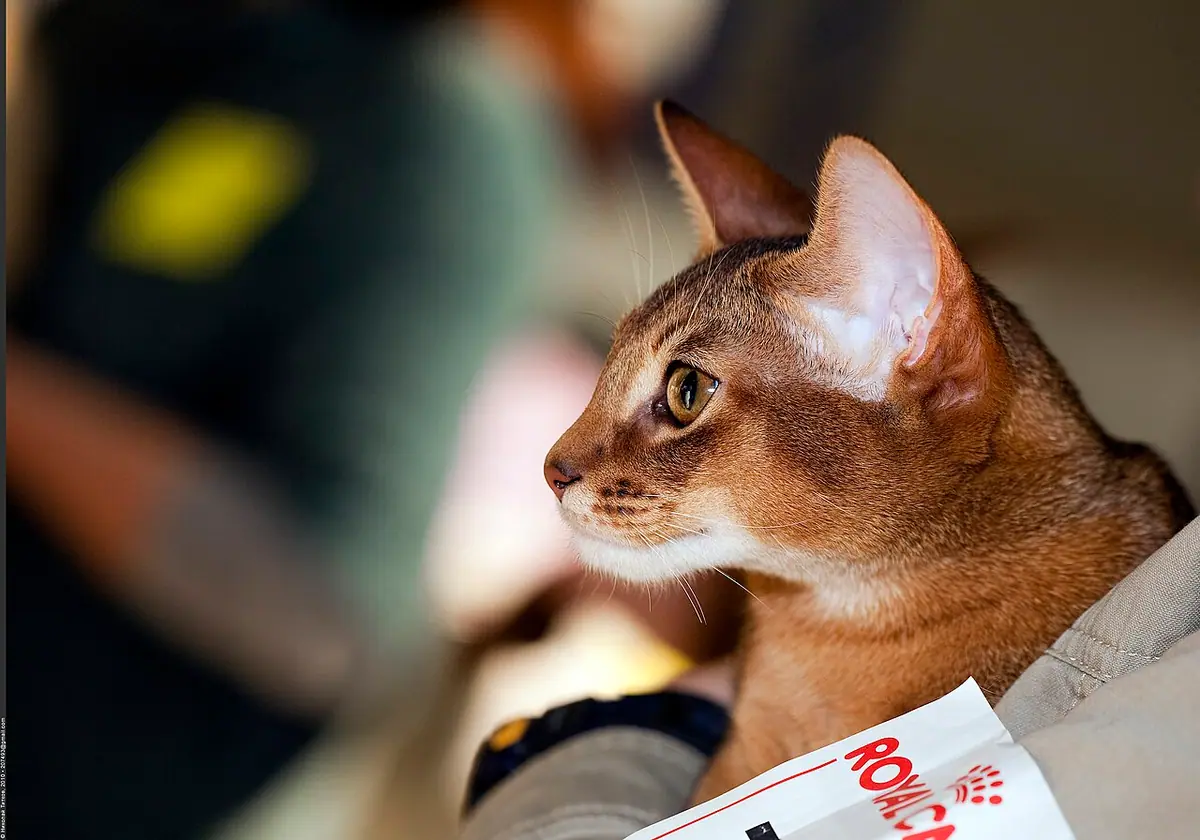
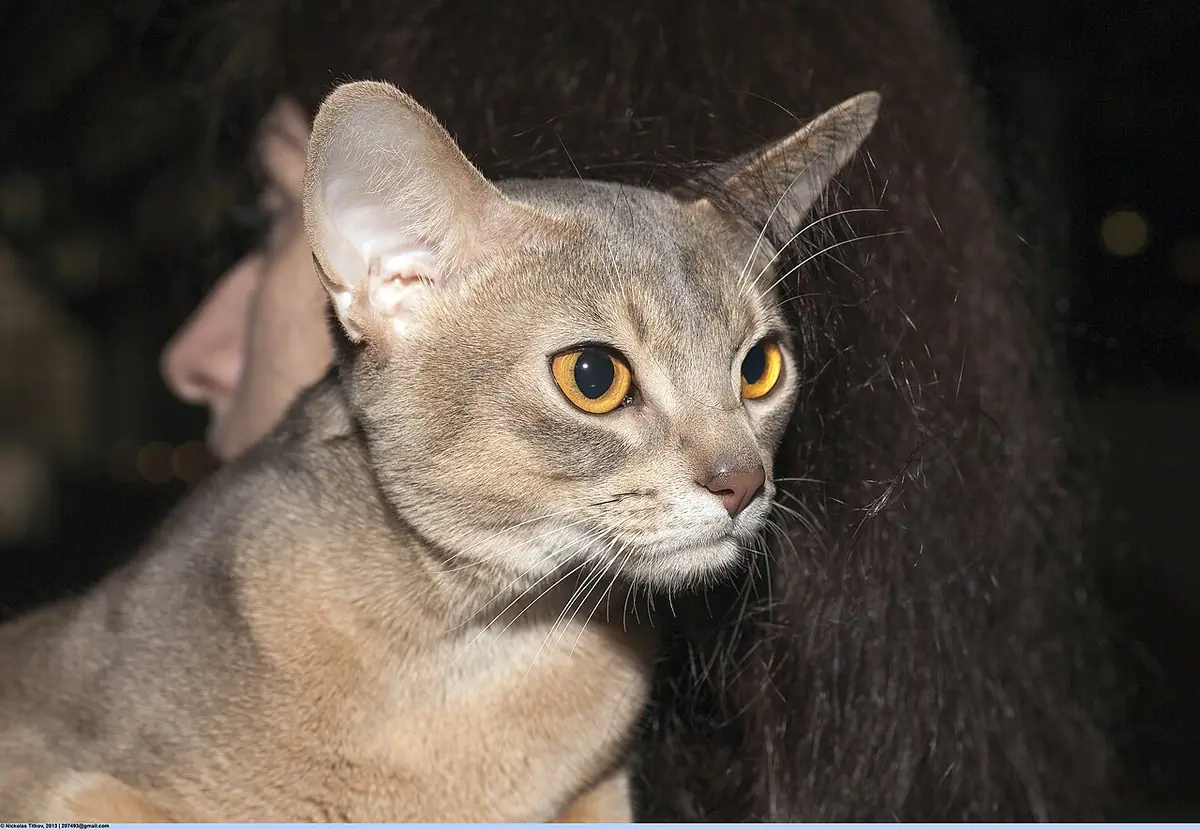
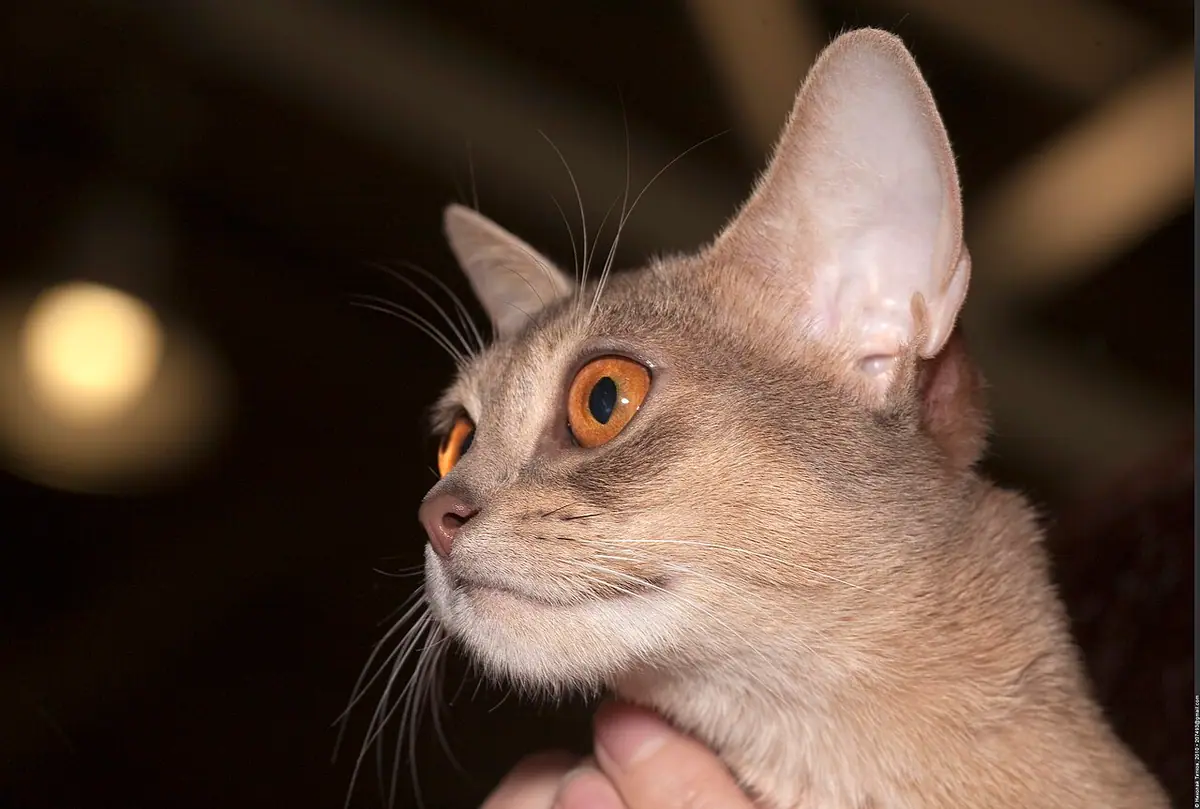
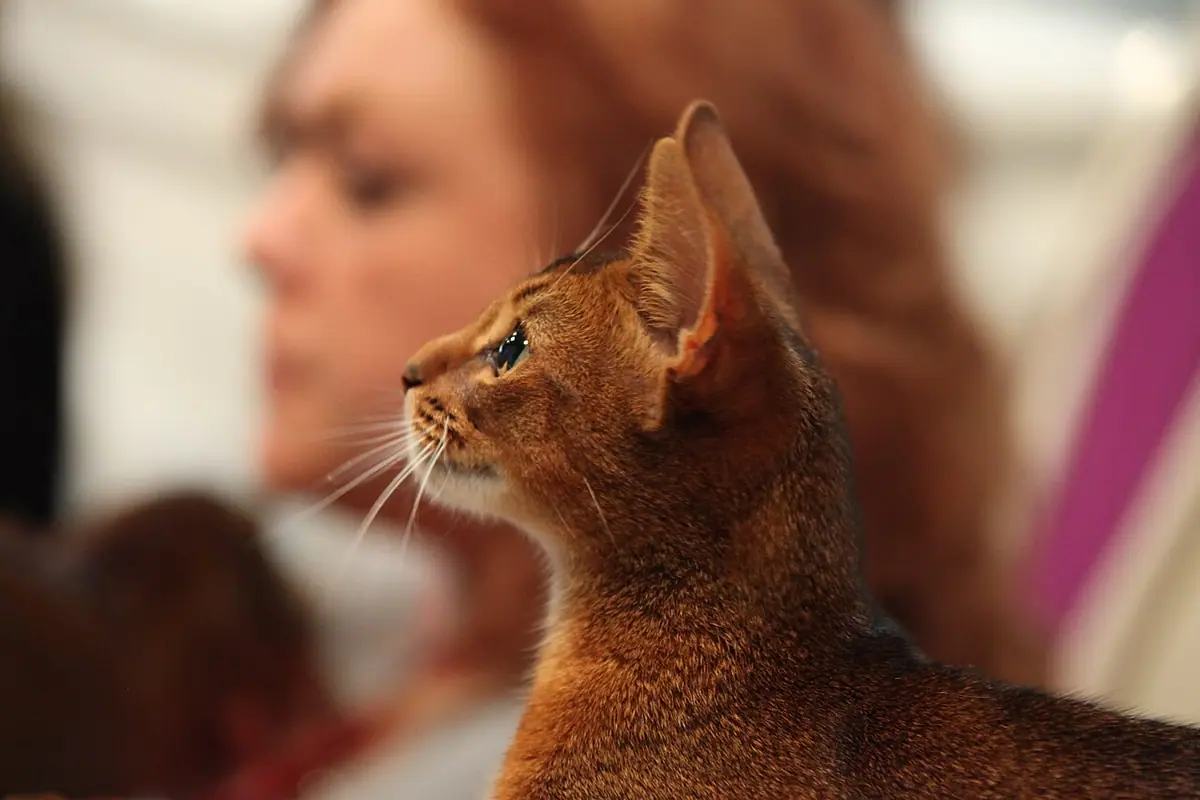
.jpg)
Photos: Wikimedia Commons – author & licence shown when enlarged and on the Photo credits page.
Temperament
Abys are indomitable problem-solvers, curious about everything, and leave no corner unexplored [1]. They're always on the move unless asleep, and without enough toys they'll invent their own [1]. They're not long-term lap cats, but they still seek attention, sometimes asking with a gentle paw [1]. Their energy makes them a great match for families with children who enjoy toys and hunting games [1]. They love high places, dislike being left alone for long, and communicate clearly without much noise [1].
Care
Health
- Inherited anaemia: an inherited disease that once caused anaemia occurred in the breed; breeders now use genetic testing to remove carriers [1].
- Dental care: some breeders teach buyers to brush their cat's teeth to prevent gingivitis [1].
- Lifespan: median 10.0 years in a UK study, but from only 11 Abyssinians, so not conclusive [3].
Ask the breeder about the parents' test results, and talk to your vet about any specific concern.
Don't confuse with…
Ask your vet. This information is for reference only and does not replace a veterinary diagnosis.
Fun facts
Frequently asked questions
Does the Abyssinian come from Ethiopia or Egypt?
Not really. The name only reflects that the first Abys shown in England were imports from Ethiopia. Despite resembling cats in ancient Egyptian art, genetic research places the breed's origin in coastal Indian Ocean areas and Southeast Asia, probably brought to England by returning soldiers [1].
Is the Abyssinian a lap cat?
Not for long. Abys are very affectionate but too active to settle in a lap for long. If they want attention, they may ask with a gentle paw [1].
Can an Abyssinian live in an apartment?
Yes, with plenty of toys, hunting games and high perches, since they love heights. They dislike being left alone for long, so quieter homes may want two [1].
Do Abyssinians need baths?
Usually not, unless the cat is being shown. Comb or brush a few times a month to control shedding; a chamois cloth adds sheen [1].
Similar breeds


Breed photos: Wikimedia Commons (CC0 / CC BY / CC BY-SA) – authors & licences on the Photo credits page.
References
- CFA, Abyssinian (breed profile & standard)
- FIFe, Breeds (ABY Abyssinian; founding breeds 1949)
- O'Neill DG et al. (2015). Longevity and mortality of cats attending primary care veterinary practices in England. J Feline Med Surg 17(2)
- CFA, Most Popular Breeds for 2026 (Abyssinian #6, based on 2025 registrations)
- CFA, Somali (breed profile)
- CFA, Singapura (breed profile)
- TICA, Browse All Breeds (Abyssinian listed)
Accessed: 2026-10-02
Written by Catopidia from the sources above. Photos credit their author and licence under each image and on the Photo credits & licences.