Cat breed · England
Oriental Shorthair
Mèo Phương Đông lông ngắn

The Oriental Shorthair is a study in elegance, with a wedge-shaped head, huge ears and a long, whippy tail that reveal its Siamese roots [1]. Unlike the Siamese, it comes in over 600 colour, pattern and coat-length combinations [1]. Orientals are extremely bright, people-centred and chatty [1]. The breed is recognised by CFA, FIFe [2] and GCCF [3].
Contents (10 sections)
Quick facts
- Origin
- Europe (1950s), from Siamese lines
- Weight
- no data
- Lifespan
- ~12–15 years
- Coat
- short, sleek
- Energy
- high
Details & sources
Traits (scale 1–5)
- Energy
- 4/5
- Shedding
- 1/5
- Grooming needs
- 1/5
- Good with kids
- 4/5
- Vocal
- 5/5
- Independence
- 1/5
Basis: Editorial estimate based on CFA's description, not a measurement
Registry recognition
| CFA | Yes |
|---|---|
| TICA | — |
| FIFe | Yes |
| GCCF | Yes |
History
Development began in Europe in the 1950s [1]. Britain's GCCF first recognised chestnut, lavender and white solids; other colours followed in the 1960s and 1970s as US breeders developed them [1]. CFA accepted Oriental Shorthairs for registration in 1974 and for championship in 1977 [1]. In 1988 CFA added Oriental Longhairs and renamed the breed simply "Oriental", with the two coat lengths shown in separate divisions [1].
Appearance
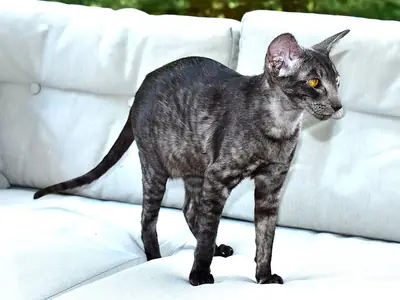
- Body: svelte like the Siamese, fine-boned and tubular, with surprisingly firm muscle [1].
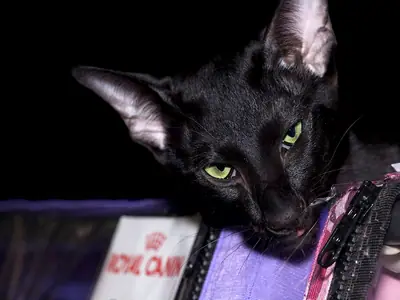
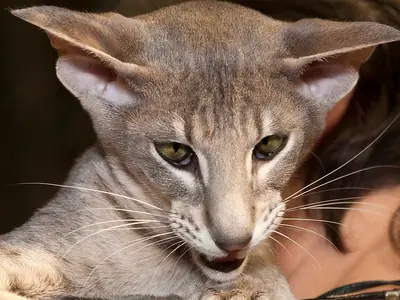
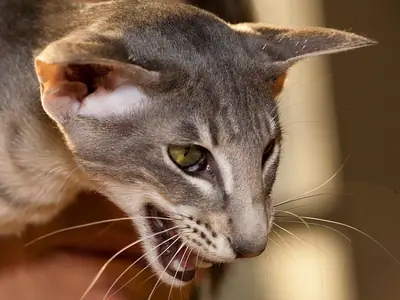
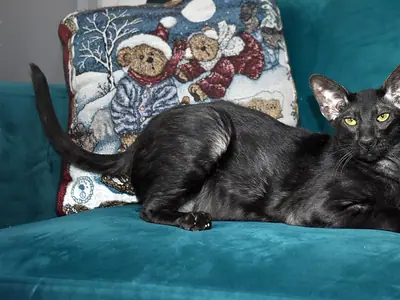
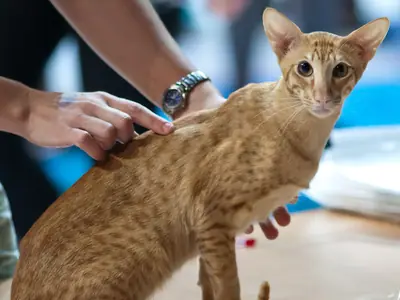
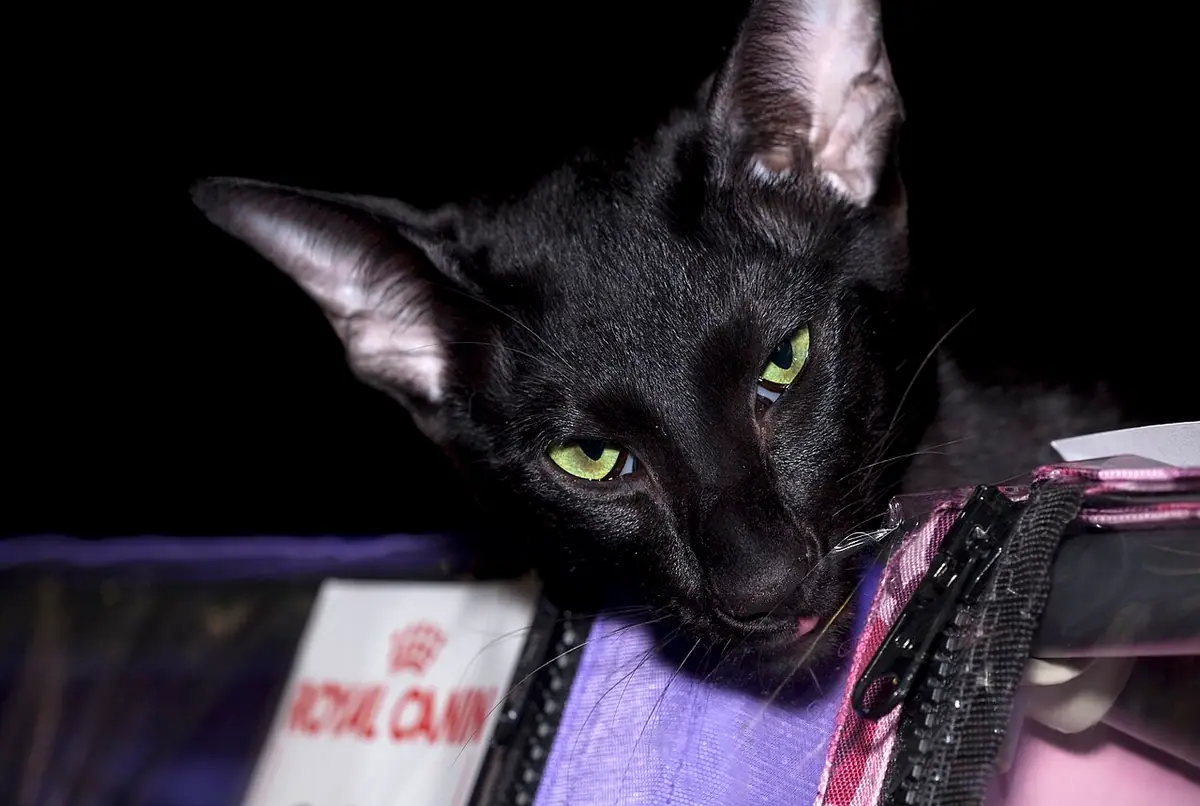
- Head: a long wedge with a straight profile and almond eyes; strikingly large, broad-based ears continue the wedge [1].
- Tail: long and whippy in the shorthair [1].
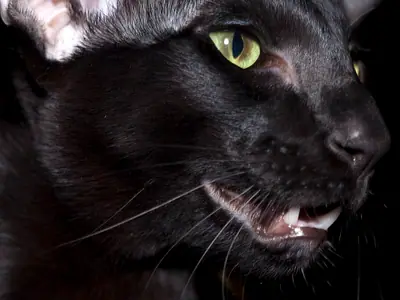
- Coat: short, sleek and "painted-on" [1].
- Colours: over 600 colour, pattern and coat-length combinations [1].
Photo gallery
7 photos · tap to enlarge- (enlarge, photo 1/7)
- (enlarge, photo 2/7)
- (enlarge, photo 3/7)
- (enlarge, photo 4/7)
- (enlarge, photo 5/7)
- (enlarge, photo 6/7)
- (enlarge, photo 7/7)
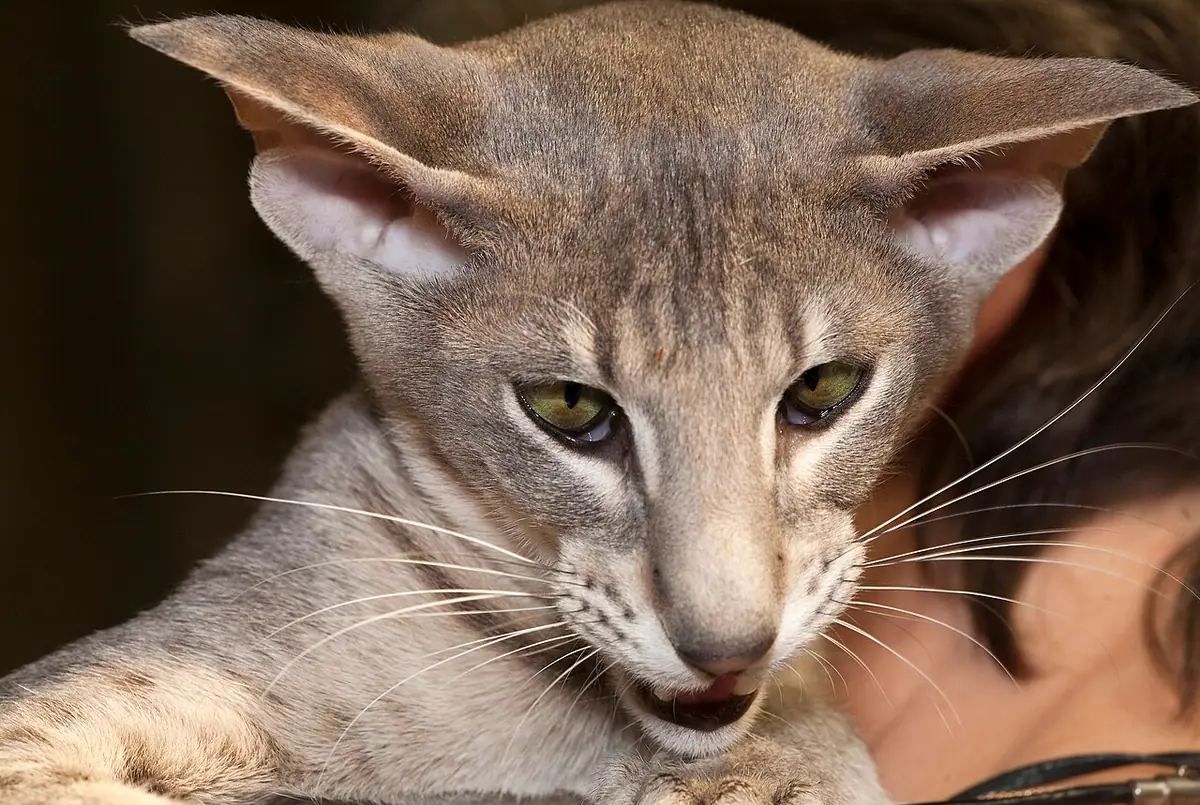
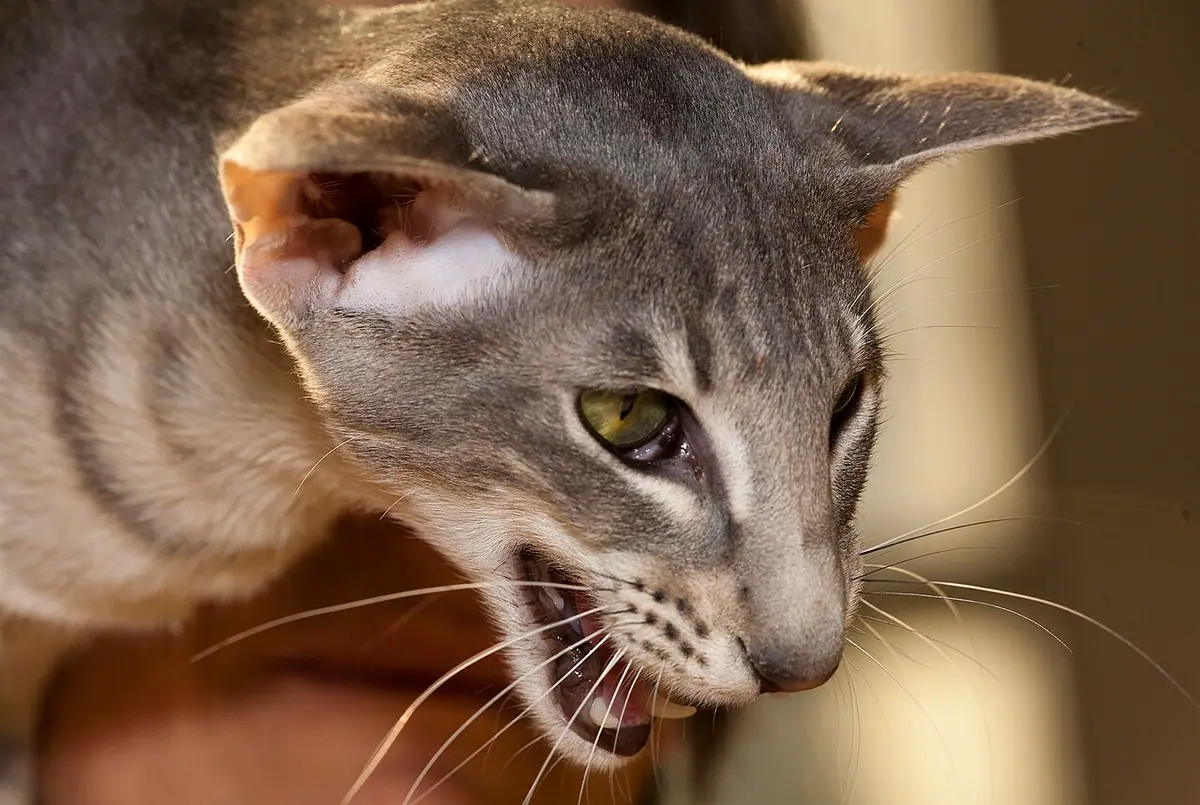
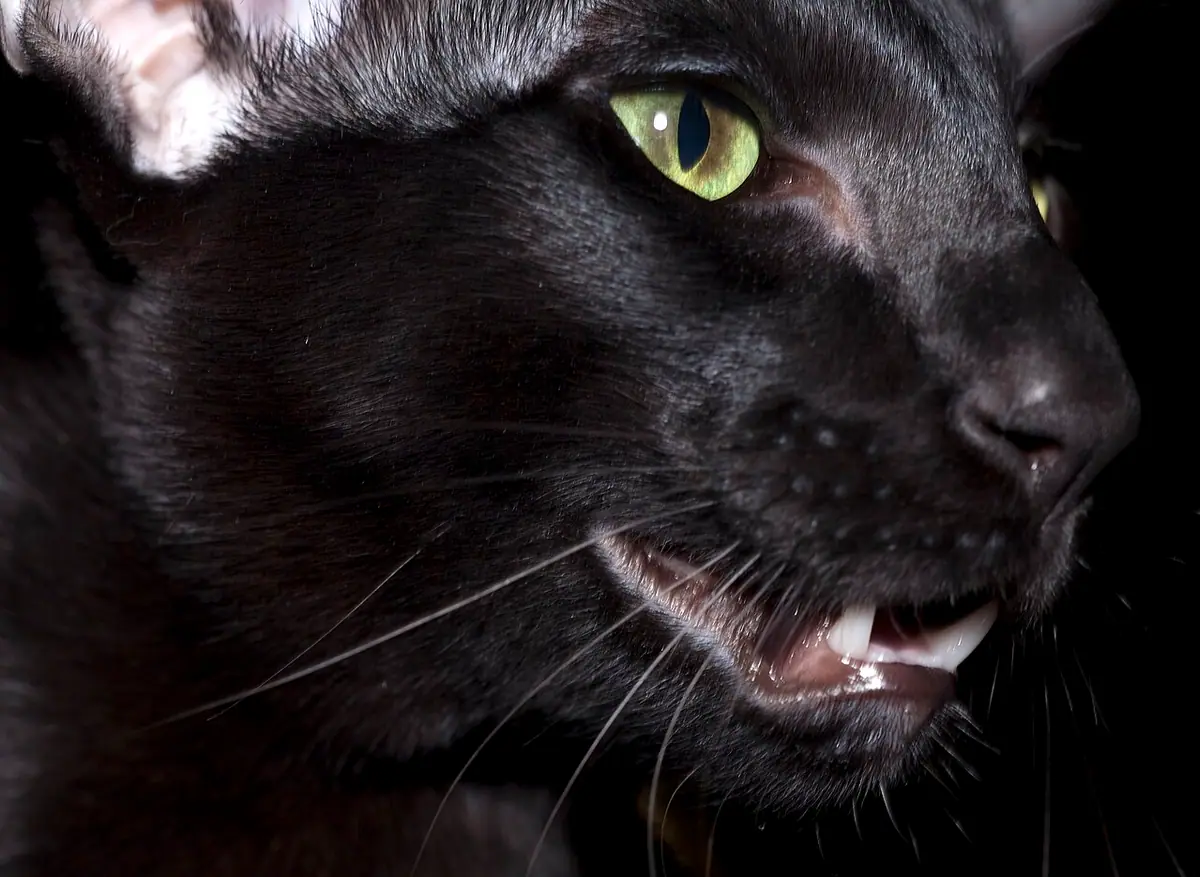
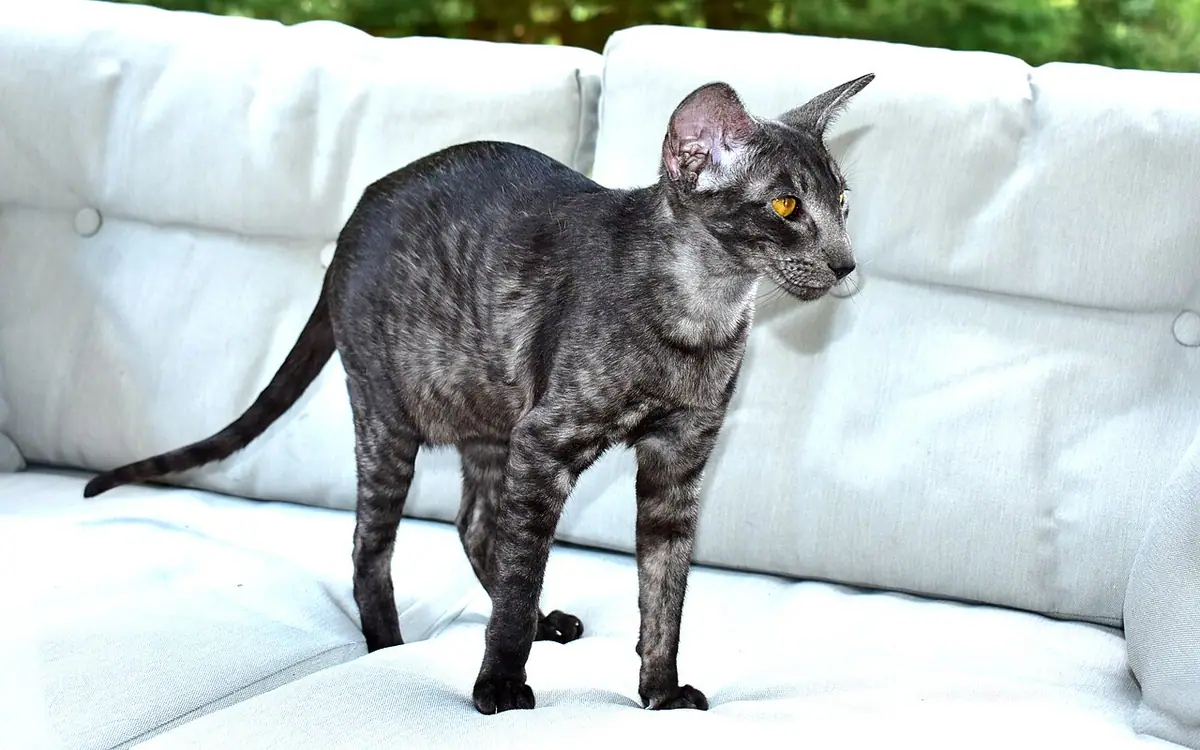
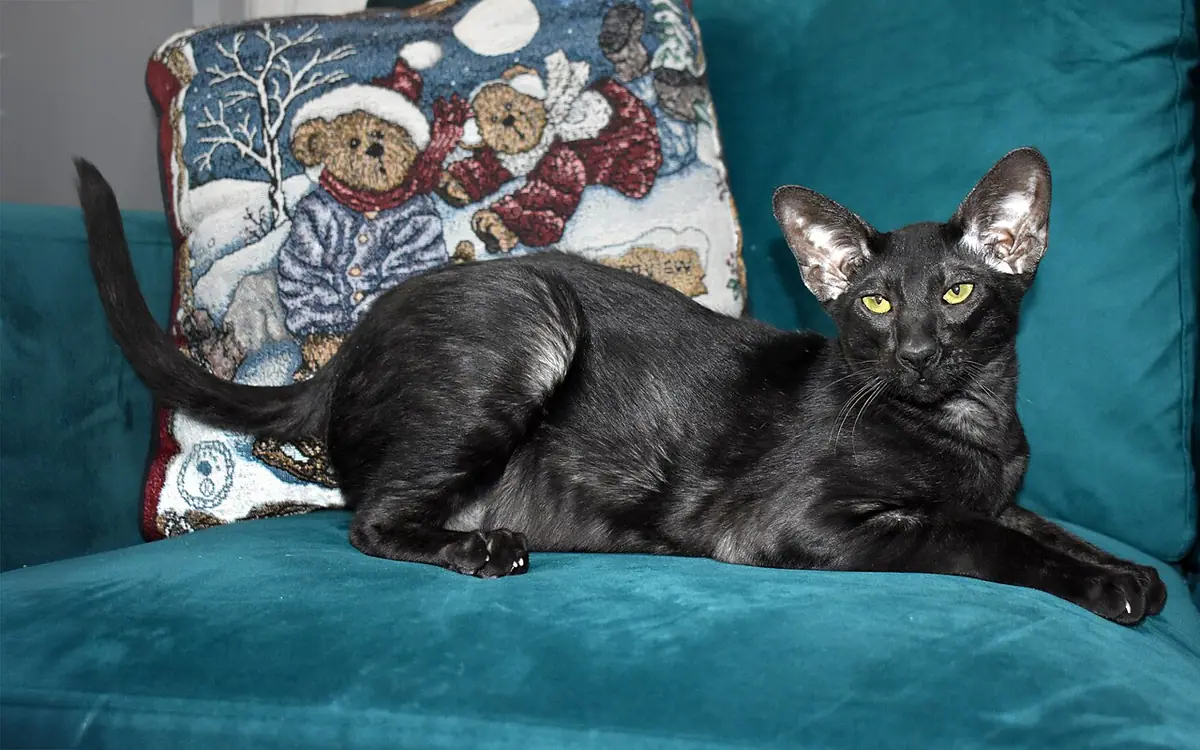
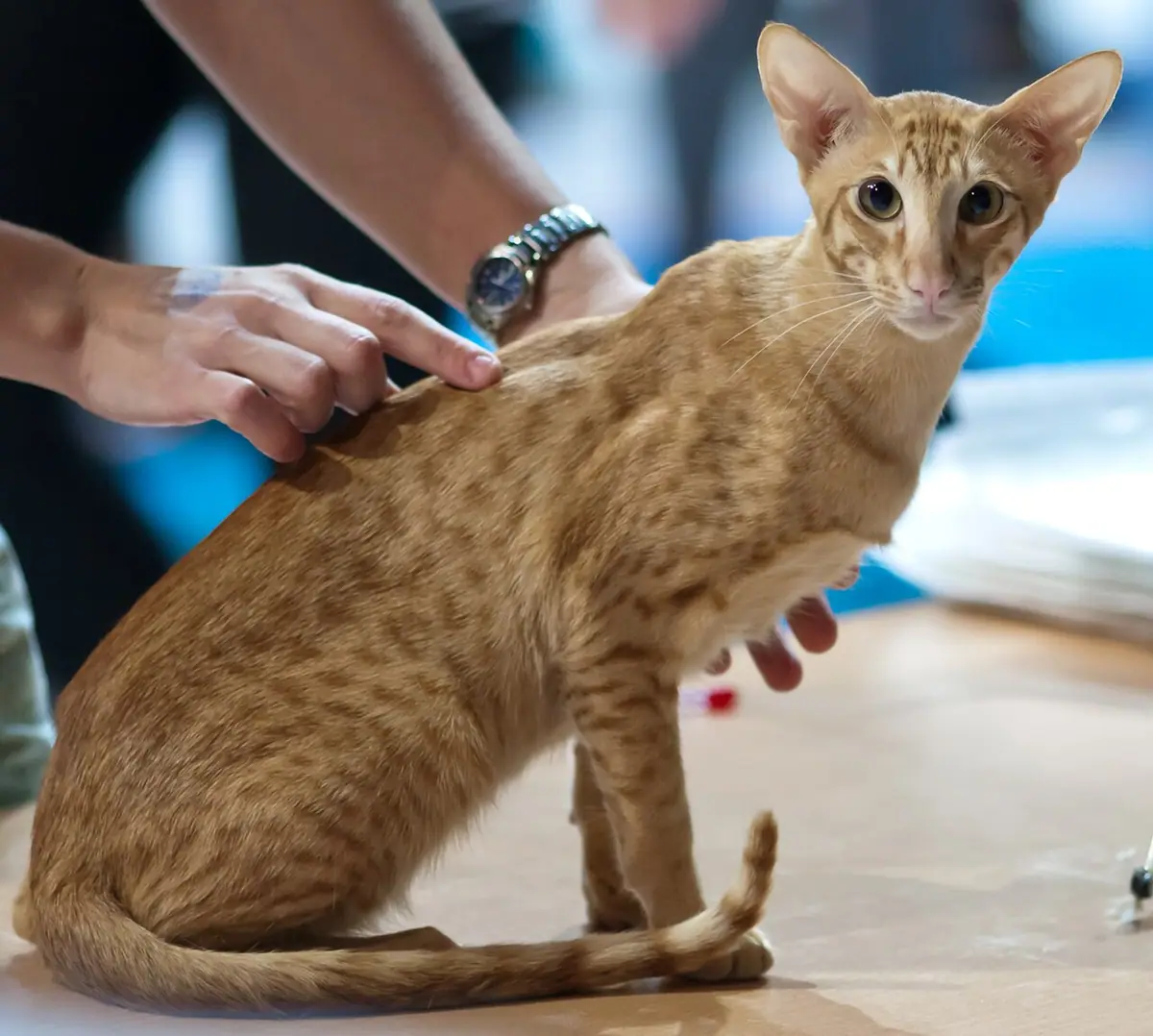

Photos: Wikimedia Commons – author & licence shown when enlarged and on the Photo credits page.
Temperament
Orientals are as intelligent as their Siamese ancestors [1]. They can be fairly vocal and needy, and they're unmistakably people-centred [1]. Everything you do fascinates them: they may inspect your toothbrush, help tie your shoes and choose your breakfast from the fridge [1]. Sit still and they'll settle in your lap, purring and nuzzling your chin [1]. Give them attention and they'll do anything to please you; withdraw it and they may pine [1]. They make wonderful family pets, moving easily from lap to lap [1].
Care
Health
- Progressive retinal atrophy (PRA): can cause blindness; recessive and detectable by genetic testing [1].
- Amyloidosis: affects the liver and other organs; can be genetic or acquired, and research is ongoing. Ask breeders about any history in the kitten's lines [1].
- Lifespan: GCCF estimates 12–15 years [3]. We found no breed-specific longevity study.
Ask breeders about PRA testing and any amyloidosis history, and talk to your vet about any specific concern.
Don't confuse with…
- Siamese: same build, but always pointed with blue eyes [4].
- Cornish Rex: slender and big-eared, but with tight wavy curls [5].
- Havana Brown: mahogany brown, green eyes, head narrowing to a rounded muzzle [6].
Ask your vet. This information is for reference only and does not replace a veterinary diagnosis.
Fun facts
Frequently asked questions
How is an Oriental different from a Siamese?
In build they're alike: svelte, fine-boned, with a long wedge head and big ears [1]. The main difference is colour: the Siamese is always pointed with blue eyes [4], while the Oriental has over 600 colour, pattern and coat-length combinations [1].
Are Orientals vocal?
Yes. CFA says they're fairly vocal and want to share their thoughts on pretty much everything [1].
Is an Oriental OK with busy owners?
Not ideally. Given attention, they'll do anything to please; withdraw it and they may pine. CFA advises making sure you or your family can give enough attention before adopting [1].
Similar breeds


Breed photos: Wikimedia Commons (CC0 / CC BY / CC BY-SA) – authors & licences on the Photo credits page.
References
- CFA, Oriental (breed profile & standard)
- FIFe, Breeds (OSH Oriental Shorthair, OLH Oriental Longhair)
- GCCF, Cat Breeds (Oriental breed card)
- CFA, Siamese (breed profile & standard)
- CFA, Cornish Rex (breed profile & standard)
- CFA, Havana Brown (breed profile)
Accessed: 2026-10-02
Written by Catopidia from the sources above. Photos credit their author and licence under each image and on the Photo credits & licences.