Cat breed · United Kingdom
British Shorthair
Mèo Anh lông ngắn

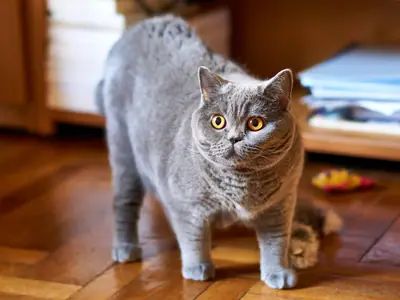
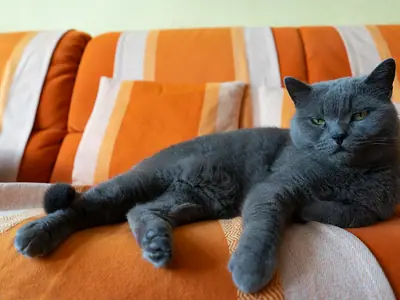
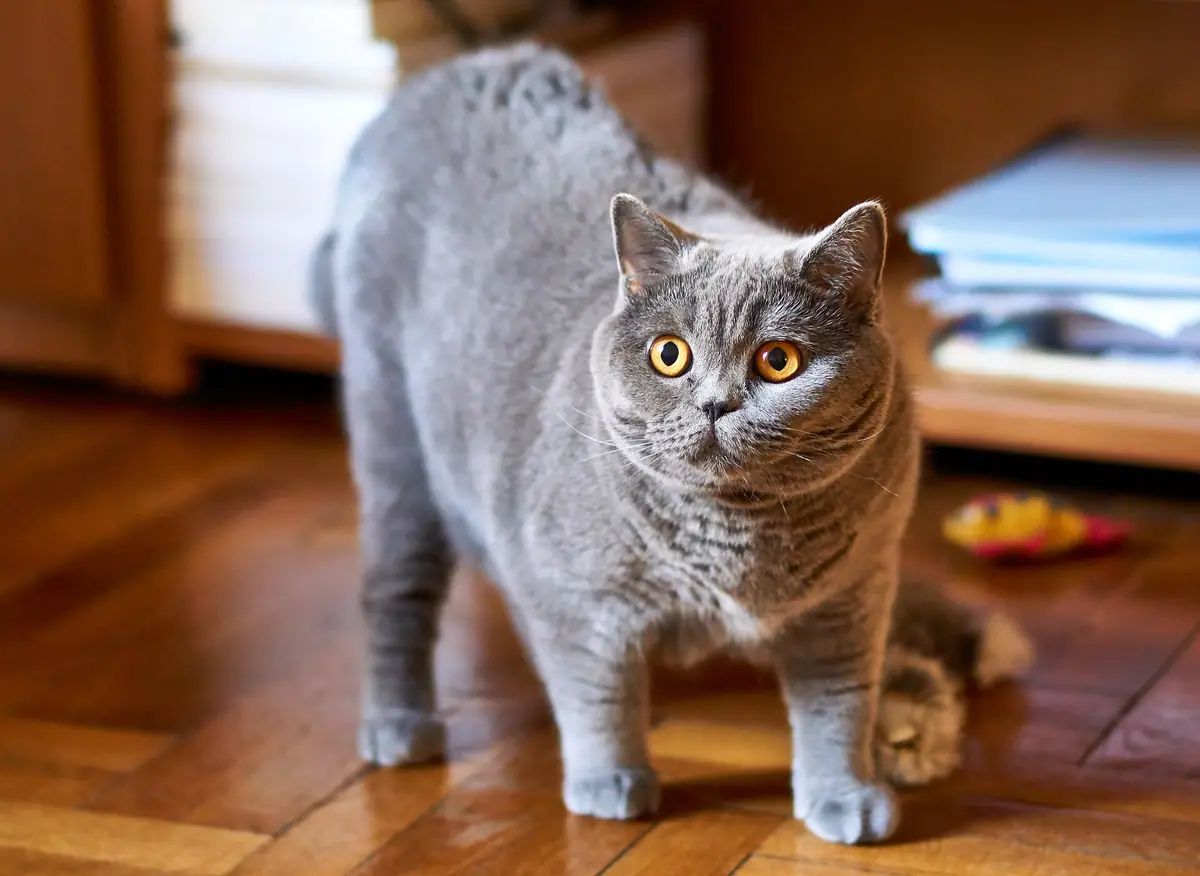
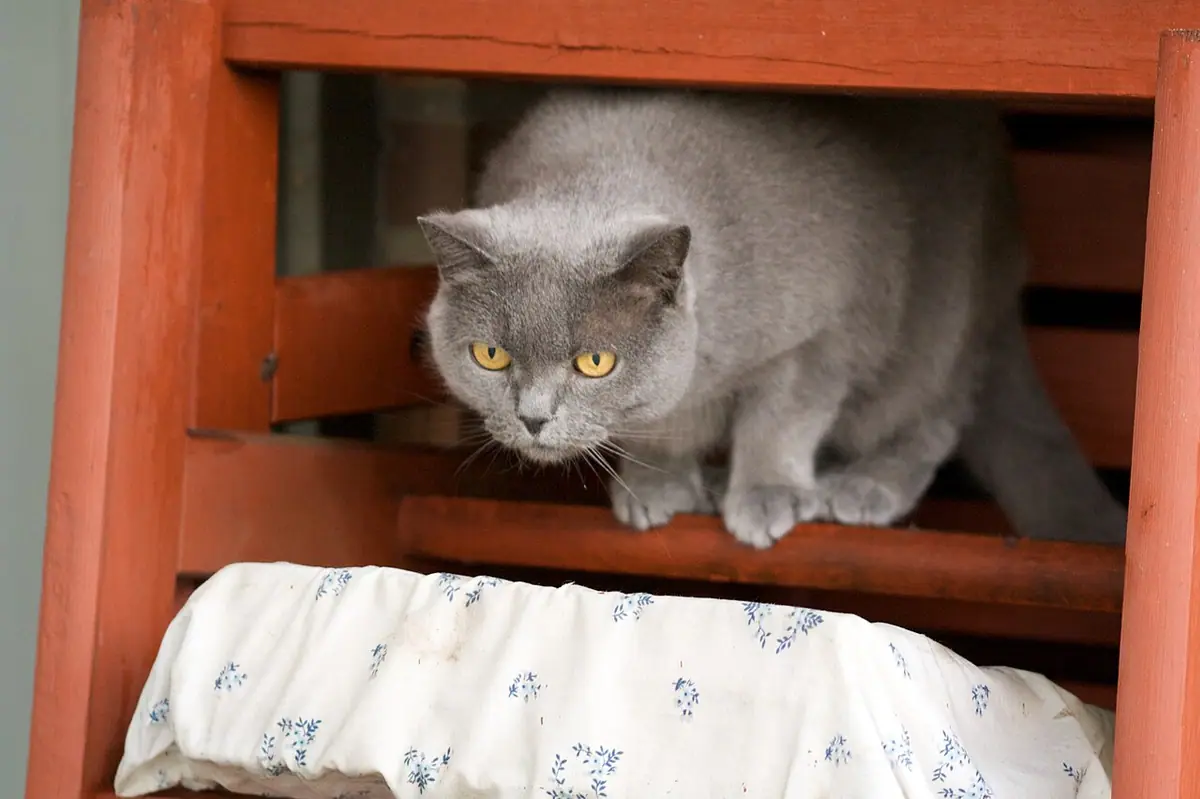
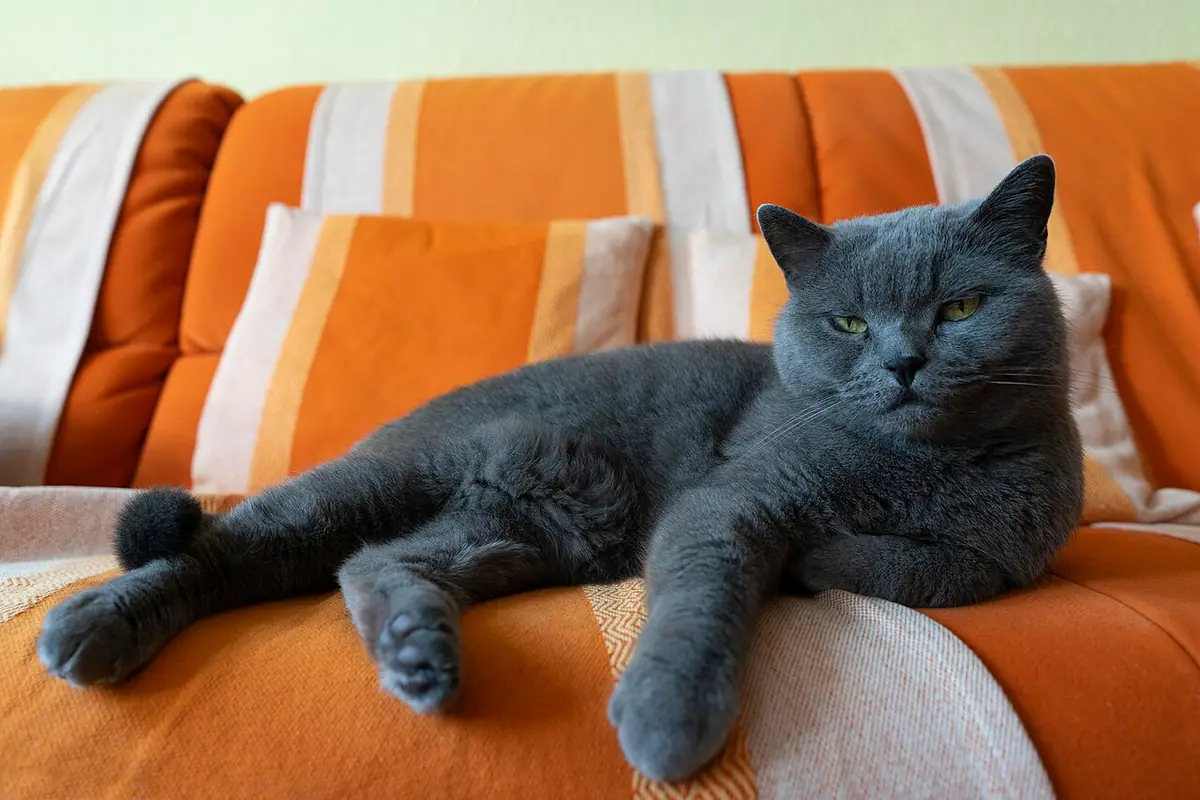
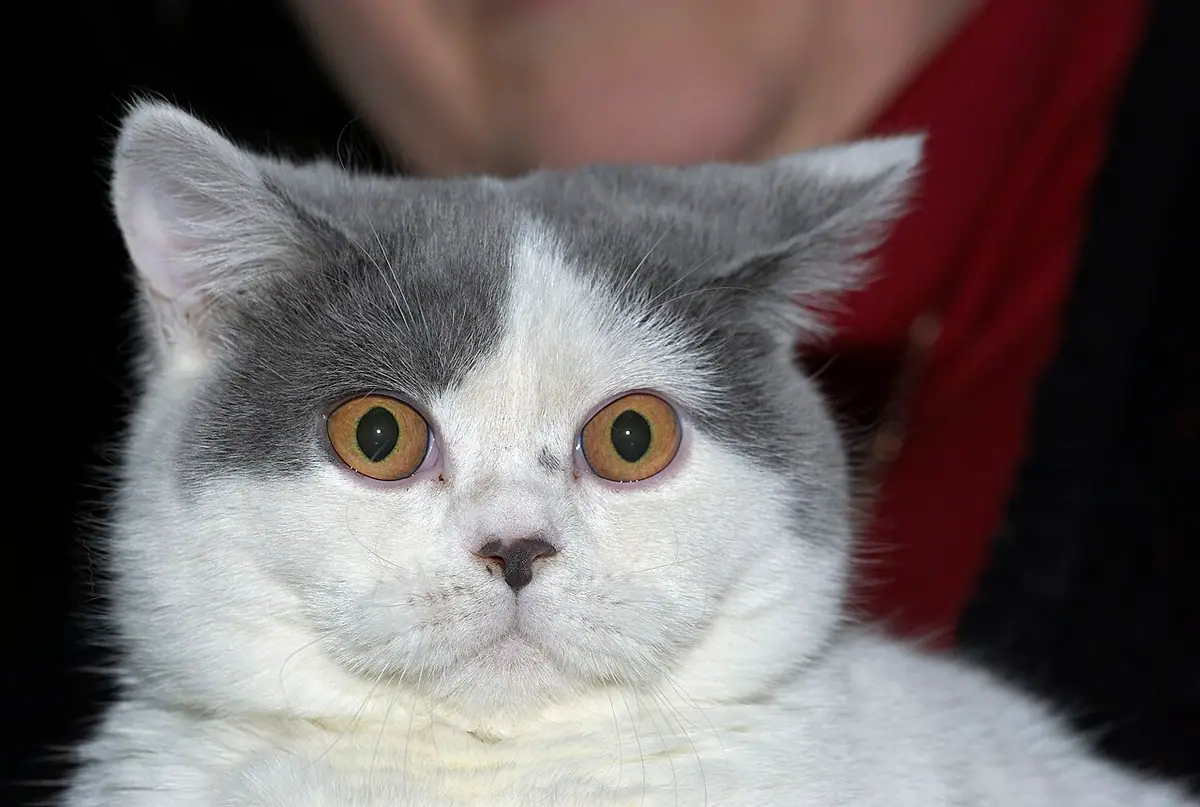
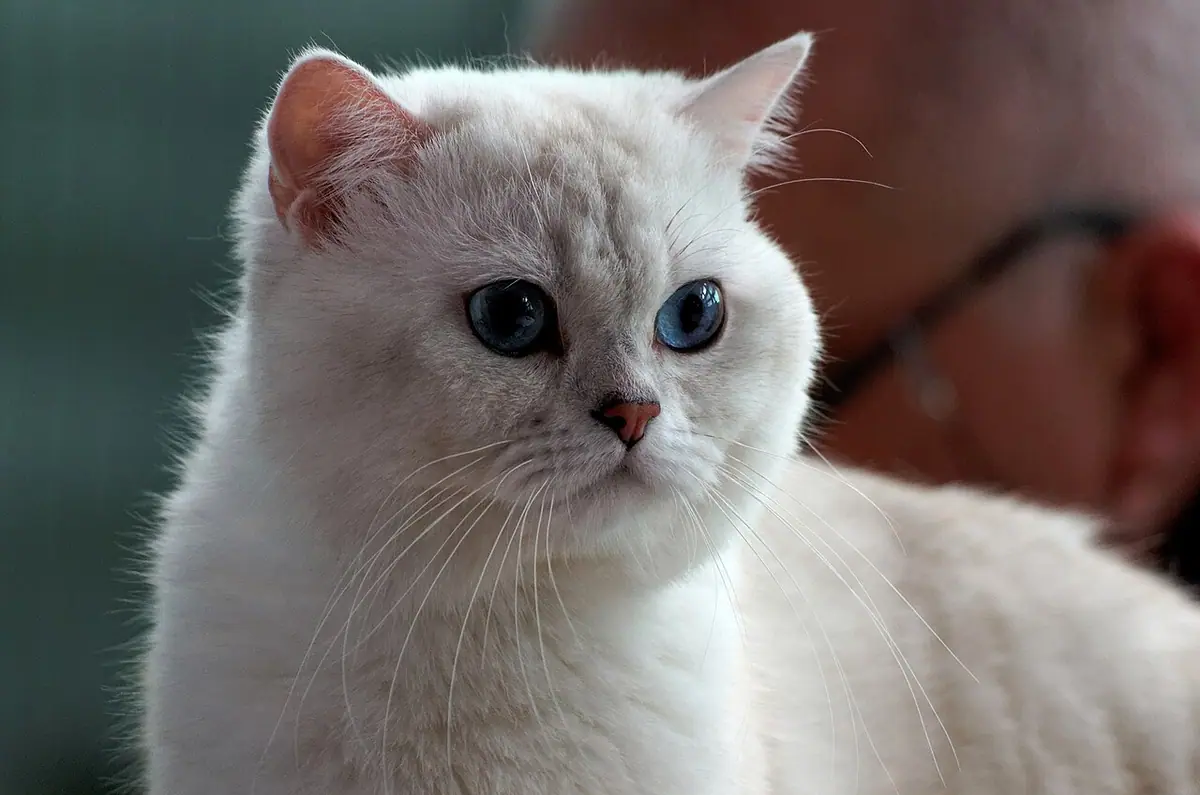
With its round face, chubby cheeks and plush coat, the British Shorthair is often called the teddy bear of the cat world. Blue-grey "British Blue" is the classic look, but the breed comes in a huge range of colours [1]. Brits are calm, quiet companions that would rather sit beside you than be picked up [1]. In 2025 the British Shorthair was the most-registered breed at the UK's GCCF [3]. It's also in CFA's top ten [7] and TICA's top five [2].
Contents (10 sections)
Quick facts
- Origin
- United Kingdom
- Weight
- males up to ~7.7 kg
- Lifespan
- ~11.8 years (median)
- Coat
- short, dense
- Energy
- low
Details & sources
Traits (scale 1–5)
- Energy
- 2/5
- Shedding
- 3/5
- Grooming needs
- 2/5
- Good with kids
- 4/5
- Vocal
- 2/5
- Independence
- 3/5
Basis: Editorial estimate based on the CFA description, not a measurement
Registry recognition
| CFA | Yes |
|---|---|
| TICA | Yes |
| FIFe | Yes |
| GCCF | Yes |
History
CFA calls the British Shorthair the modern embodiment of the cats that came to Britain with the Romans. The breed first drew public attention at the Crystal Palace cat shows in London around the turn of the 20th century [1]. Both World Wars devastated the gene pool, and breeders brought in Persians and ordinary domestic shorthairs to rebuild it. By the 1950s a blue male called Brynbuboo Little Monarch had become the first Grand Champion of any breed at GCCF, and most Brits today trace back to him [1]. The first exports to the US came in the early 1900s, registered at the time as "British Blues" [1].
Appearance
- Body: compact and powerful, with a broad chest and short-to-medium, sturdy legs [1].
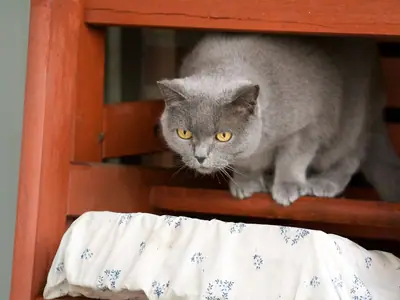
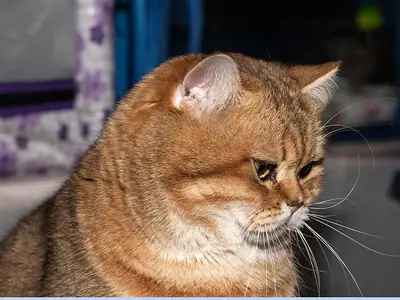
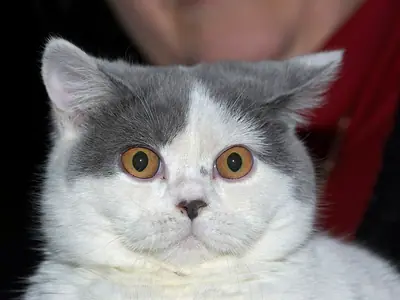
- Head: round and massive, with round cheeks, a medium-broad nose, large round eyes and medium ears set wide apart [1].
- Coat: short, very dense and crisp. Push it the wrong way and it springs back [1].
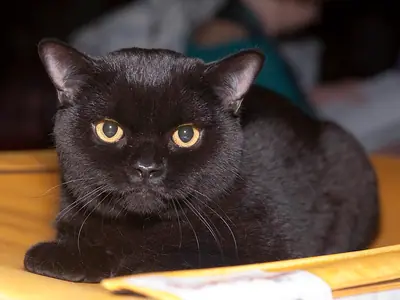
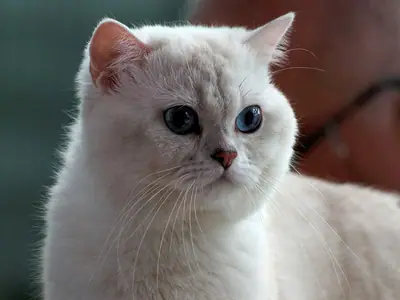
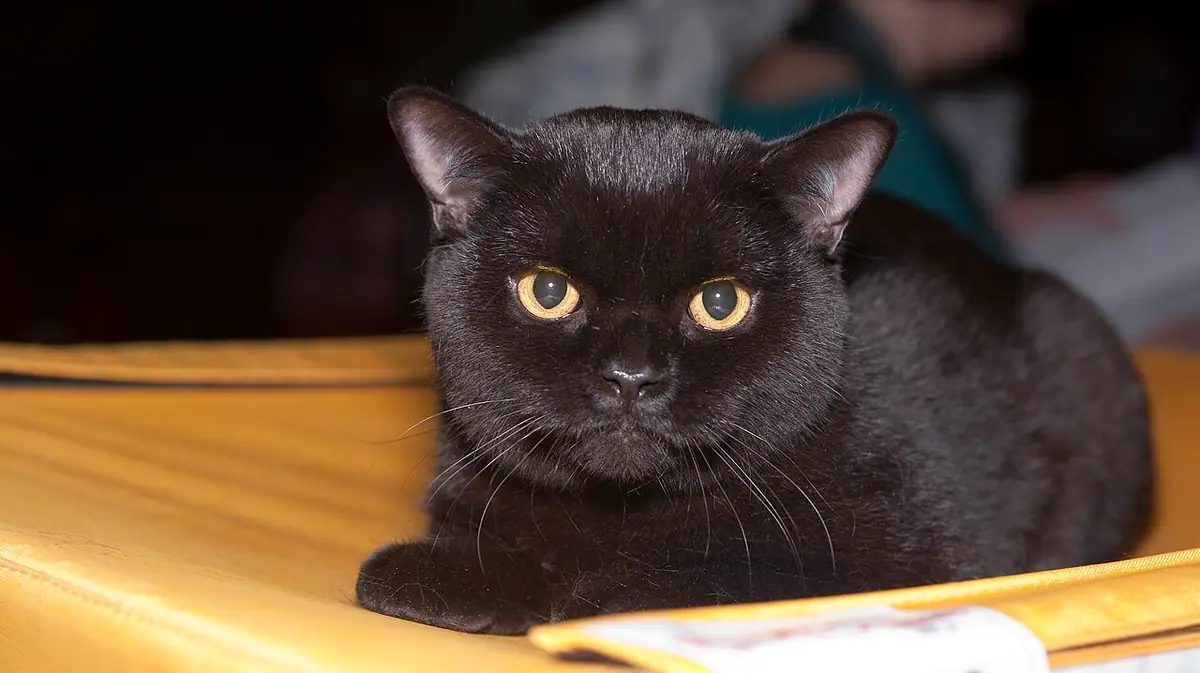
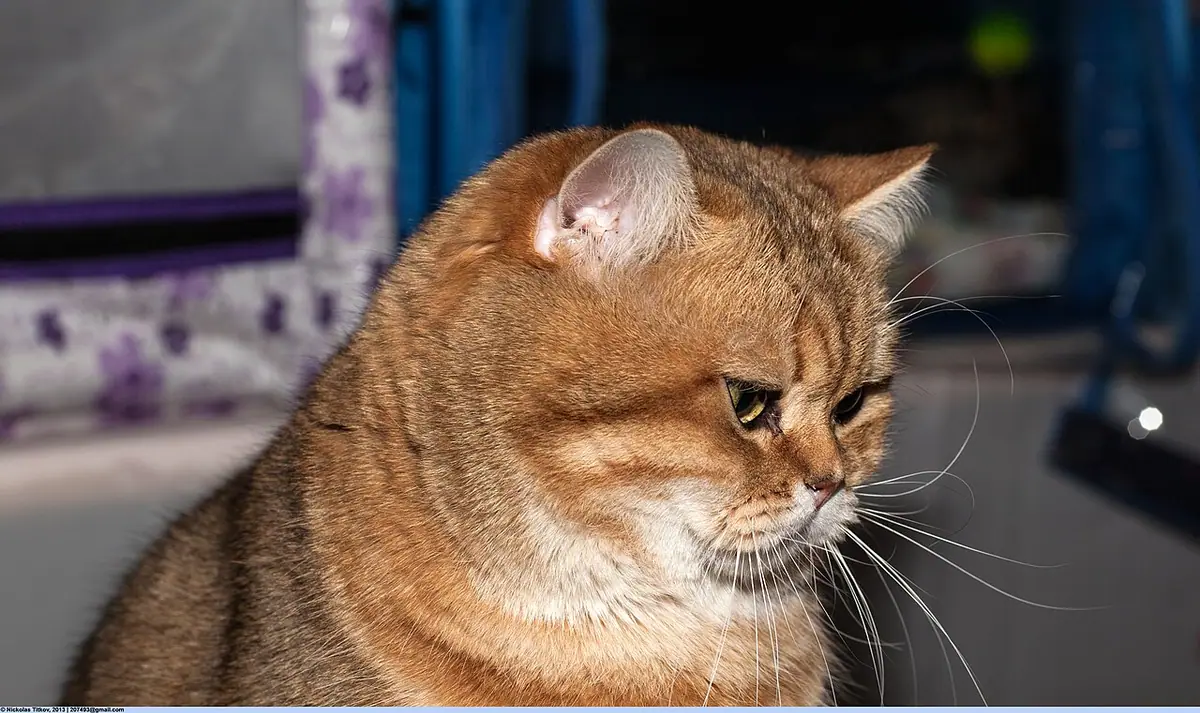
- Colours: blue, black, white, cream, red, chocolate, lilac, several tabby patterns, bicolours, smokes, and silver or golden shaded/chinchilla, among others [1].
- Size: males can reach about 17 lb (7.7 kg), and females are smaller. Brits mature slowly and reach full size at around three years [1].
Photo gallery
7 photos · tap to enlarge- (enlarge, photo 1/7)
- (enlarge, photo 2/7)
- (enlarge, photo 3/7)
- (enlarge, photo 4/7)
- (enlarge, photo 5/7)
- (enlarge, photo 6/7)
- (enlarge, photo 7/7)
.jpg)
Photos: Wikimedia Commons – author & licence shown when enlarged and on the Photo credits page.
Temperament
Brits share their attention around the whole household rather than picking one favourite person. They like to supervise from close by, follow you from room to room, and wait to be invited onto the sofa [1]. They're confident, usually settle in with dogs and other pets, and are patient with children. They may retreat when things get loud, though, and most don't enjoy being carried around [1]. They're quiet cats that only occasionally comment on your day [1].
Care
- A quick weekly brush or comb keeps shedding under control [1].
- Trim nails regularly and clean ears now and then [1].
- Brits like to keep all four feet on the floor [1], so floor-level play suits them better than towering cat trees.
- Keep your cat at a healthy weight. Across all cats, a non-ideal body weight is linked to shorter lives [6].
Health
- Hypertrophic cardiomyopathy (HCM) has been documented as familial in the breed. A Danish study that screened 329 Brits by echocardiography found 8.5% HCM-positive, with males affected far more often than females. The authors recommend screening, especially for breeding cats [5].
- Polycystic kidney disease (PKD): GCCF requires a negative PKD test before a British Shorthair can be placed on its breeding register [3b].
- Blood type: many lines carry type B, so know your cat's blood type in case it ever needs a transfusion [1].
- Lifespan: an English study recorded a median age at death of 11.8 years (69 cats), with wide variation [4].
Ask breeders for the parents' health-screening results, and talk to your vet about any specific concern.
Don't confuse with…
- British Longhair: the same build with a long coat, registered separately by GCCF [3].
- Scottish Fold: its ears fold forward. A Brit's ears are upright, medium-sized and set wide apart [1].
Ask your vet. This information is for reference only and does not replace a veterinary diagnosis.
Fun facts
Frequently asked questions
Is a British Shorthair easy to look after?
Fairly easy. The short coat needs a quick weekly brush plus occasional nail trims and ear cleaning. They're calm, usually accept dogs and other pets, and are patient with children, though they don't like being carried around [1].
Do British Shorthairs shed a lot?
Yes, some. The coat is extremely dense, but because it's short and springy, a weekly brush usually keeps loose fur under control [1].
How long do British Shorthairs live?
A study of cats seen at English vet practices recorded a median age at death of 11.8 years (69 cats), with very wide variation [4]. Across all cats, neutering and a healthy body weight are linked to longer lives [6].
How big do British Shorthairs get?
CFA says males can reach about 17 lb (7.7 kg), with females smaller. They grow slowly and reach full size at around three years [1].
Are British Shorthairs prone to heart disease?
HCM has been documented in the breed, and researchers recommend echocardiographic screening, especially for breeding cats [5]. Ask the breeder about screening results and talk to your vet.
Similar breeds


Breed photos: Wikimedia Commons (CC0 / CC BY / CC BY-SA) – authors & licences on the Photo credits page.
References
- CFA, British Shorthair (breed profile & standard)
- TICA, Top Five Most Registered Cat Breeds
- GCCF, Registered Cats By Breed 2024–2025 (PDF; read via search-index copy, direct download hit a captcha, re-verify)
- GCCF, Registration Policy for British Shorthair Cats (effective 19/11/2025; read via search-index copy, re-verify)
- O'Neill DG et al. (2015). Longevity and mortality of cats attending primary care veterinary practices in England. J Feline Med Surg
- Granström S et al. (2011). Prevalence of Hypertrophic Cardiomyopathy in a Cohort of British Shorthair Cats in Denmark. J Vet Intern Med 25(4):866–871
- Teng KT et al. (2024). Life tables of annual life expectancy and risk factors for mortality in cats in the UK. J Feline Med Surg
- CFA, Most Popular Breeds for 2026 (British Shorthair #7, based on 2025 registrations)
Accessed: 2026-10-02
Written by Catopidia from the sources above. Photos credit their author and licence under each image and on the Photo credits & licences.