Cat breed · Canada
Sphynx
Mèo Sphynx (mèo không lông)

The Sphynx is instantly recognisable: nearly bare skin, enormous ears, lemon-shaped eyes and a wrinkled brow [1]. It isn't truly hairless, though. Most have a very fine down that feels like warm suede [1][2]. Sphynx are intensely affectionate, chatty and hate being alone [1]. Despite the Egyptian-sounding name, the breed began in Canada [1]. It is recognised by CFA [1], TICA [2] and FIFe [5]. Please read the health and welfare note below.
Contents (10 sections)
Quick facts
- Origin
- Canada (Toronto, Ontario, 1966)
- Weight
- ~2.7–5.4 kg
- Lifespan
- ~6.7 years
- Coat
- near-hairless
- Energy
- high
Details & sources
Traits (scale 1–5)
- Energy
- 4/5
- Shedding
- 1/5
- Grooming needs
- 3/5
- Good with kids
- 4/5
- Vocal
- 4/5
- Independence
- 1/5
Basis: Editorial estimate based on CFA and TICA descriptions, not a measurement
Registry recognition
| CFA | Yes |
|---|---|
| TICA | Yes |
| FIFe | Yes |
| GCCF | — |
GCCF: pending verification.
History
Today's Sphynx descend from a spontaneous mutation in 1966, when a domestic cat in Toronto, Canada, gave birth to a hairless kitten [1]. TICA records the kitten's name as Prune, for its wrinkled skin [2]. Hairlessness is recessive, so over some 30 years breeders crossed hairless cats with coated ones and back again to build a diverse gene pool [1]. In 1975 two cats with the same mutation turned up in Minnesota and were named Epidermis and Dermis. They were bred with American Shorthairs and Devon Rex and folded into the Sphynx population [1]. Later genetic work placed the Sphynx hairless variant on the KRT71 gene, the same gene behind the Devon Rex's curly coat [3]. CFA accepted the breed for registration in 1998 and championship in 2002 [1].
Appearance
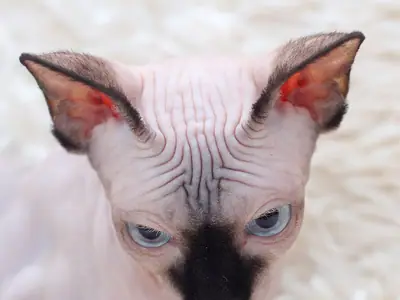
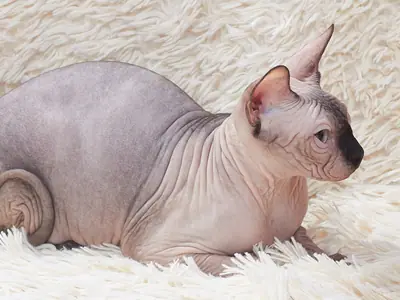
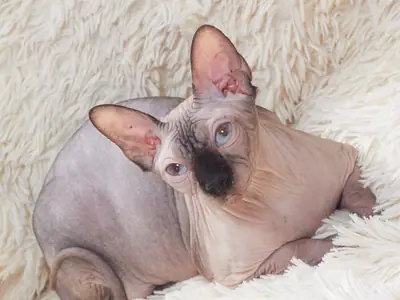
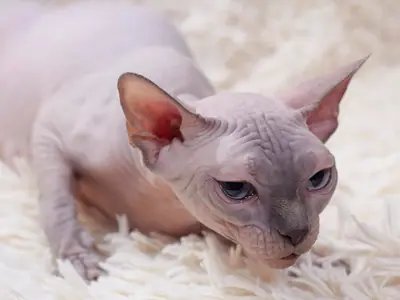
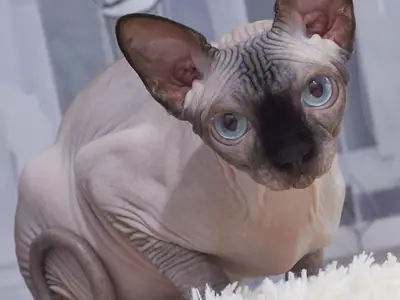
- Body: medium-sized and sturdy, with good muscle and a round belly that looks like it just finished dinner [1].
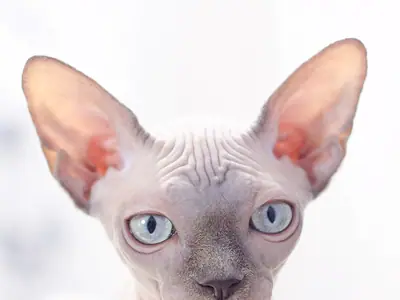
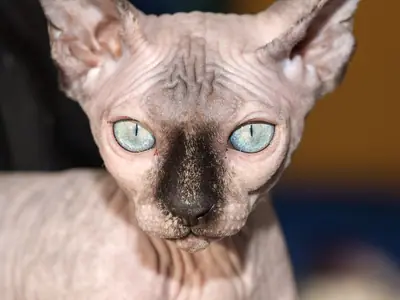
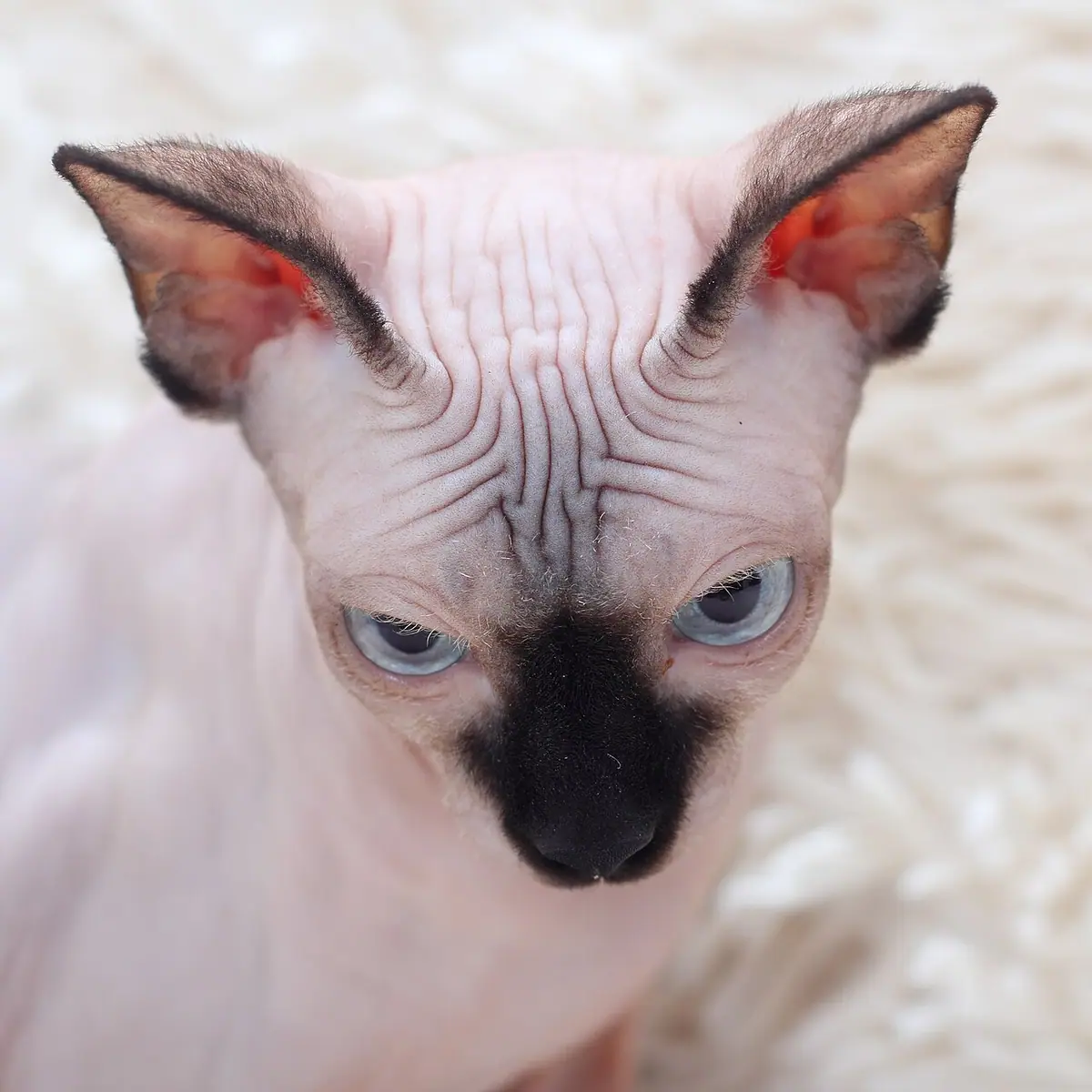
- Head: a modified wedge with prominent cheekbones, and wrinkles that give a worried or inquisitive look [1].
- Ears and eyes: large, bat-like ears and lemon-shaped eyes [1].
- Skin and hair: looks hairless but usually has fine down, with short hair on the nose, ears and tail. The degree of hairlessness varies between cats and can change with season and hormones [1].
- Feet: thick paw pads and long, finger-like toes [1].
- Colours: colour and pattern show in the skin pigment. TICA accepts all four of its categories: traditional, pointed, mink and sepia [2].
- Weight: about 6–12 lb per TICA [2].
Photo gallery
7 photos · tap to enlarge- (enlarge, photo 1/7)
- (enlarge, photo 2/7)
- (enlarge, photo 3/7)
- (enlarge, photo 4/7)
- (enlarge, photo 5/7)
- (enlarge, photo 6/7)
- (enlarge, photo 7/7)
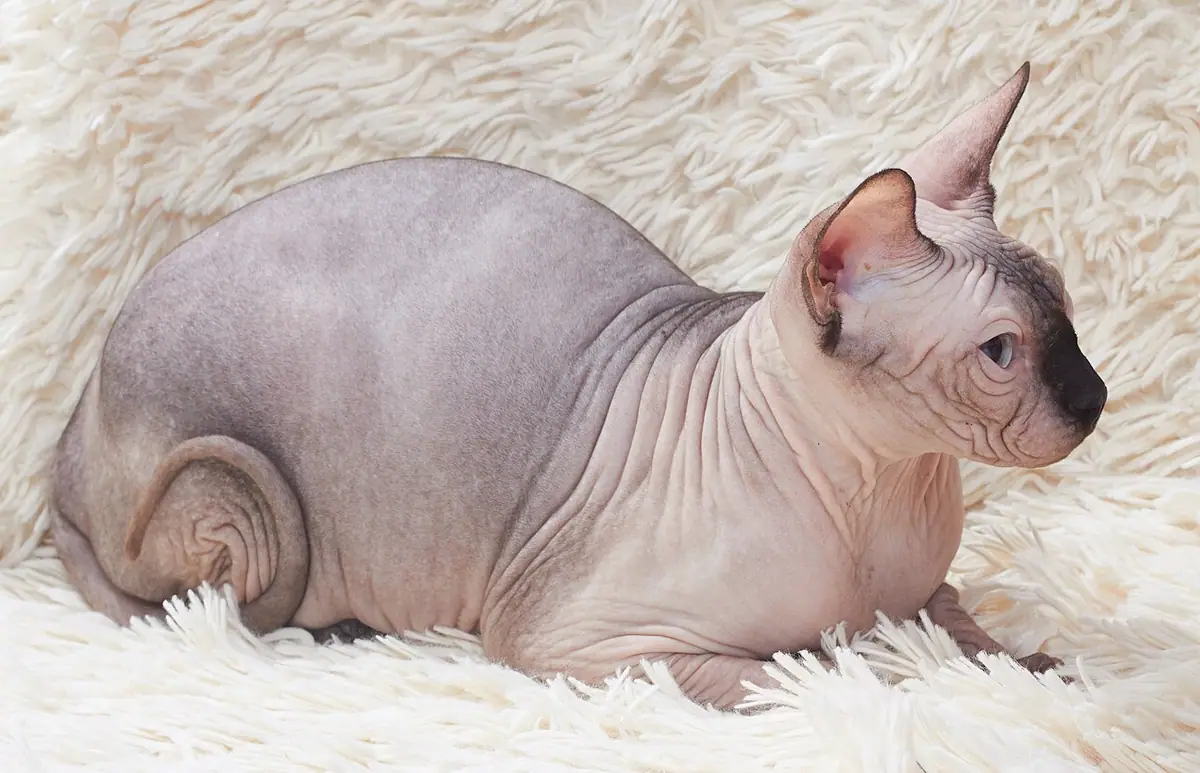
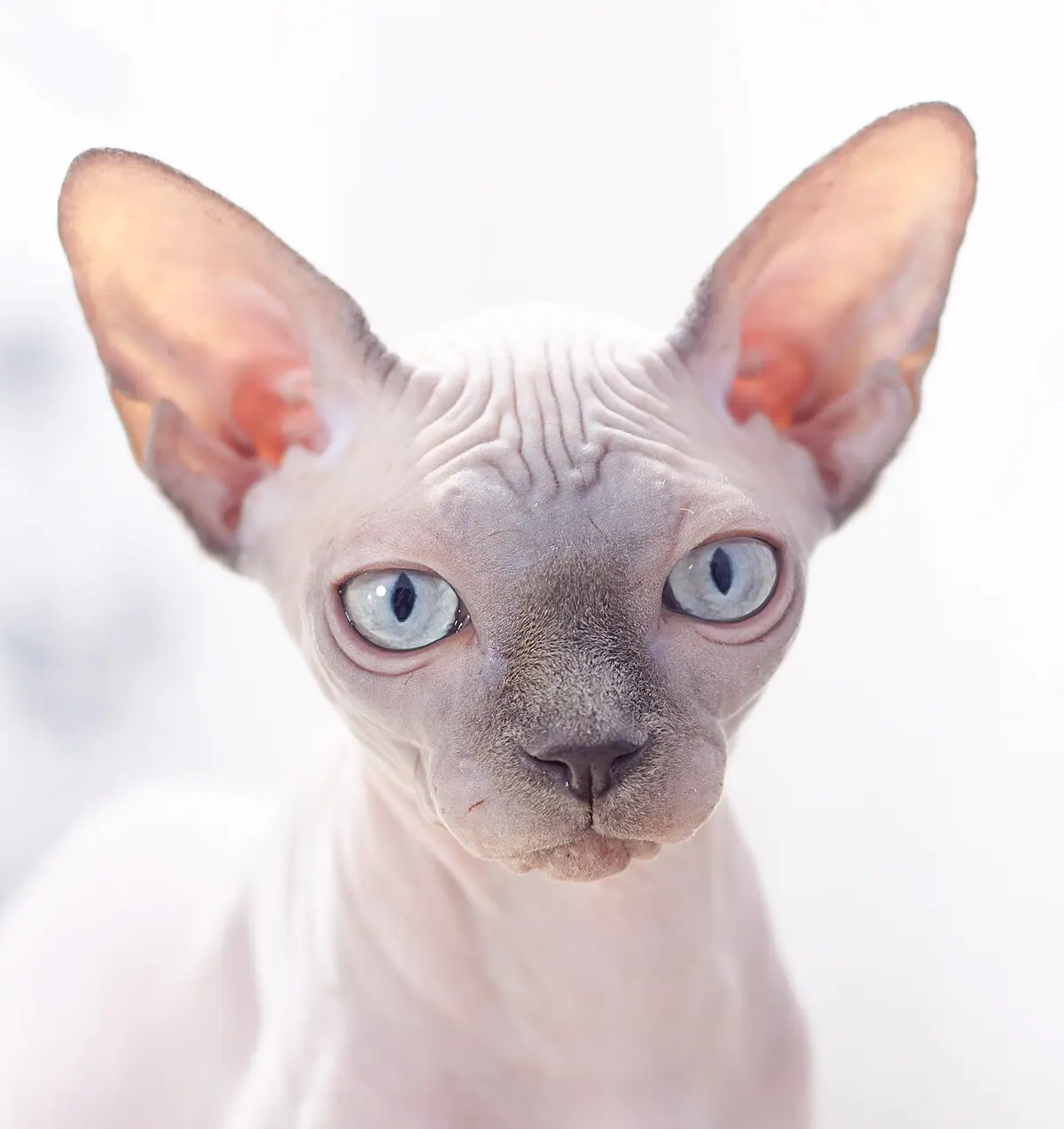
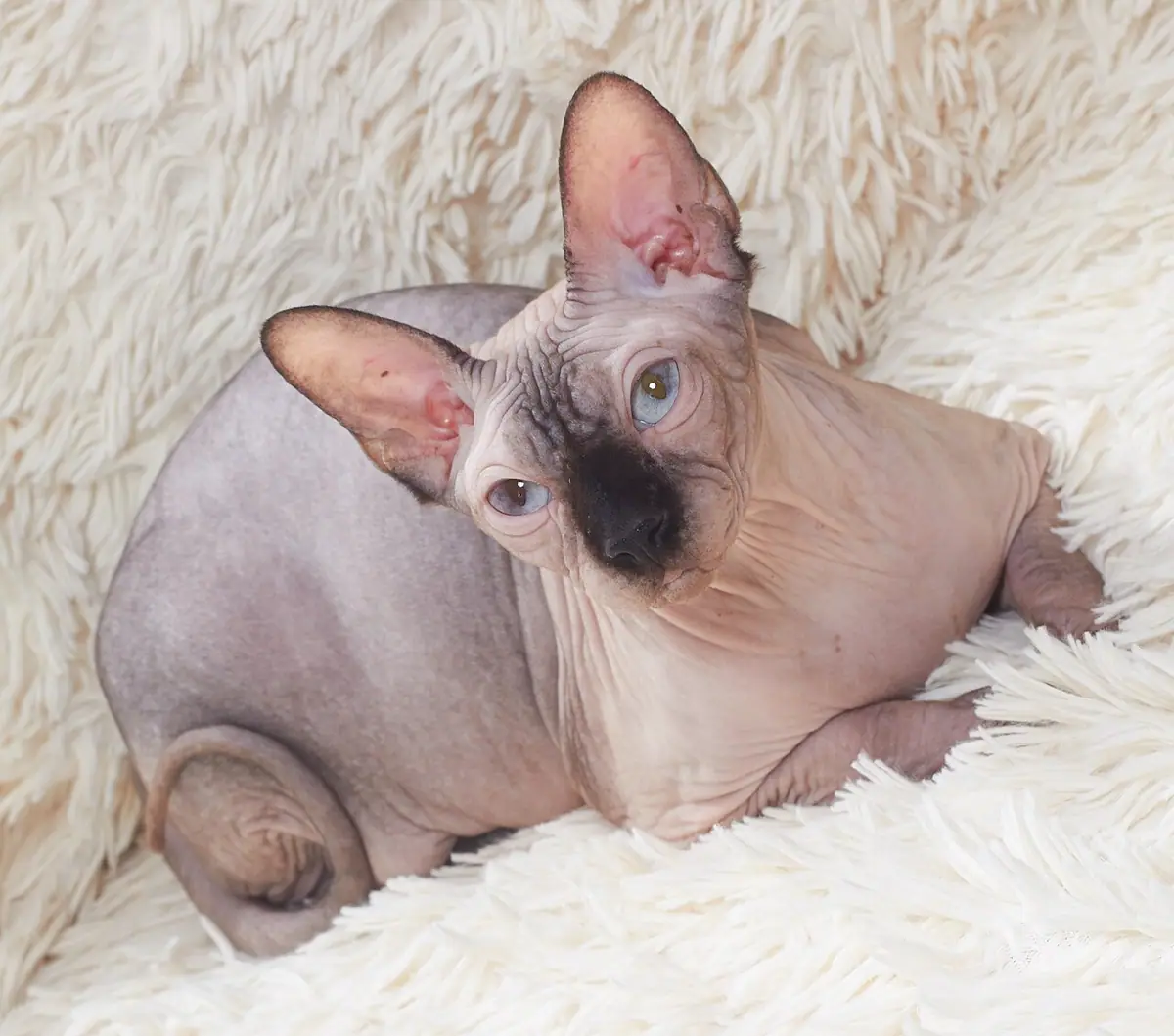
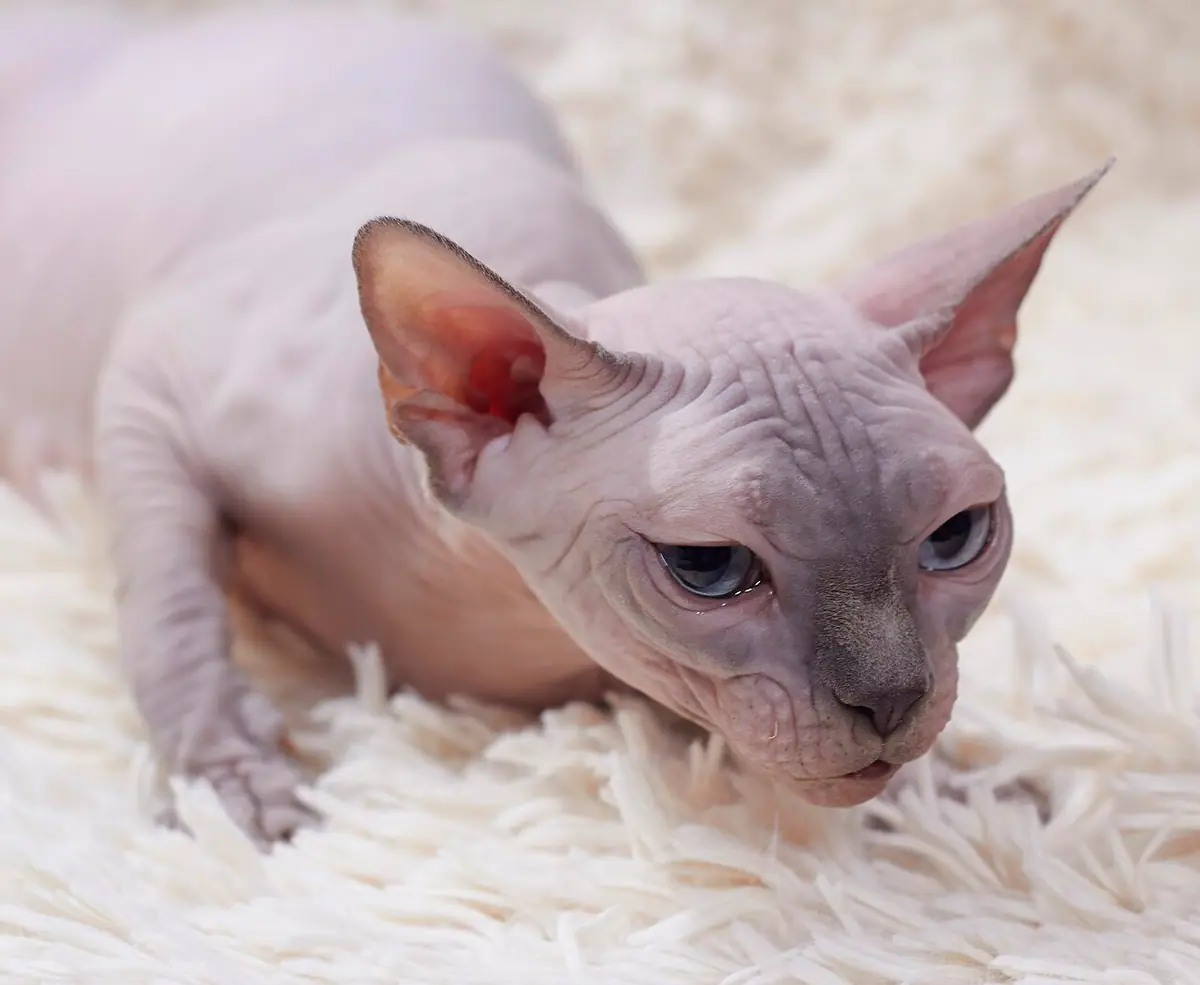
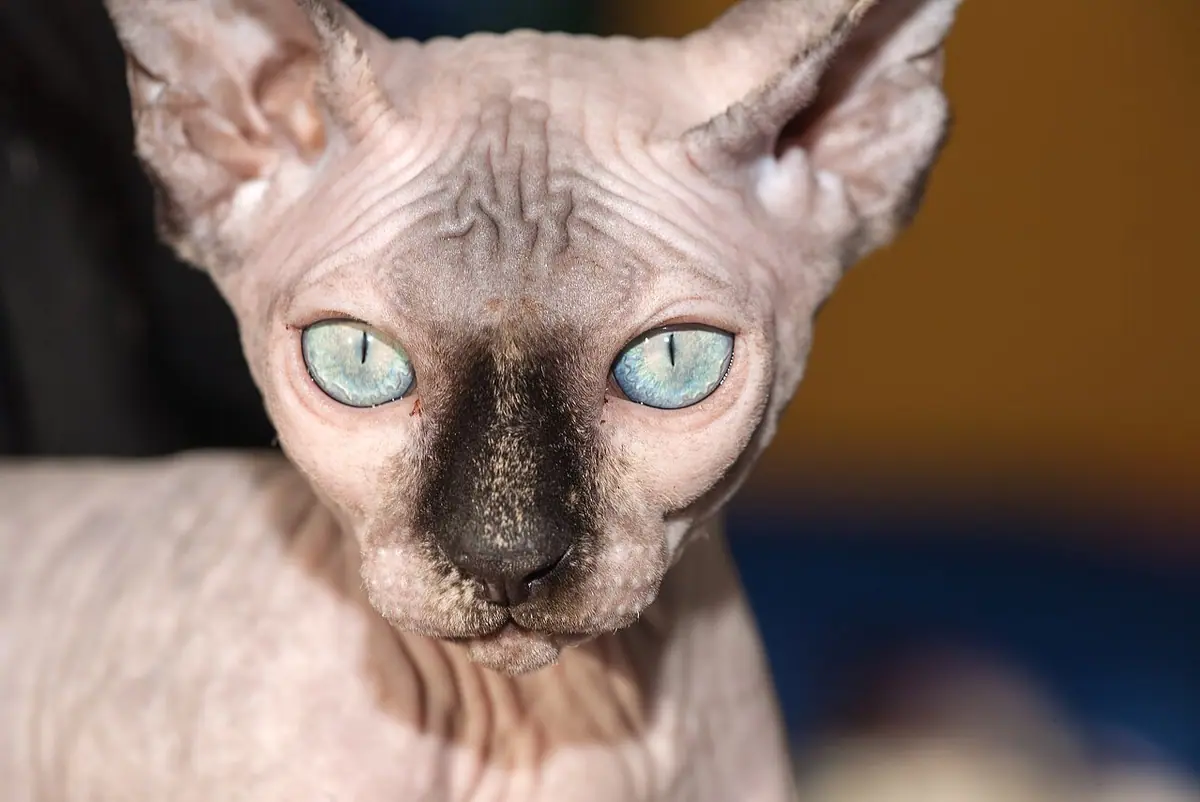
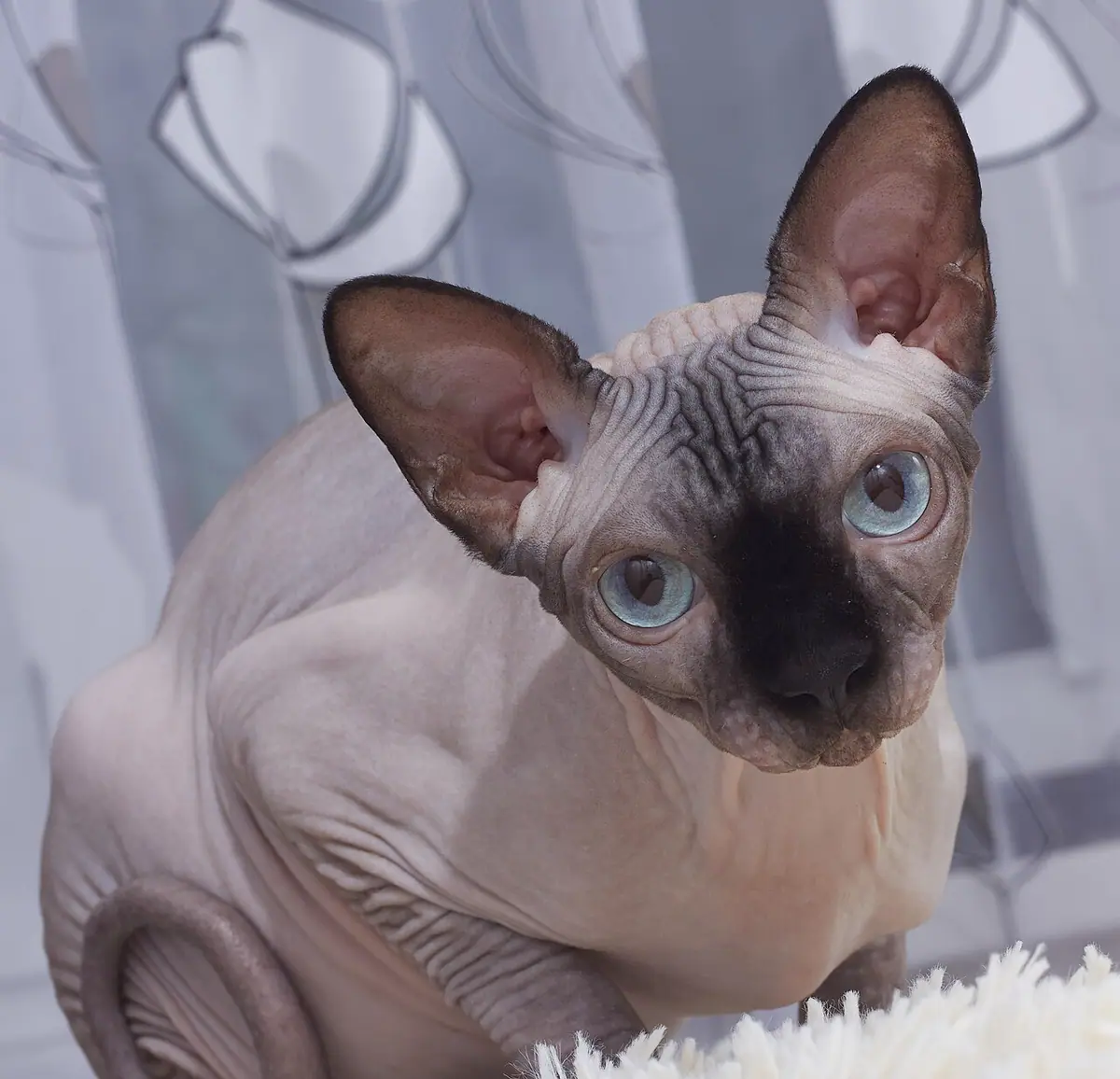
Photos: Wikimedia Commons – author & licence shown when enlarged and on the Photo credits page.
Temperament
Sphynx are curious, outgoing, very intelligent and anything but shy [1]. They make their needs, usually attention or food, very clear, chattering as they follow you from room to room [1]. They're heat-seekers that will spend hours pressed against you, and many sleep under the covers with their owners [1][2]. Children love them, but kids should be old enough to understand that the skin is delicate and not made for rough play [1]. They thrive with other cats, especially other Sphynx, and don't do well alone for long; a pair is worth considering [1].
Care
- Bathing: the skin is oily and needs regular baths [1]. TICA warns that over-bathing can make the skin produce more oil, and that a gentle shampoo every few months is often enough [2]. Ask your breeder or vet what suits your cat.
- Ears, nails, eyes, teeth: hairless ears collect wax, so clean them gently every week. Trim nails weekly, and keep up with eye and dental care [2].
- Warmth and sun: the skin sunburns easily and these cats feel the cold [2].
- Food: a fast metabolism means a bigger appetite than the average coated cat, but keep an eye on weight [2].
- Allergies: not a low-allergen cat, even though some allergic people tolerate them [1][2].
Health
- Hypertrophic cardiomyopathy (HCM): listed by both CFA and TICA. TICA recommends echocardiogram screening by a veterinary cardiologist for breeding cats and pets alike [1][2].
- Other issues CFA lists for the breed: respiratory problems in kittens due to lack of hair, hereditary myopathy, sensitive digestion, urticaria pigmentosa (a skin condition) and periodontal disease [1].
- Lifespan: UK life tables estimate Sphynx life expectancy at birth at about 6.7 years, the lowest of 12 breeds analysed, with a wide confidence interval (4.5–8.8 years) [4]. TICA estimates 7–15 years [2].
Ask breeders for the parents' heart-screening results, and talk to your vet about any specific concern.
Don't confuse with…
Ask your vet. This information is for reference only and does not replace a veterinary diagnosis.
Fun facts
Frequently asked questions
Are Sphynx cats hypoallergenic?
No. CFA says some allergic people tolerate them and bathing reduces allergens on the skin, but that doesn't make them a low-allergen cat [1]. TICA adds that reactions vary person to person, so spend time with one before deciding [2].
Do Sphynx cats need baths?
Yes. Their skin is very oily and needs regular bathing [1]. TICA cautions that over-bathing can make the skin produce more oil, and that a gentle shampoo every few months is often enough [2]. Ask your breeder or vet about the right routine for your cat. Weekly ear cleaning, nail trims and dental care matter too [2].
How long do Sphynx cats live?
UK life tables put Sphynx life expectancy at birth at about 6.7 years, the lowest of 12 breeds analysed, though with a wide confidence interval (4.5–8.8 years) [4]. TICA estimates 7–15 years [2]. These are population averages, not a prediction for any one cat.
Is the Sphynx an Egyptian cat?
No. The name nods to the Egyptian Sphinx, but the breed comes from a natural mutation in Canada in 1966 [1][2]. The breed actually linked to Egypt is the Egyptian Mau, a spotted, coated cat [6].
Can a Sphynx be left alone?
Not for long. CFA says they thrive with other cats, especially other Sphynx, and don't do well left alone; consider a pair [1].
Similar breeds


Breed photos: Wikimedia Commons (CC0 / CC BY / CC BY-SA) – authors & licences on the Photo credits page.
References
- CFA, Sphynx (breed profile & standard)
- TICA, Sphynx (breed profile)
- Gandolfi B et al. (2010). The naked truth: Sphynx and Devon Rex cat breed mutations in KRT71. Mamm Genome 21:509–515
- Teng KT, Brodbelt DC, Church DB, O'Neill DG (2024). Life tables of annual life expectancy and risk factors for mortality in cats in the UK. J Feline Med Surg 26(5)
- FIFe, Breeds (SPH Sphynx; also DSP Don Sphynx, PEB Peterbald)
- CFA, Egyptian Mau (breed profile & standard)
- International Cat Care, Sphynx (updated 26 Sep 2025)
- iCatCare and iCatCare Veterinary Society International Partners, Feline conformational health and welfare in cat breeding (position statement, 2025)
- Cats Protection, Hairless cats (extreme traits)
Accessed: 2026-10-02
Written by Catopidia from the sources above. Photos credit their author and licence under each image and on the Photo credits & licences.