Cat breed · Thailand
Khao Manee
Mèo Khao Manee

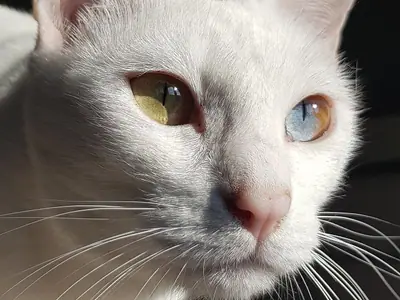
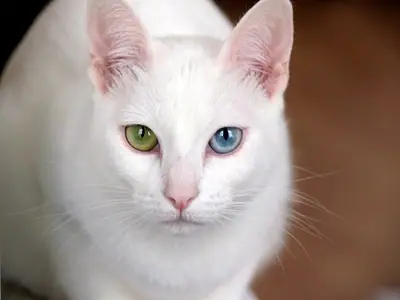
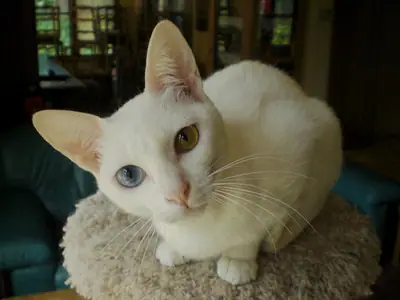
The Khao Manee is a shorthaired Thai breed that comes only in glistening white, with luminous, jewel-like eyes in blue, green, yellow or odd colours [1]. It's curious, clever, friendly and a keen lap cat [1]. TICA recognises the breed [2]; CFA has registered it since 2018 and currently shows it in the Provisional class [1]; FIFe does not list it [5]. Because it is always white, the breed carries a higher risk of congenital deafness; see the health section below.
Contents (10 sections)
Quick facts
- Origin
- Thailand; referenced in the Tamra Maeo cat poems of the Ayutthaya period (1350–1767)
- Weight
- no data
- Lifespan
- no data
- Coat
- medium-short, white
- Energy
- high
Details & sources
Traits (scale 1–5)
- Energy
- 4/5
- Shedding
- 2/5
- Grooming needs
- 1/5
- Good with kids
- 4/5
- Vocal
- 3/5
- Independence
- 2/5
Basis: Editorial estimate based on CFA's description, not a measurement
Registry recognition
| CFA | Preliminary |
|---|---|
| TICA | Yes |
| FIFe | No |
| GCCF | — |
CFA: accepted for registration in 2018, currently shown in the Provisional class [1]. GCCF: pending verification.
History
Although often thought of as "new", the Khao Manee is an old breed: it appears as a "good luck" cat in the Tamra Maeo, the book of cat poems produced during Thailand's Ayutthaya period (1350–1767) [1]. Legend says Thai royalty kept the breed hidden from visitors [1]. What is certain is that it was exclusive to Thailand until 1999, when its numbers had dwindled and conservation specialist Colleen Freymouth was permitted to bring the first Khao Manee to the US and start a breeding programme [1]. CFA accepted it for registration in 2018 [1].
Appearance
- Coat: medium-short, fine and slightly open, smooth enough to show the muscles, with a sparse undercoat [1].
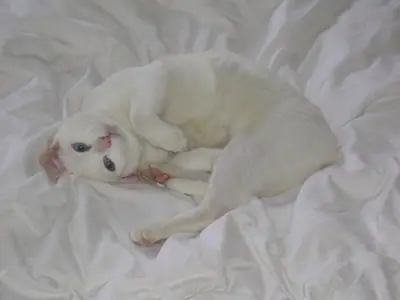
- Colour: pure white only. Kittens may carry a cap of colour on the head until about 18 months [1].
- Eyes: slightly to moderately large, open almond-shaped with an Asian slant; any colour that is clear and vivid. Odd eyes are the rarest and most prized [1].
- Head: a modified wedge with high cheekbones; the nose tip and ear tips form an equilateral triangle [1].
- Body: medium-length, very firmly muscled but flexible and springy. Tail kinks are common [1].
Photo gallery
7 photos · tap to enlarge- (enlarge, photo 1/7)
- (enlarge, photo 2/7)
- (enlarge, photo 3/7)
- (enlarge, photo 4/7)
- (enlarge, photo 5/7)
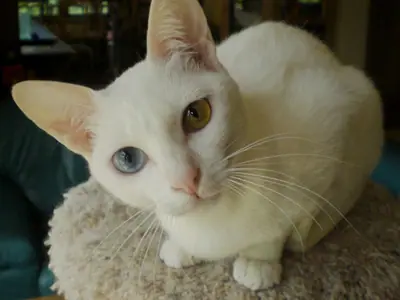
- (enlarge, photo 6/7)
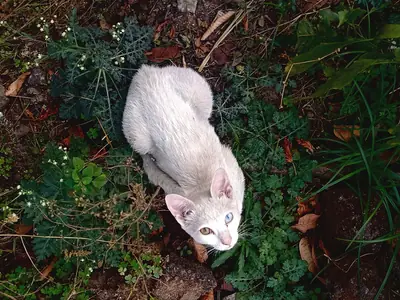
- (enlarge, photo 7/7)
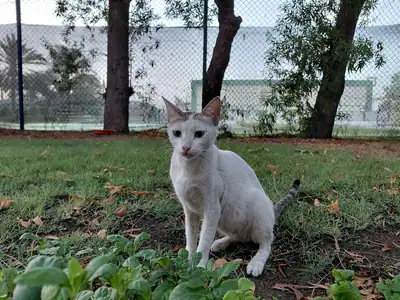
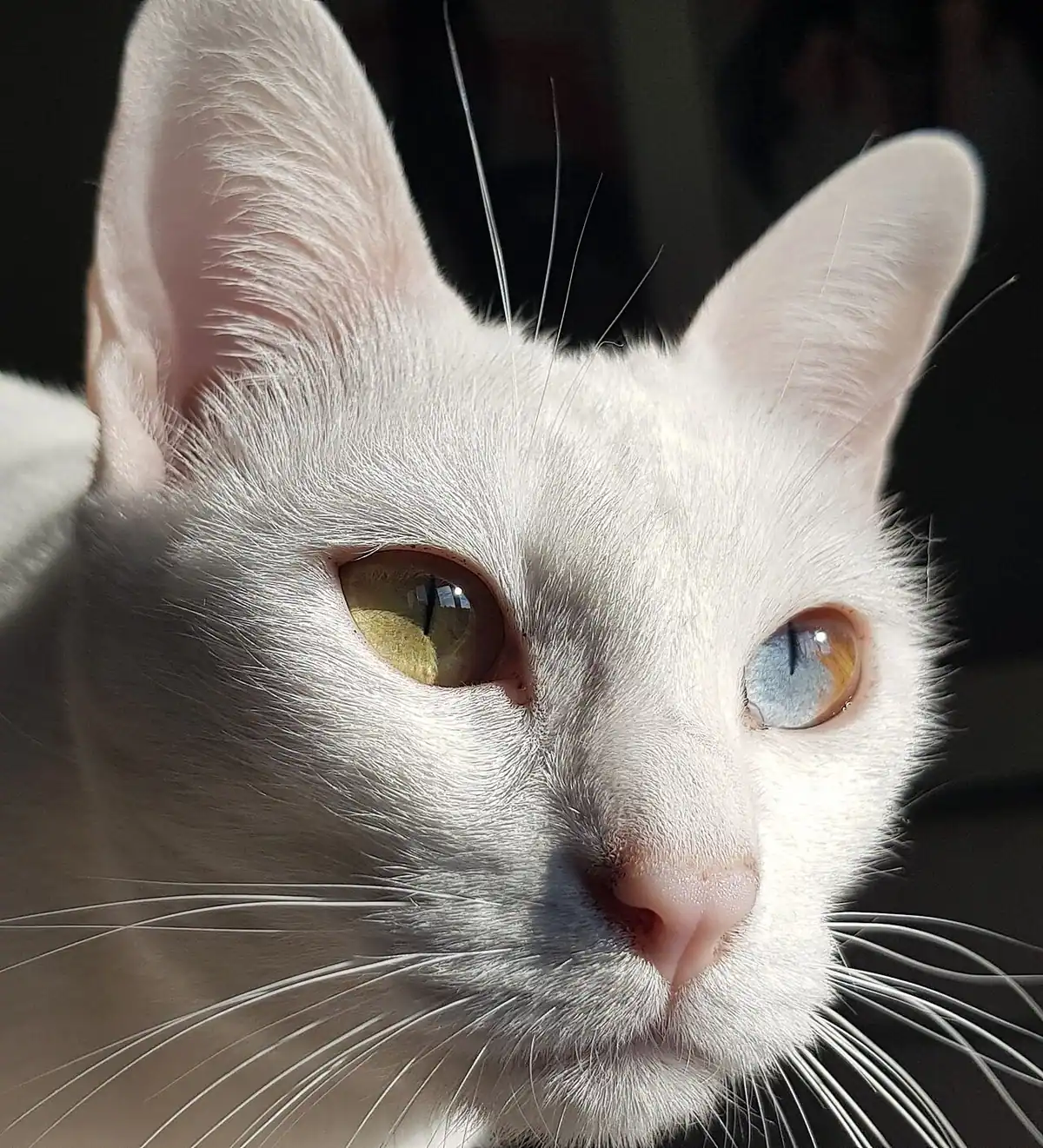
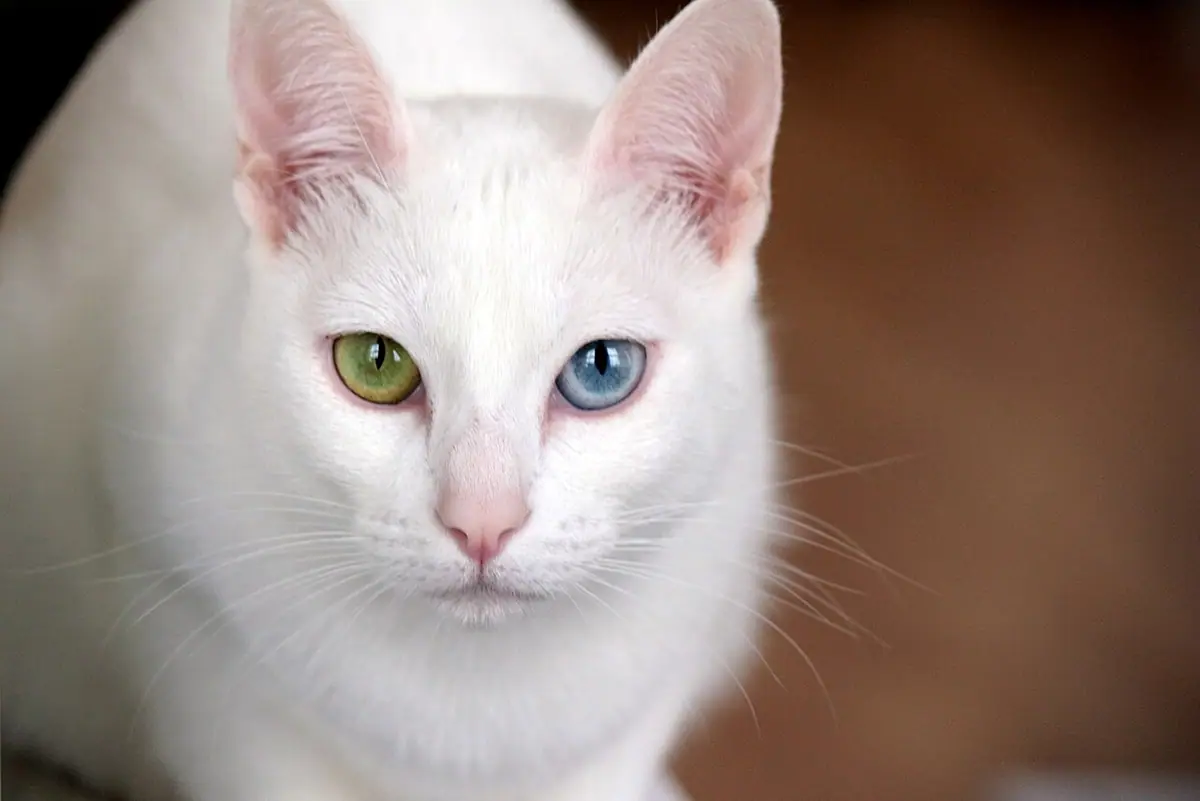
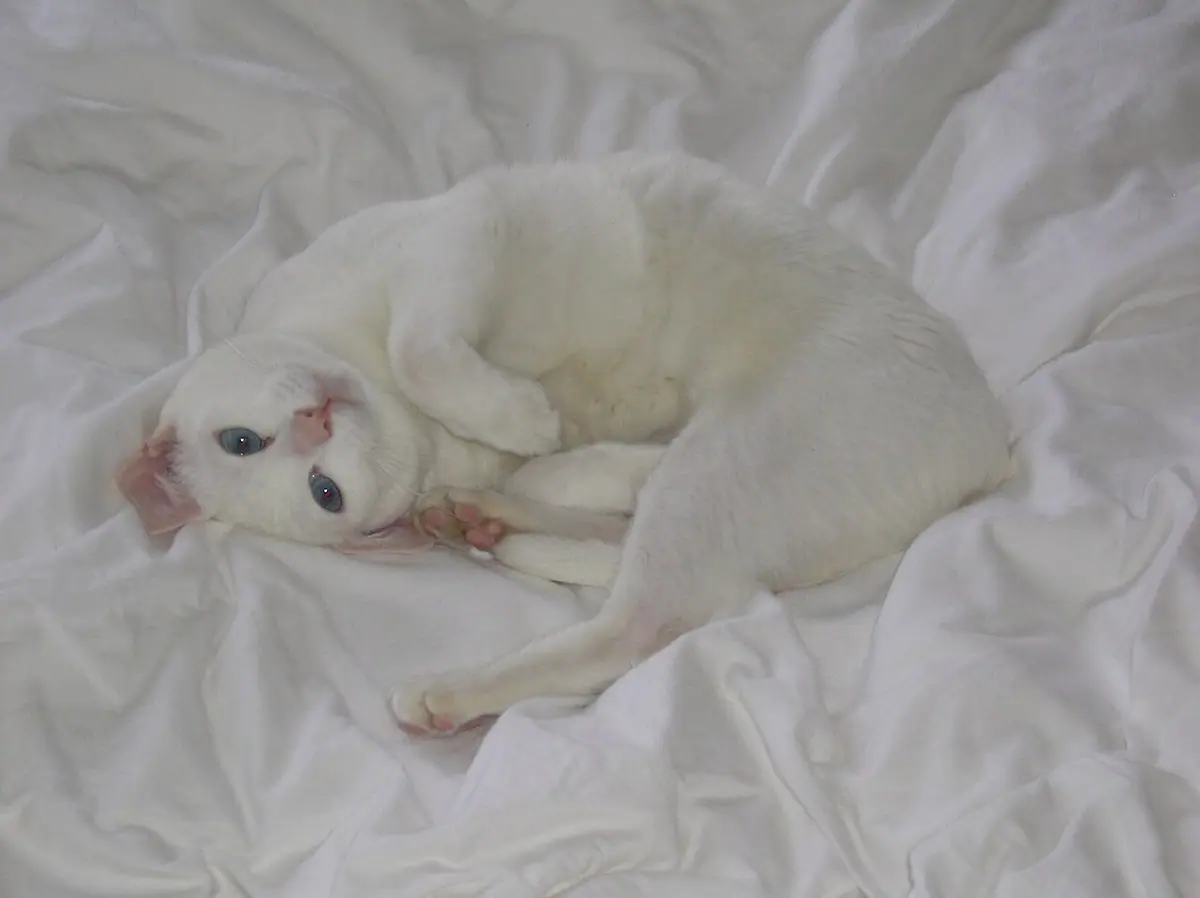
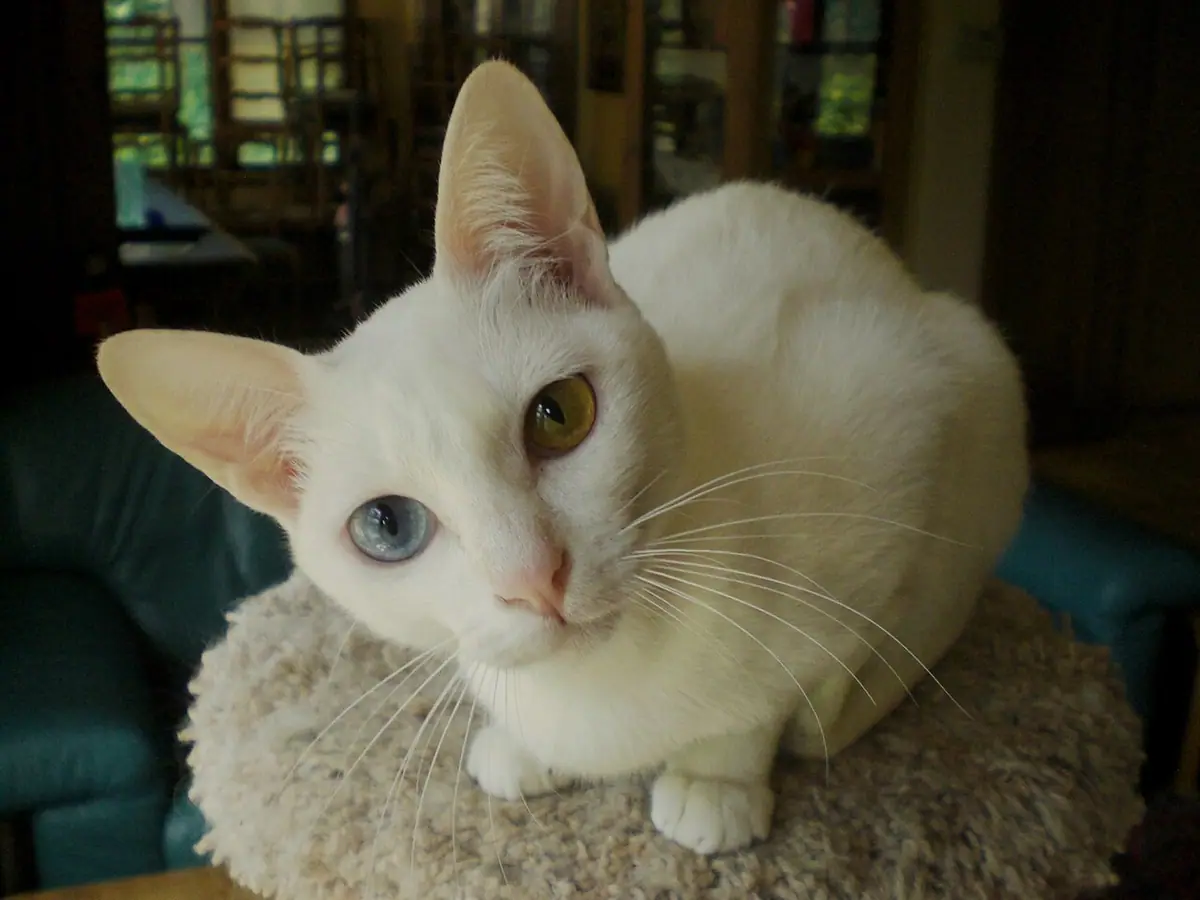
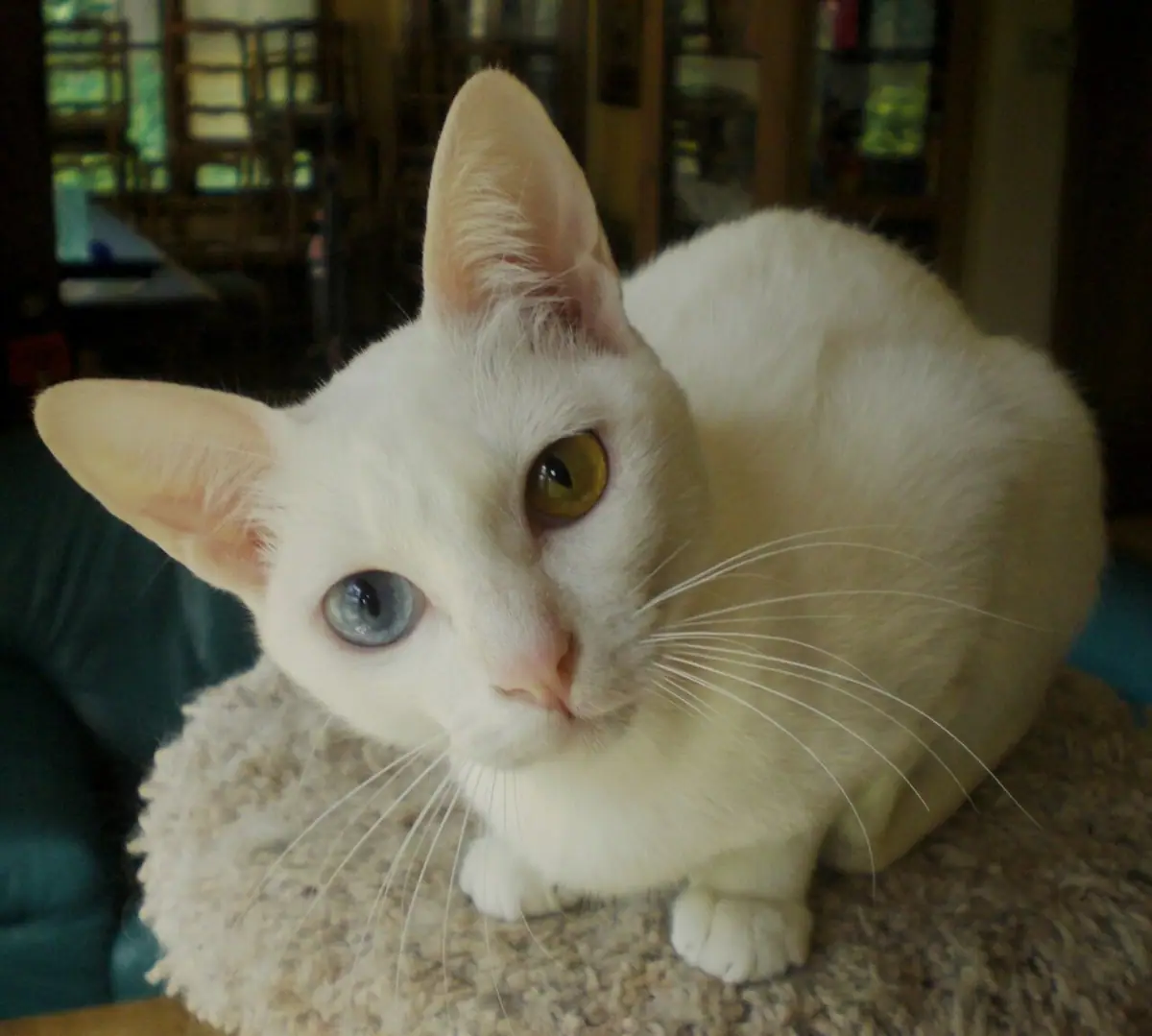
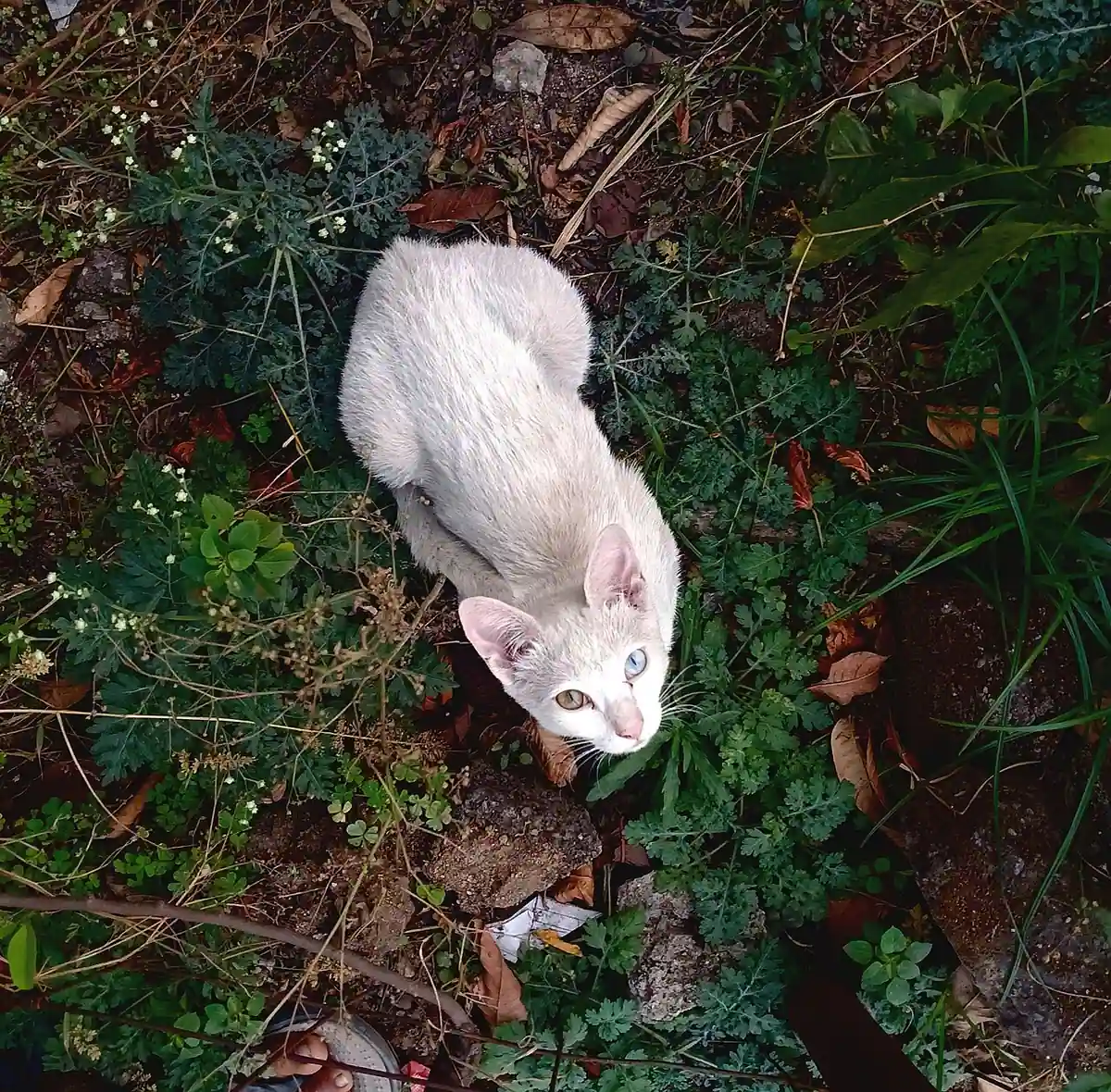
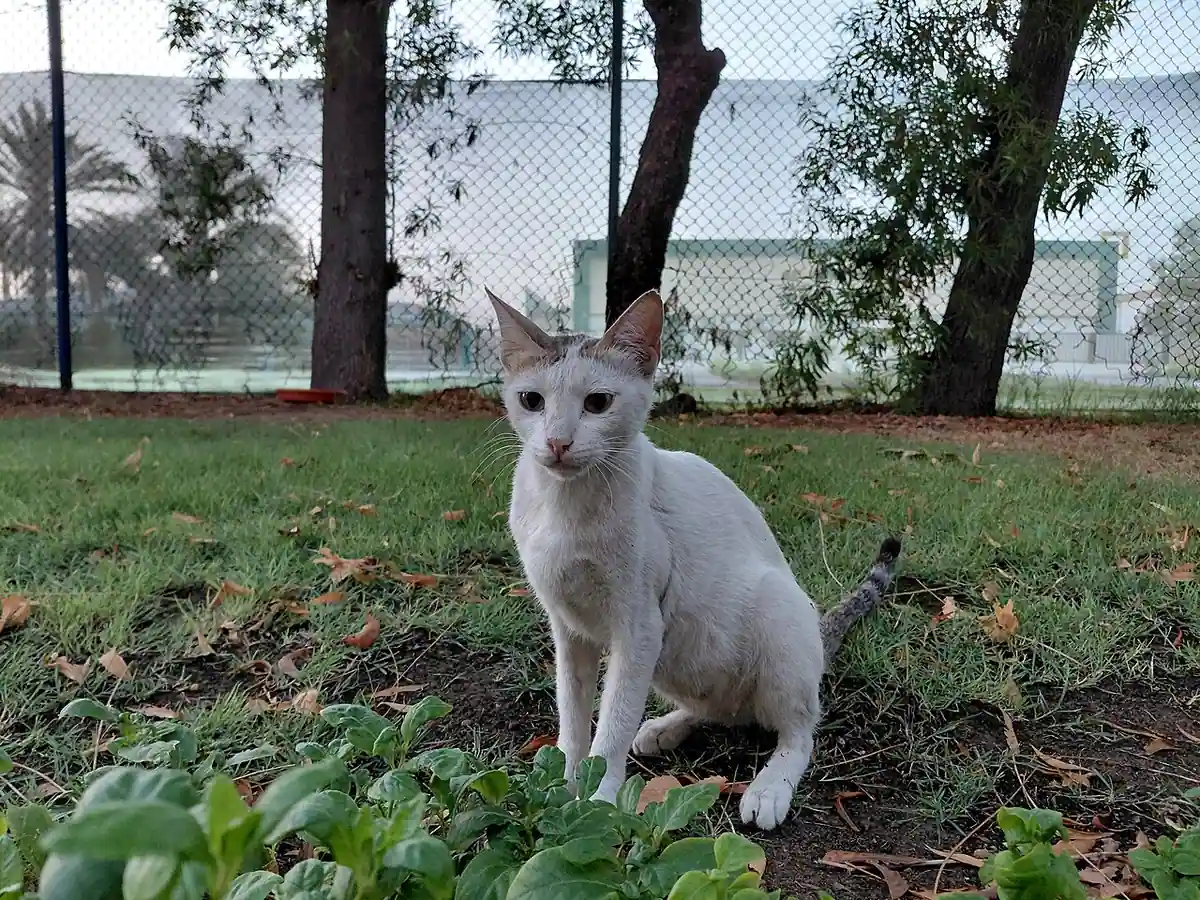

Photos: Wikimedia Commons – author & licence shown when enlarged and on the Photo credits page.
Temperament
Like the better-known Thai breeds, the Korat and the Siamese, Khao Manees are highly intelligent [1]. They are friendly and easy to win over, love fetch and often carry toys (or your socks) around in their mouths [1]. They want to help with everything you do [1]. Owners describe them as active athletes who are also lap lovers and shoulder riders [1]. They get along with other pets and communicate freely through body language and a range of sounds, without necessarily being noisy [1].
Care
- Coat: not heavy shedders, but white hair shows on clothes; brush regularly with a rubber brush [1].
- Bathing: an occasional bath keeps the coat sparkling; ask your breeder about products, as human shampoos shouldn't be used on cats [1].
- Hearing: for a deaf cat, iCatCare recommends indoor living or a safe enclosure, simple hand signals, and approaching from the front so the cat isn't startled [3].
Health
- Congenital deafness: seen almost exclusively in white cats and linked to the dominant W gene [3]. A white cat with two blue eyes is 3–5 times more likely to be deaf than one with two non-blue eyes; one blue eye roughly doubles the risk [3]. Odd-eyed cats may be deaf in one ear [1].
- BAER testing: a non-invasive hearing test; many breeds require it before breeding white cats [3].
- Otherwise: CFA says the breed is not known for any specific health problems [1].
- Lifespan: we found no longevity study or registry estimate.
This is general information; talk to your vet about any specific concern.
Don't confuse with…
- Turkish Angora: often white and odd-eyed too, but long-coated and silky with a plumed tail [4].
- White Vietnamese domestic cat: the white-coat gene occurs in many breeds [3]; the Khao Manee is defined by its breed standard [1].
Ask your vet. This information is for reference only and does not replace a veterinary diagnosis.
Fun facts
Frequently asked questions
Are Khao Manee cats deaf?
Not all are, but the risk is higher because the breed comes only in white. White cats with two blue eyes are 3–5 times more likely to be deaf than white cats without blue eyes [3], and odd-eyed cats may be deaf in one ear [1]. If you suspect poor hearing (startling easily, not responding when called), ask your vet about a BAER test [3].
Do Khao Manees come in colours other than white?
Under CFA's standard, only white; kittens may carry a cap of colour on the head until about 18 months. An occasional non-white kitten appears in a litter; it can't be shown but can be used for breeding [1].
Is the Khao Manee good with children?
CFA describes the breed as active and friendly, good with other pets, and says its activity level makes it a good choice for children [1].
Similar breeds


Breed photos: Wikimedia Commons (CC0 / CC BY / CC BY-SA) – authors & licences on the Photo credits page.
References
- CFA, Khao Manee (breed profile & standard; Provisional)
- TICA, Browse All Breeds (Khaomanee listed)
- International Cat Care, Inherited deafness in white cats (updated 26 Sep 2025)
- CFA, Turkish Angora (breed profile & standard)
- FIFe, Breeds (Khao Manee not listed)
Accessed: 2026-10-02
Written by Catopidia from the sources above. Photos credit their author and licence under each image and on the Photo credits & licences.