Cat breed
Cornish Rex
Mèo Cornish Rex

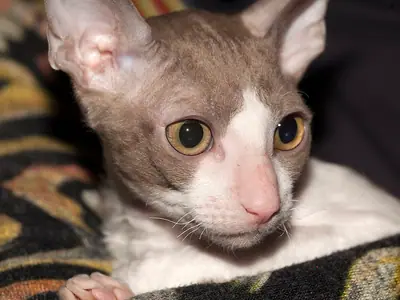
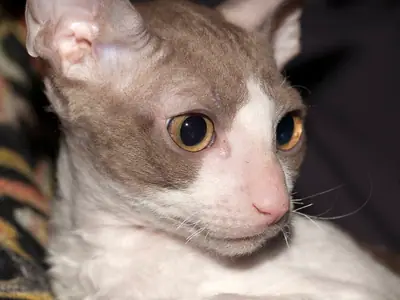
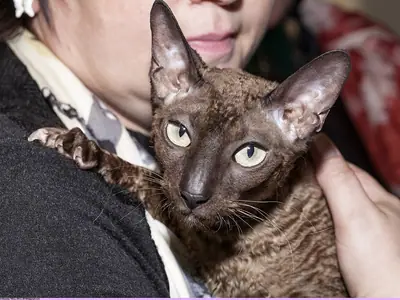
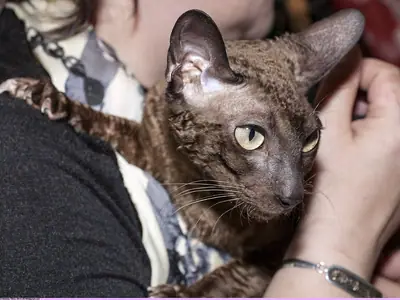
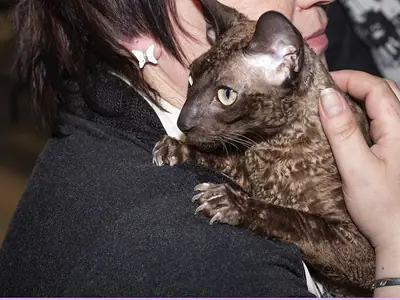
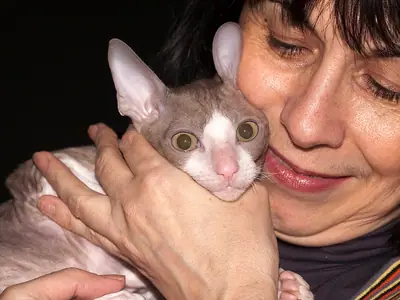
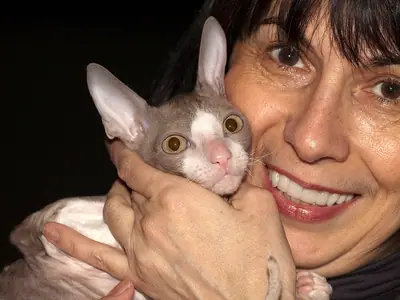
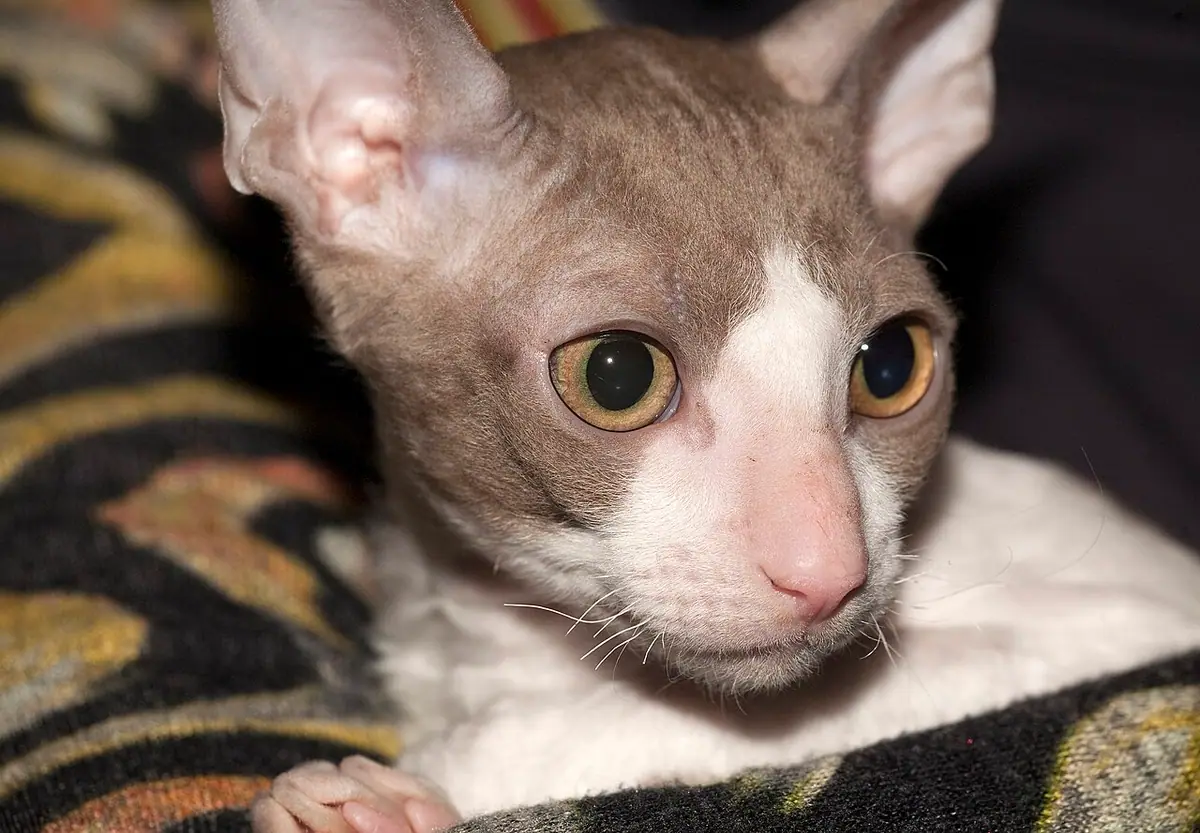
CFA describes the Cornish Rex as the racy elegance of a greyhound paired with a clown's personality, dressed in curls [1]. Its close-lying marcel waves have no guard hairs at all, making the coat unbelievably soft [1]. Corneys are very active, intelligent and intensely devoted [1]. The breed is recognised by CFA, TICA [7], FIFe [2] and GCCF [3].
Contents (10 sections)
Quick facts
- Origin
- England (Cornwall, 1950)
- Weight
- ~2.3–4.5 kg
- Lifespan
- ~16 years
- Coat
- short, wavy
- Energy
- high
Details & sources
Traits (scale 1–5)
- Energy
- 5/5
- Shedding
- 1/5
- Grooming needs
- 1/5
- Good with kids
- 5/5
- Vocal
- 2/5
- Independence
- 1/5
Basis: Editorial estimate based on CFA's description, not a measurement
Registry recognition
| CFA | Yes |
|---|---|
| TICA | Yes |
| FIFe | Yes |
| GCCF | Yes |
History
In 1950 a curly-coated cream male kitten, Kallibunker, turned up in a litter of barn cats on Nina Ennismore's farm in Cornwall, England [1]. After consulting her vet and a geneticist, she bred him back to his mother and got two more curly kittens [1]. Having kept Rex rabbits, she gave the new cat breed the same name [1]. Crosses with Burmese, Siamese and British Shorthairs showed the mutation was recessive [1]. A California breeder bought a pair in 1956 to start the breed in the US; CFA accepted it for registration in 1962 and for championship two years later [1].
Appearance
Photo gallery
7 photos · tap to enlarge- (enlarge, photo 1/7)
- (enlarge, photo 2/7)
- (enlarge, photo 3/7)
- (enlarge, photo 4/7)
- (enlarge, photo 5/7)
- (enlarge, photo 6/7)
- (enlarge, photo 7/7)
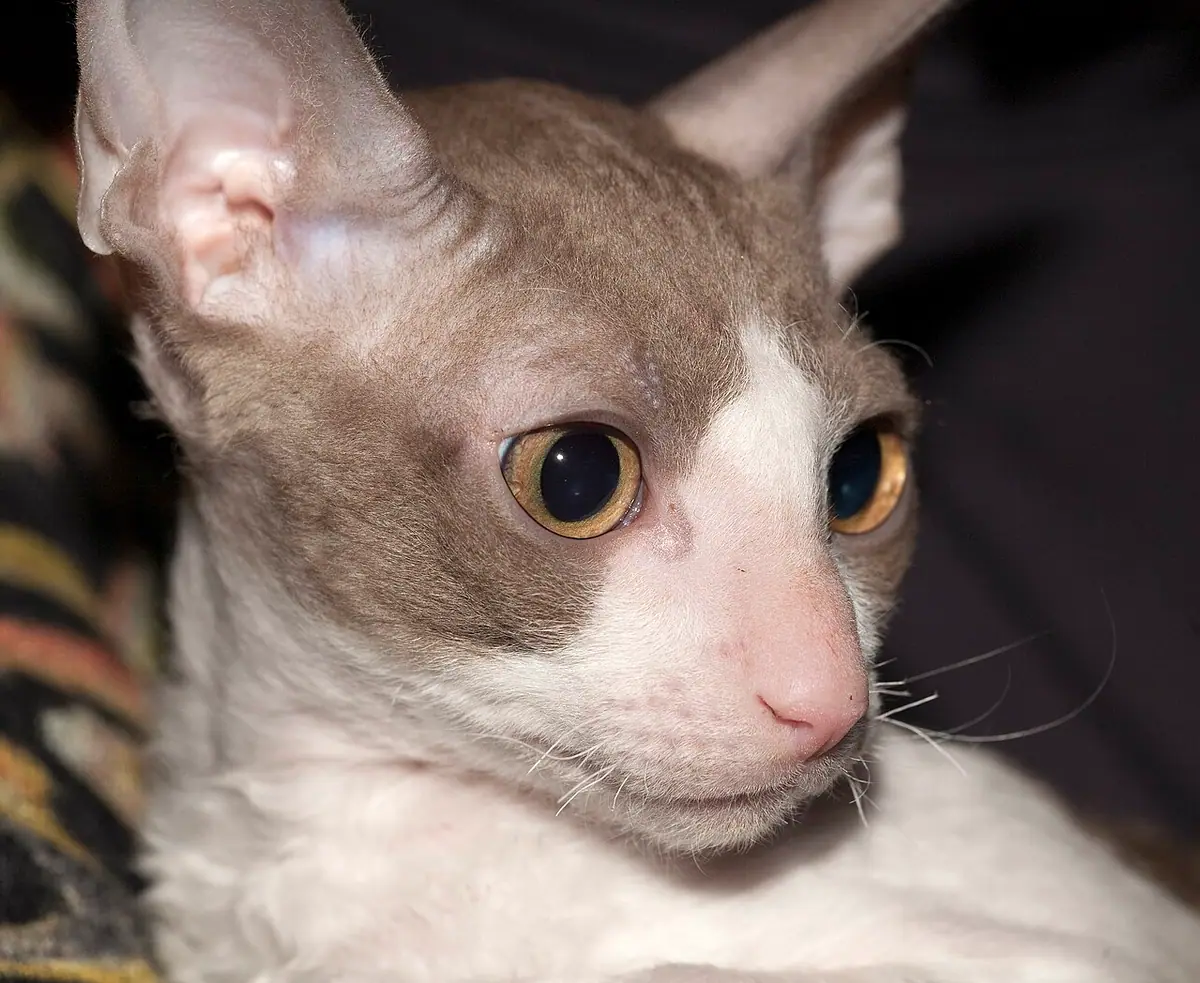
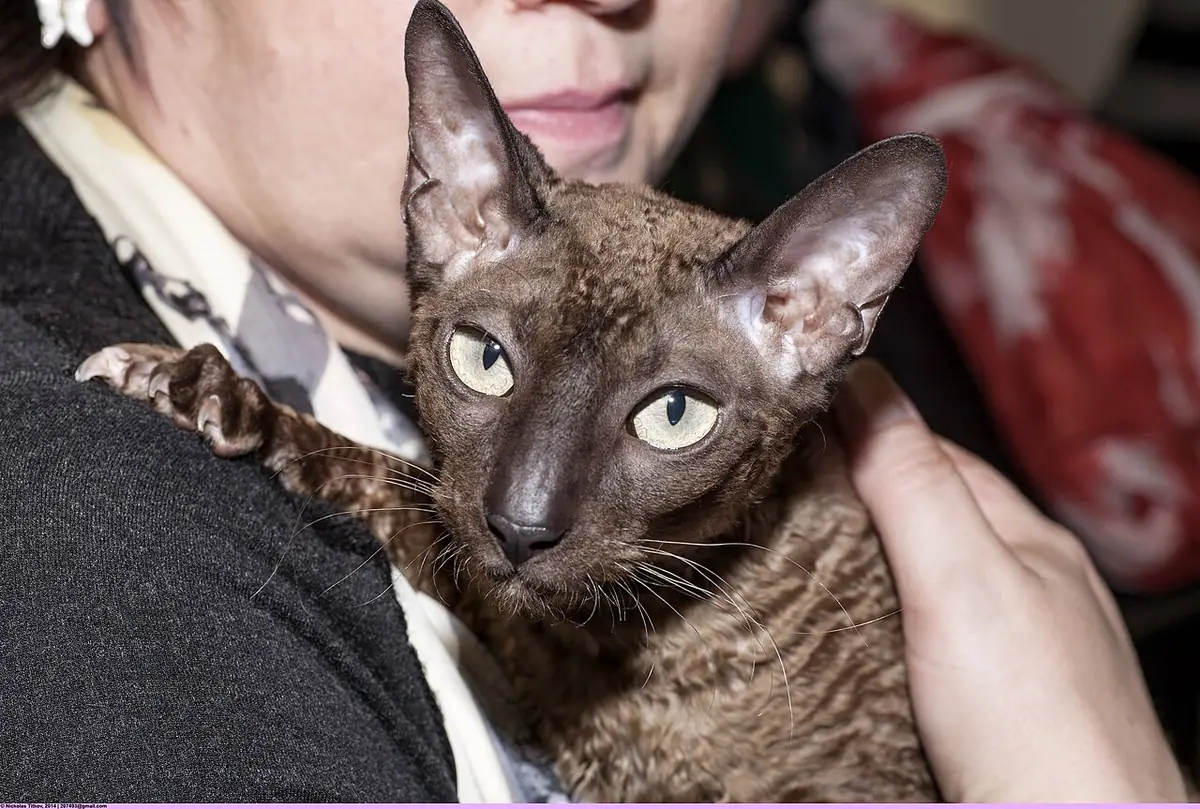
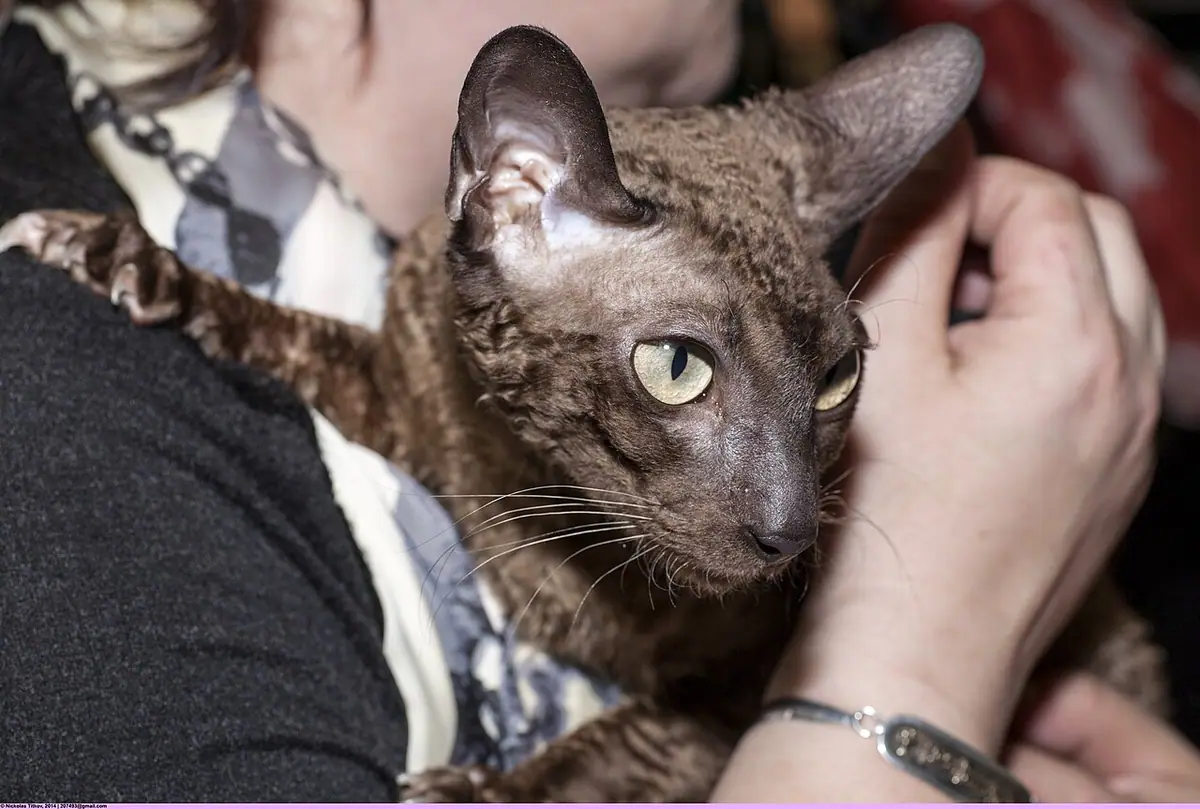
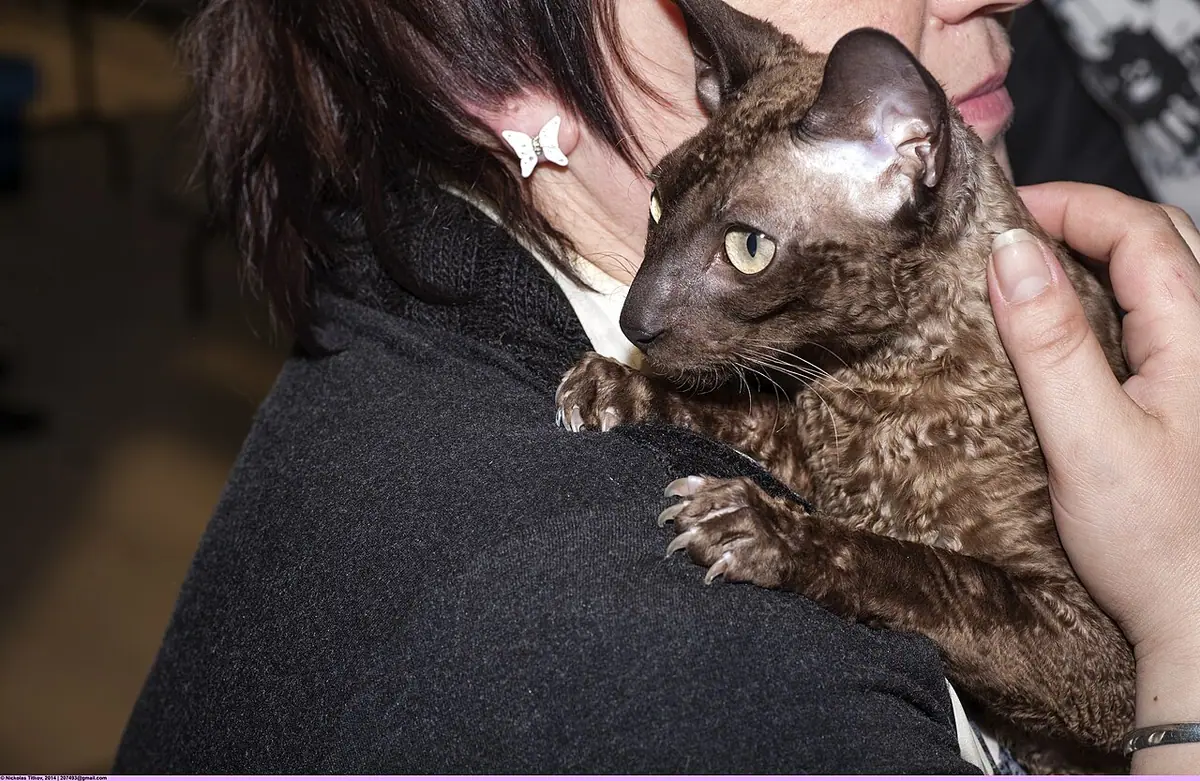
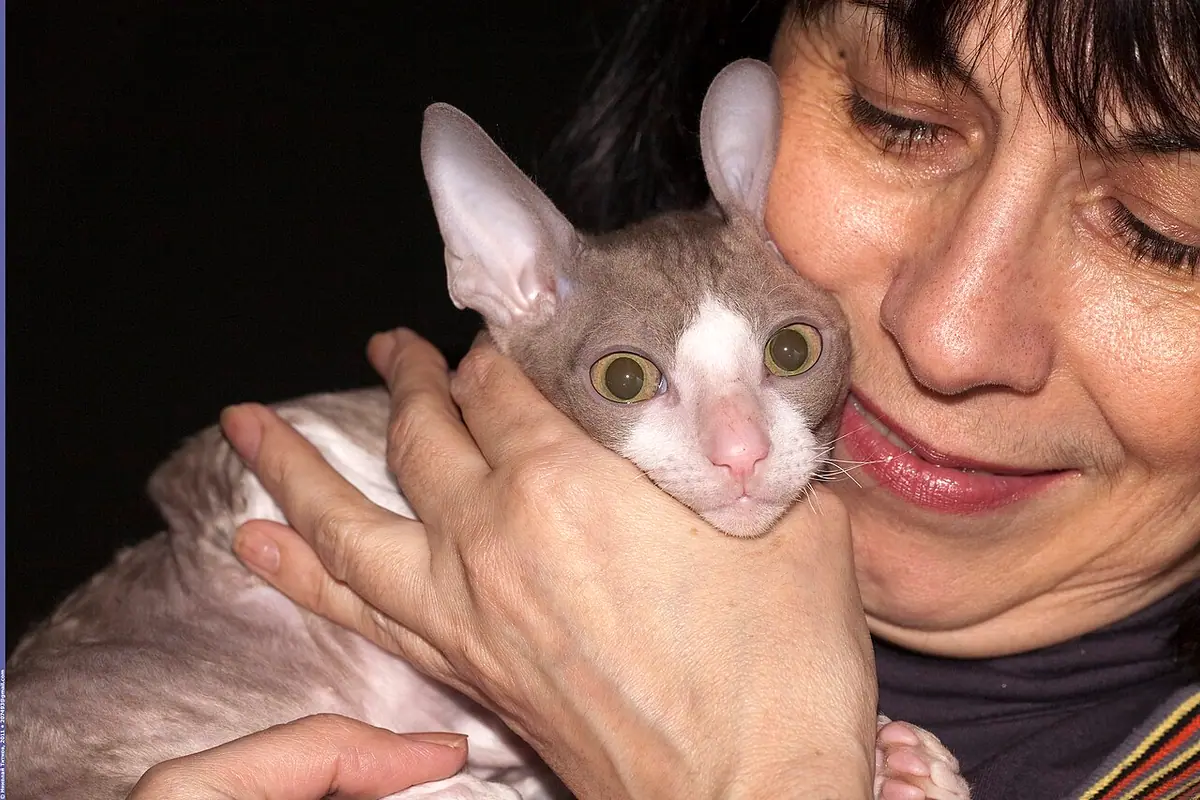
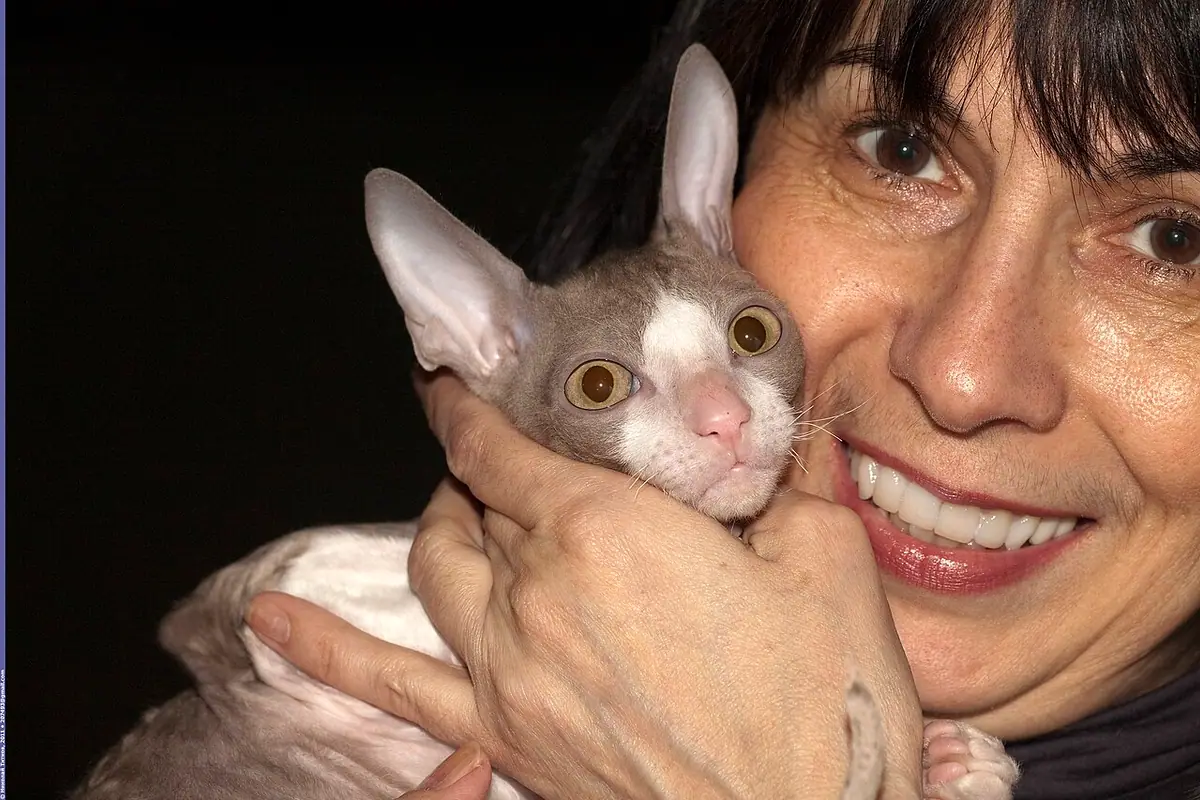
.jpg)
Photos: Wikimedia Commons – author & licence shown when enlarged and on the Photo credits page.
Temperament
Cornish Rex are extremely intelligent, adaptable and adventurous, and they love to travel [1]. They're also devoted, often called "Velcro kitties" for their need for physical contact with their person [1]. Their energy means a constant hunt for new playthings, appropriate or not, so put fragile things away [1]. Children and adults enjoy their antics, and dogs get a willing playmate [1]. They'll chat, but not loudly or needlessly [1].
Care
- Coat: no regular combing needed. Bathe occasionally if the coat gets greasy; towel-dry and never blow-dry [1].
- Ears: wax builds up faster than in other breeds; clean often with a cotton ball or swab [1].
- Warmth and sun: they chill easily and can sunburn [1].
- Food: big appetites despite slim builds [1].
Health
- Inherited conditions: CFA describes a sturdy breed with none [1].
- Skin and coat: the guard-hair-free coat is fragile and may not protect against sun; they chill easily [1].
- Ears: wax builds up quickly; clean often [1].
- Lifespan: GCCF estimates about 16 years [3]. We found no breed-specific longevity study.
This is general information; talk to your vet about any specific concern.
Don't confuse with…
- Devon Rex: a few guard hairs, looser waves, huge low-set ears [4].
- Selkirk Rex: sturdy, with thick loose curls [5].
- Oriental Shorthair: slender and big-eared, but straight-coated [6].
Ask your vet. This information is for reference only and does not replace a veterinary diagnosis.
Fun facts
Frequently asked questions
Does a Cornish Rex need a sweater?
It may help. With no guard hairs they chill easily in cold weather, and CFA suggests a sweater. The thin coat may not protect against sun either [1].
How is a Cornish Rex different from a Devon Rex?
The Cornish has no guard hairs, tight even waves, a slender arched body, an egg-shaped head and a Roman nose [1]. The Devon has a few guard hairs, a looser wave and huge low-set ears [4]. They carry different mutations [4].
Does a Cornish Rex need brushing?
Regular combing isn't needed. Occasional baths help if the coat gets greasy; towel-dry thoroughly and never use a blow dryer [1].
Similar breeds

Breed photos: Wikimedia Commons (CC0 / CC BY / CC BY-SA) – authors & licences on the Photo credits page.
References
- CFA, Cornish Rex (breed profile & standard)
- FIFe, Breeds (CRX Cornish Rex, fully recognised)
- GCCF, Cat Breeds (Cornish Rex breed card)
- CFA, Devon Rex (breed profile & standard)
- CFA, Selkirk Rex (breed profile & standard)
- CFA, Oriental (breed profile & standard)
- TICA, Browse All Breeds (Cornish Rex listed)
Accessed: 2026-10-02
Written by Catopidia from the sources above. Photos credit their author and licence under each image and on the Photo credits & licences.