Cat breed · United States
Himalayan
Mèo Himalaya

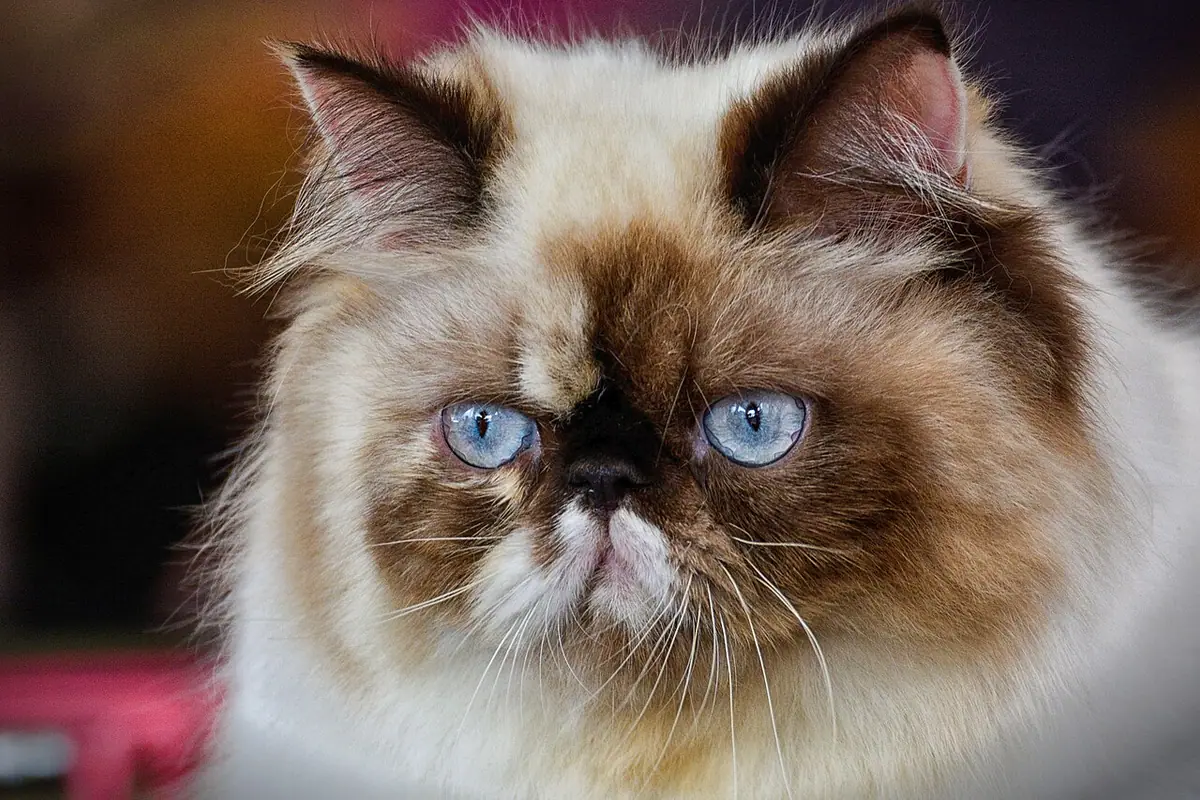
The Himalayan combines the body and coat of the Persian with the pointed colouring and deep blue eyes of the Siamese [1]. It's gentle, sedate and affectionate [1]. Registries classify it differently: CFA shows it as a colour division of the Persian [2], while TICA lists it as its own breed in the Persian Breed Group [1]. FIFe has no separate Himalayan breed [8]. Please read the health and welfare note below.
Contents (11 sections)
Quick facts
- Origin
- USA and UK/Canada (mid-20th century), from Persian x Siamese breeding
- Weight
- no data
- Lifespan
- ~8–11 years
- Coat
- long
- Energy
- low
Details & sources
- Size
- Medium to large, short and cobby; looks bigger than it is thanks to the coat [1]
- Weight
- TICA gives no weight figures; males are larger than females [1]
- Lifespan
- TICA estimates 8–11 years [1]; no Himalayan-specific longevity study found
- Coat
- Long and flowing, with an undercoat that mats; pointed pattern [1]
Traits (scale 1–5)
- Energy
- 2/5
- Shedding
- 4/5
- Grooming needs
- 5/5
- Good with kids
- 4/5
- Vocal
- 2/5
- Independence
- 2/5
Basis: Editorial estimate based on TICA's description, not a measurement
Registry recognition
| CFA | Yes |
|---|---|
| TICA | Yes |
| FIFe | No |
| GCCF | — |
GCCF: pending verification.
Relationship to the Persian
The Himalayan is a man-made breed, created by crossing Persians with Siamese to get a Persian-type cat with the pointed pattern [1]. TICA groups the Himalayan, Persian and Exotic Shorthair in one Persian Breed Group with a shared body type [1]. CFA divides the Persian into seven colour divisions for showing, and the "Himalayan" division covers the pointed cats [2]. Much of the care and health information on our Persian page applies to Himalayans too.
History
In 1931 Virginia Cobb and Dr Clyde Keeler began an experimental breeding programme and produced the first Himalayan kitten, "Newton's Debutante" [1]. In the 1950s Ben Borrett ran a similar programme in Canada [1]. According to TICA, GCCF recognised the breed as the "Colorpoint Longhair" in 1955 [1]. Marguerita Goforth pioneered its path to championship, and American associations recognised it as the Himalayan in 1957 [1].
Appearance
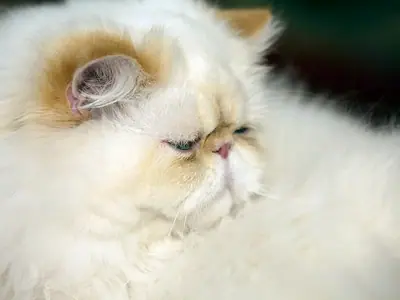
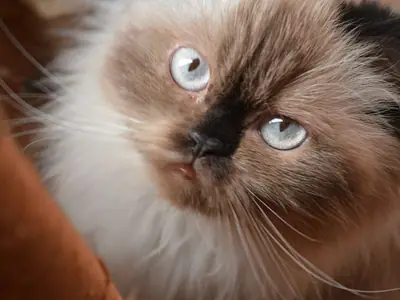
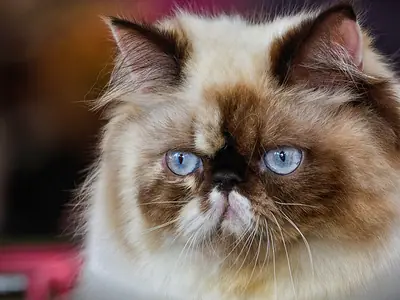
- Body: medium to large, short and cobby, equally massive across shoulders and rump, with heavy boning [1].
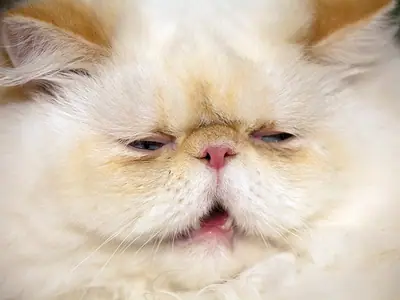
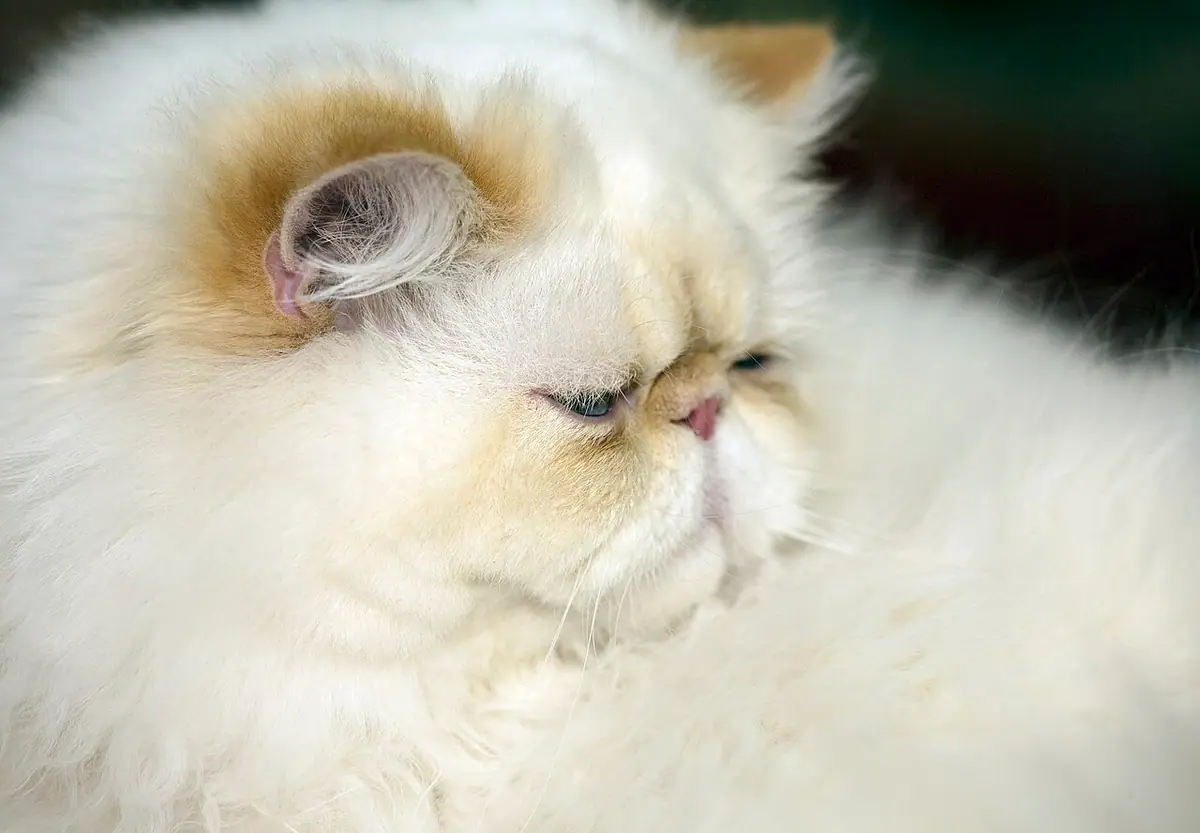
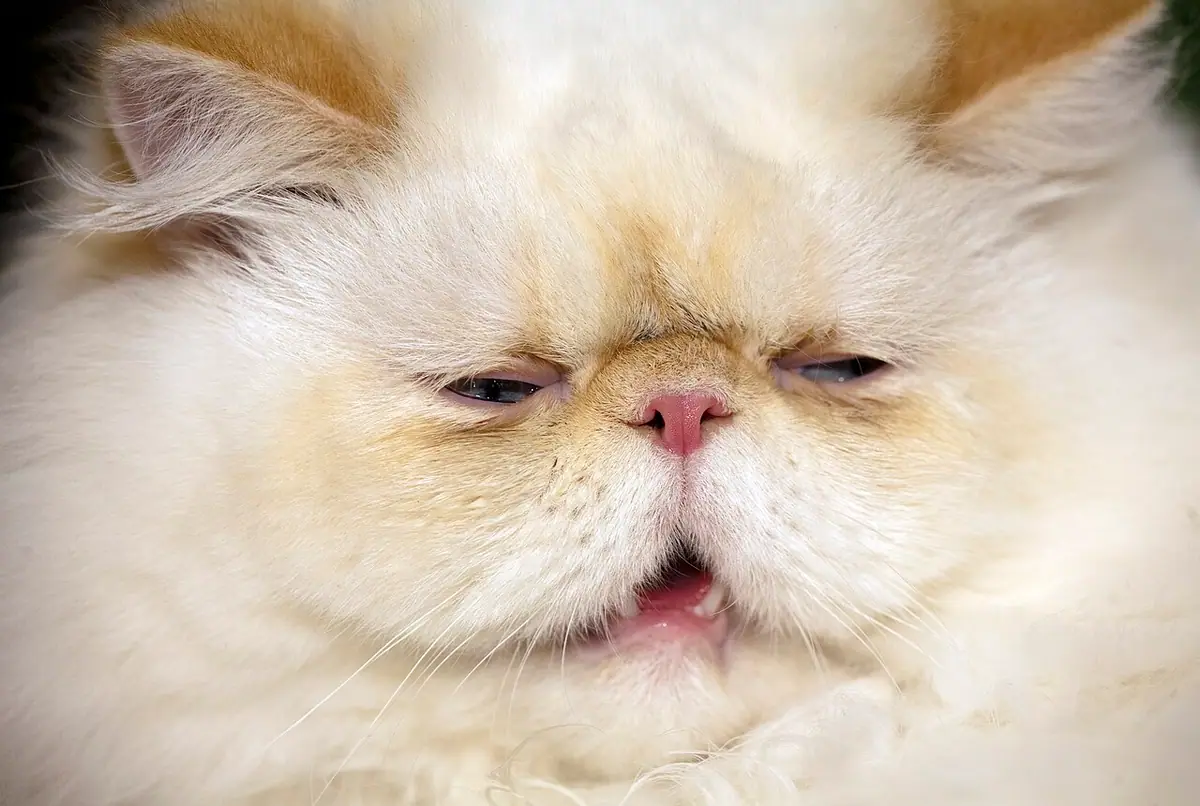
- Head: large and round, with a short, snub, broad nose and small, round-tipped ears set low and far apart [1].
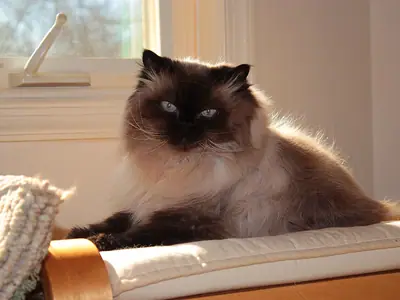
- Eyes: large, round and deep blue [1].
- Coat: long and flowing, with an undercoat that mats [1].
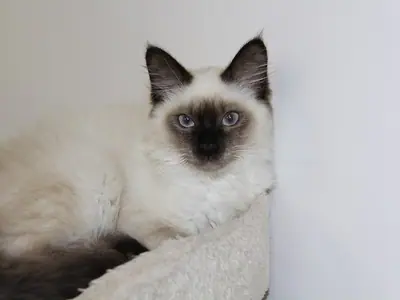
- Colour: a light body with darker points (ears, face, legs, tail) in seal, blue, chocolate, lilac, red, cream, tortoiseshell and blue-cream, in many point patterns [1]. The pattern comes from a heat-sensitive TYR mutation, the same as in the Siamese [3].
Photo gallery
7 photos · tap to enlarge- (enlarge, photo 1/7)
- (enlarge, photo 2/7)
- (enlarge, photo 3/7)

- (enlarge, photo 4/7)
- (enlarge, photo 5/7)
- (enlarge, photo 6/7)
- (enlarge, photo 7/7)
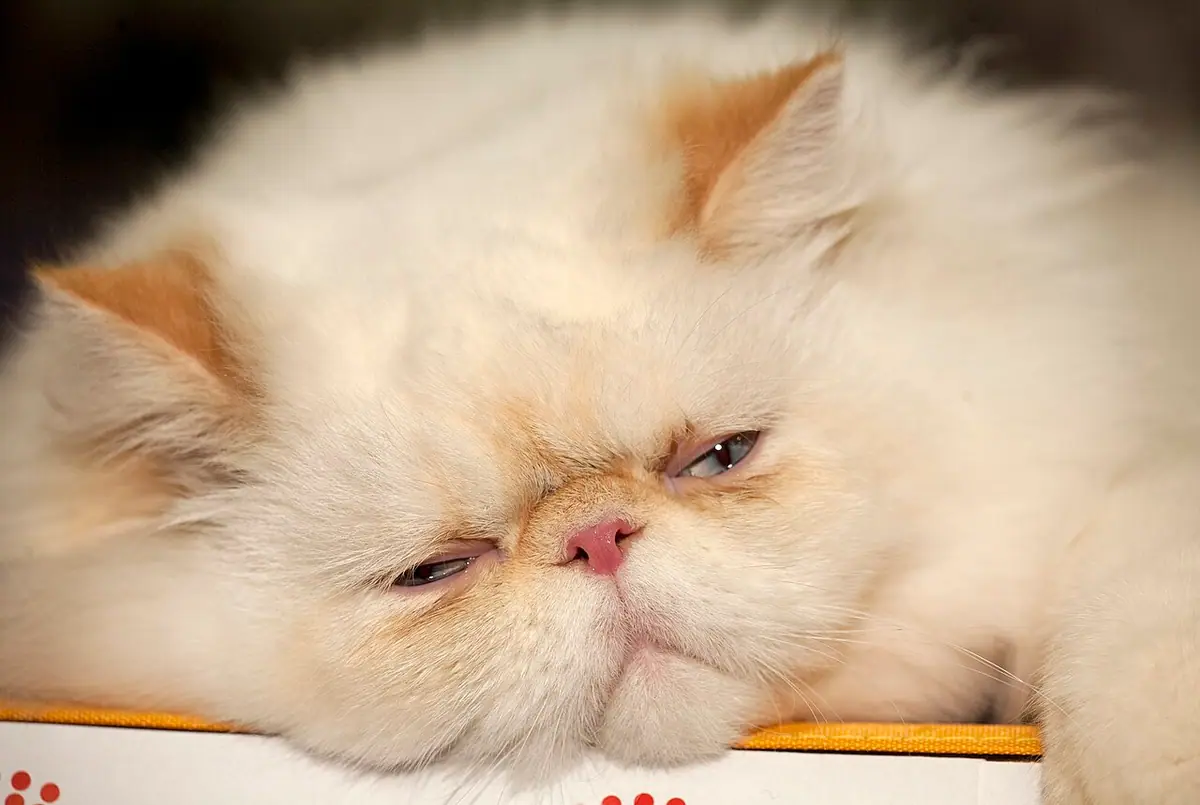
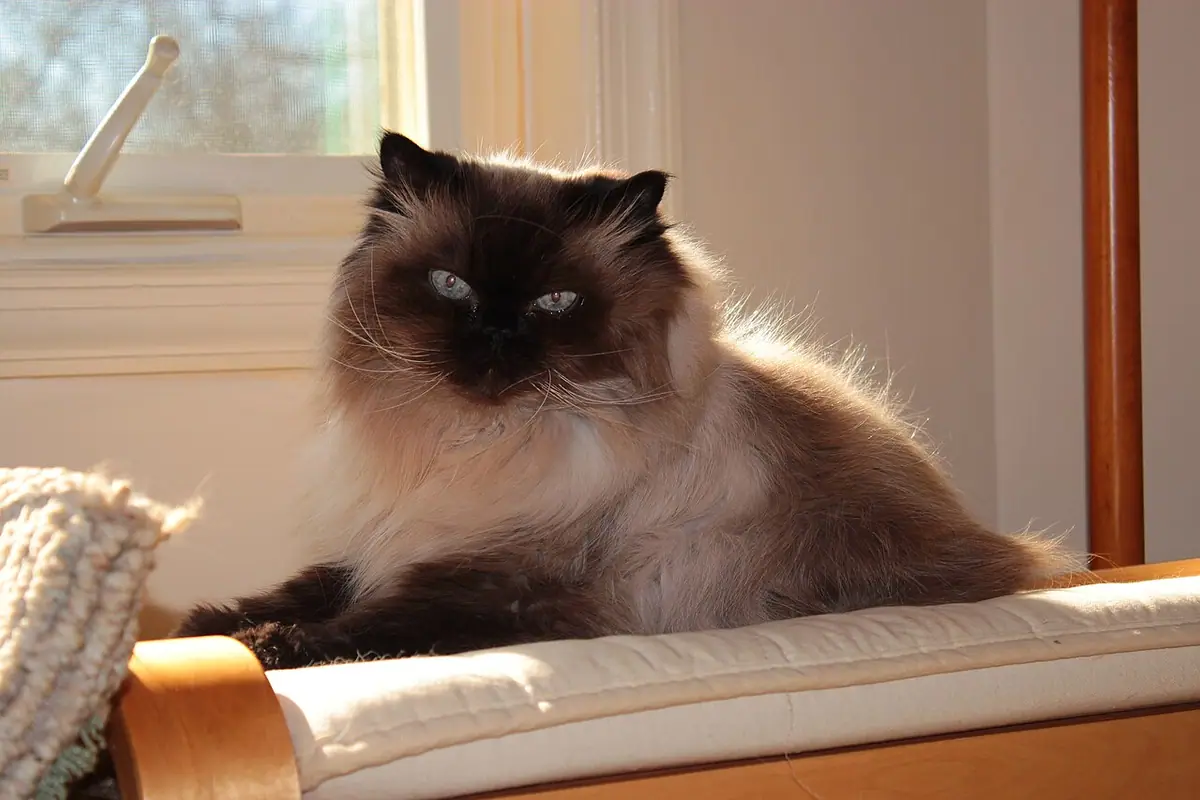
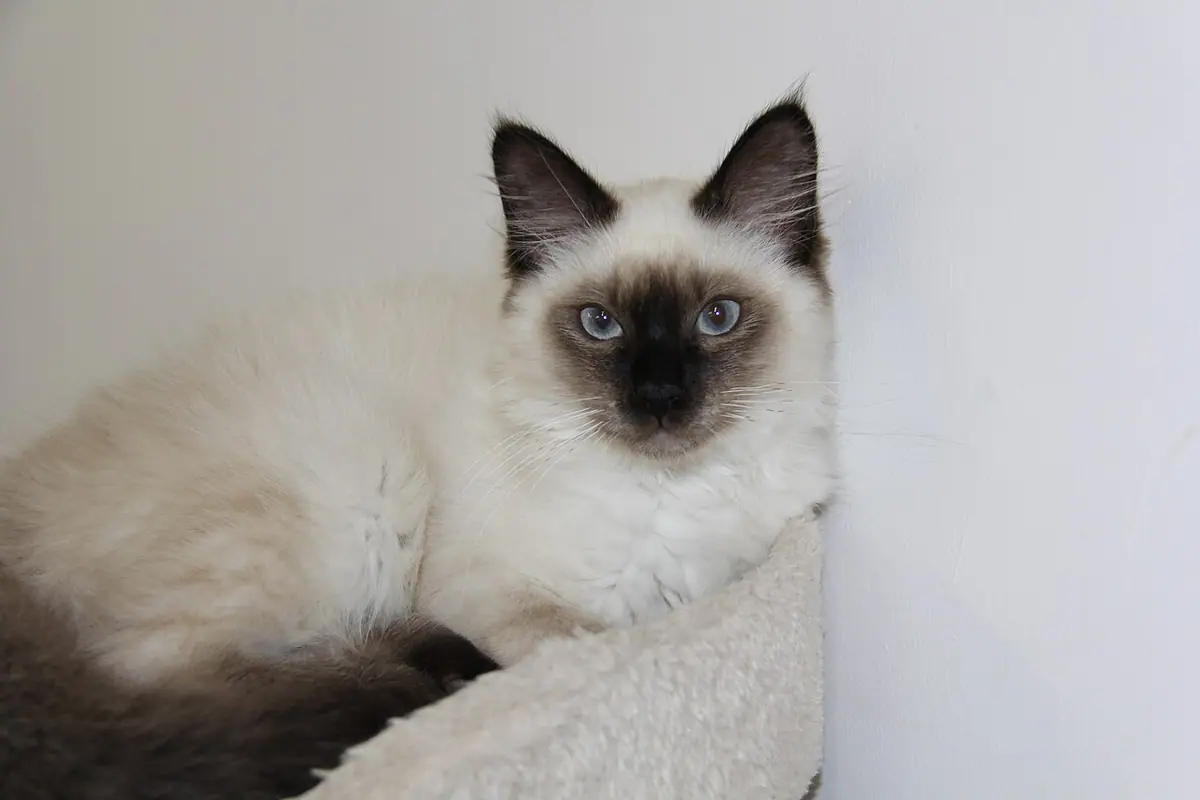
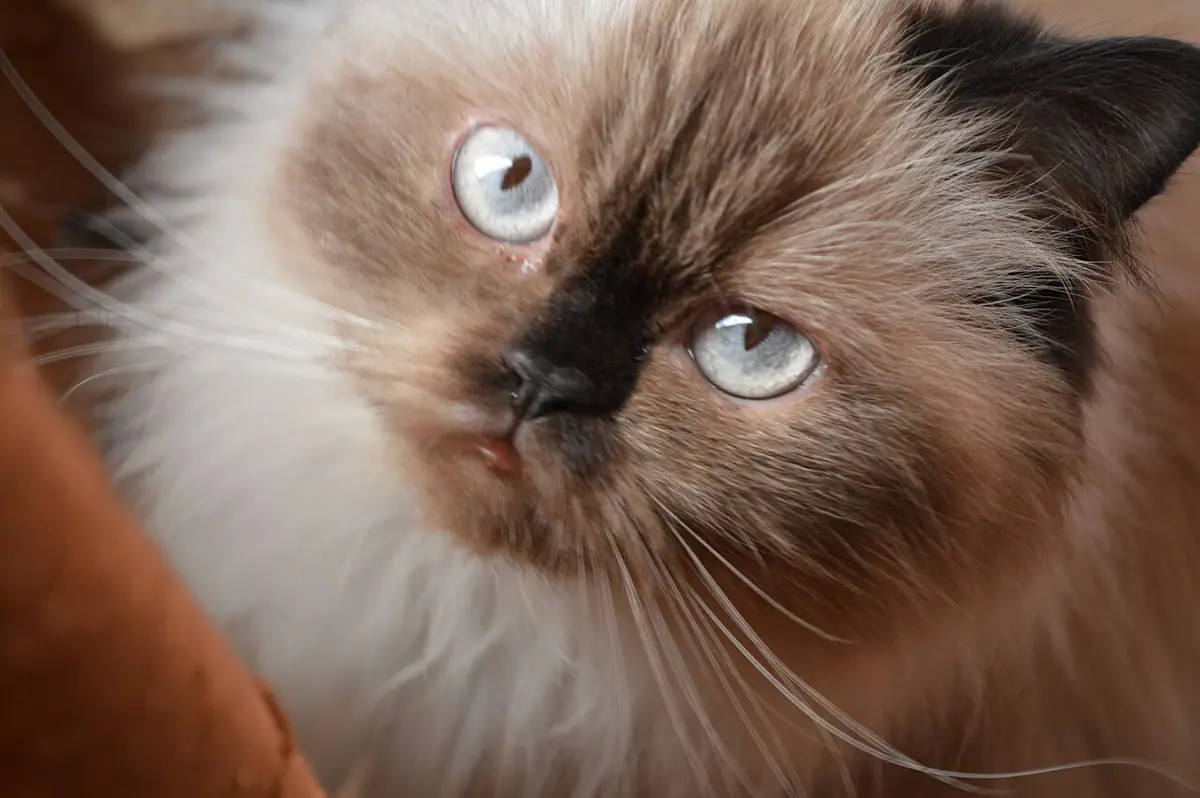

Photos: Wikimedia Commons – author & licence shown when enlarged and on the Photo credits page.
Temperament
Himalayans are gentle, quiet and prefer a calm home; they'd rather lounge on the sofa with you than climb the curtains [1]. They're responsive to your moods and very intelligent [1]. They have sudden bursts of kitten-like activity between naps in the sun [1], but you may have to encourage daily exercise [1]. They don't demand attention, though they'll tell you with quiet meows and meaningful looks if they're short of it [1]. They adapt to any family that treats them gently [1].
Care
- Coat: brush and comb daily to prevent tangles [1].
- Face: clean regularly and carefully to prevent tear stains [1].
- Nails and teeth: trim nails weekly in kittens and every 2–3 weeks in adults; brush teeth regularly [1].
- Weight: neutered cats gain weight more easily, so watch food quality and quantity [1].
Health
- What to check: TICA advises asking your breeder and vet about polycystic kidney disease (PKD), respiratory problems, eye problems such as progressive retinal atrophy (PRA), and hypertrophic cardiomyopathy (HCM) [1].
- PKD: the PKD1 mutation was found in Persians and Persian-derived breeds, making a DNA test possible [4].
- Flat faces: across cats, research found flatter faces linked with more owner-reported respiratory signs [5].
- Lifespan: TICA estimates 8–11 years [1]. We found no Himalayan-specific longevity study.
Ask the breeder about the parents' test results, and talk to your vet about any specific concern.
Don't confuse with…
Ask your vet. This information is for reference only and does not replace a veterinary diagnosis.
Fun facts
Frequently asked questions
Is a Himalayan a Persian?
It depends on the registry. CFA treats Himalayans as one of seven Persian colour divisions, the pointed one [2]. TICA lists the Himalayan as its own breed in the Persian Breed Group, alongside the Persian and Exotic Shorthair [1]. Physically, it has a Persian's body and coat with a Siamese's colouring and blue eyes [1].
Is a Himalayan hard to groom?
It takes work. The coat needs daily brushing and combing because the undercoat mats [1]. The flat face also needs regular, careful cleaning to prevent tear stains [1].
Are Himalayans as vocal as Siamese?
No. Some breeders say Himalayans talk a little more than Persians, but nothing like the Siamese. They use quiet meows and meaningful looks [1].
Similar breeds

Breed photos: Wikimedia Commons (CC0 / CC BY / CC BY-SA) – authors & licences on the Photo credits page.
References
- TICA, Himalayan (breed profile)
- CFA, Persian (breed profile; Himalayan division)
- Lyons LA et al. (2005). Tyrosinase mutations associated with Siamese and Burmese patterns in the domestic cat. Animal Genetics 36:119–126
- Lyons LA et al. (2004). Feline polycystic kidney disease mutation identified in PKD1. J Am Soc Nephrol 15(10):2548–2555
- Farnworth MJ et al. (2016). Flat feline faces: is brachycephaly associated with respiratory abnormalities in the domestic cat (Felis catus)? PLoS ONE 11(8):e0161777
- CFA, Birman (breed profile & standard)
- CFA, Ragdoll (breed profile & standard)
- FIFe, Breeds (no separate Himalayan breed)
- International Cat Care, Persian cats and brachycephaly (updated 26 Sep 2025)
- iCatCare and iCatCare Veterinary Society International Partners, Feline conformational health and welfare in cat breeding (position statement, 2025)
Accessed: 2026-10-02
Written by Catopidia from the sources above. Photos credit their author and licence under each image and on the Photo credits & licences.