Cat breed · Norway
Norwegian Forest Cat
Mèo rừng Na Uy

The Norwegian Forest Cat, or "Wegie", is a large, sturdy longhair with a water-repellent double coat built for Scandinavian winters [1]. Its trademark is an equilateral-triangle head, a straight profile and a riveting gaze [1]. Wegies are independent, intelligent and friendly without being clingy [1]. The breed is recognised by CFA, TICA [6], FIFe [2] and GCCF [3].
Contents (10 sections)
Quick facts
- Origin
- Norway (natural breed)
- Weight
- ~4.1–7.3 kg
- Lifespan
- ~14–16 years
- Coat
- thick, double
- Energy
- moderate
Details & sources
Traits (scale 1–5)
- Energy
- 3/5
- Shedding
- 4/5
- Grooming needs
- 2/5
- Good with kids
- 5/5
- Vocal
- 2/5
- Independence
- 4/5
Basis: Editorial estimate based on CFA's description, not a measurement
Registry recognition
| CFA | Yes |
|---|---|
| TICA | Yes |
| FIFe | Yes |
| GCCF | Yes |
History
No one knows exactly where the breed came from. It's thought to have emerged from the forest some 4,000 years ago, then become a working farm cat and mouser [1]. Norse mythology makes it the favourite of the goddess Freya [1]. Vikings may have taken Forest Cats aboard to control rodents, so the cats could have reached North America's east coast in the late 900s [1]. The breed was nearly lost to crossbreeding with shorthaired strays. In the mid-1970s Norway's first breed club began a breeding programme from carefully selected cats [1]. King Olaf named it Norway's official cat in the 1970s [1]. The first breeding pair reached the US in 1979, and CFA granted championship status in 1993 [1].
Appearance
- Body: large and sturdy [1].
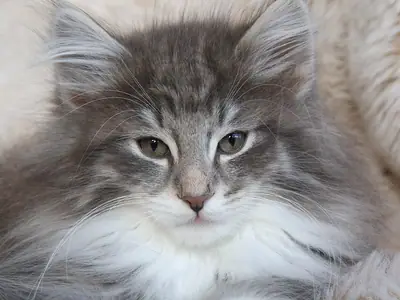
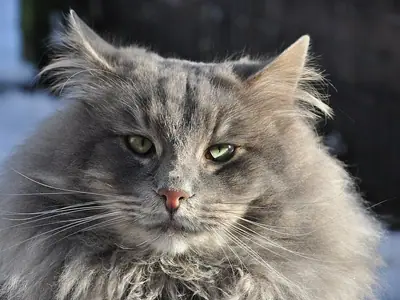
- Head: an equilateral triangle with a straight profile from brow to nose tip; large almond-shaped eyes [1].
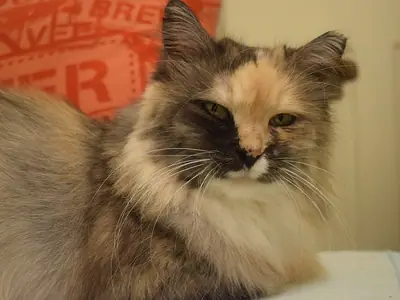
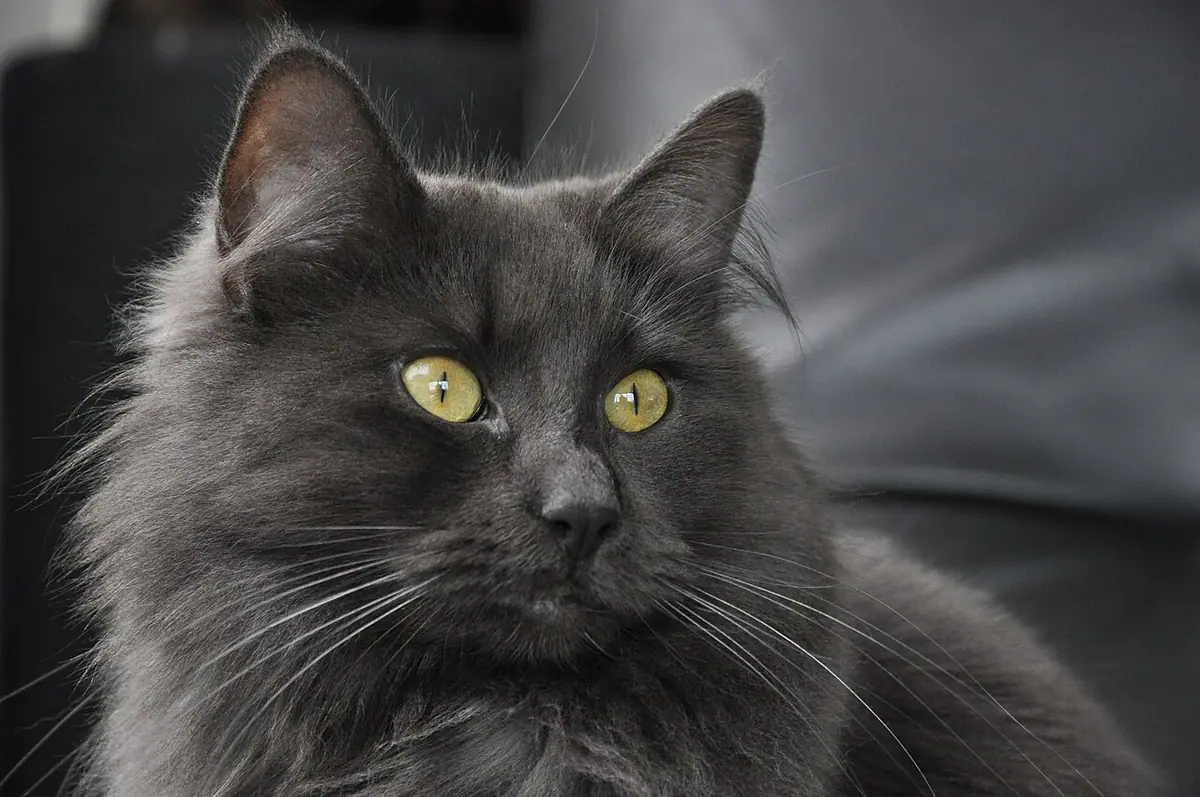
- Coat: thick double coat with a silky, water-repellent topcoat and a ruff on the neck and chest [1].
- Weatherproofing: heavily furnished ears, tufted paws and a long bushy tail deflect wind and snow [1].
- Weight: males about 12–16 lb, females 9–12 lb, reached after up to five years of growth [1].
Photo gallery
7 photos · tap to enlarge- (enlarge, photo 1/7)
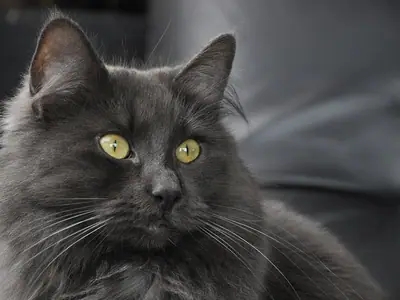
- (enlarge, photo 2/7)
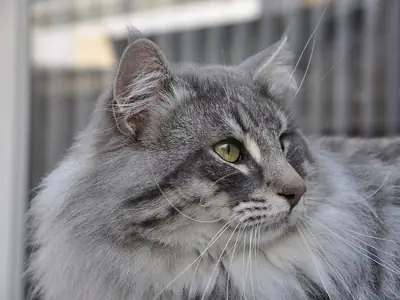
- (enlarge, photo 3/7)
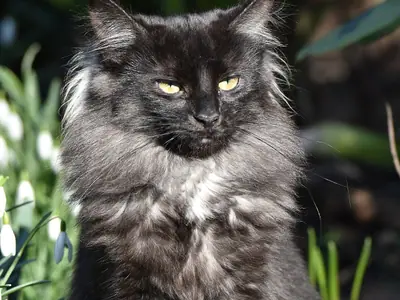
- (enlarge, photo 4/7)
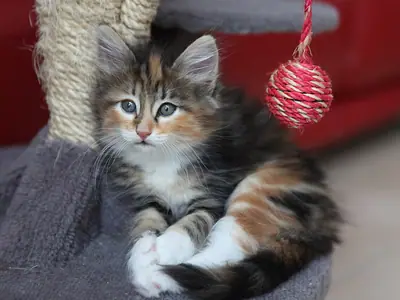
- (enlarge, photo 5/7)
- (enlarge, photo 6/7)
- (enlarge, photo 7/7)
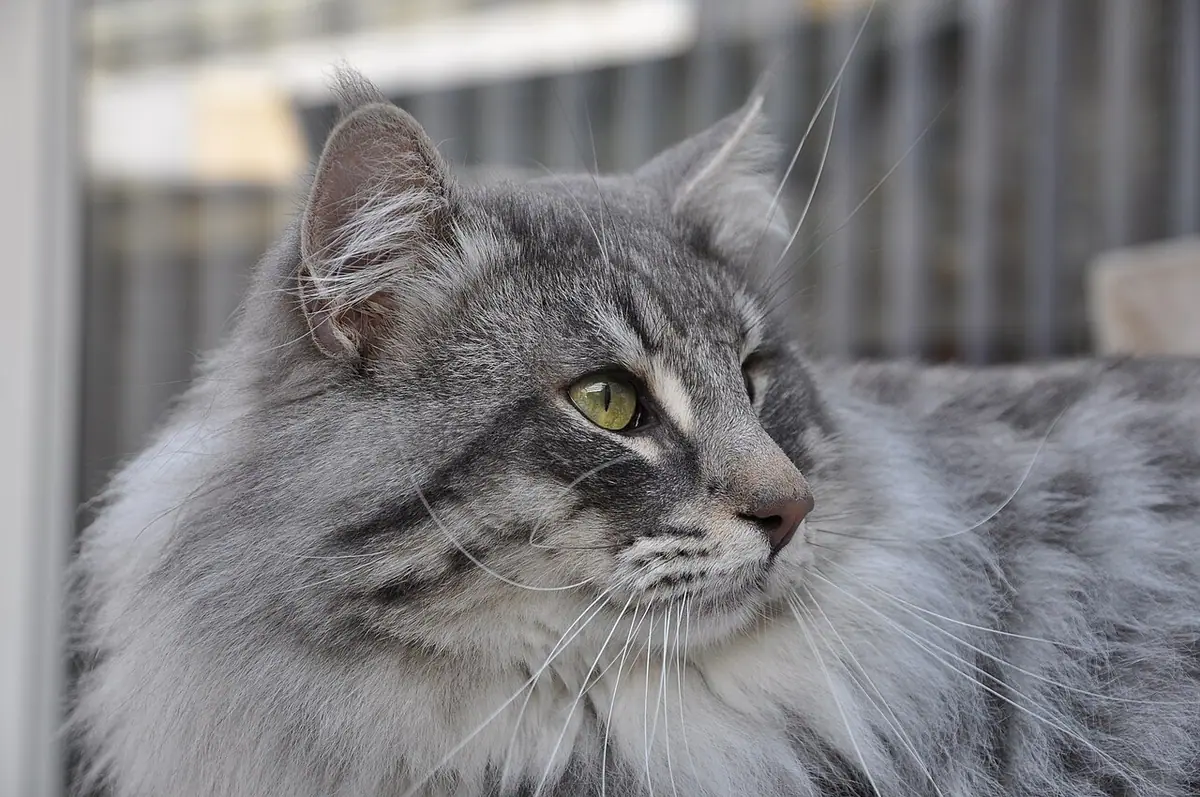
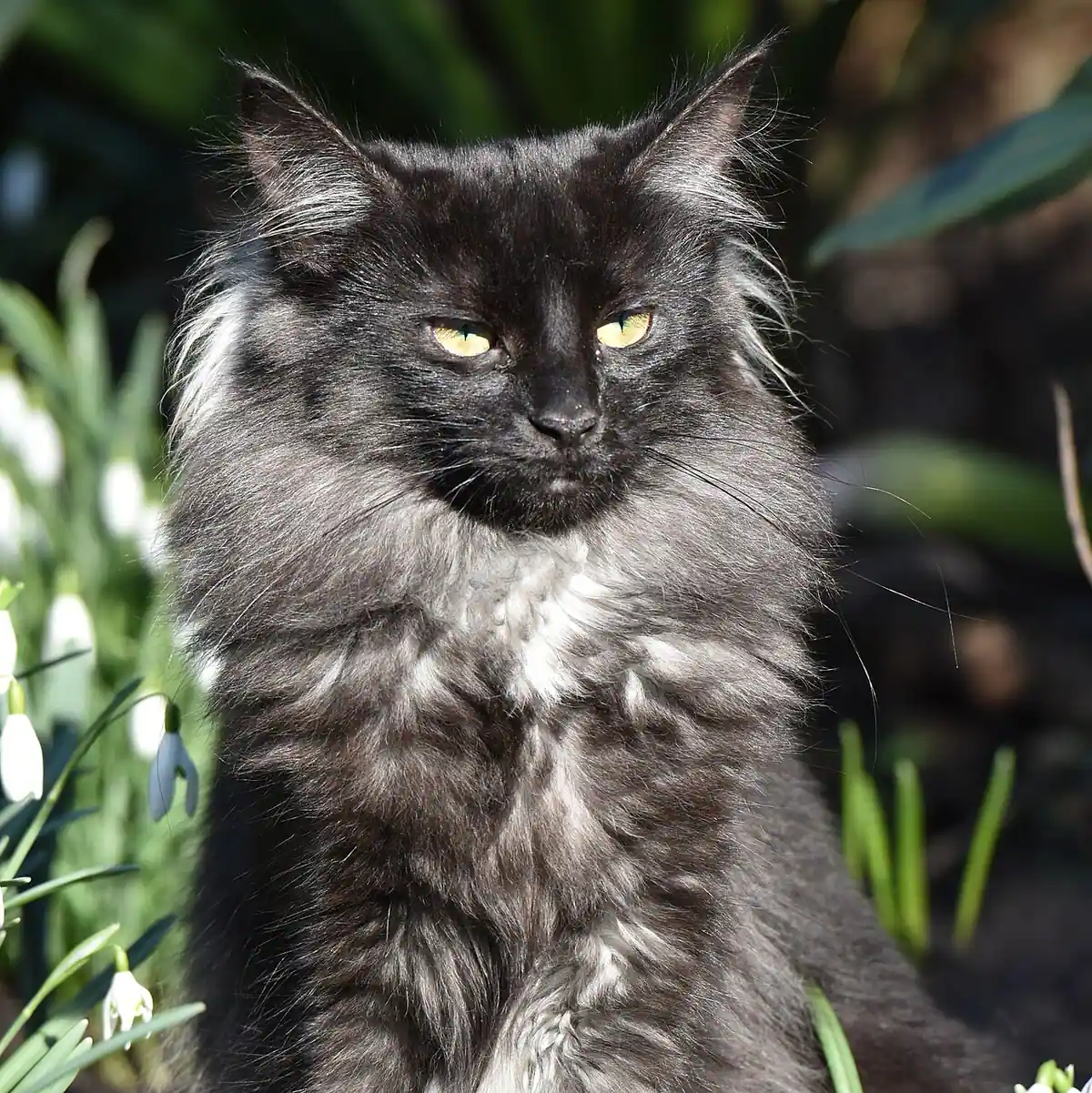
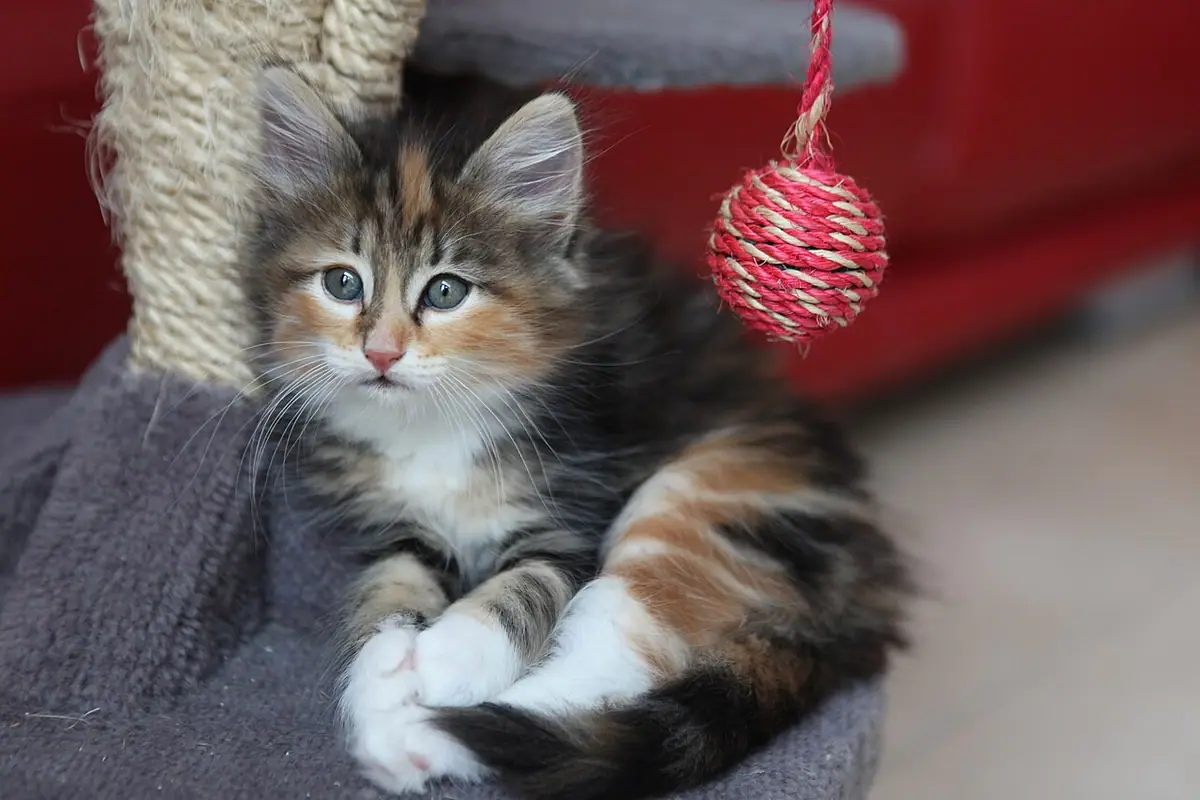
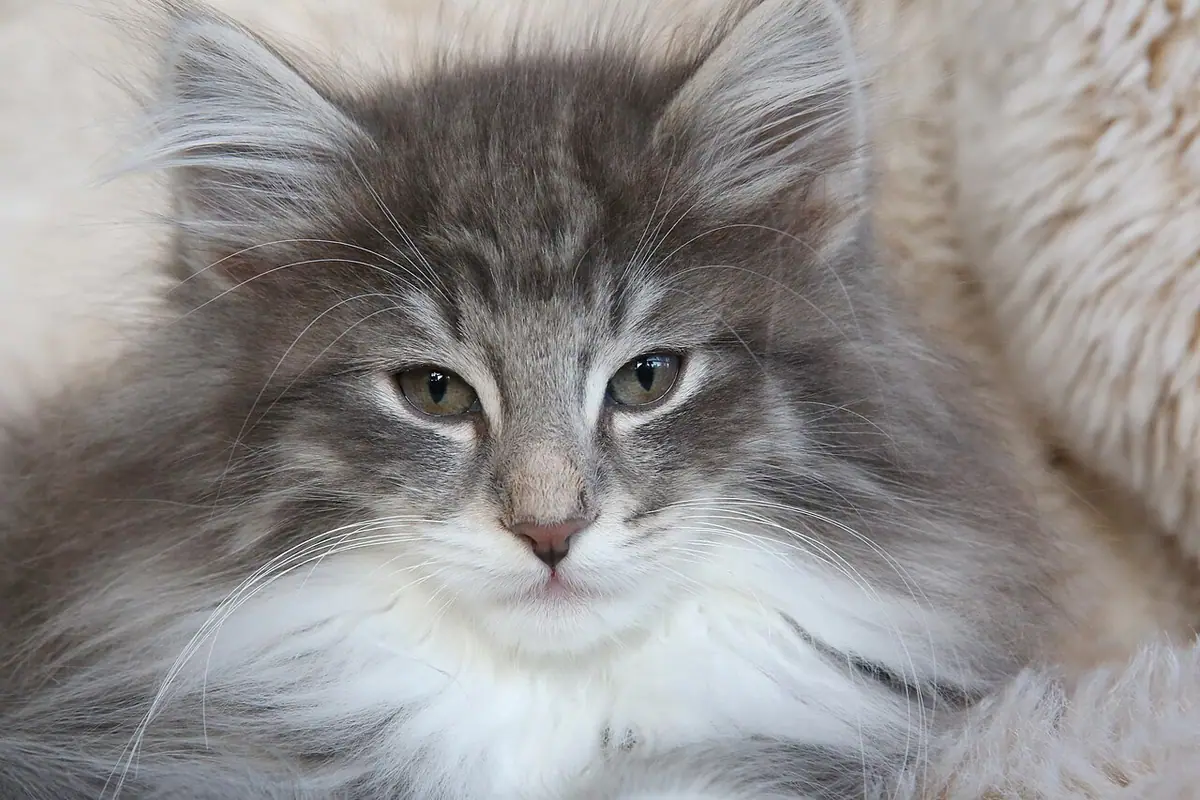
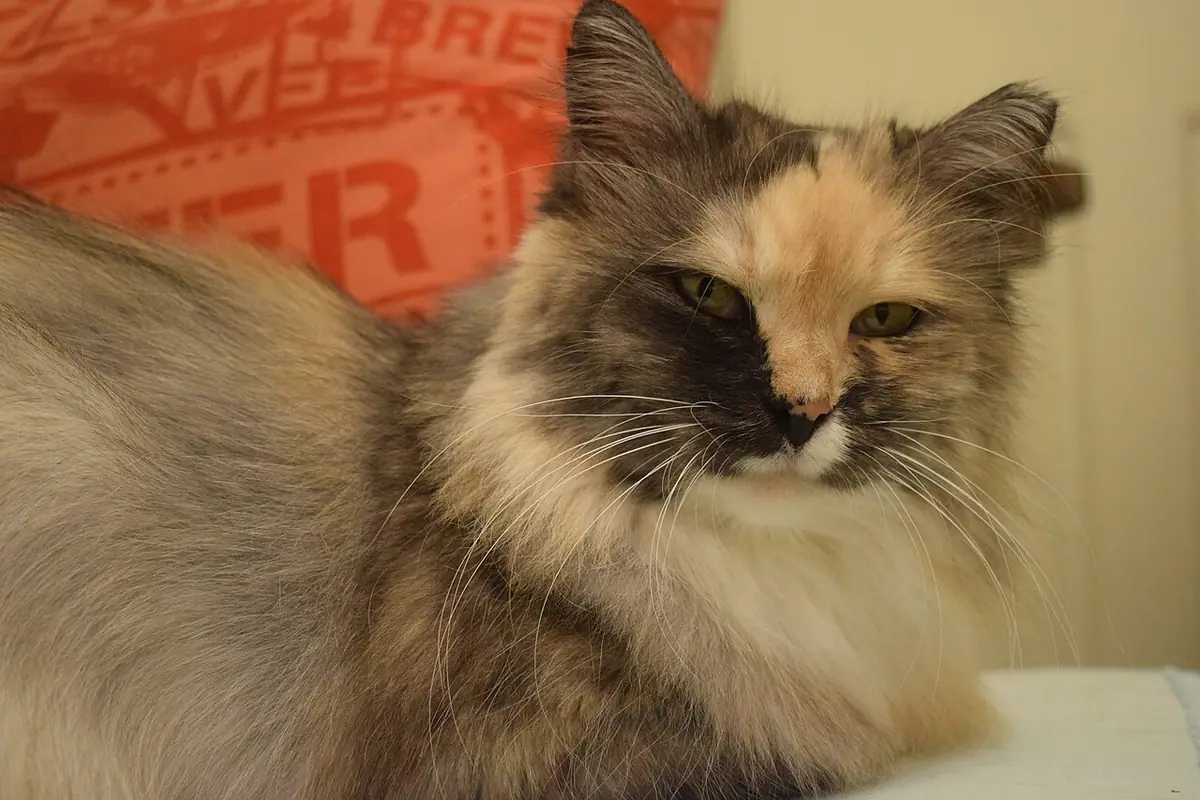
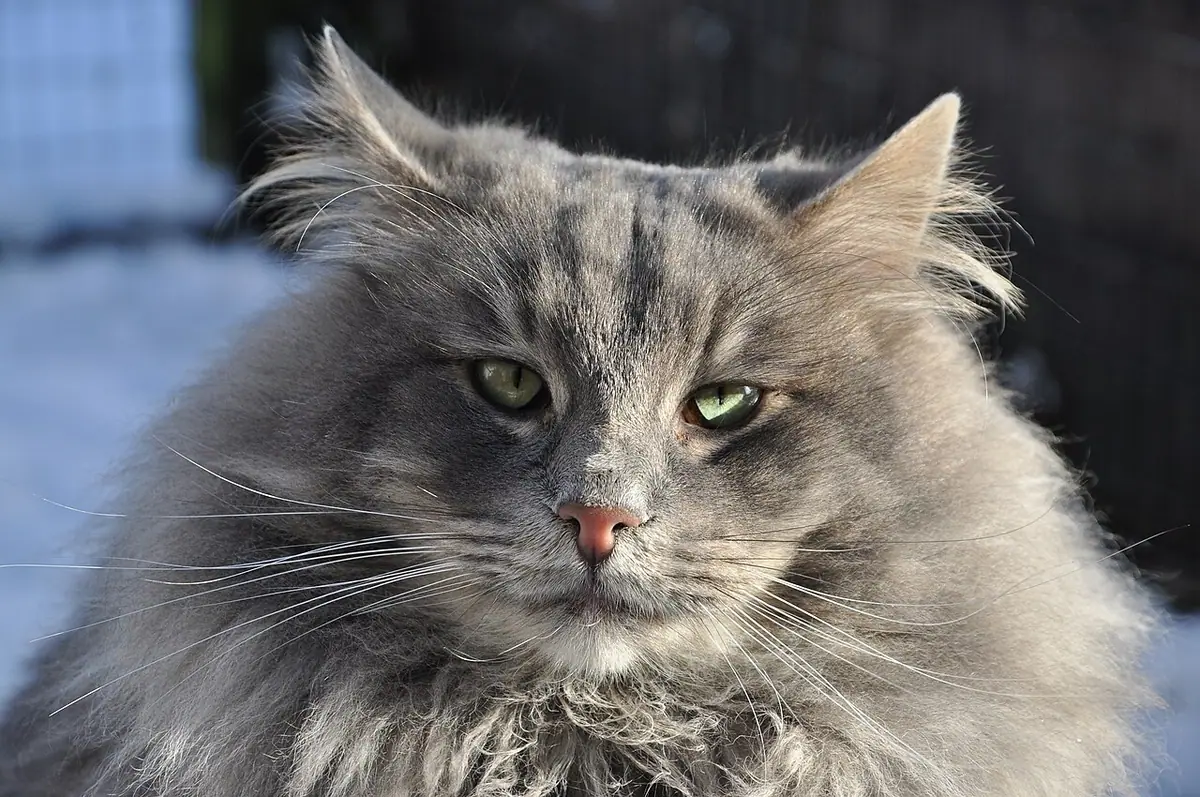
.jpg)
Photos: Wikimedia Commons – author & licence shown when enlarged and on the Photo credits page.
Temperament
Wegies are independent and intelligent, in keeping with their self-sufficient past [1]. They're not clingy, but they'll seek company if left alone too long [1]. They can be lap cats, on their own terms [1]. Moderately active, they have random bursts of energy and like to chase, hide and ambush their toys [1]. Their voices range from a soft purr to bird-like chirps when excited [1]. They get along with other cats, dogs and children [1].
Care
- Combing: the coat tangles less than most longhairs; comb regularly with a stainless-steel comb [1]. Spring, when the winter coat sheds, needs more attention [1].
- Bathing: ask your breeder about products and technique; the water-repellent coat is slow to wet and slower to dry [1].
- Heights: provide tall scratching posts or cat trees [1].
Health
- HCM and GSD: hypertrophic cardiomyopathy and glycogen storage disease have occurred in the breed. Breeders now test routinely and are removing carriers from the gene pool [1].
- Slow maturity: full growth can take up to five years [1].
- Lifespan: GCCF estimates 14–16 years [3]. We found no breed-specific longevity study.
Ask the breeder about the parents' test results, and talk to your vet about any specific concern.
Don't confuse with…
- Maine Coon: rectangular head, square muzzle [4].
- Siberian: rounded contours, full rounded muzzle, almost round eyes [5].
Ask your vet. This information is for reference only and does not replace a veterinary diagnosis.
Fun facts
Frequently asked questions
Is a Norwegian Forest Cat hard to groom?
Less than it looks. The coat tangles less than most longhairs; regular combing with a stainless-steel comb is enough. Expect more work in spring as the winter coat sheds, and some textures mat more easily [1].
Do Norwegian Forest Cats like being held?
On their terms. They can be lap cats, but getting on and off is always their decision. They're not clingy, but they'll look for company if left alone too long [1].
How is a Norwegian Forest Cat different from a Maine Coon?
Look at the head: the Wegie has an equilateral-triangle head with a straight profile from brow to nose tip [1]; the Maine Coon has a rectangular head and square muzzle [4].
What kind of space does a Wegie need?
They love heights, so provide tall scratching posts or cat trees, or your cat may claim the top of the kitchen cabinet [1].
Similar breeds


Breed photos: Wikimedia Commons (CC0 / CC BY / CC BY-SA) – authors & licences on the Photo credits page.
References
- CFA, Norwegian Forest Cat (breed profile & standard)
- FIFe, Breeds (NFO Norwegian Forest Cat, fully recognised)
- GCCF, Cat Breeds (Norwegian Forest breed card)
- CFA, Maine Coon (breed profile & standard)
- CFA, Siberian (breed profile & standard)
- TICA, Browse All Breeds (Norwegian Forest listed)
Accessed: 2026-10-02
Written by Catopidia from the sources above. Photos credit their author and licence under each image and on the Photo credits & licences.