Cat breed · Russia
Russian Blue
Mèo xanh Nga

The Russian Blue is an elegant shorthair with a silver-tipped blue coat that shimmers in sunlight and vivid green eyes [1]. CFA ranks it among the cleverest of all breeds [1]. Russians are easy to care for and don't need much space; they can be shy at first but become affectionate companions once they know you [1]. The breed is recognised by CFA [1], TICA [4], FIFe [2] and GCCF [3].
Contents (10 sections)
Quick facts
- Origin
- Russia (believed to come from the Archangel Isles)
- Weight
- ~2.3–4.5 kg
- Lifespan
- ~12–15 years
- Coat
- short, dense
- Energy
- moderate
Details & sources
Traits (scale 1–5)
- Energy
- 3/5
- Shedding
- 2/5
- Grooming needs
- 1/5
- Good with kids
- 3/5
- Vocal
- 3/5
- Independence
- 3/5
Basis: Editorial estimate based on CFA's description, not a measurement; vocal set to neutral because the source does not say
Registry recognition
| CFA | Yes |
|---|---|
| TICA | Yes |
| FIFe | Yes |
| GCCF | Yes |
History
Russian Blues are believed to come from the Archangel Isles in northern Russia, though there's little written history before the late 1800s [1]. Russian folklore casts them as good-luck charms [1]. They're thought to have reached England with sailors, and they competed at the early English shows as "Archangel Cats" alongside every other solid blue cat [1]. From the early 20th century until World War II, Scandinavian breeders led the breed's development. After the war, US breeders imported cats from Europe and combined English and Scandinavian lines into the Russian Blue we know today [1]. FIFe has recognised the breed since its founding in 1949 [2].
Appearance
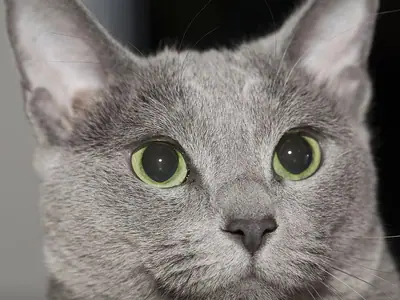
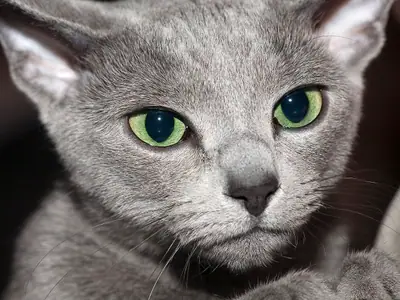
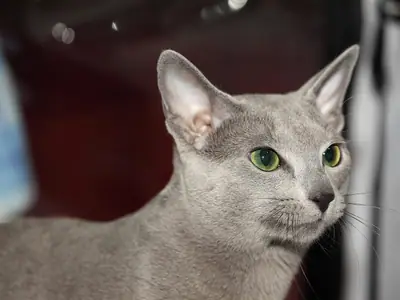
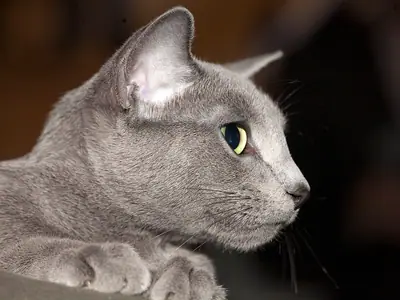
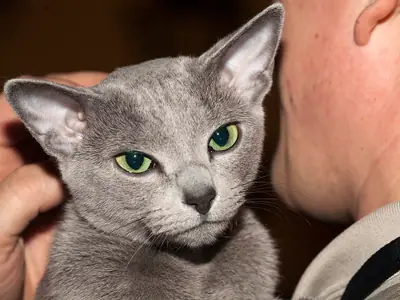
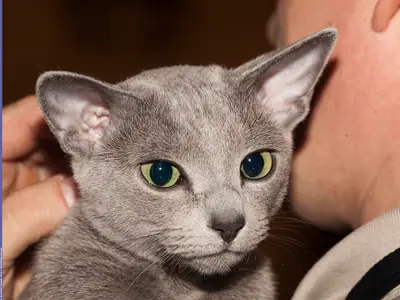
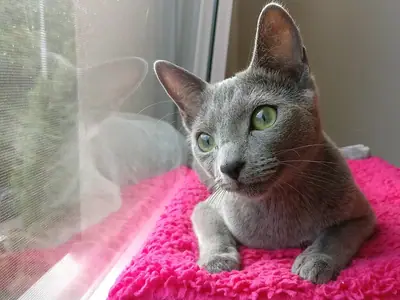
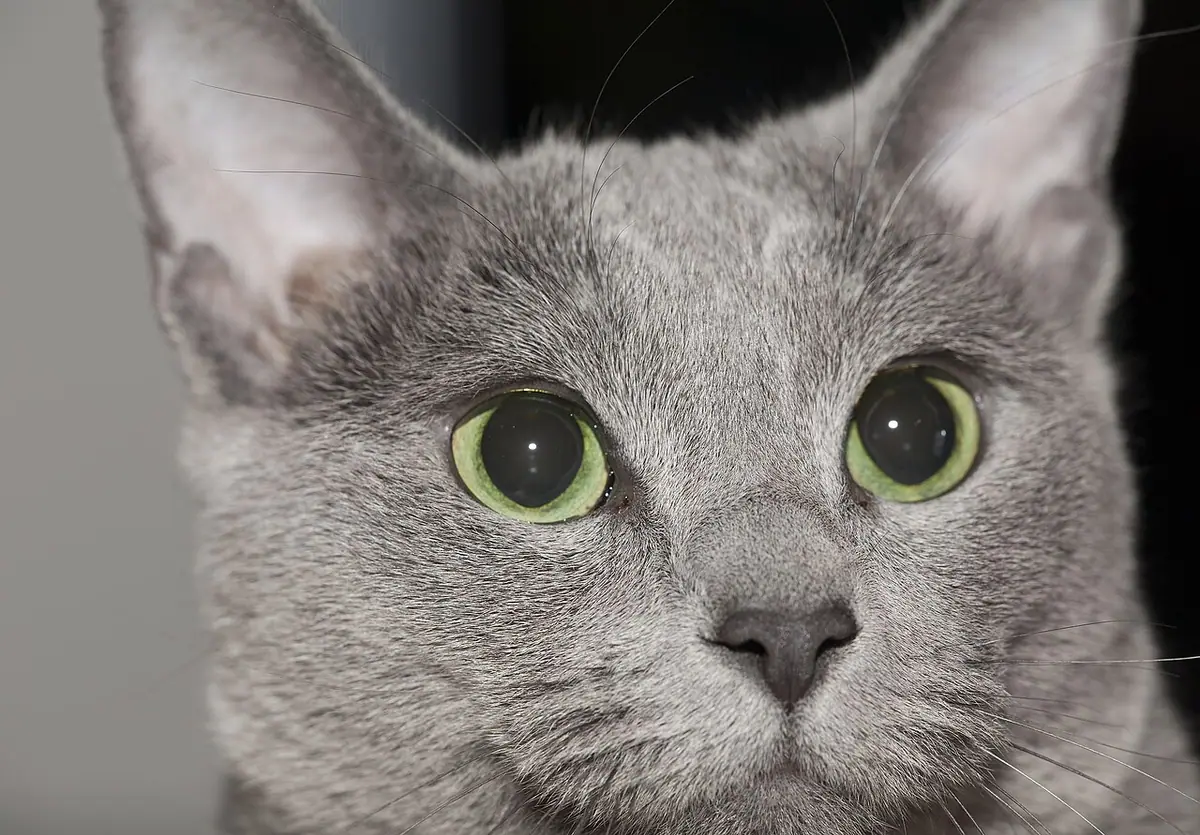
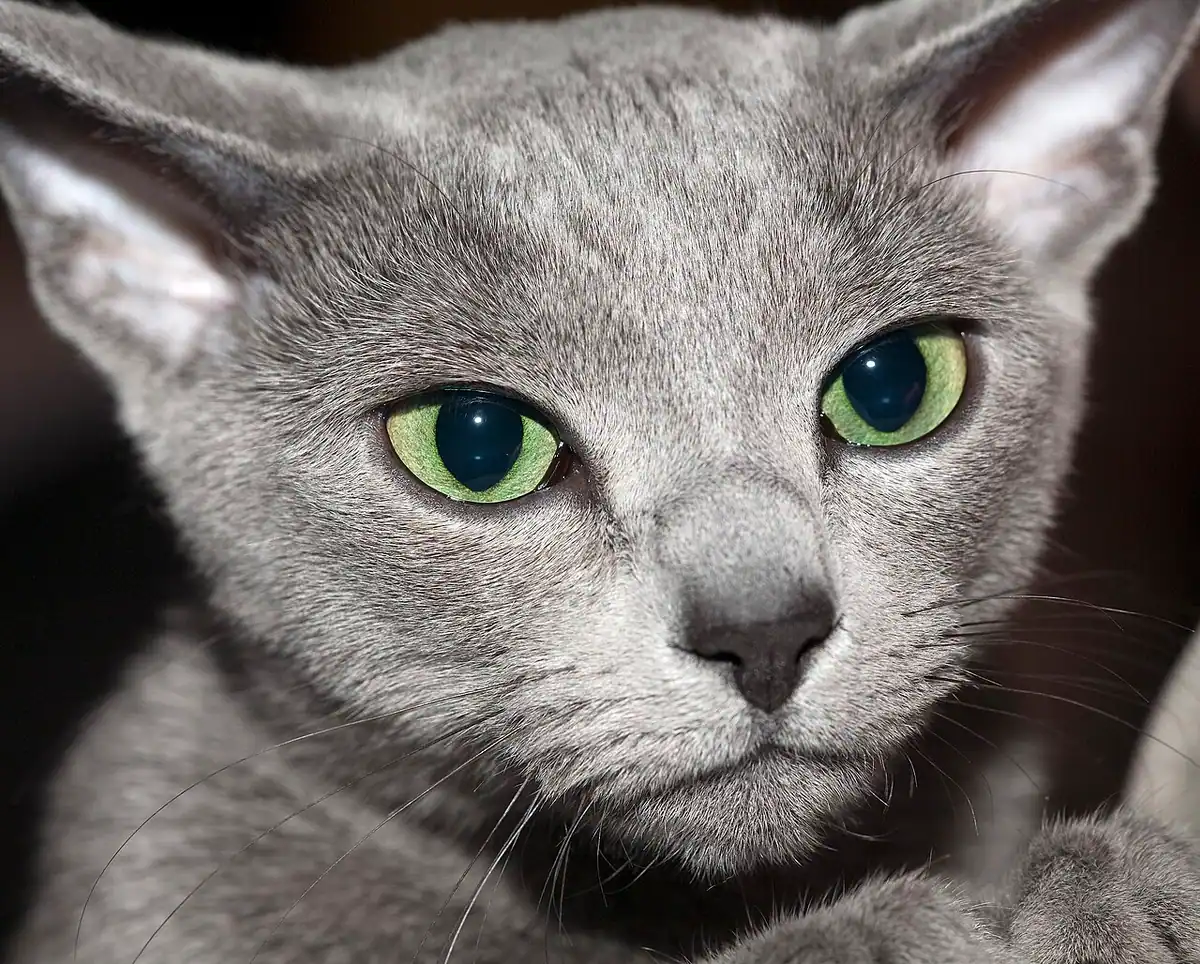
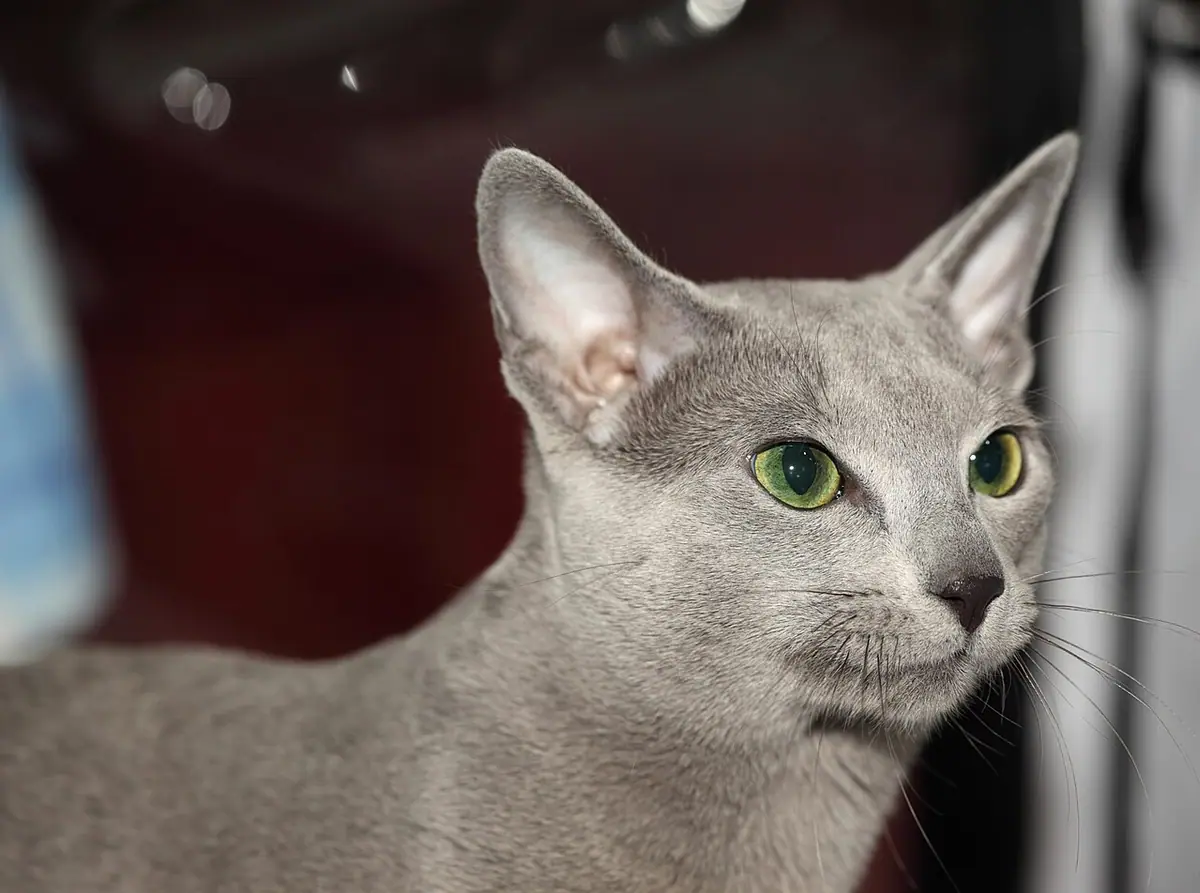
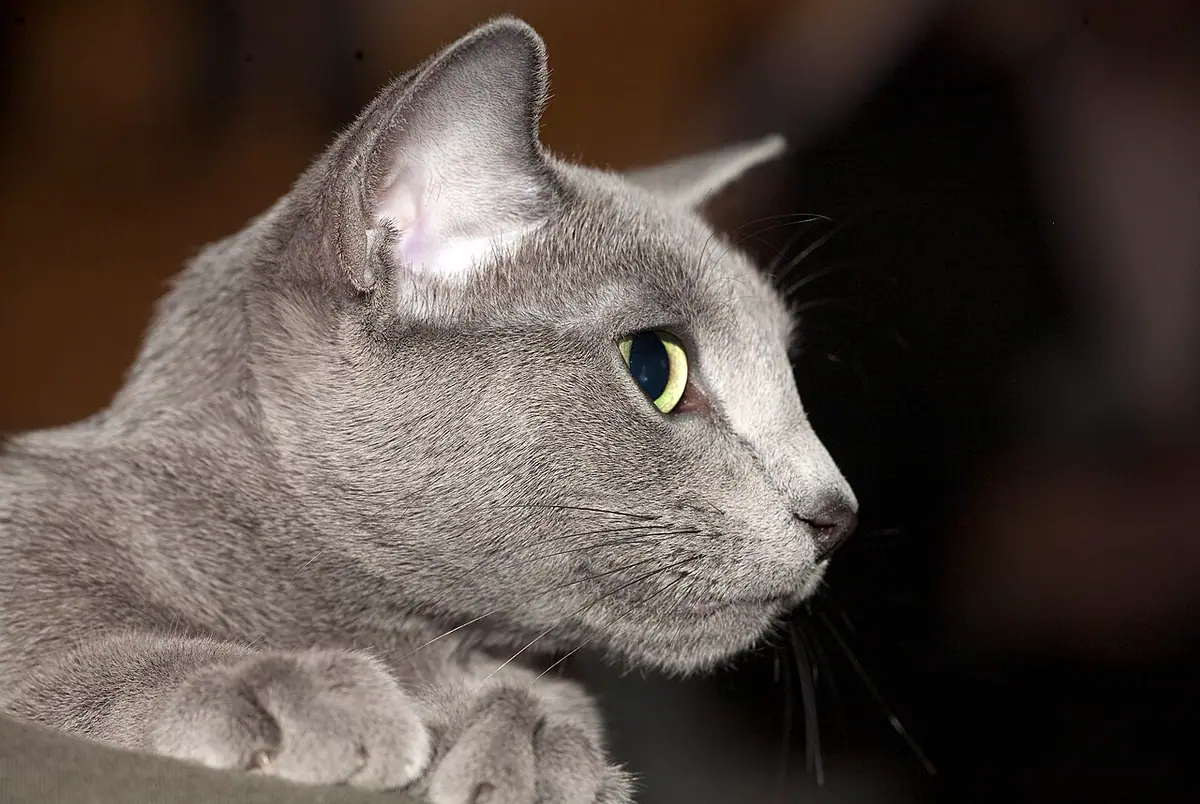
- Coat: short, very dense and plush, with silver tips. Run your fingers through it and you leave little "footprints" [1].
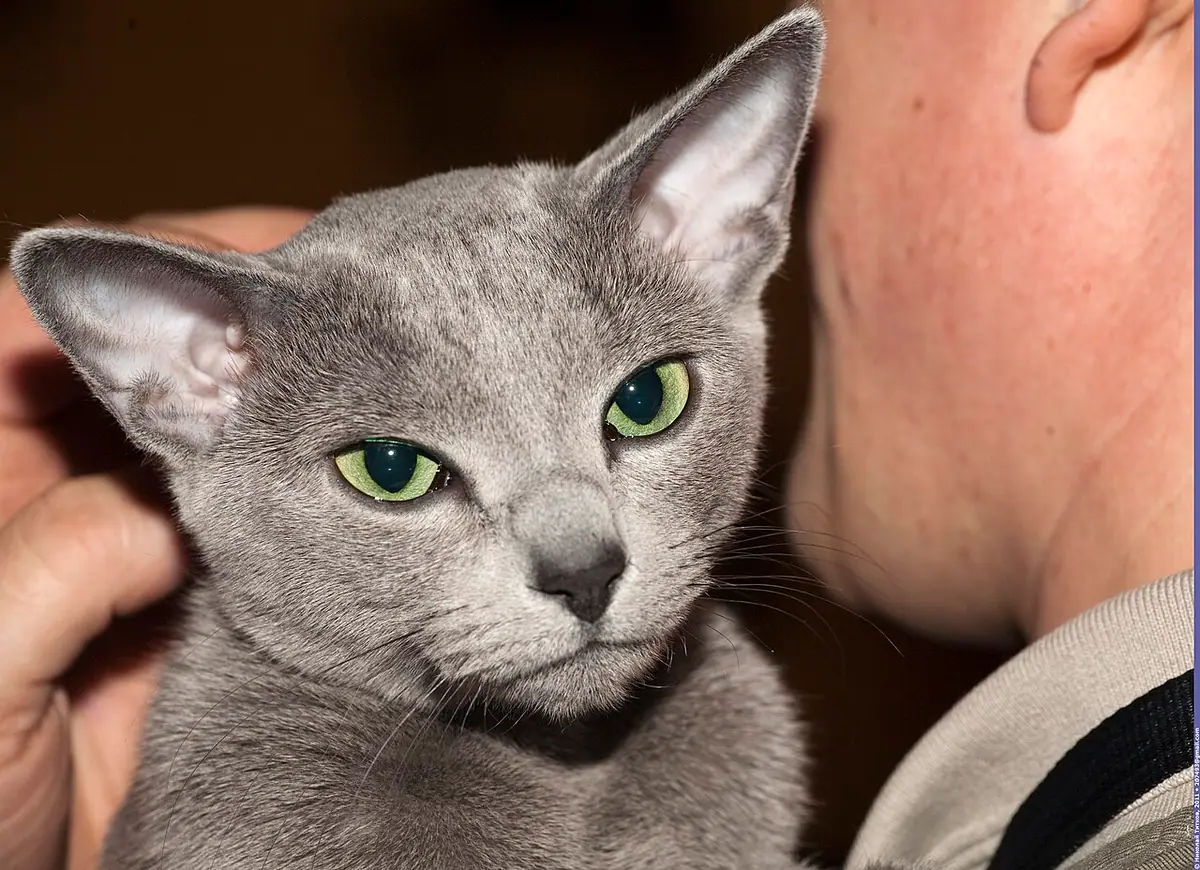
- Eyes: green, deepening with age [1].
- Head: a modified wedge with a two-plane profile; large ears, broad at the base and set far apart [1].
- Body: medium-long and graceful [1].
- Colour: CFA accepts only blue; GCCF also accepts black and white [3].
- Weight: males rarely exceed 10 lb, and females range from 5 to 8 lb [1].
Photo gallery
7 photos · tap to enlarge- (enlarge, photo 1/7)
- (enlarge, photo 2/7)
- (enlarge, photo 3/7)
- (enlarge, photo 4/7)
- (enlarge, photo 5/7)
- (enlarge, photo 6/7)
- (enlarge, photo 7/7)
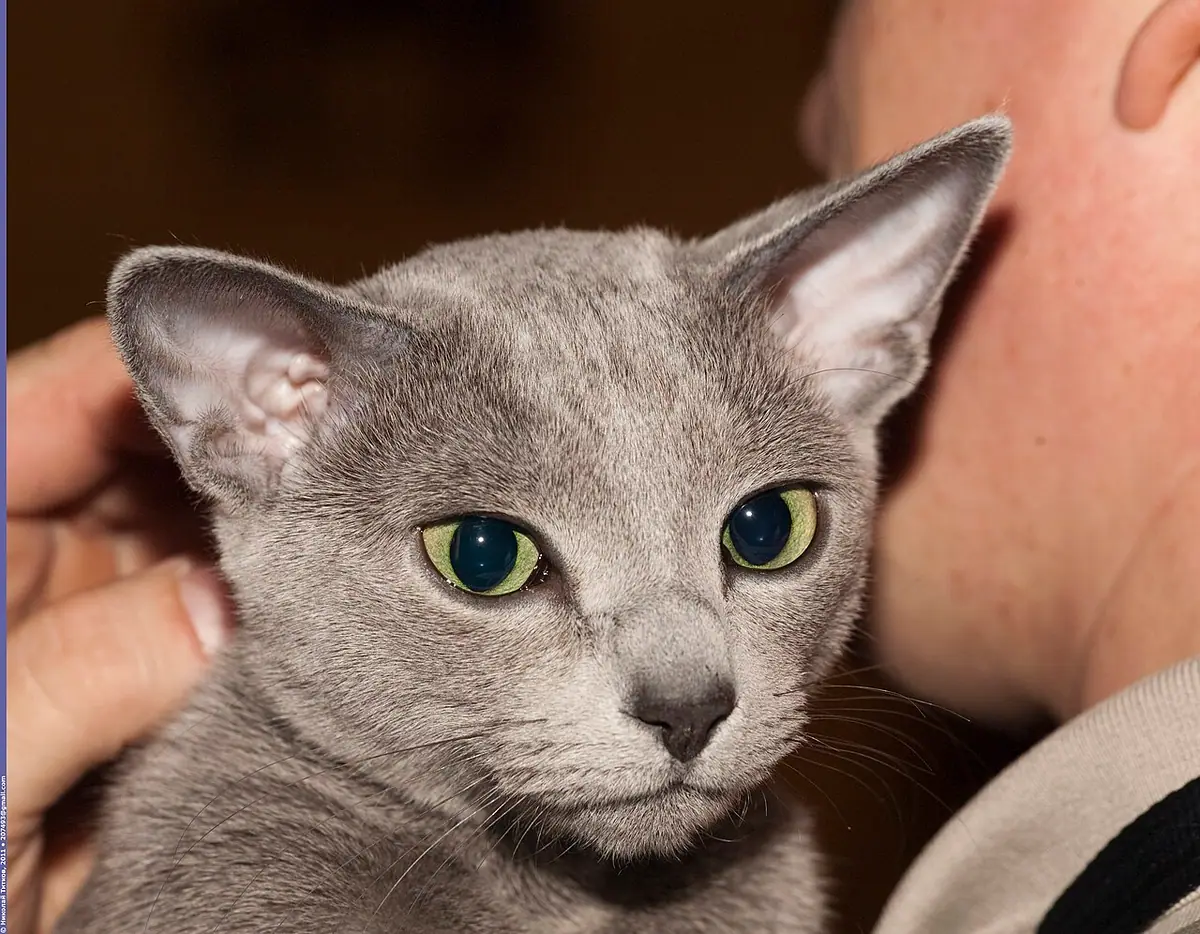
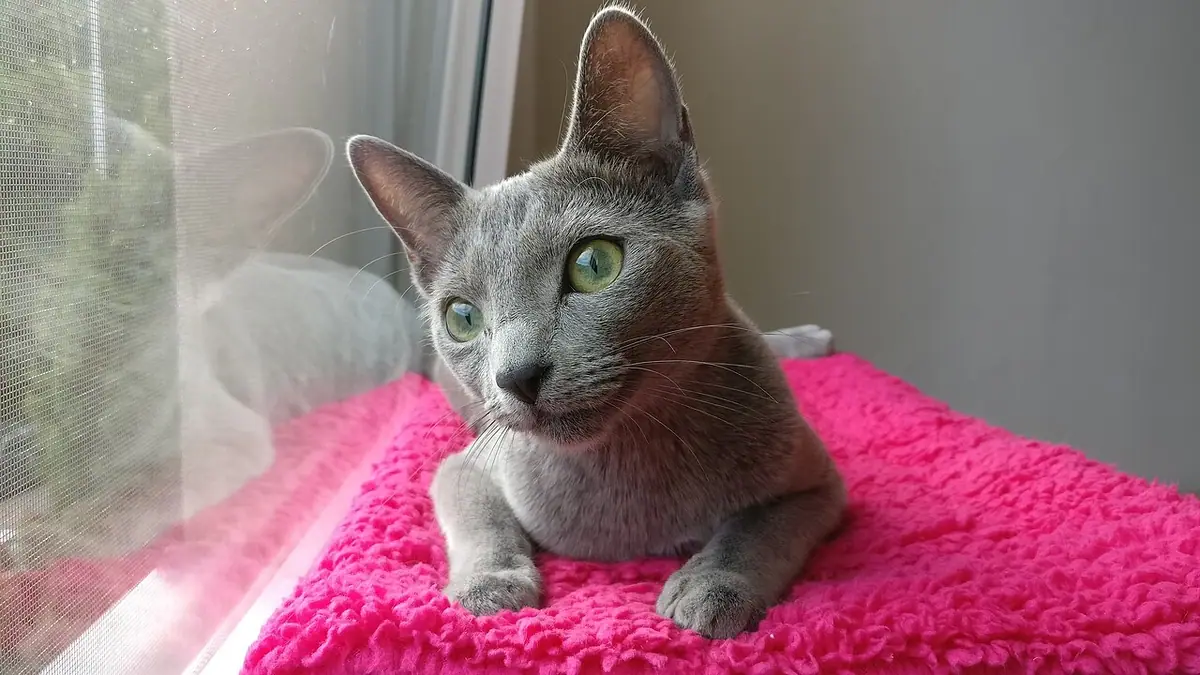

Photos: Wikimedia Commons – author & licence shown when enlarged and on the Photo credits page.
Temperament
Russians are very intelligent, with real mechanical aptitude: closed cabinets, drawers and lidded jars are all fair game [1]. Puzzle toys and interactive games are a good outlet [1]. They're loving companions that will seek out your lap or ride around on your shoulder [1]. A Russian will often hide under the sofa when guests arrive, until curiosity gets the better of it [1]. They're sensitive to their people's moods and suit older children who'll be patient with them [1].
Care
Health
- No known breed-specific genetic problems, according to CFA, though some believe the relatively small gene pool could make the cats more susceptible to certain diseases [1].
- Obesity is the main risk CFA flags [1]. Across all cats, a non-ideal weight is linked to shorter lives [7].
- Lifespan: GCCF estimates 12–15 years [3]. We found no breed-specific longevity study.
Keep an eye on your cat's weight, and talk to your vet about any specific concern.
Don't confuse with…
- Korat: also silver-tipped blue with green eyes, but with a heart-shaped head and a glossy, fine coat [5].
- British Shorthair (blue): cobby, with a big round head and round cheeks [6].
- Chartreux: another blue breed, with a dense, short, woolly coat [3].
Ask your vet. This information is for reference only and does not replace a veterinary diagnosis.
Fun facts
Frequently asked questions
Are Russian Blues easy to keep?
Fairly easy. They're clean cats that need combing only two or three times a month, plus nail, eye and ear care [1]. They don't need much space, but they're very smart and need puzzle toys and interactive play [1].
Are Russian Blues shy?
At first. Many hide under the sofa when a guest arrives, but curiosity soon brings them out. With their own people they're affectionate and may sit on your lap or ride on your shoulder [1].
How is a Russian Blue different from a blue British Shorthair?
The Russian is slender, with a wedge-shaped head, large ears, green eyes and a silver-tipped coat [1]. The British Shorthair is cobby, with a big round head and round cheeks [6].
Are Russian Blues good with children?
CFA says they suit older children who'll let the cat take its time. They do best in quieter homes, though many thrive in busier ones [1].
Similar breeds


Breed photos: Wikimedia Commons (CC0 / CC BY / CC BY-SA) – authors & licences on the Photo credits page.
References
- CFA, Russian Blue (breed profile & standard)
- FIFe, Breeds (RUS Russian Blue; recognised since 1949)
- GCCF, Cat Breeds (Russian and Chartreux breed cards)
- TICA, Browse All Breeds (Russian Blue listed)
- CFA, Korat (breed profile & standard)
- CFA, British Shorthair (breed profile & standard)
- Teng KT et al. (2024). Life tables of annual life expectancy and risk factors for mortality in cats in the UK. J Feline Med Surg
Accessed: 2026-10-02
Written by Catopidia from the sources above. Photos credit their author and licence under each image and on the Photo credits & licences.