Cat breed · United States
Exotic Shorthair
Mèo Exotic (mèo mặt tịt lông ngắn)

The Exotic Shorthair has everything that makes a Persian appealing (the round head, short snub nose, huge round eyes and cobby body) in a dense, plush, medium-length coat that's far easier to care for [1]. The result looks like a fluffy teddy bear [1]. Exotics are sweet, loyal and very quiet [1]. The breed is recognised by CFA [1], TICA [7], FIFe [5] and GCCF [6]. Please read the health and welfare note below.
Contents (10 sections)
Quick facts
- Origin
- United States (1950s, Persian × American Shorthair)
- Weight
- ~3.2–6.4 kg
- Lifespan
- ~12–15 years
- Coat
- medium, plush
- Energy
- low
Details & sources
Traits (scale 1–5)
- Energy
- 2/5
- Shedding
- 4/5
- Grooming needs
- 3/5
- Good with kids
- 5/5
- Vocal
- 1/5
- Independence
- 3/5
Basis: Editorial estimate based on CFA's description, not a measurement
Registry recognition
| CFA | Yes |
|---|---|
| TICA | Yes |
| FIFe | Yes |
| GCCF | Yes |
History
In the 1950s several West Coast Persian breeders crossed their cats with American Shorthairs [1]. Short hair is dominant, so the kittens were shorthaired but had the Persian's round head, big eyes and cobby body [1]. The hybrids were controversial at first, but they proved so popular that CFA established them as a breed in 1966 [1]. After the original cross, Exotics were consistently bred back to Persians rather than shorthairs, which is why the two breeds are practically identical in personality [1].
Appearance
- Overall: CFA's standard is identical to the Persian's except for the coat [1].
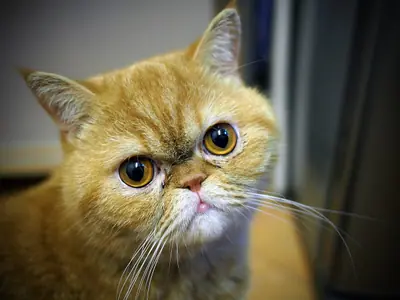
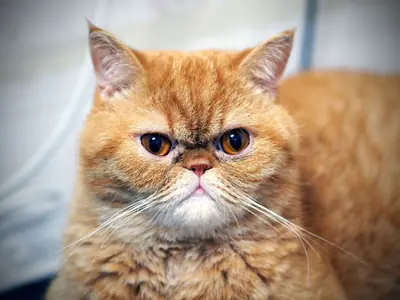
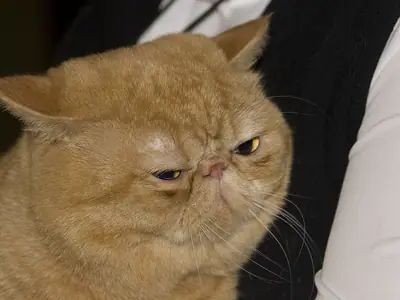
- Head: round and massive with round underlying bone, and a short snub nose with a deep break centred between the eyes [1].
- Body: short, substantial and muscular [1].
- Coat: even in length, dense and plush, with a thick undercoat that makes it stand off the body [1].
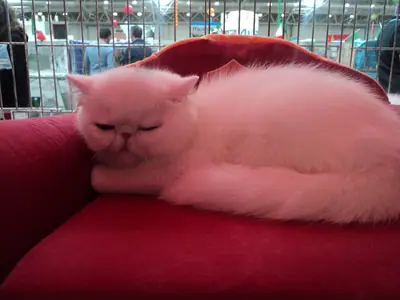
- Colours: CFA shows them in the same seven divisions as Persians: solid, tabby, silver and golden, parti-colour, shaded and smoke, calico and bicolour, and pointed [1].
- Weight: GCCF gives about 7–14 lb [6].
Photo gallery
7 photos · tap to enlarge- (enlarge, photo 1/7)
- (enlarge, photo 2/7)
- (enlarge, photo 3/7)
- (enlarge, photo 4/7)
- (enlarge, photo 5/7)
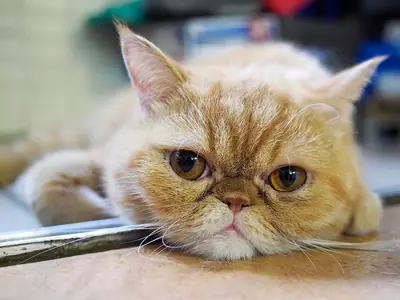
- (enlarge, photo 6/7)
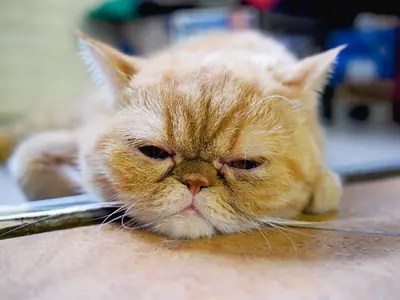
- (enlarge, photo 7/7)
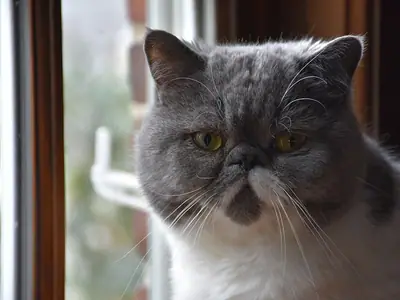
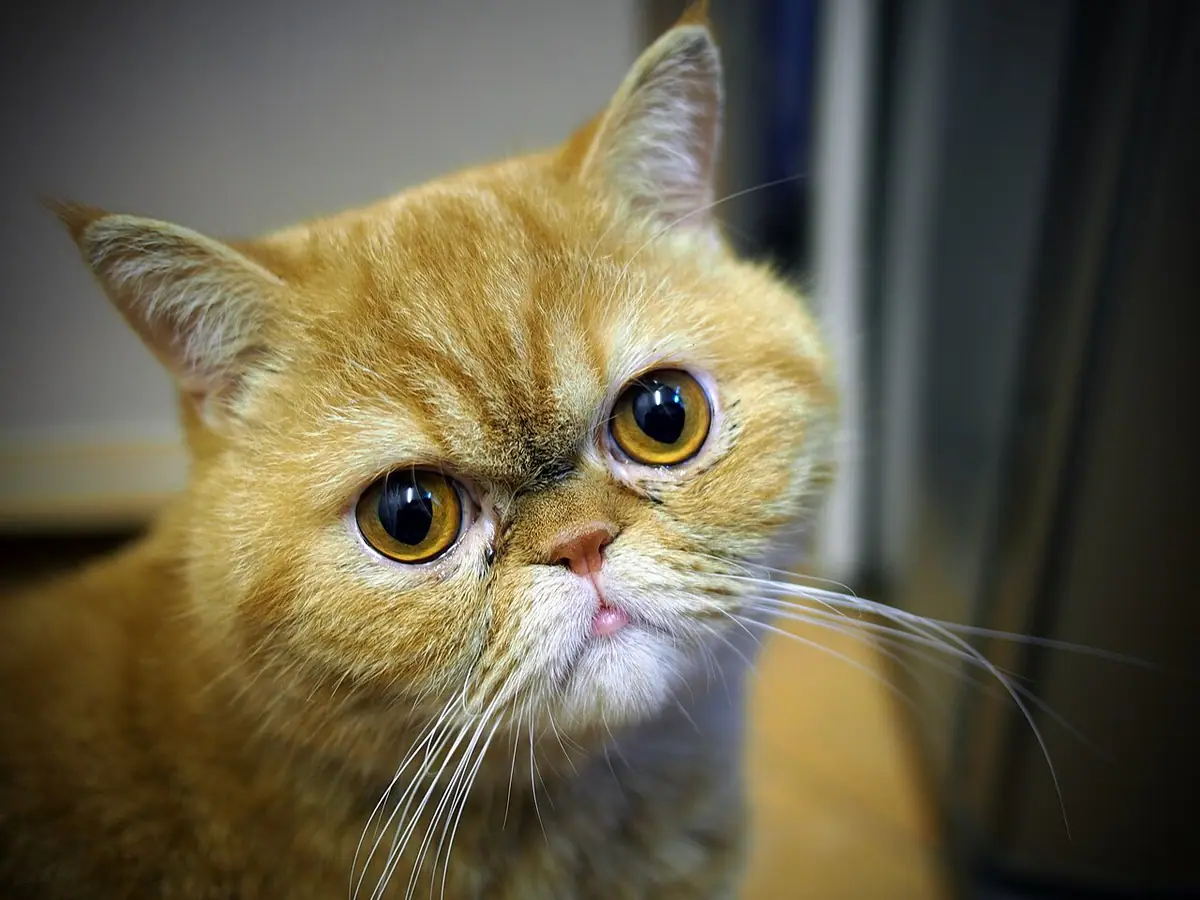
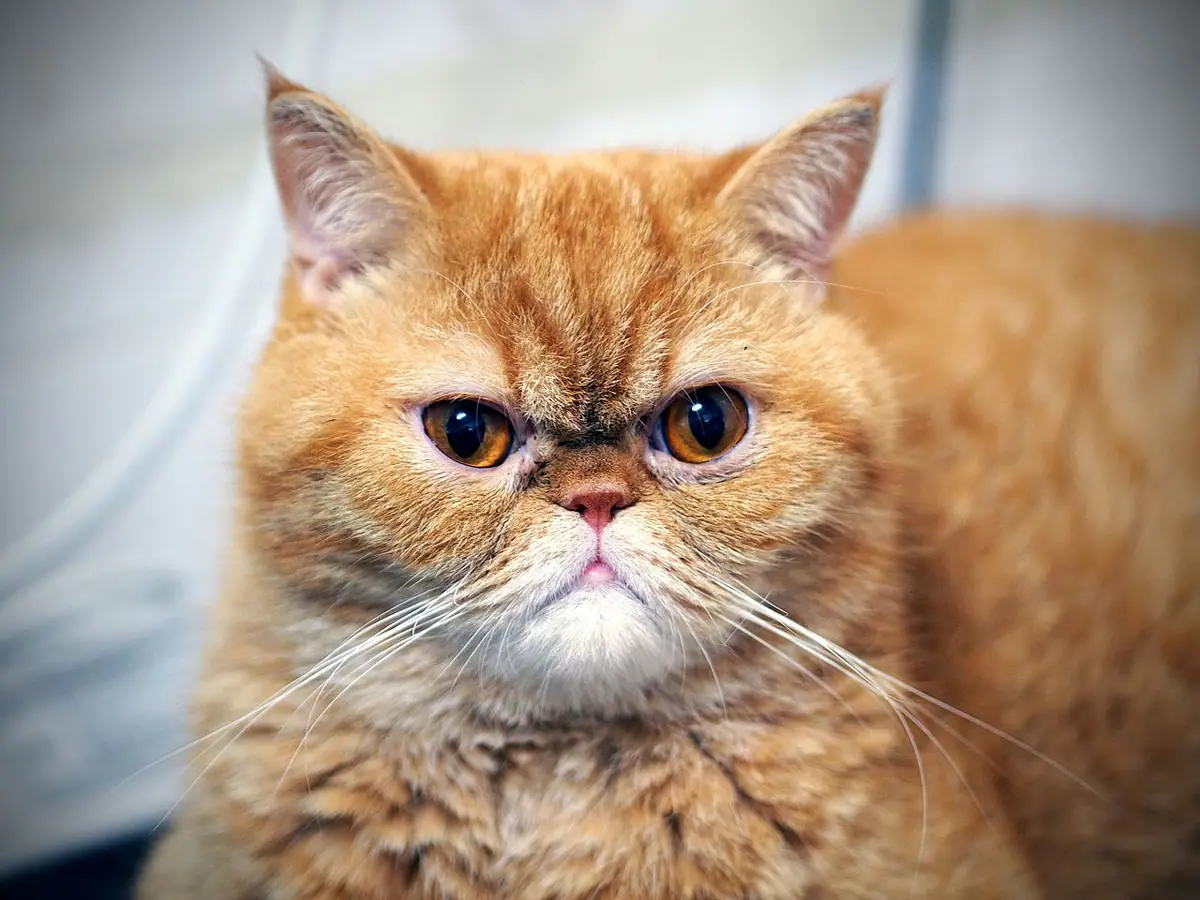
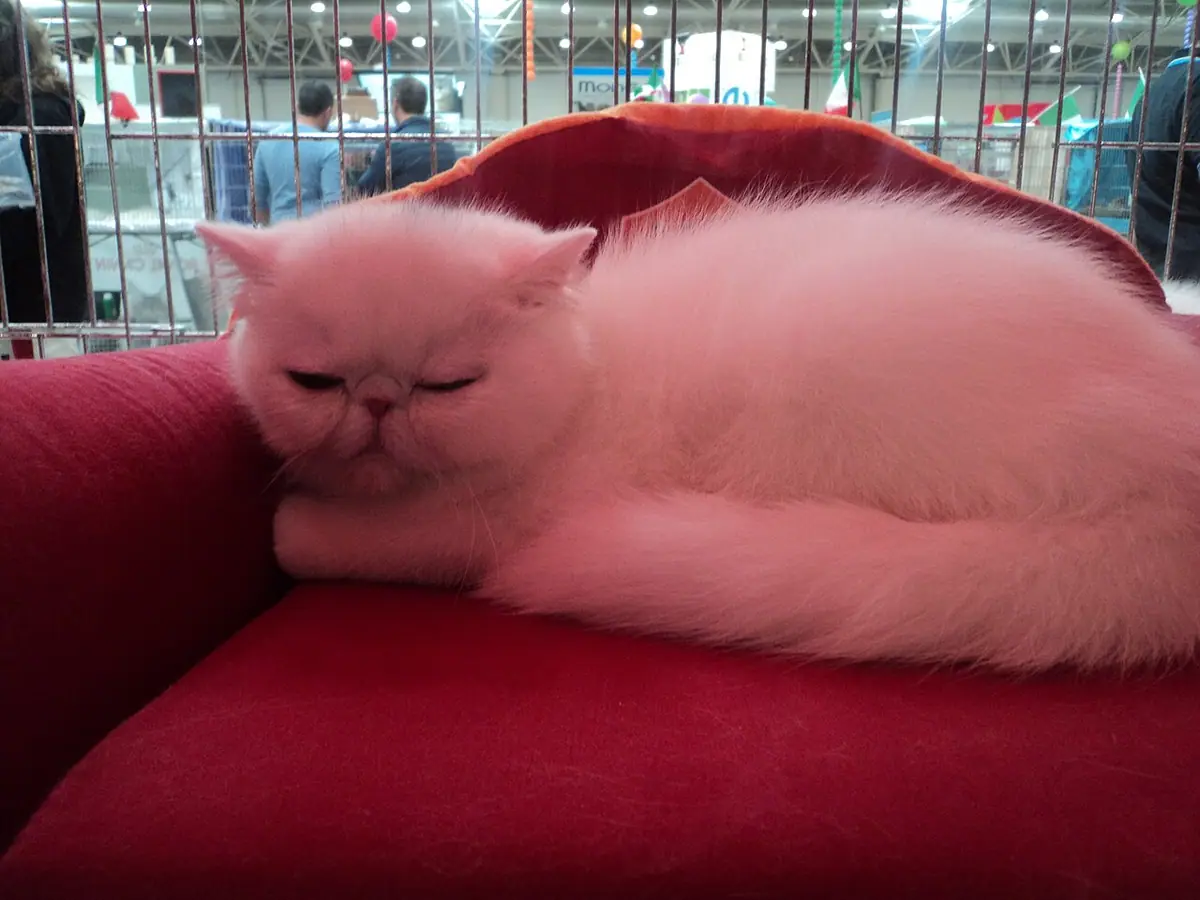
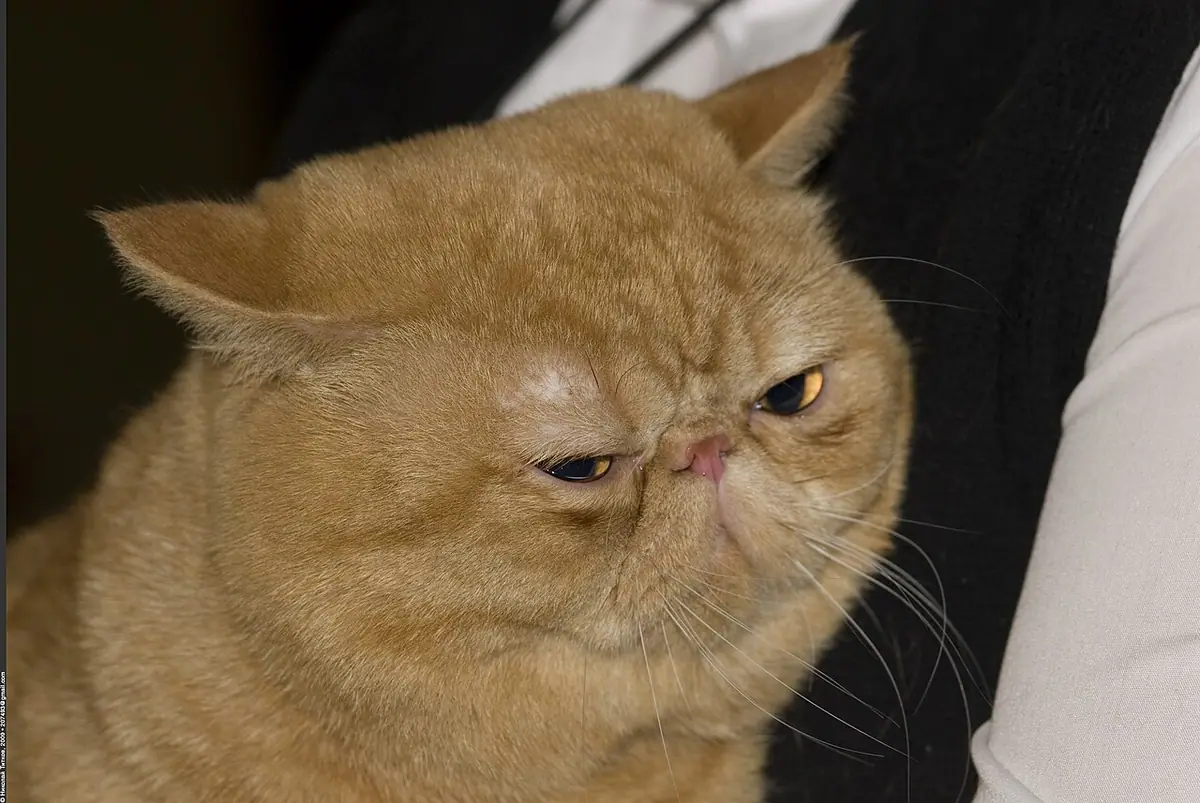
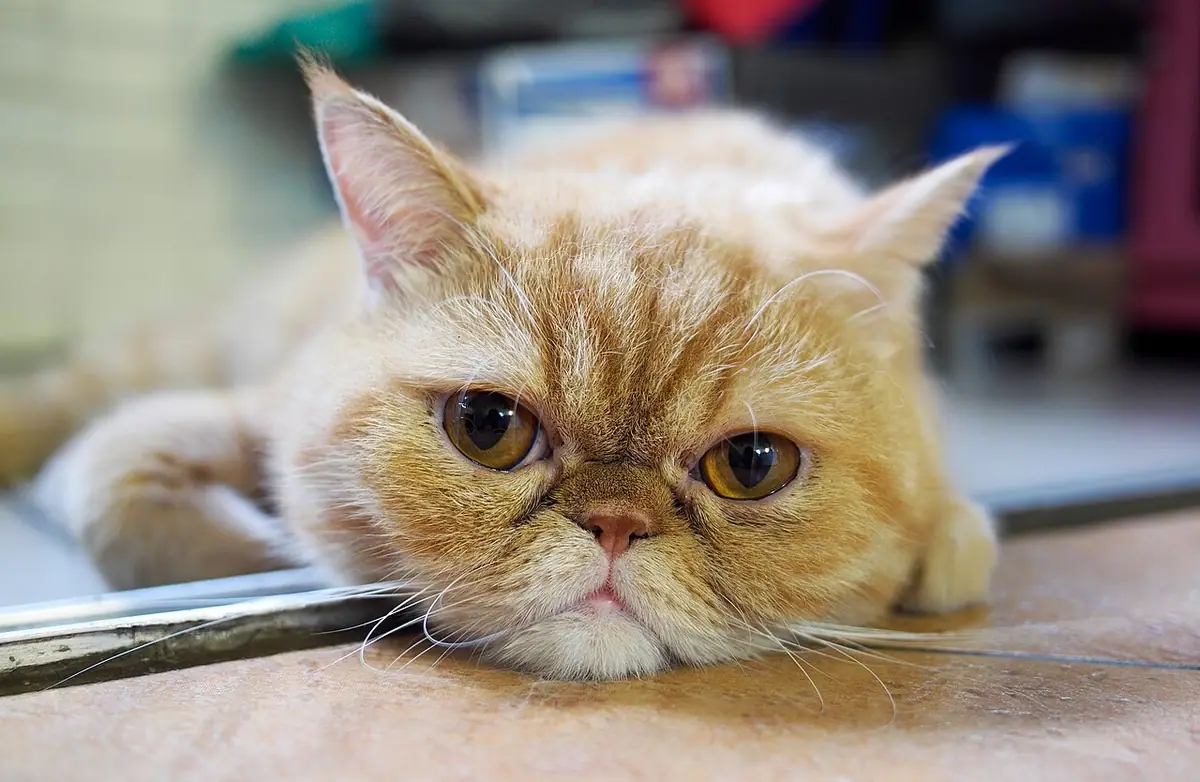
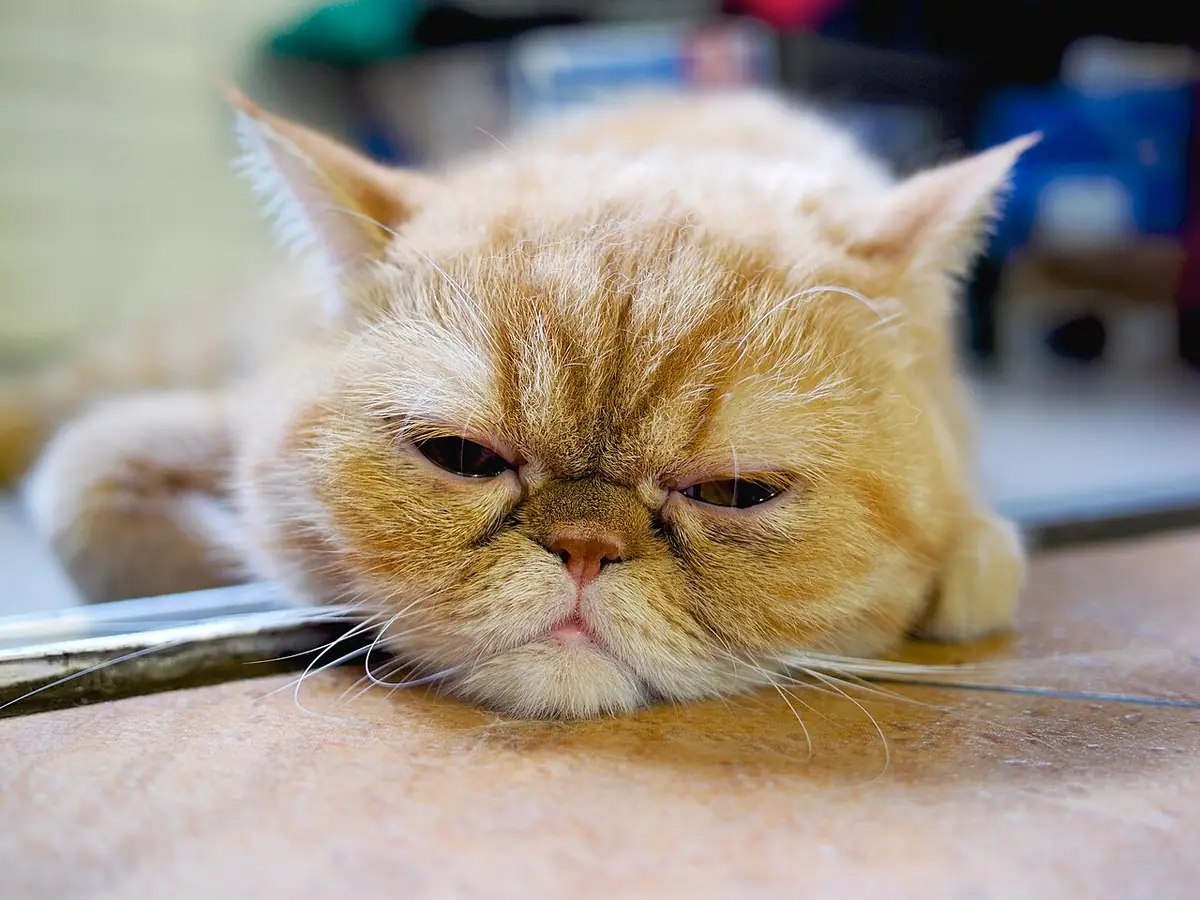
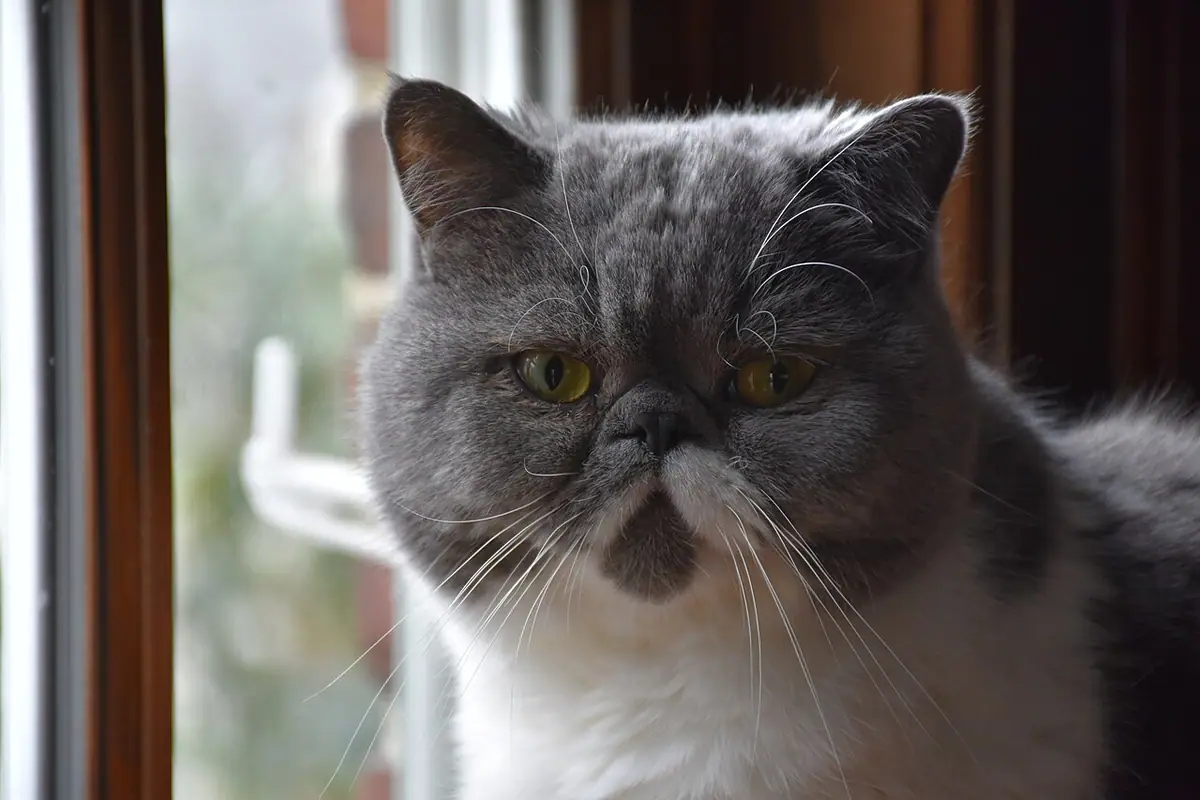
.jpg)
Photos: Wikimedia Commons – author & licence shown when enlarged and on the Photo credits page.
Temperament
Some find Exotics a bit more active and playful than Persians, perhaps because they never had to learn to sit still for long grooming sessions [1]. They're devoted but not intrusive, happy to stay near you without joining in everything [1]. They adapt well and can settle into a new home at any age [1]. CFA calls them an excellent choice for families with young children; they may be shy with other animals at first but soon learn to coexist [1]. Exotics talk with their eyes more than their voices: you'll hear purring, but meows are rare [1].
Care
- Comb with a steel or Teflon-coated comb. For most of the year, once a week is enough [1].
- Exotics shed more heavily than Persians in season, so a bath may help clear the undercoat [1].
- Mats are uncommon, but they can form if the coat is neglected [1].
- Check and gently clean the big eyes and flat face regularly.
Health
- Polycystic kidney disease (PKD): the PKD1 mutation behind Persian PKD has also been found in breeds that outcross with Persians [3]. A DNA test exists [3].
- Breathing and the flat face: Exotics share the Persian head structure [1]. A study based on about 1,000 owner questionnaires found flatter faces were associated with more owner-reported respiratory signs [4].
- Genetic screening: CFA stresses that screening breeding cats remains essential [1].
- Lifespan: GCCF estimates 12–15 years [6]. We found no breed-specific longevity study.
Ask breeders for the parents' PKD results, and talk to your vet about any specific concern.
Don't confuse with…
- Persian: the same body and face standard with a long coat [1][2].
- British Shorthair: also round-faced and plush-coated, but without the short snub nose [8].
Ask your vet. This information is for reference only and does not replace a veterinary diagnosis.
Fun facts
Frequently asked questions
Is the Exotic a shorthaired Persian?
Pretty much. The Exotic standard is identical to the Persian's apart from the coat, and Exotics are consistently bred back to Persians [1]. It's still a separate breed in the registries [1][5].
Is an Exotic easier to care for than a Persian?
Easier on the coat: most of the year a weekly comb is enough, and mats are uncommon [1]. Exotics do shed more heavily than Persians in season, though, so a bath may be needed to clear the undercoat [1]. The big eyes and flat face still need attention.
Do flat-faced cats have breathing problems?
They can. A study based on about 1,000 owner questionnaires found flatter faces were associated with more owner-reported respiratory signs [4]. If your cat breathes noisily, breathes through its mouth or tires quickly during play, see a vet.
Are Exotics good with children?
CFA calls them an excellent choice for families with young children. They're adaptable and may be shy with other animals at first, but soon settle in with dogs and cats [1].
Similar breeds


Breed photos: Wikimedia Commons (CC0 / CC BY / CC BY-SA) – authors & licences on the Photo credits page.
References
- CFA, Exotic (breed profile & standard)
- CFA, Persian (breed profile & standard)
- Lyons LA et al. (2004). Feline polycystic kidney disease mutation identified in PKD1. J Am Soc Nephrol 15(10):2548–2555
- Farnworth MJ et al. (2016). Flat feline faces: is brachycephaly associated with respiratory abnormalities in the domestic cat (Felis catus)? PLoS ONE 11(8):e0161777
- FIFe, Breeds (EXO Exotic, fully recognised)
- GCCF, Cat Breeds (Exotic Shorthair breed card)
- TICA, Browse All Breeds (Exotic Shorthair listed)
- CFA, British Shorthair (breed profile & standard)
- International Cat Care, Persian cats and brachycephaly (updated 26 Sep 2025)
- Anagrius KL et al. (2021). Facial conformation characteristics in Persian and Exotic Shorthair cats. J Feline Med Surg 23(12):1089–1097
- iCatCare and iCatCare Veterinary Society International Partners, Feline conformational health and welfare in cat breeding (position statement, 2025)
Accessed: 2026-10-02
Written by Catopidia from the sources above. Photos credit their author and licence under each image and on the Photo credits & licences.