Cat breed · Thailand
Korat
Mèo Korat

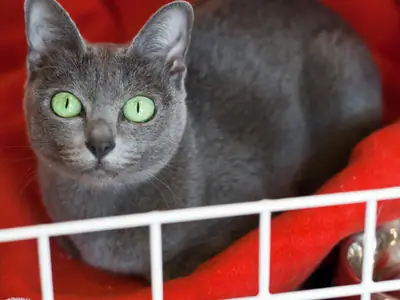
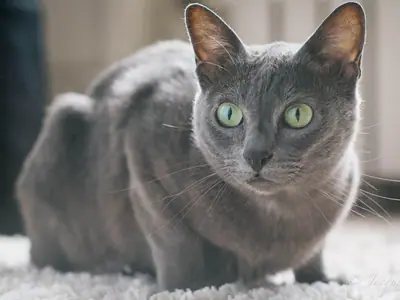
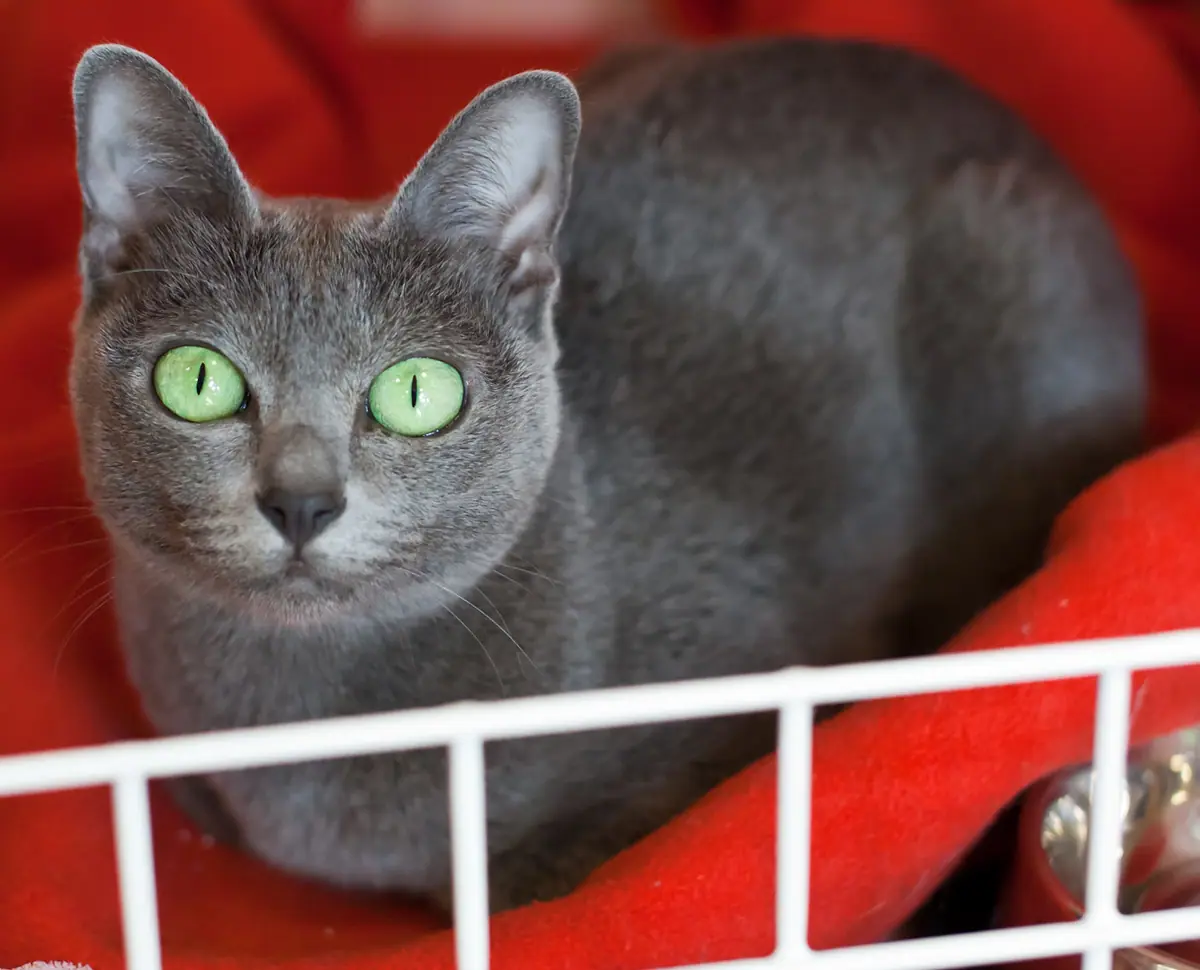
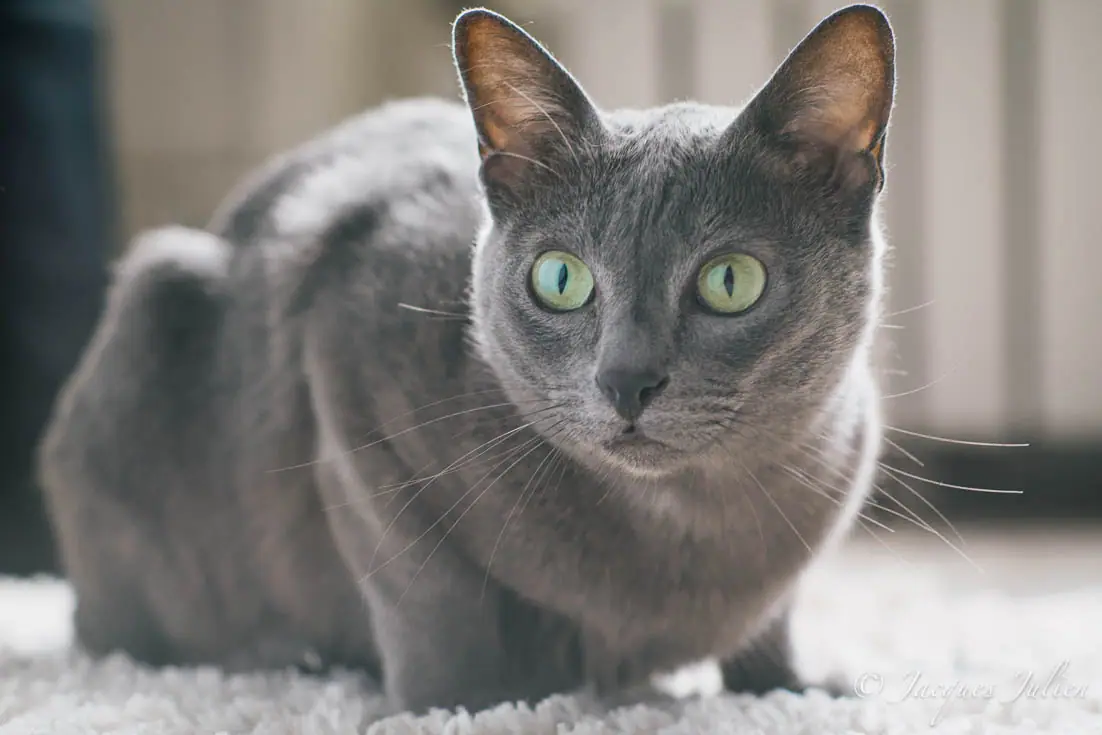
The Korat is an ancient Thai breed with a shimmering silver-tipped blue coat and large, luminous green eyes [1]. Its heart-shaped face is unique to the breed [1][2]. Korats are clever, devoted and love attention [1][2], and in Thailand they are considered good luck [1][2]. The breed is recognised by CFA [1], TICA [2], FIFe [4] and GCCF [3].
Contents (10 sections)
Quick facts
- Origin
- Thailand; earliest record in a cat-poem book of the Ayutthaya period (1350–1767)
- Weight
- ~2.7–4.5 kg
- Lifespan
- ~15–18 years
- Coat
- short, glossy
- Energy
- high
Details & sources
Traits (scale 1–5)
- Energy
- 4/5
- Shedding
- 1/5
- Grooming needs
- 1/5
- Good with kids
- 4/5
- Vocal
- 3/5
- Independence
- 2/5
Basis: Editorial estimate based on CFA and TICA descriptions, not a measurement
Registry recognition
| CFA | Yes |
|---|---|
| TICA | Yes |
| FIFe | Yes |
| GCCF | Yes |
History
According to CFA, the Korat was first found in a part of Thailand's Korat province [1]. The earliest record of the breed is in the Cat-Book Poems (Smud Khoi), produced during the Ayutthaya period (1350–1767); it illustrates 17 "good luck" cats of Thailand, of which the Korat is the best known [1]. TICA relates that the name dates to King Rama V, who asked what kind of cat he had been given and was told it came from the Korat plateau in north-east Thailand [2]. In Thailand the breed is also called the Si-Sawat cat [2]. Jean Johnson imported the first two Korats to the US in 1959 [1], and ten years later Daphne Negus brought back nine more from Thailand to strengthen the bloodlines [1].
Appearance
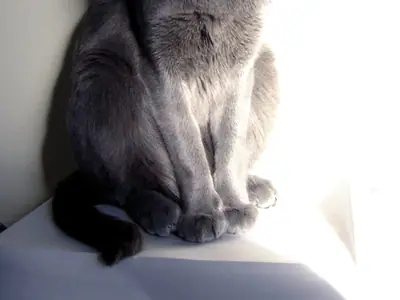
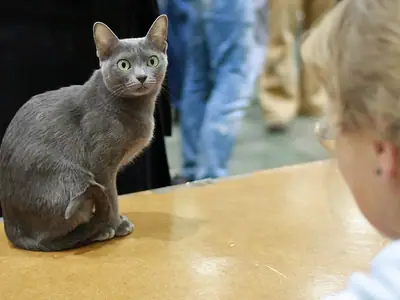
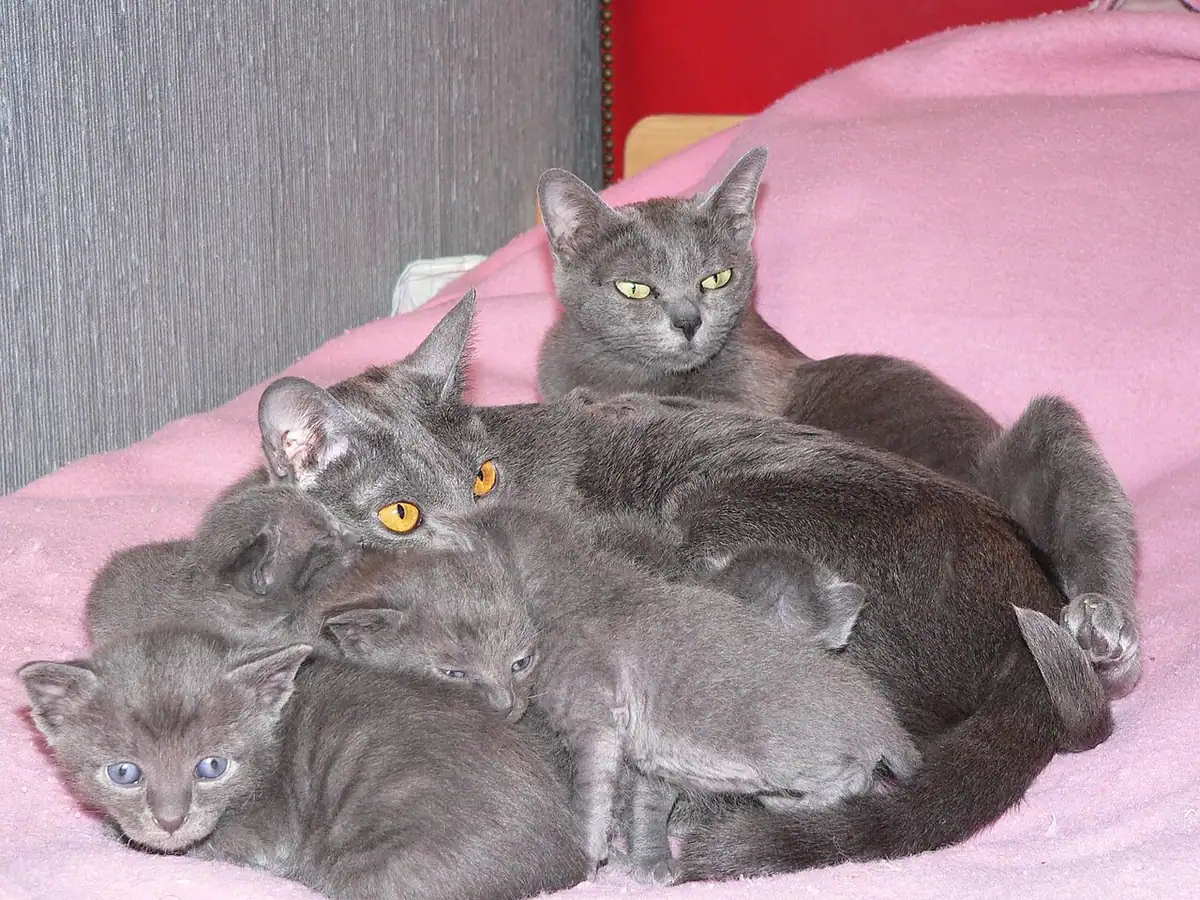
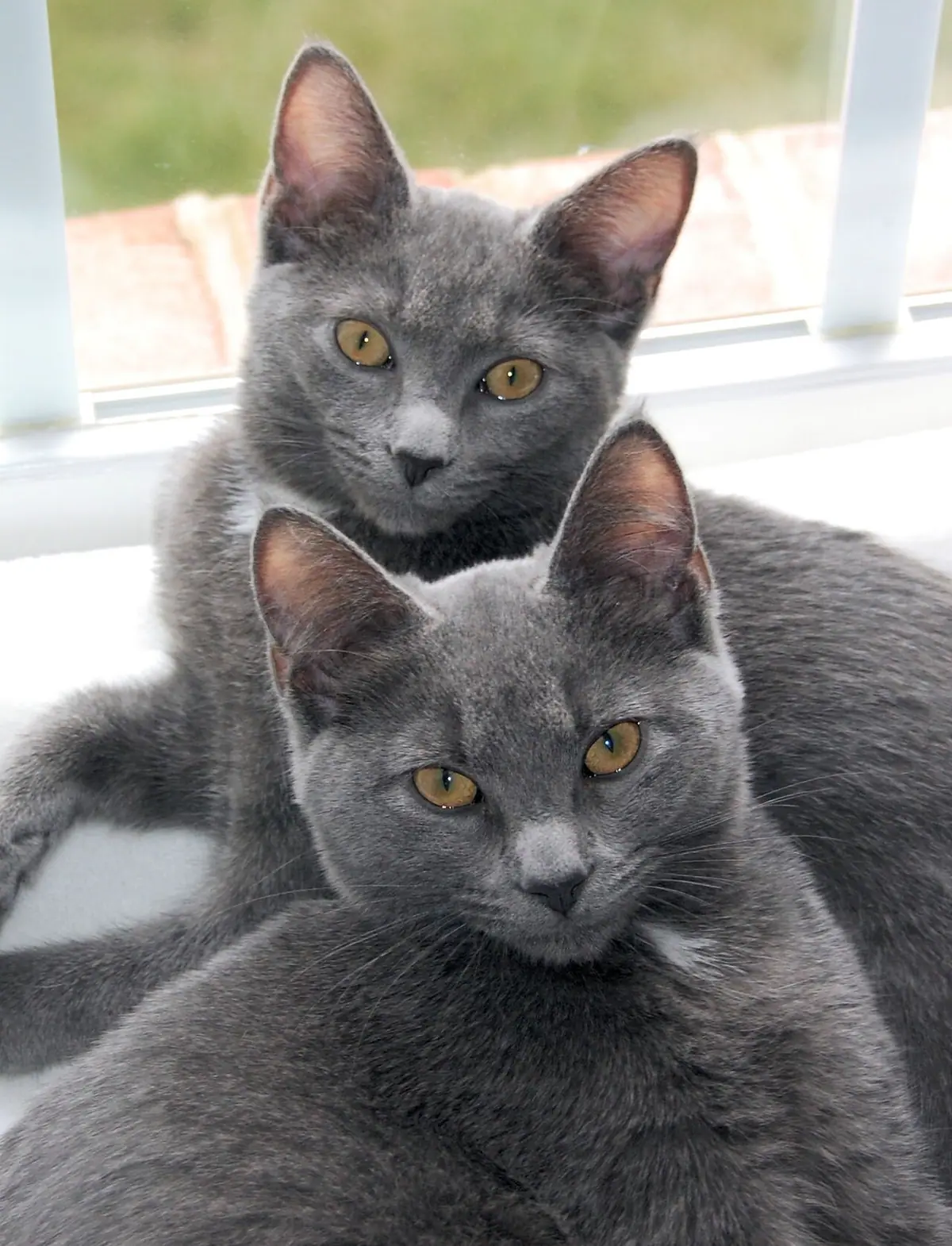
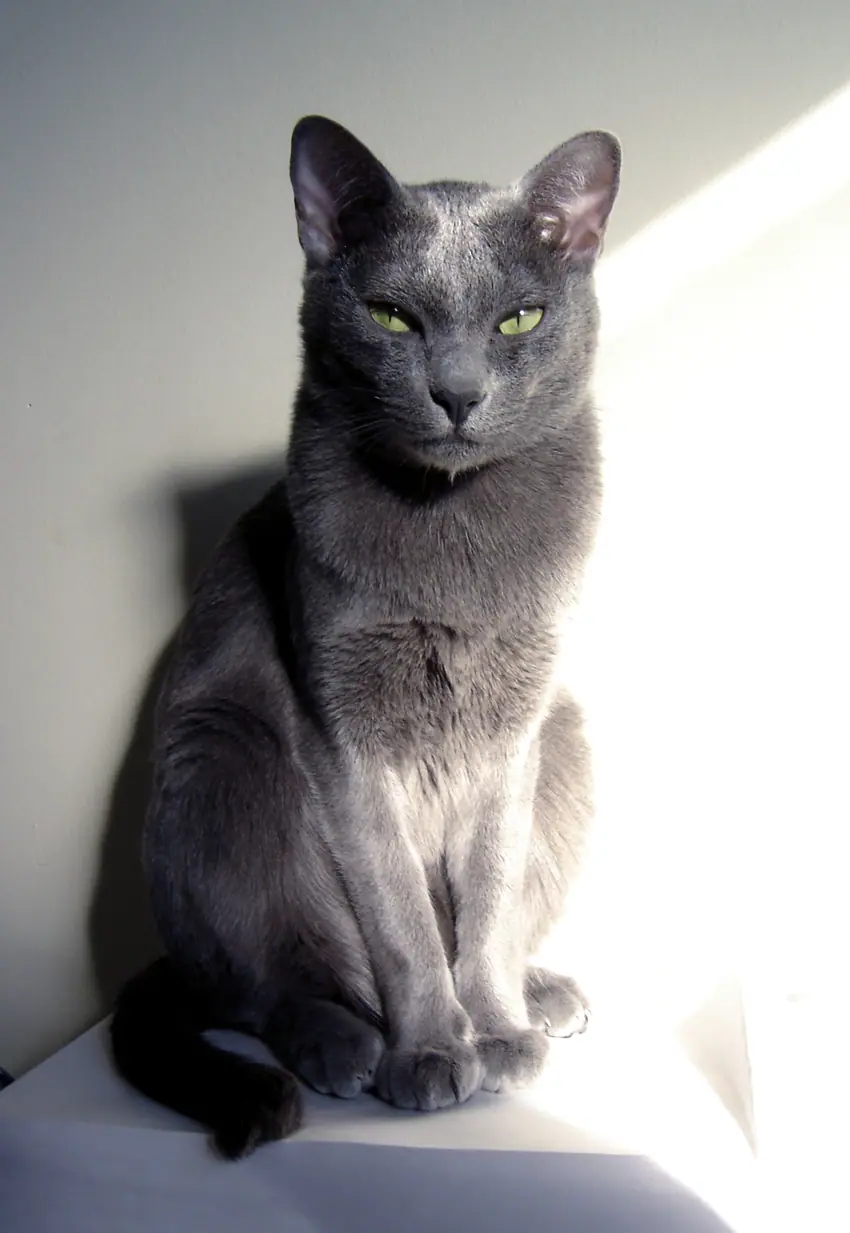
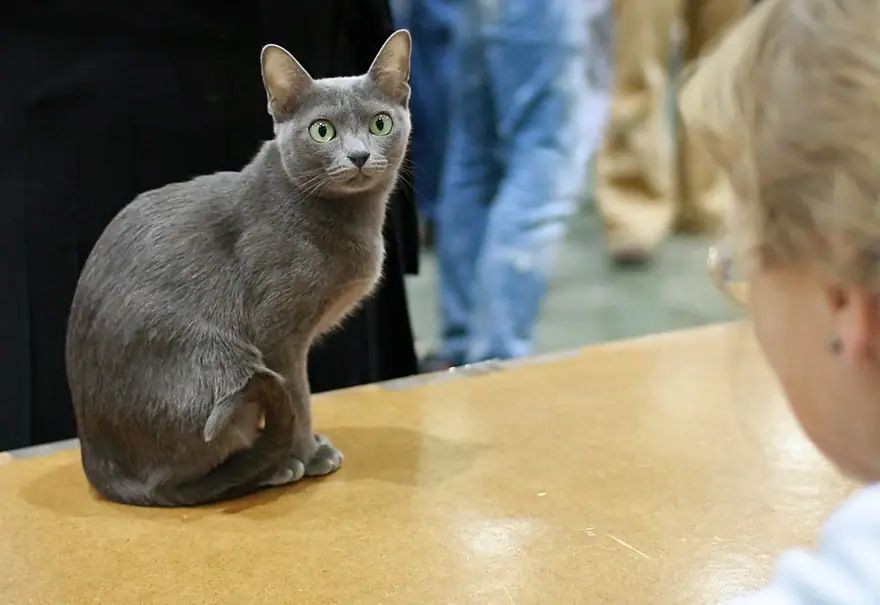
- Coat: short, single, glossy and fine, blue with silver tipping [1][2]. Blue is the only colour [2].
- Head: eyebrow ridges, prominent cheekbones and a rounded, tapered muzzle form the "heart-shaped" head; large ears with rounded tips [1].
- Eyes: large, luminous and peridot green [1]. The adult colour only settles at 2–4 years [2].
- Body: medium, muscular and surprisingly heavy [1]. Korats don't reach full maturity until two to four years of age [1].
- Weight: TICA gives about 6–8 lb for females and 8–10 lb for males [2].
Photo gallery
6 photos · tap to enlarge- (enlarge, photo 1/6)
- (enlarge, photo 2/6)
- (enlarge, photo 3/6)
- (enlarge, photo 4/6)
- (enlarge, photo 5/6)
- (enlarge, photo 6/6)

Photos: Wikimedia Commons – author & licence shown when enlarged and on the Photo credits page.
Temperament
Korats are extremely intelligent and can learn tricks, but only with their consent [1]. They crave stimulation, so interactive toys, puzzle toys and treats are recommended [1]. This is a cat that demands attention, considers itself head of the family, bonds strongly with its owners and takes an interest in everything [1]. Korats make a wide range of sounds and will speak up when they want attention [1]. They're energetic but not hyperactive and usually get on with other pets; when a new pet arrives, keep the focus on the Korat to head off jealousy [1]. TICA notes they dislike being left alone for long or ignored and may become withdrawn [2].
Care
Health
- Gangliosidosis (GM1, GM2): according to TICA, the only known inherited disease in the breed; a DNA test has existed since 1998 and the disease is now almost eradicated [2].
- Overall: CFA describes the Korat as a natural, typically relatively healthy breed [1].
- Lifespan: TICA estimates 15 years or more [2] and GCCF 15–18 years [3]. These are registry estimates; we found no breed-specific study.
Ask breeders for the parents' GM1/GM2 test results, and talk to your vet about any specific concern.
Don't confuse with…
- Russian Blue: also silver-tipped blue with green eyes, but with a plush coat and a wedge-shaped head [5].
- Chartreux: a dense, woolly coat and gold-to-copper eyes [6].
- Blue British Shorthair: stocky, with a round, massive head [7].
Ask your vet. This information is for reference only and does not replace a veterinary diagnosis.
Fun facts
Frequently asked questions
How is a Korat different from a Russian Blue?
Both are silver-tipped blue with green eyes. The Korat has a heart-shaped head, a short single coat that lies close, and a compact body [1][2]. The Russian Blue has a very dense, plush coat, a modified-wedge head and a medium-long, graceful body [5].
Are Korats hypoallergenic?
Not really. CFA says Korat hair doesn't float off when stroked, so airborne allergen levels may stay tolerable for an occasional allergic visitor, but this does not make the Korat a low-allergen breed [1].
How long do Korats live?
These are registry estimates, not study data: TICA estimates 15 years or more [2], and GCCF estimates 15–18 years [3].
Can Korats be left alone?
Not for long. TICA says Korats need companionship, dislike being left alone for long periods or ignored, and may become withdrawn if neglected [2].
Similar breeds


Breed photos: Wikimedia Commons (CC0 / CC BY / CC BY-SA) – authors & licences on the Photo credits page.
References
- CFA, Korat (breed profile & standard)
- TICA, Korat (breed profile)
- GCCF, Cat Breeds (Korat breed card)
- FIFe, Breeds (KOR Korat, fully recognised)
- CFA, Russian Blue (breed profile & standard)
- CFA, Chartreux (breed profile)
- CFA, British Shorthair (breed profile & standard)
Accessed: 2026-10-02
Written by Catopidia from the sources above. Photos credit their author and licence under each image and on the Photo credits & licences.