Cat breed · United States
Maine Coon
Mèo Maine Coon

The Maine Coon is the gentle giant of the cat world; CFA calls it the largest of all pedigreed cats [1]. Picture a shaggy coat, big ears that are often tufted and a long, plumed tail [1]. Maine Coons are friendly, trainable family cats [1]. The breed tops CFA's registrations [6], was third at the UK's GCCF in 2025 [7], is in TICA's top five [8] and is recognised by FIFe [9].
Contents (10 sections)
Quick facts
- Origin
- United States (New England, Maine)
- Weight
- males ~9 kg+
- Lifespan
- ~11 years (small sample)
- Coat
- heavy, shaggy
- Energy
- moderate
Details & sources
- Size
- Large; CFA calls it the largest of all pedigreed cats [1]
- Weight
- Mature males may reach or exceed 20 lb (about 9 kg); females are usually smaller [1]
- Lifespan
- Median age at death 11.0 years in an English study, from a very small sample (14 cats) [5]
- Coat
- Heavy and shaggy; shorter at the shoulders, longer on the sides, belly and hind legs, with a long plumed tail [1]
Traits (scale 1–5)
- Energy
- 3/5
- Shedding
- 4/5
- Grooming needs
- 3/5
- Good with kids
- 4/5
- Vocal
- 2/5
- Independence
- 3/5
Basis: Editorial estimate based on CFA's description, not a measurement
Registry recognition
| CFA | Yes |
|---|---|
| TICA | Yes |
| FIFe | Yes |
| GCCF | Yes |
History
The Maine Coon's roots are in New England, where short-haired ship's cats came ashore with early settlers [1]. Plenty of legends try to explain the long coat, from Marie Antoinette's Turkish Angoras released in the Maine woods to a sea captain named "Coon" with a shipload of longhairs. None is proven [1]. The breed's documented history goes back to the 1850s [1]. Maine Coons faded from show halls in the early 20th century as other longhairs took over, until breeders revived them; CFA granted championship status in 1976 [1].
Appearance
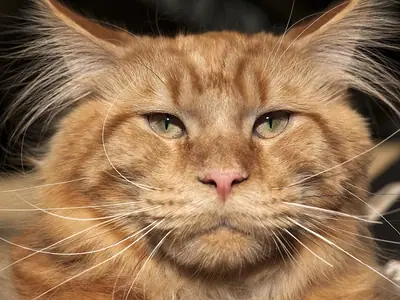
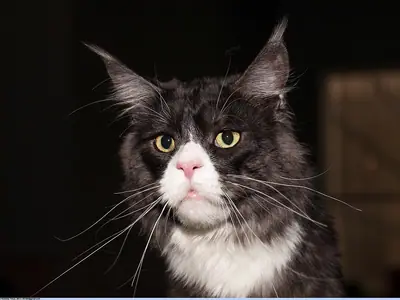
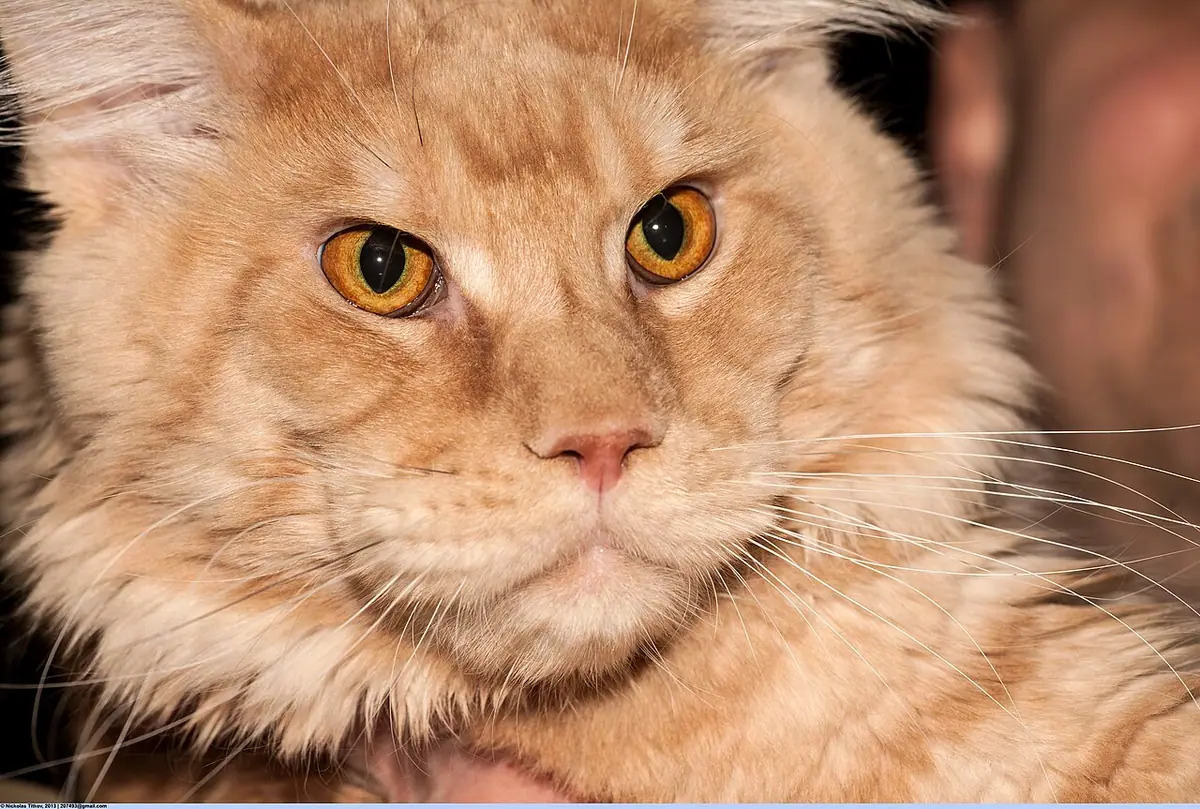
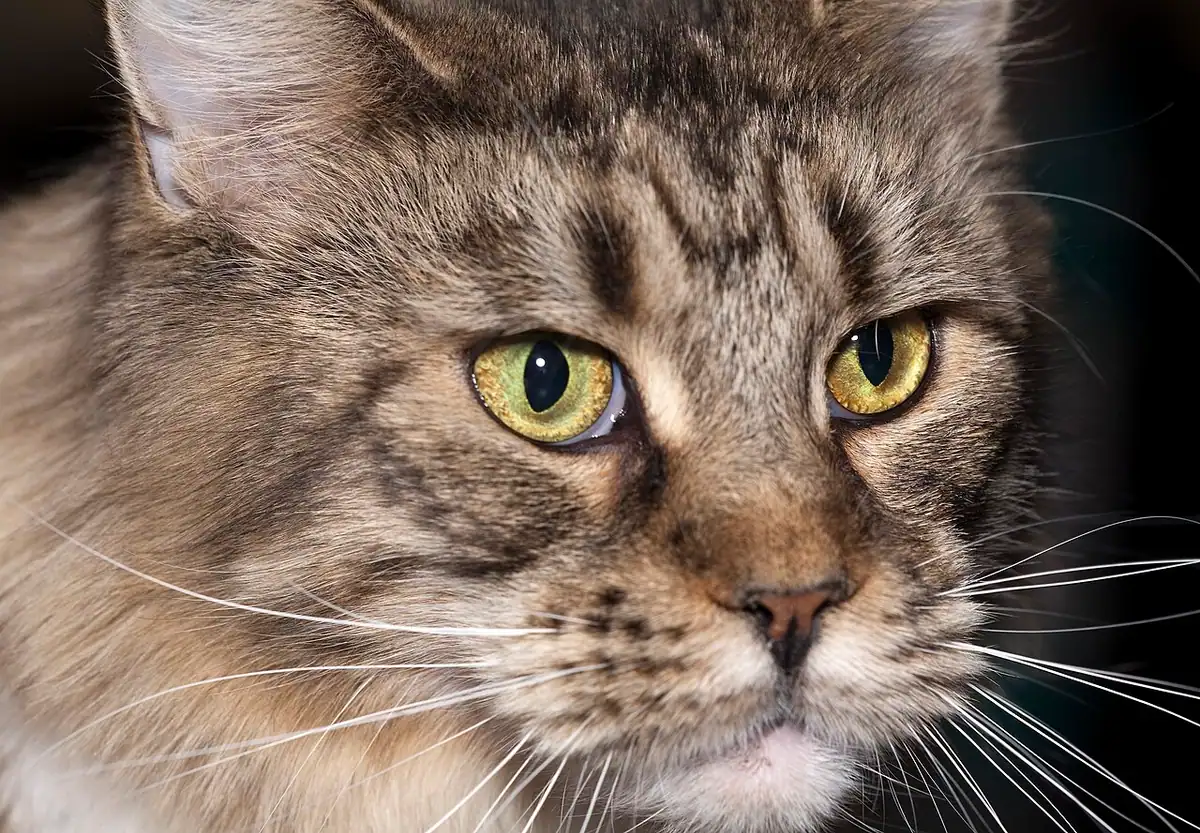
- Body: large, solid and rugged, well balanced, with nothing exaggerated [1].
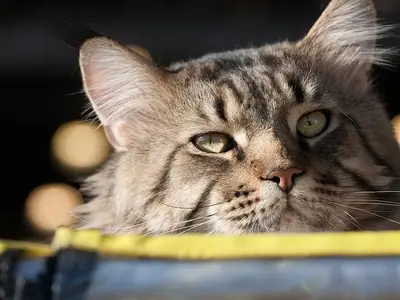
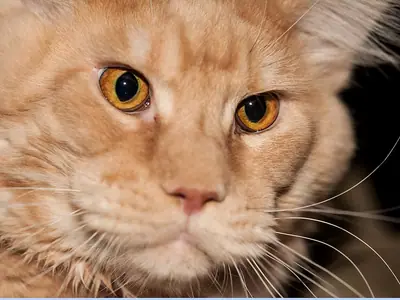
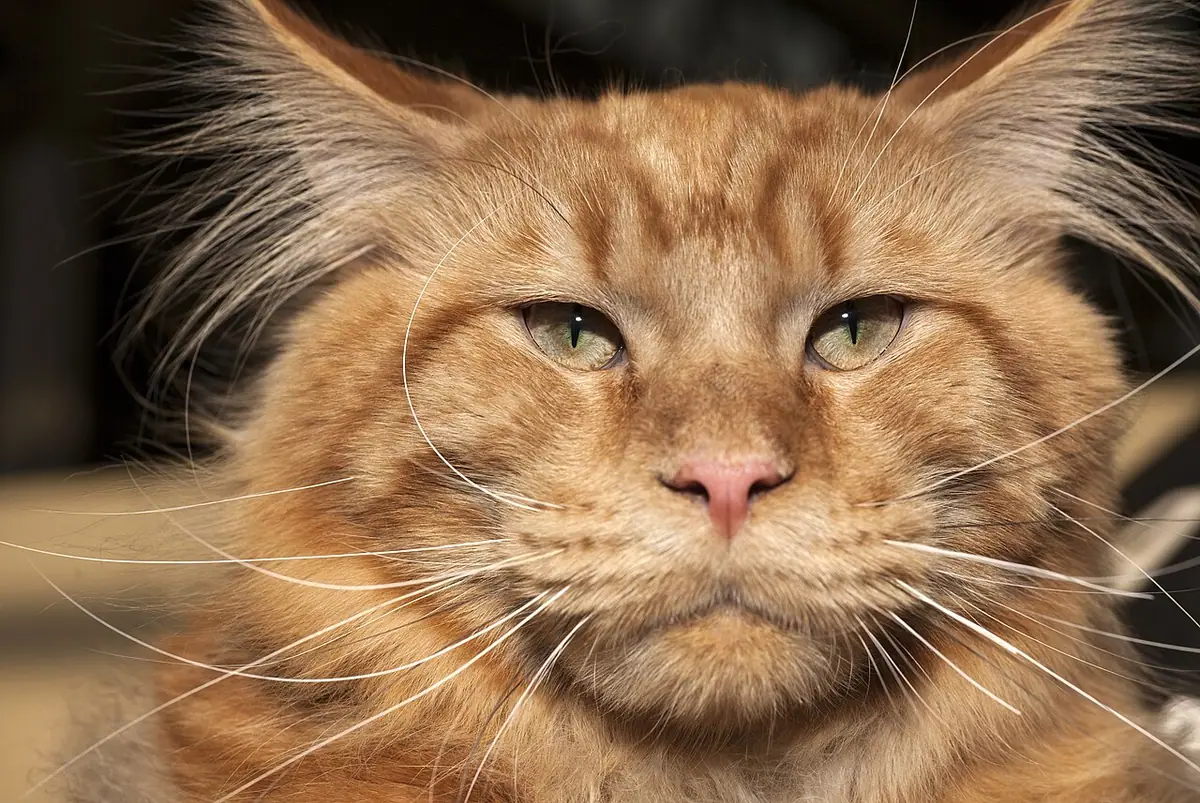
- Head: slightly longer than wide, with a clearly square muzzle, a gently concave profile and high cheekbones [1].
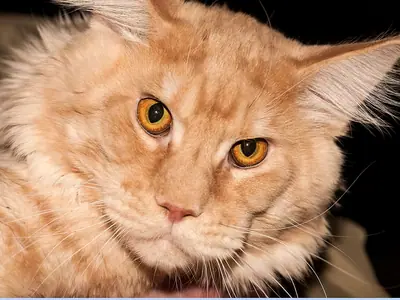
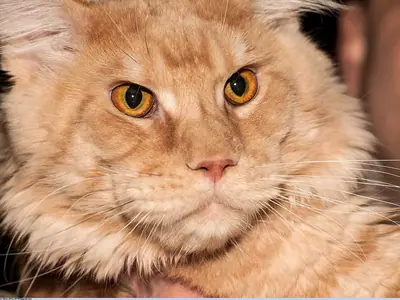
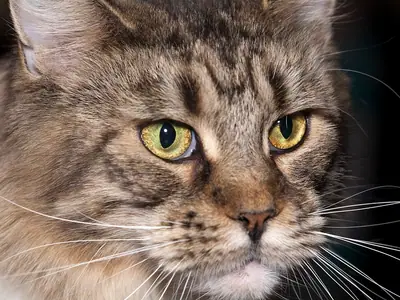
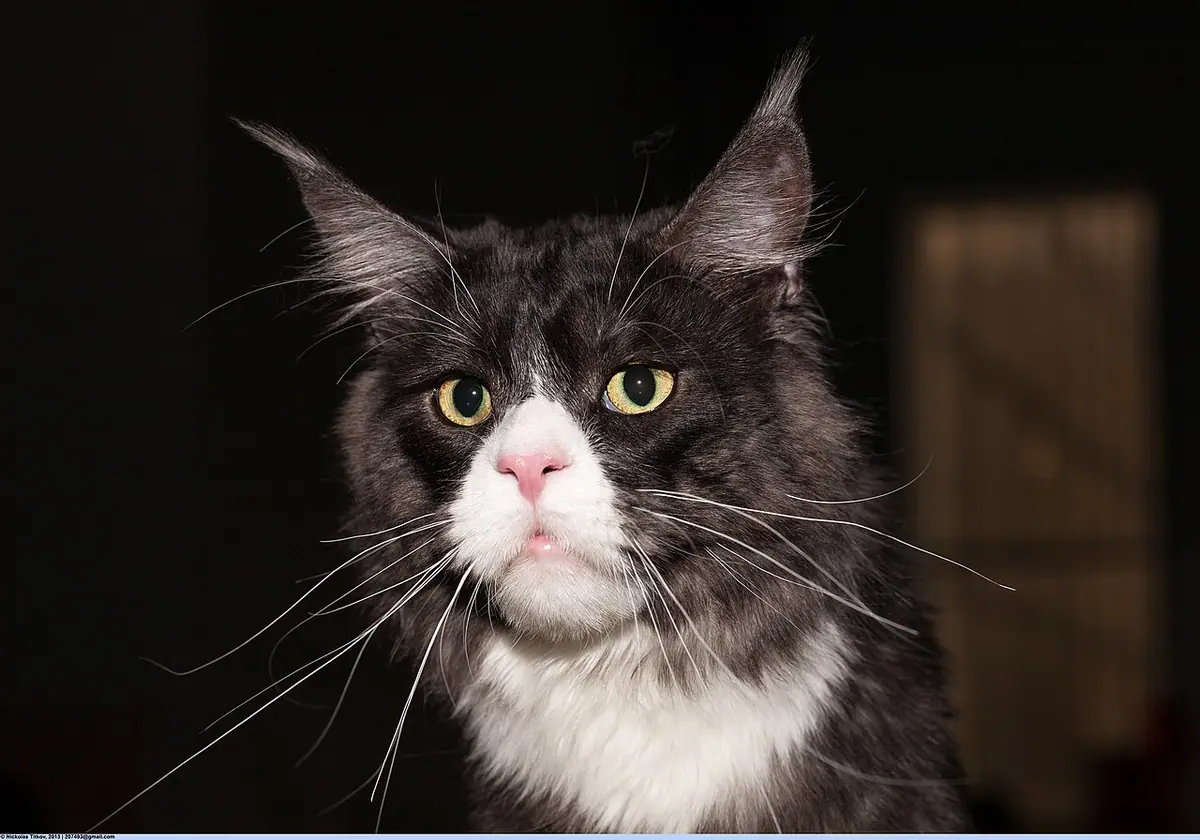
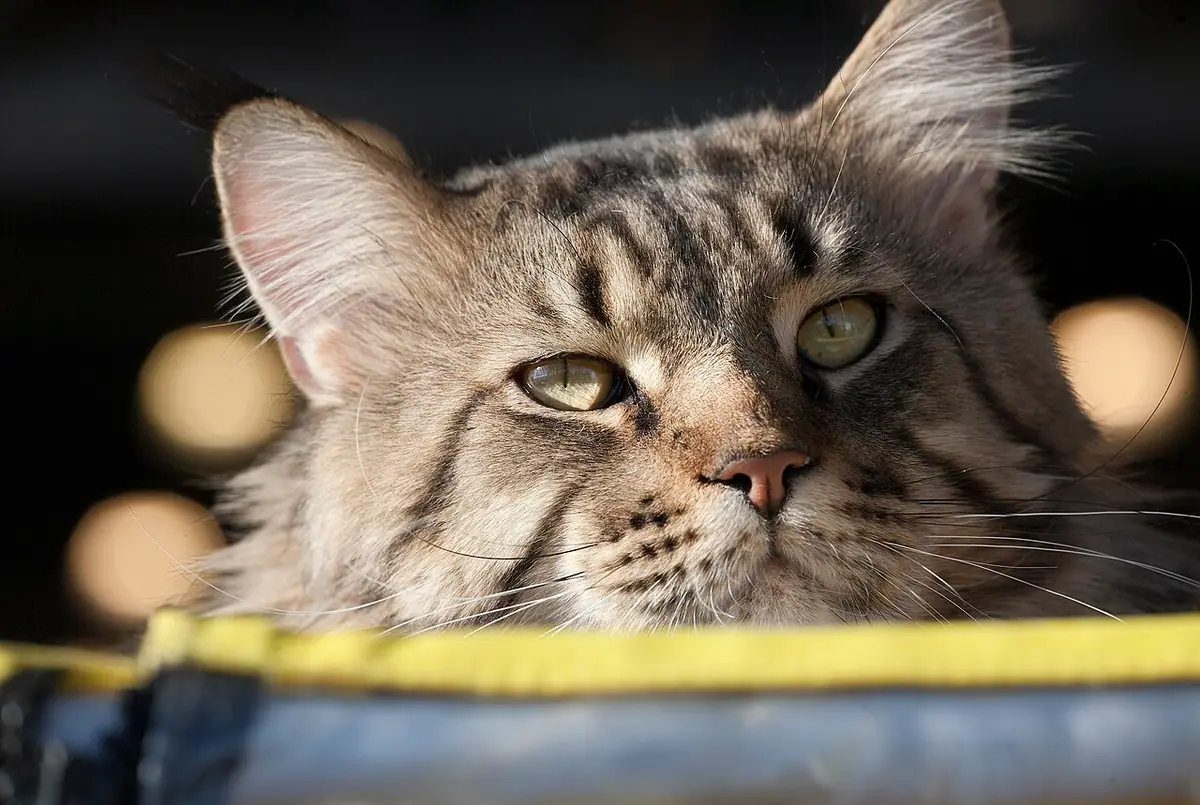
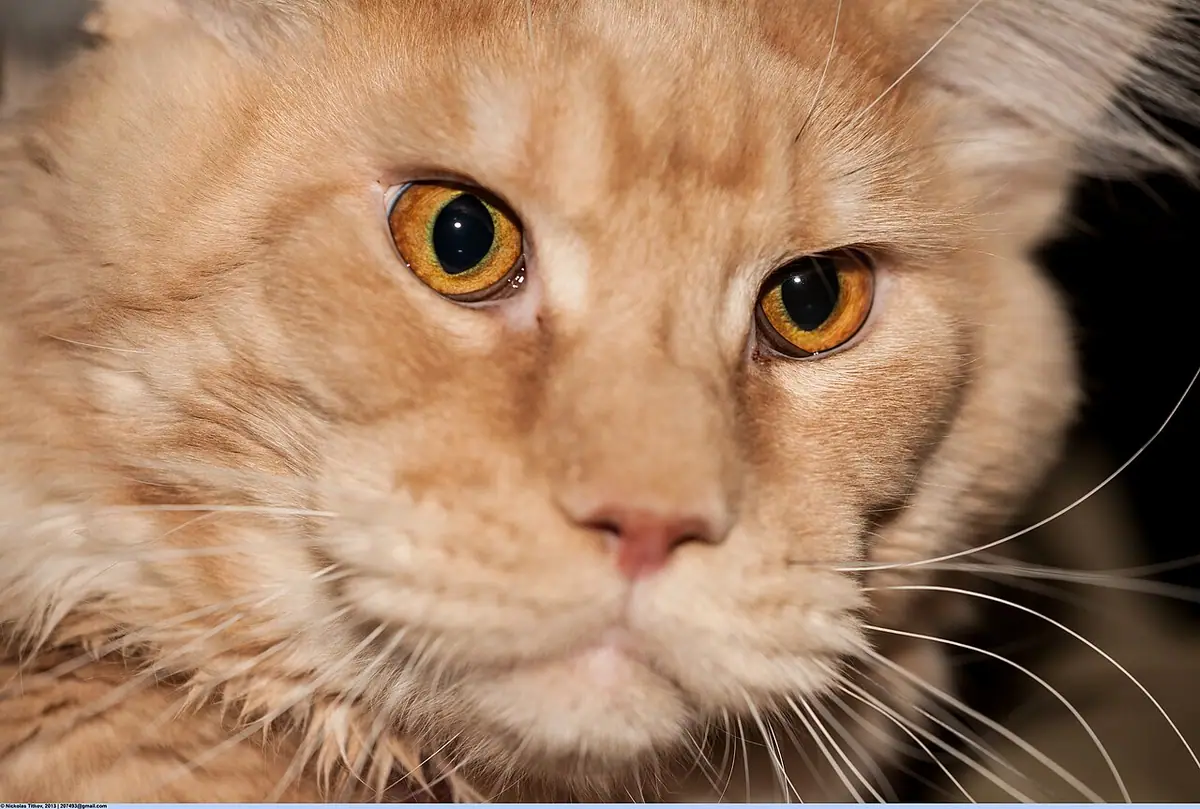
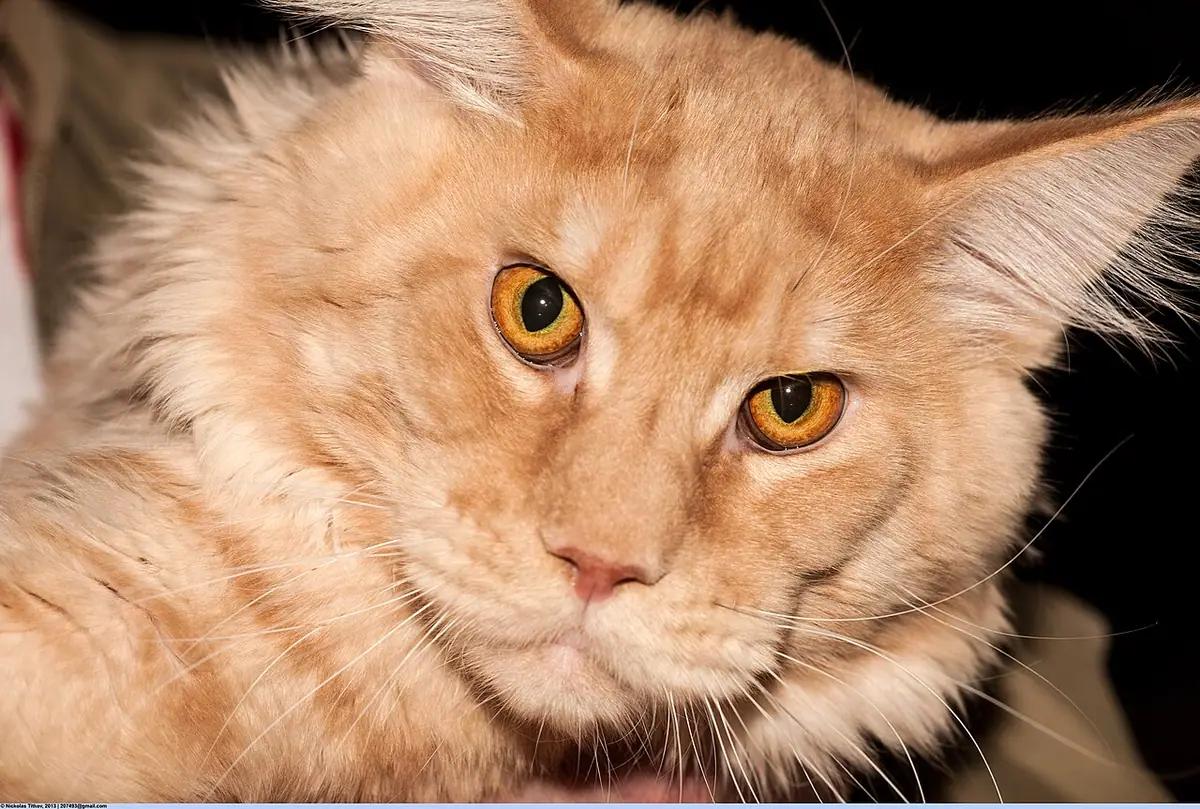
- Ears and eyes: very large ears, typically with prominent tufts; large, expressive eyes [1].
- Coat: heavy and shaggy, shorter at the shoulders and longer on the sides, belly and back legs, ending in a long plumed tail. Broad, tufted paws look made for snow [1].
- Size: males may reach or exceed 20 lb, and females are usually smaller. Full growth can take three years [1].
Photo gallery
7 photos · tap to enlarge- (enlarge, photo 1/7)
- (enlarge, photo 2/7)
- (enlarge, photo 3/7)
- (enlarge, photo 4/7)
- (enlarge, photo 5/7)
- (enlarge, photo 6/7)
- (enlarge, photo 7/7)
.jpg)
Photos: Wikimedia Commons – author & licence shown when enlarged and on the Photo credits page.
Temperament
Like many former working cats, Maine Coons are sociable, loyal and smart [1]. They'll work out where you hid their favourite toy and dig it out [1]. Rather than picking a favourite person, they tend to do the rounds from lap to lap [1]. They're fairly independent but want a moderate amount of attention, and will insist on it when you're around [1]. They get along with children and other pets, though their size can be intimidating at first [1]. Expect chirps, trills and purrs rather than constant meowing [1].
Care
Health
- Hypertrophic cardiomyopathy (HCM): in 2005 researchers identified the A31P mutation in the MYBPC3 gene in Maine Coons with familial HCM [2]. A Danish study found half of young to middle-aged cats with two copies had HCM, while one copy did not significantly raise the odds at that age [3]. Breeders screen with DNA tests and echocardiograms [1].
- Hip dysplasia: screened by X-ray [1].
- Spinal muscular atrophy (SMA): a recessive disease caused by a chromosomal deletion, identified in the breed [4].
- Lifespan: an English study recorded a median of 11.0 years, but from only 14 cats, so treat it with caution [5].
Ask breeders for the parents' HCM DNA, heart-scan and hip X-ray results, and talk to your vet about any specific concern.
Don't confuse with…
- Norwegian Forest Cat: an equilateral-triangle head and straight profile [11]. The Maine Coon has a square muzzle and a gently concave profile [1].
- Siberian: a rounder head with a full muzzle and almost round eyes [12].
Ask your vet. This information is for reference only and does not replace a veterinary diagnosis.
Fun facts
- The raccoon-hybrid story is genetically impossible, but it left its mark on the name [1].
- At the first US cat show in 1895, a brown tabby Maine Coon named Cosey won Best Cat [1].
- Many are fascinated by water and may try to join you in the shower [1].
- TICA lists a separate Maine Coon Polydactyl [10].
Frequently asked questions
How big do Maine Coons get?
CFA calls it the largest pedigreed cat. Mature males may reach or exceed 20 lb, and females are usually smaller. They grow slowly and can take up to three years to finish growing [1].
Are Maine Coons easy to keep?
Fairly easy if you have the space. They're friendly, trainable and good with children and other pets. The coat needs a 5–10 minute comb two or three times a week [1].
Are Maine Coons vocal?
Not especially. Expect chirps, trills, purrs and the odd meow, but they're not considered a talkative breed [1].
Similar breeds


Breed photos: Wikimedia Commons (CC0 / CC BY / CC BY-SA) – authors & licences on the Photo credits page.
References
- CFA, Maine Coon Cat (breed profile & standard)
- Meurs KM et al. (2005). A cardiac myosin binding protein C mutation in the Maine Coon cat with familial hypertrophic cardiomyopathy. Hum Mol Genet 14(23):3587–3593
- Godiksen MT et al. (2011). Hypertrophic cardiomyopathy in young Maine Coon cats caused by the p.A31P cMyBP-C mutation: the clinical significance of having the mutation. Acta Vet Scand 53:7
- Fyfe JC et al. (2006). An ~140-kb deletion associated with feline spinal muscular atrophy implies an essential LIX1 function for motor neuron survival. Genome Res 16(9):1084–1090
- O'Neill DG et al. (2015). Longevity and mortality of cats attending primary care veterinary practices in England. J Feline Med Surg
- CFA, Most Popular Breeds for 2026 (Maine Coon #1, based on 2025 registrations)
- GCCF, Registered Cats By Breed 2024–2025 (PDF; read via search-index copy, re-verify)
- TICA, Top Five Most Registered Cat Breeds
- FIFe, Breeds (MCO Maine Coon, fully recognised)
- TICA, Browse All Breeds (lists Maine Coon and Maine Coon Polydactyl)
- CFA, Norwegian Forest Cat (breed profile & standard)
- CFA, Siberian (breed profile & standard)
Accessed: 2026-10-02
Written by Catopidia from the sources above. Photos credit their author and licence under each image and on the Photo credits & licences.