Cat breed · United States
Ragdoll
Mèo Ragdoll

The Ragdoll pairs vivid blue eyes and a silky, pointed coat with one of the gentlest temperaments in the cat world [1]. Ragdolls are devoted without being demanding, and a great fit for families with children [1]. They're among the most popular breeds anywhere: second at CFA [5] and at the UK's GCCF [6], and in TICA's top five [7]. FIFe recognises the breed too [8].
Contents (10 sections)
Quick facts
- Origin
- United States (Riverside, California, 1960s)
- Weight
- males ~9 kg+
- Lifespan
- ~10.1 years (small sample)
- Coat
- semi-long
- Energy
- moderate
Details & sources
- Size
- Medium to large; one of the bigger breeds, broad-chested and long-bodied [1]
- Weight
- Mature males may reach or exceed 20 lb (about 9 kg); females are usually smaller [1]
- Lifespan
- Median age at death 10.1 years in an English study, from a small sample (21 cats) [4]
- Coat
- Semi-long and silky, mostly guard hairs with little undercoat [1]
Traits (scale 1–5)
- Energy
- 3/5
- Shedding
- 3/5
- Grooming needs
- 2/5
- Good with kids
- 5/5
- Vocal
- 2/5
- Independence
- 2/5
Basis: Editorial estimate based on CFA's description, not a measurement
Registry recognition
| CFA | Yes |
|---|---|
| TICA | Yes |
| FIFe | Yes |
| GCCF | Yes |
History
Ann Baker, a breeder in Riverside, California, developed the Ragdoll in the 1960s from a group of domestic longhairs [1]. The foundation cat, Josephine, was a white longhair carrying the colorpoint gene. Baker felt Josephine's kittens had unusually endearing temperaments and kept selecting for the look and personality she wanted [1]. She claimed Josephine was so placid she went limp when held, which gave the breed its name [1]. CFA accepted Ragdolls for registration in 1993 and for championship in 2000 [1].
Appearance
- Body: one of the larger breeds, with a broad chest, long muscular body and sturdy bone [1].
- Head: large, a broad modified wedge with equal sides and a gently rounded muzzle [1].
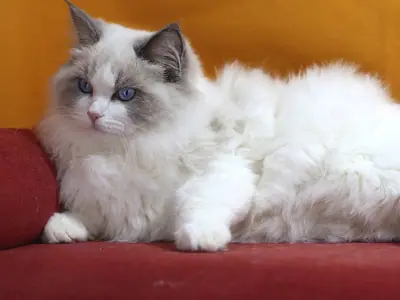
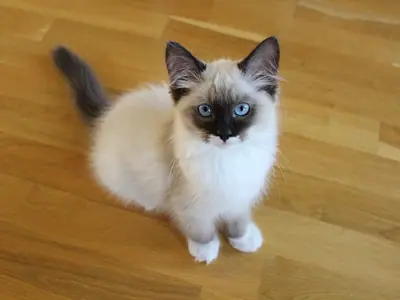
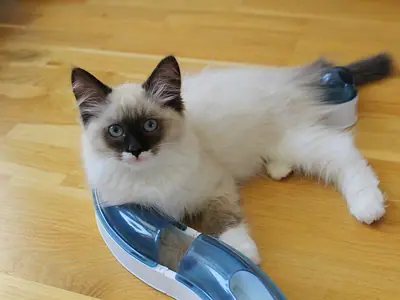
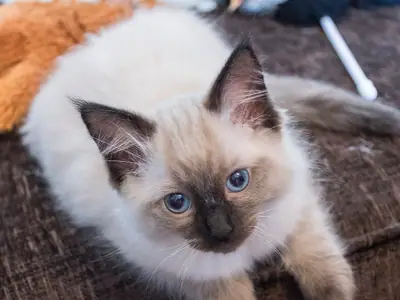
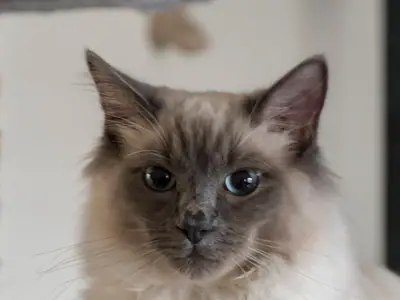
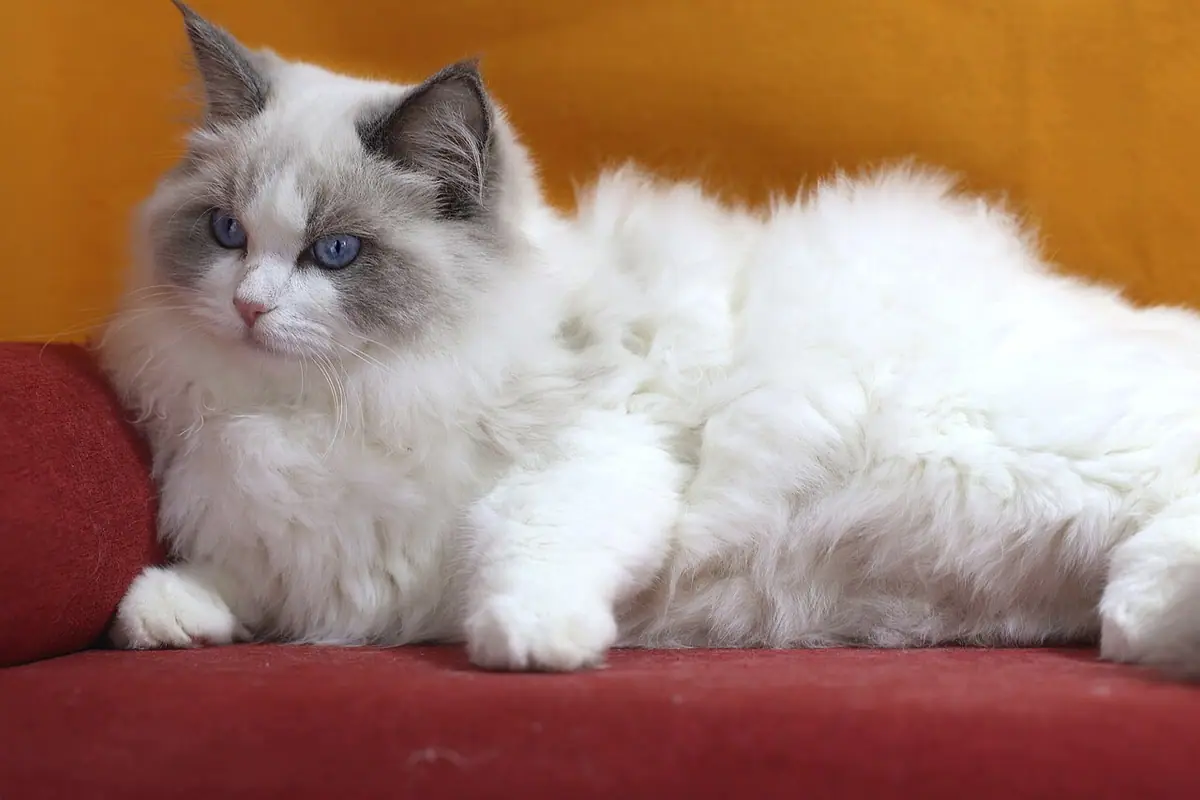
- Eyes: vivid blue and oval [1].
- Coat: semi-long and mostly guard hair without much undercoat, which gives it a soft, silky feel [1].
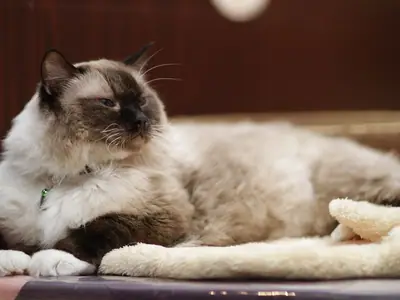
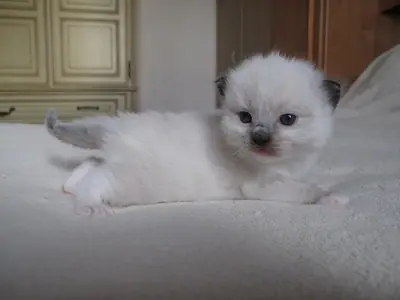
- Patterns: every Ragdoll carries the colorpoint gene, so the body is lighter than the head, legs and tail. Three of the four patterns also carry the bicolour gene, which adds white [1].
- Growth: full colour at about two, full size at about four. Males may reach or exceed 20 lb [1].
Photo gallery
7 photos · tap to enlarge- (enlarge, photo 1/7)
- (enlarge, photo 2/7)
- (enlarge, photo 3/7)
- (enlarge, photo 4/7)
- (enlarge, photo 5/7)
- (enlarge, photo 6/7)
- (enlarge, photo 7/7)
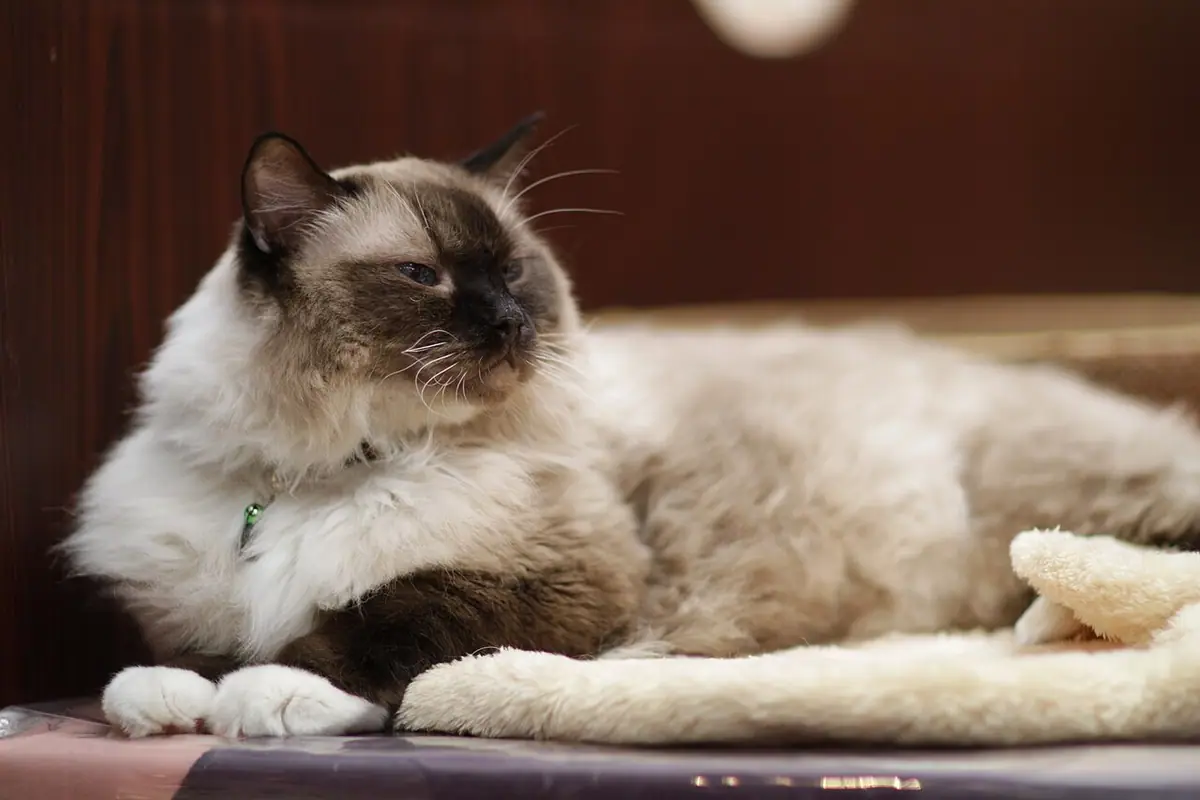
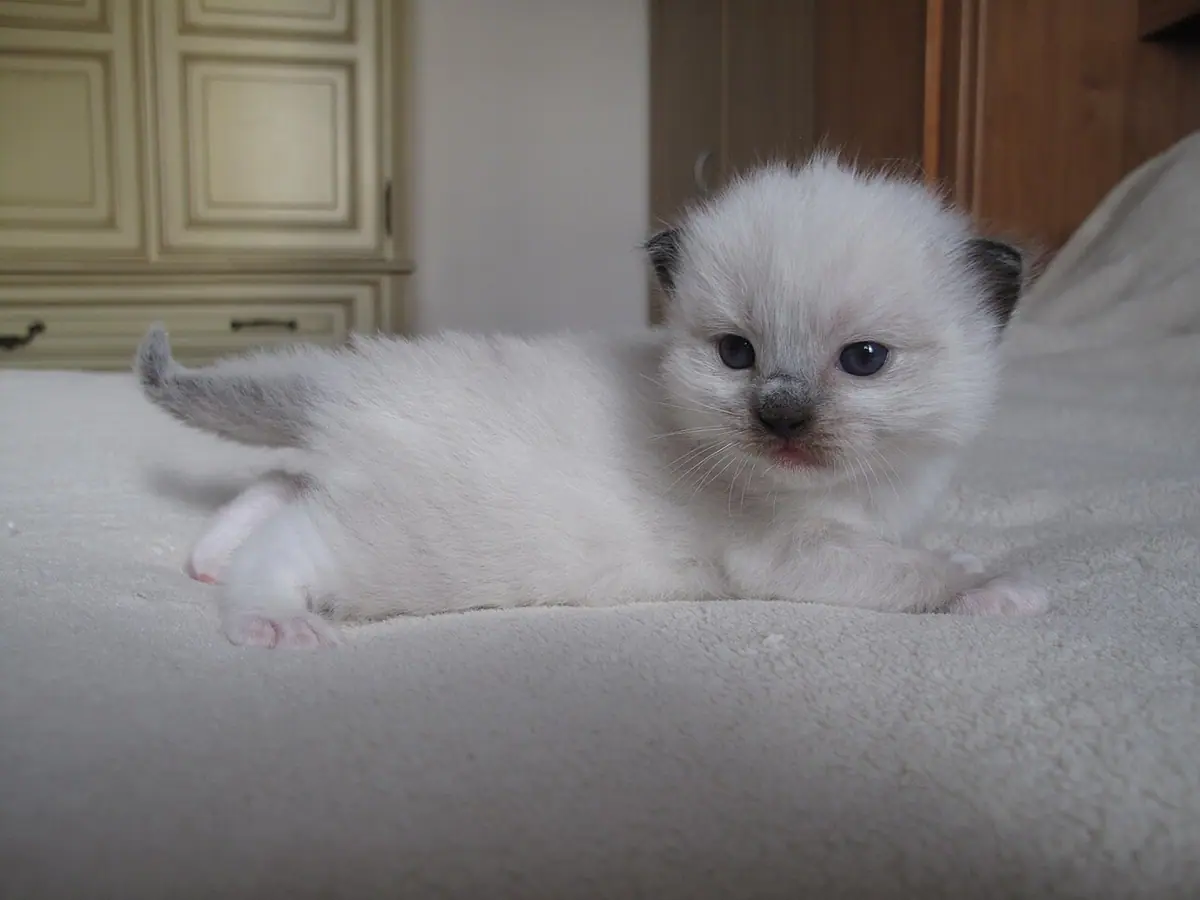
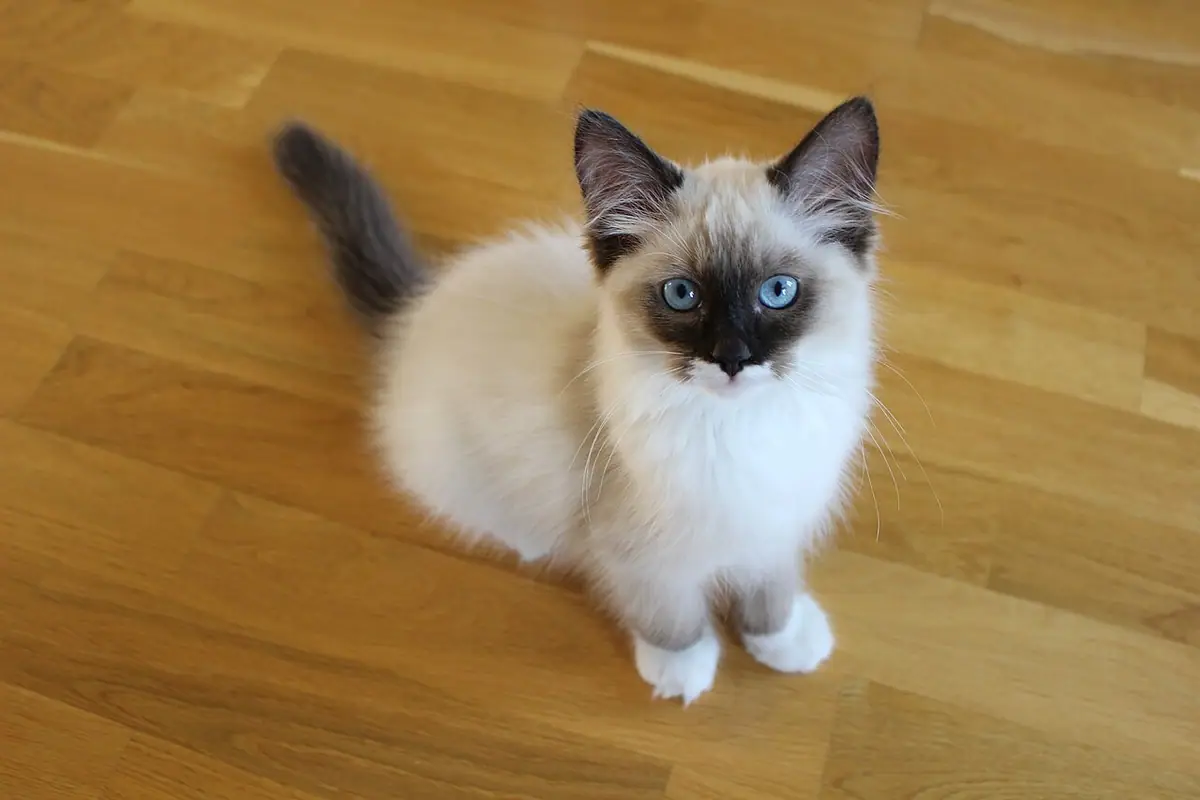
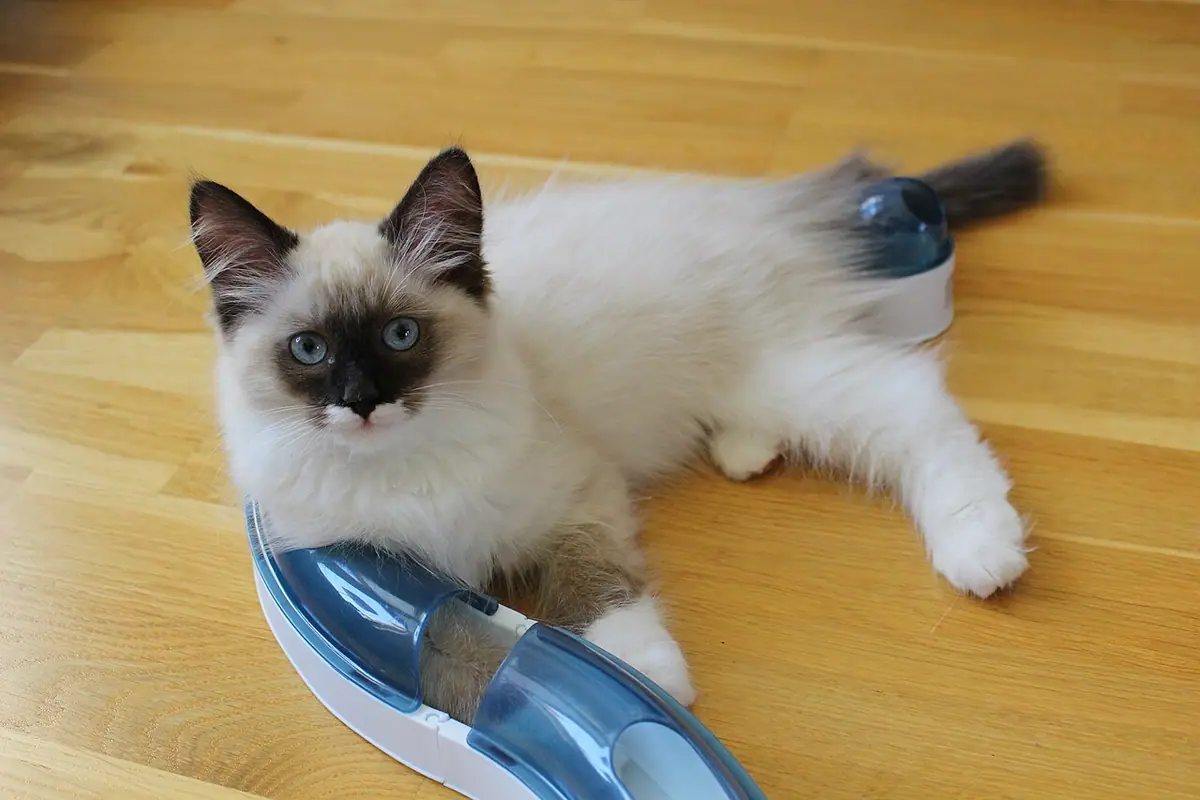
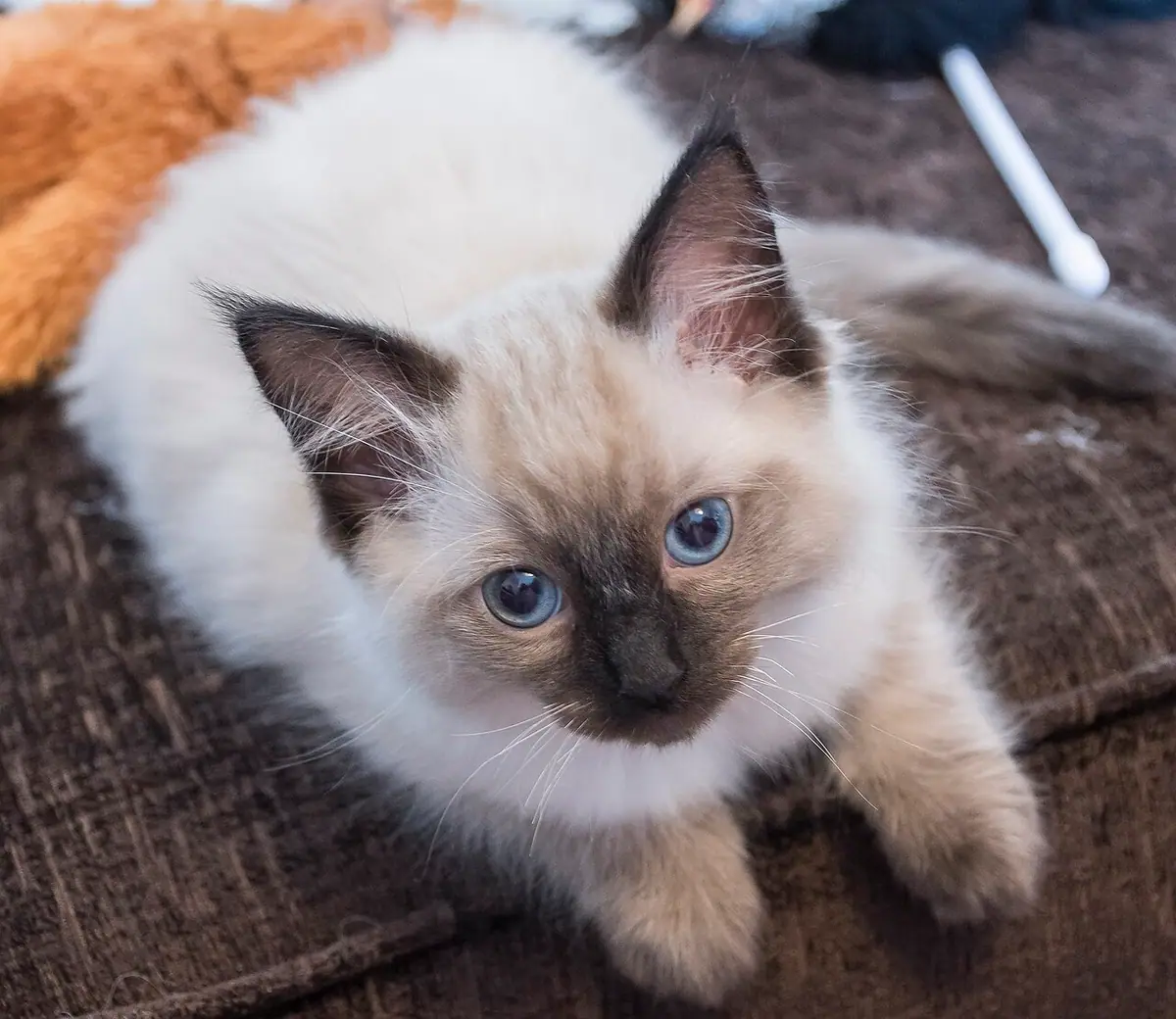
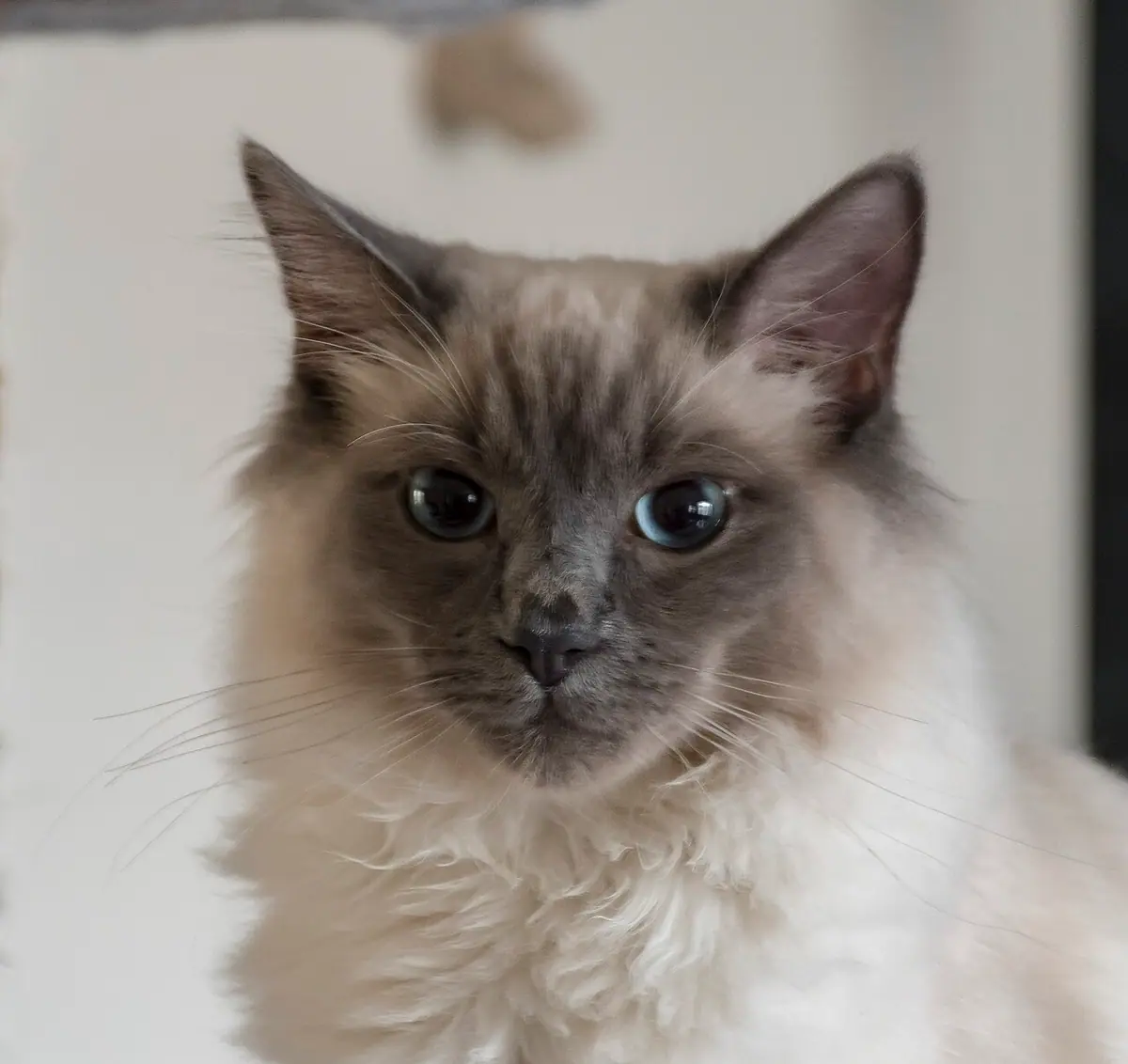

Photos: Wikimedia Commons – author & licence shown when enlarged and on the Photo credits page.
Temperament
Ragdolls are loving without being pushy, and gentle, calm and sociable [1]. Expect to be greeted at the door and followed around; many sleep with their owners [1]. They're playful and trainable, and plenty learn to fetch and come when called [1]. They're moderately active, enjoying play without insisting on it, and adapt easily to small homes [1]. Since aggression is rare, they do well with children and other animals, but that trusting nature means introductions to resident pets need care [1]. They're quiet, with the occasional soft mew [1].
Care
- Comb with a steel comb once or twice a week. With little undercoat they shed and mat less than many longhairs, though they still shed seasonally [1].
- Watch portions. Ragdolls love food and can put on weight [1], and across all cats a non-ideal weight is linked to shorter lives [11].
- Ask your breeder about products and technique if you plan to bathe your cat [1].
Health
- Hypertrophic cardiomyopathy (HCM): in 2007 researchers identified the R820W mutation in the MYBPC3 gene in Ragdolls with HCM [2]. According to UC Davis's Veterinary Genetics Laboratory, cats with two copies are at high risk of severe HCM, usually at one to two years old, while cats with one copy usually show no signs and may live normal lives [3]. CFA says breeders now test routinely and are removing carriers from the gene pool [1].
- Obesity: keep an eye on portions [1].
- Lifespan: an English study recorded a median of 10.1 years, but from only 21 cats, so read it with caution [4].
Ask breeders for the parents' HCM DNA results, and talk to your vet about any specific concern.
Don't confuse with…
- RagaMuffin: split from Ragdoll breeding in the early 1990s and comes in every colour and pattern, not just pointed [9].
- Birman: also pointed and blue-eyed with white "gloves", but with a Roman nose and a pale "golden mist" on the body [10].
Ask your vet. This information is for reference only and does not replace a veterinary diagnosis.
Fun facts
Frequently asked questions
Are Ragdolls easy to keep?
Fairly easy. Ragdolls are gentle, adaptable, don't need much space and are rarely aggressive. With little undercoat the coat mats less and needs combing only once or twice a week [1]. The main things to watch are weight and the parents' HCM test results [1][3].
Do Ragdolls really go limp when you pick them up?
Not really. The name comes from the breed founder's story about Josephine, but CFA notes the trait isn't typical of most modern Ragdolls [1].
How big do Ragdolls get?
They're one of the larger breeds. Mature males may reach or exceed 20 lb (about 9 kg), and females are usually smaller. Full size comes at around four years [1].
Are Ragdolls good with children?
Usually, yes. They're rarely aggressive and get on with other animals. Their trusting nature means introductions to existing pets should be done carefully [1].
Similar breeds


Breed photos: Wikimedia Commons (CC0 / CC BY / CC BY-SA) – authors & licences on the Photo credits page.
References
- CFA, Ragdoll (breed profile & standard)
- Meurs KM et al. (2007). A substitution mutation in the myosin binding protein C gene in ragdoll hypertrophic cardiomyopathy. Genomics 90(2):261–264
- UC Davis Veterinary Genetics Laboratory, Hypertrophic Cardiomyopathy (HCM) in Ragdolls
- O'Neill DG et al. (2015). Longevity and mortality of cats attending primary care veterinary practices in England. J Feline Med Surg
- CFA, Most Popular Breeds for 2026 (Ragdoll #2, based on 2025 registrations)
- GCCF, Registered Cats By Breed 2024–2025 (PDF; read via search-index copy, re-verify)
- TICA, Top Five Most Registered Cat Breeds
- FIFe, Breeds (RAG Ragdoll, fully recognised)
- CFA, RagaMuffin (breed profile & standard)
- CFA, Birman (breed profile & standard)
- Teng KT et al. (2024). Life tables of annual life expectancy and risk factors for mortality in cats in the UK. J Feline Med Surg
Accessed: 2026-10-02
Written by Catopidia from the sources above. Photos credit their author and licence under each image and on the Photo credits & licences.