Cat breed · Thailand
Siamese
Mèo Xiêm

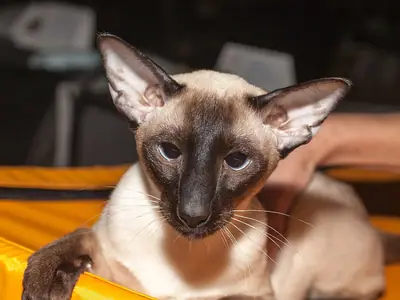
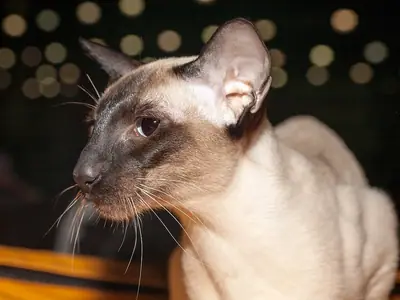
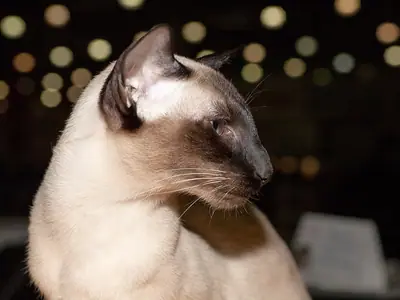
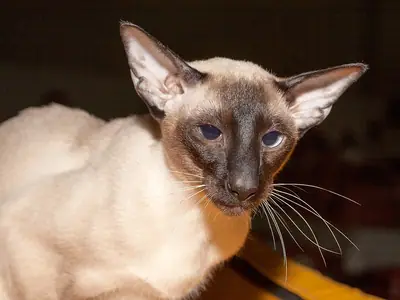
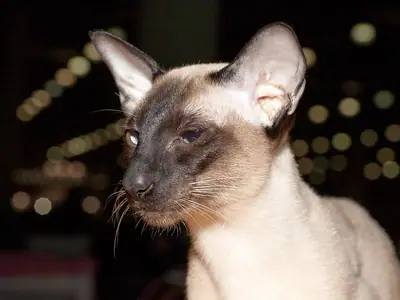
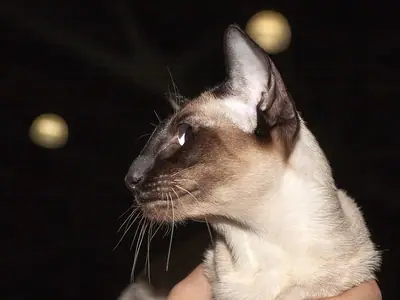
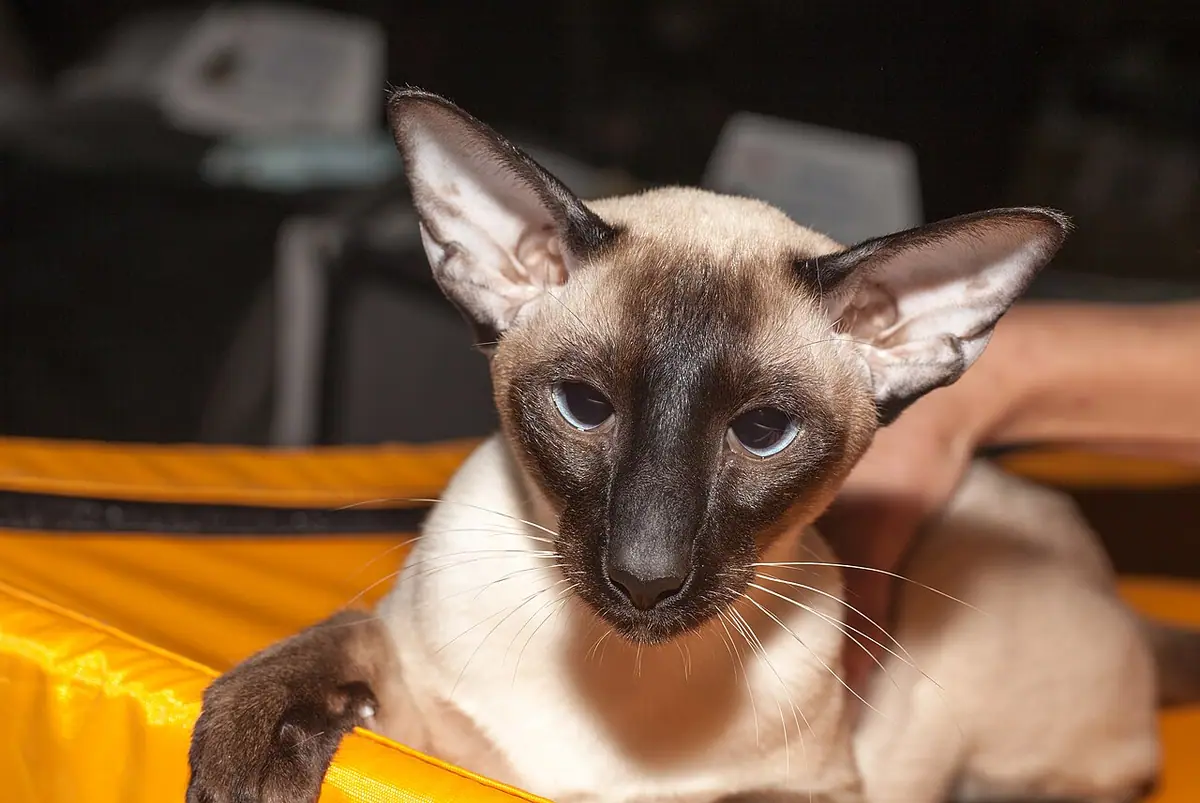
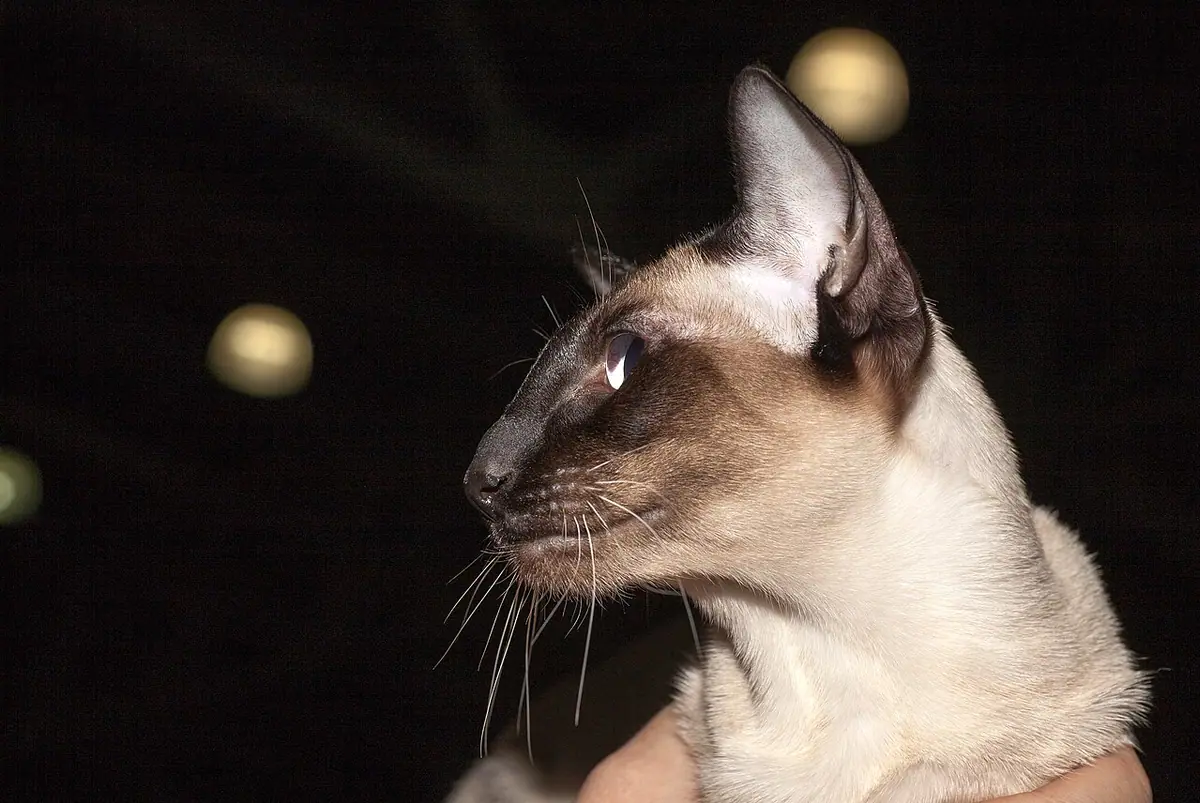
Few cats are as instantly recognisable as the Siamese: a long, slender body, almond-shaped sapphire eyes, and dark "points" on the face, ears, legs and tail against a pale coat [1]. The breed comes from Thailand, once known as Siam. CFA calls it one of the great treasures of the cat fancy, because so many other breeds were inspired by it or descend from it [1]. Siamese are famously chatty and deeply people-focused [1]. In 2025 it was the fourth most-registered breed at the UK's GCCF [3].
Contents (10 sections)
Quick facts
- Origin
- Thailand (historic Siam)
- Weight
- no data
- Lifespan
- ~11.7 years
- Coat
- short, glossy
- Energy
- high
Details & sources
- Size
- Medium, long and svelte but muscular [1]
- Weight
- No verified standard figures; males may be proportionately larger [1]
- Lifespan
- Median age at death 14.2 years (31 cats, England) [4]; life expectancy at age 0 of 11.7 years (VetCompass UK life tables) [5]
- Coat
- Short, fine, glossy, lying close to the body [1]
Traits (scale 1–5)
- Energy
- 4/5
- Shedding
- 2/5
- Grooming needs
- 1/5
- Good with kids
- 3/5
- Vocal
- 5/5
- Independence
- 1/5
Basis: Editorial estimate based on the CFA description, not a measurement; kidFriendly set to neutral because the source does not say
Registry recognition
| CFA | Yes |
|---|---|
| TICA | Yes |
| FIFe | Yes |
| GCCF | Yes |
History
Pointed cats appear in Thailand's Tamra Maew (Cat Poems), written during the Ayutthaya period (1350–1767) [1][6]. In the late 19th century, British visitors brought these blue-eyed cats home as "Siamese", and they soon appeared at the Crystal Palace cat shows in London [1]. The first Siamese on record in the United States was "Siam", sent to President Rutherford B. Hayes by the American consul in Bangkok in 1878 [1]. The Siamese was one of the first breeds CFA recognised when it was founded in 1906 [1].
Seal point was originally the only colour. CFA later accepted blue point (1934), chocolate point (1952) and lilac point (1955) [1].
Genetically, a 2008 study found that Southeast Asian breeds, including the Siamese, cluster with random-bred cats from Vietnam and neighbouring countries [2]. That makes the Siamese a distant cousin of Vietnam's own mèo ta.
Appearance
- Body: medium-sized, long and tubular, fine-boned but firmly muscled. Long legs (the hind legs higher than the front) and a long, tapering tail [1].
- Head: a long wedge with a straight profile from the top of the head to the tip of the nose. The ears are strikingly large, pointed and wide at the base [1].
- Eyes: almond-shaped and deep vivid blue [1].
- Coat: short, fine and glossy, lying close to the body [1].
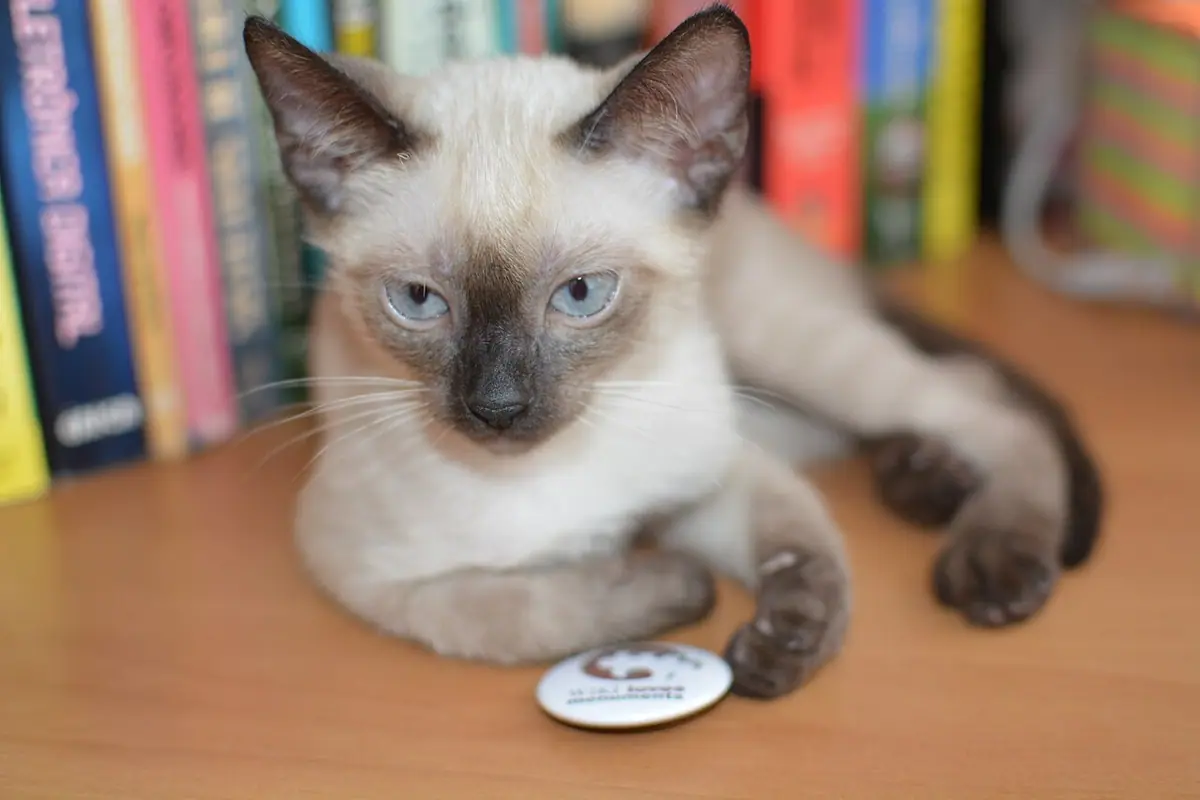
- The points: a mutation in the TYR gene makes the pigment enzyme heat-sensitive, so colour develops only on the cooler extremities [8][9]. CFA's standard notes that Siamese generally darken with age [1].
CFA says that during the 1950s boom, rounder-headed, heavier-boned cats were bred to meet demand, while the show standard never changed [1]. Cats of that older, moderate type are now recognised by TICA as a separate breed, the Thai [6].
Photo gallery
7 photos · tap to enlarge- (enlarge, photo 1/7)

- (enlarge, photo 2/7)
- (enlarge, photo 3/7)
- (enlarge, photo 4/7)
- (enlarge, photo 5/7)
- (enlarge, photo 6/7)
- (enlarge, photo 7/7)
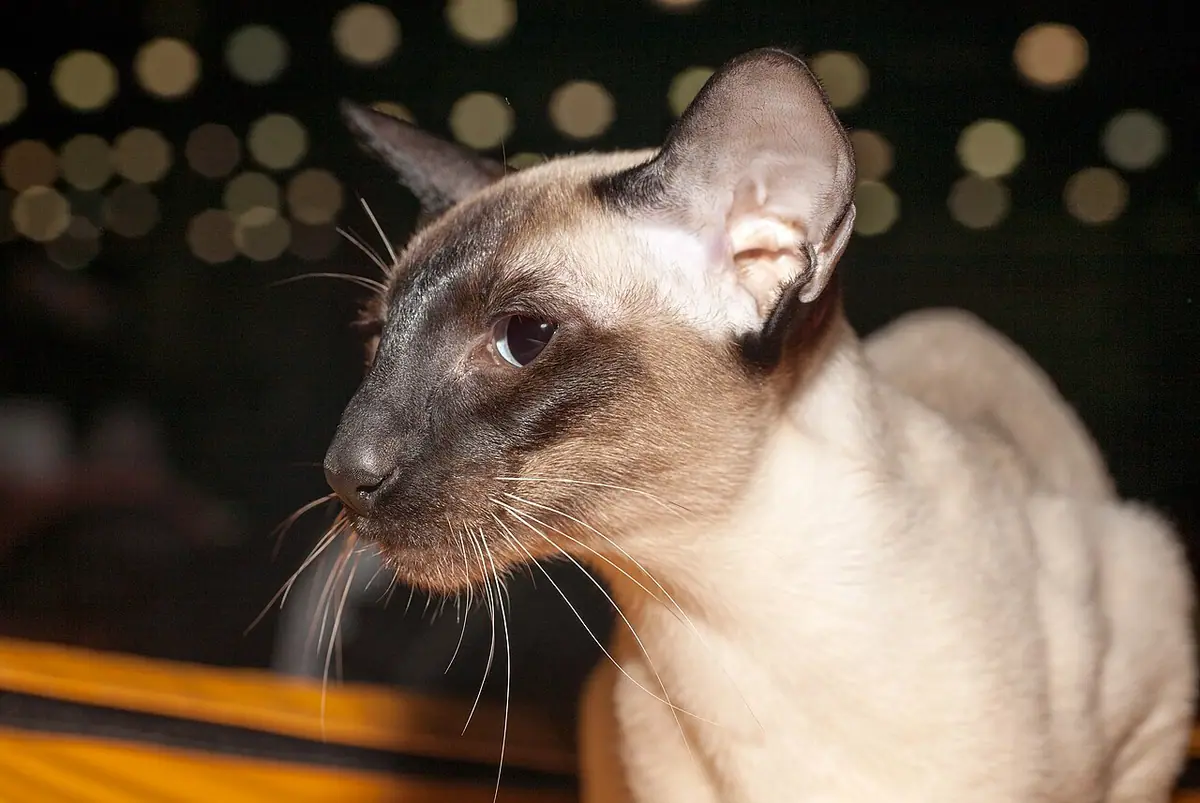
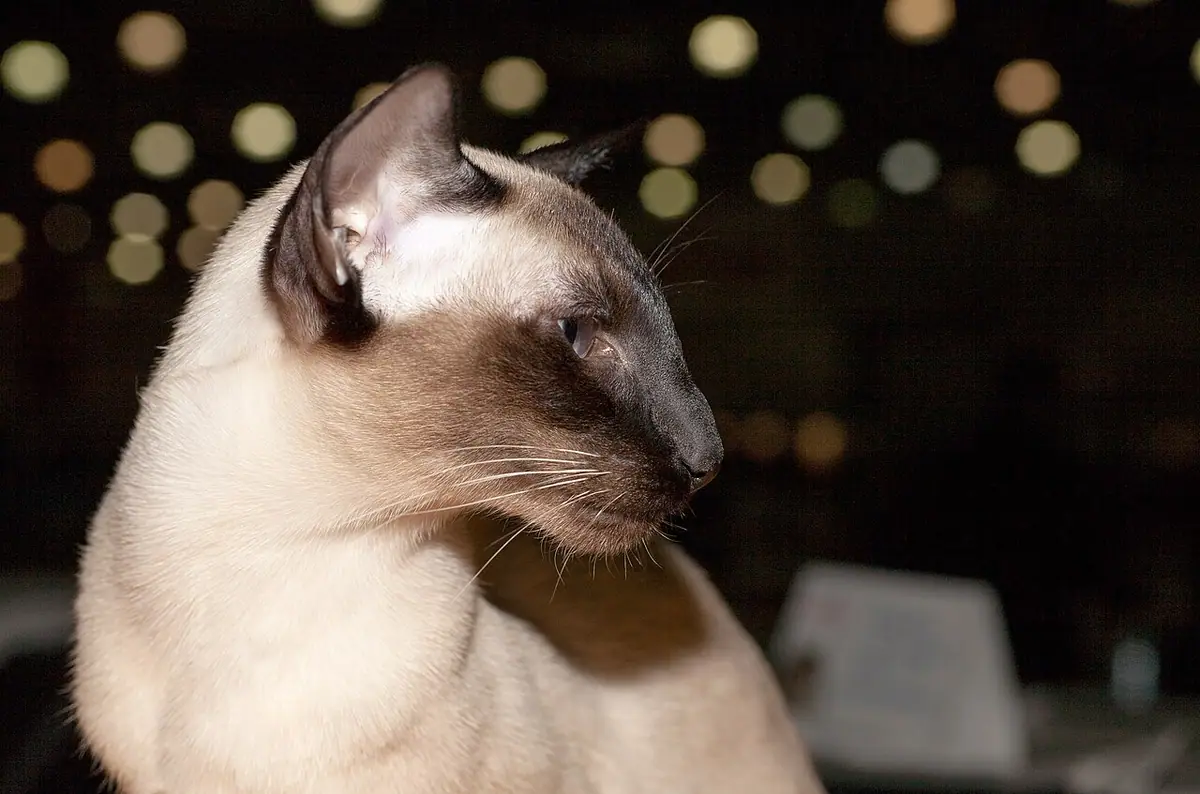
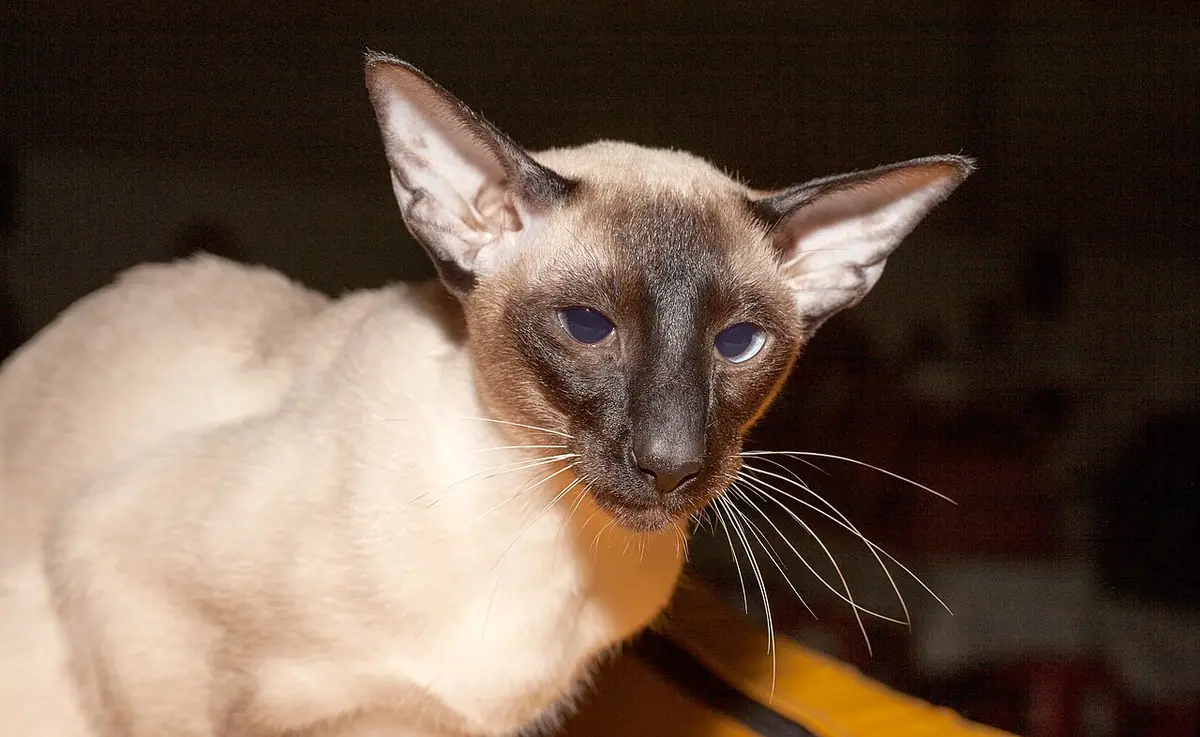
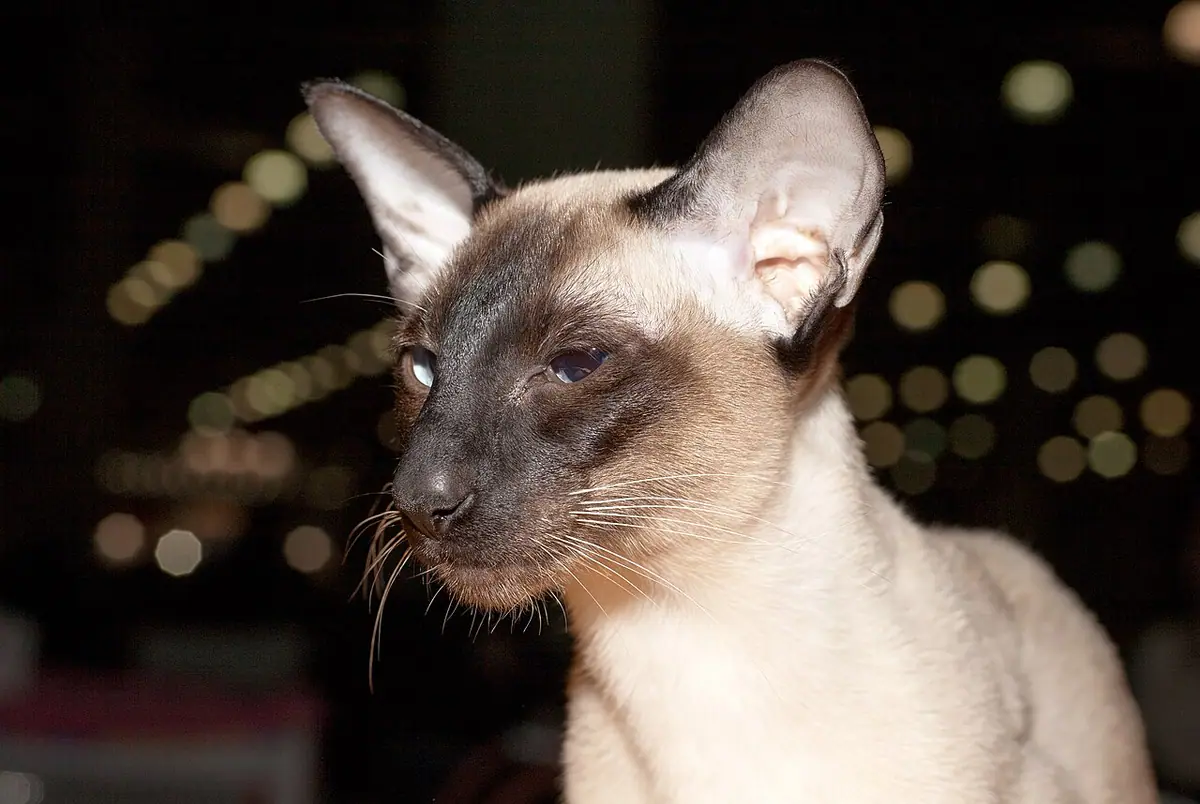

Photos: Wikimedia Commons – author & licence shown when enlarged and on the Photo credits page.
Temperament
CFA describes the Siamese as unmatched in its ability to communicate with people, through body language and a huge vocal repertoire [1]. They head for the warmest spot in the house, which is usually your lap. They want to be involved in whatever you're doing and will complain loudly if you shut them out [1]. Another person or another Siamese makes the ideal companion, though many get on well with other pets [1].
Care
Health
- Progressive retinal atrophy (PRA) can cause blindness. It's recessive, and a genetic test lets breeders avoid producing affected kittens [1].
- Amyloidosis causes liver problems. Its genetics are still being researched, so ask breeders about any family history [1].
- Lifespan: an English study recorded a median age at death of 14.2 years (31 cats) [4]. VetCompass life tables put life expectancy at birth at about 11.7 years [5].
For any specific health concern, talk to your veterinarian.
Don't confuse with…
- Thai (Wichienmaat, "Old-Style Siamese"): moderate type with a rounder head, a separate breed in TICA [6].
- Oriental Shorthair: the same body type, but without the pointed pattern, in a huge range of colours and usually with green eyes [7].
Ask your vet. This information is for reference only and does not replace a veterinary diagnosis.
Fun facts
Frequently asked questions
Are Siamese cats very vocal?
Yes. Siamese are famous for "talking" to their people through body language and a big repertoire of sounds, and they'll protest loudly when left alone [1].
Are Siamese cats easy to keep?
The coat is easy, since a damp hand or a rubber brush will do [1]. But Siamese crave attention and want to be part of everything you do, so they suit homes where someone is around a lot or where they have a companion [1].
Why do Siamese cats have dark faces, ears and paws?
A TYR gene mutation makes the pigment enzyme work poorly at warmer temperatures, so only the cooler extremities darken [8][9]. CFA's standard notes that Siamese generally darken with age [1].
Similar breeds


Breed photos: Wikimedia Commons (CC0 / CC BY / CC BY-SA) – authors & licences on the Photo credits page.
References
- CFA, Siamese (breed profile & standard)
- Lipinski MJ et al. (2008). The ascent of cat breeds. Genomics 91(1):12–21
- GCCF, Registered Cats By Breed 2024–2025 (Siamese #4; read via search-index copy, re-verify)
- O'Neill DG et al. (2015). Longevity and mortality of cats attending primary care veterinary practices in England. J Feline Med Surg
- Teng KT et al. (2024). Life tables of annual life expectancy and risk factors for mortality in cats in the UK. J Feline Med Surg; RVC VetCompass summary
- TICA, Thai (breed page + Thai Breed Introduction PDF: https://tica.org/wp-content/uploads/2018/08/TICA-Thai-Breed-Introduction.pdf)
- CFA, Oriental (breed profile & standard)
- Lyons LA et al. (2005). Tyrosinase mutations associated with Siamese and Burmese patterns in the domestic cat. Animal Genetics 36:119–126
- UC Davis Veterinary Genetics Laboratory, Colorpoint Restriction
Accessed: 2026-10-02
Written by Catopidia from the sources above. Photos credit their author and licence under each image and on the Photo credits & licences.