Cat breed · United States
Bombay
Mèo Bombay

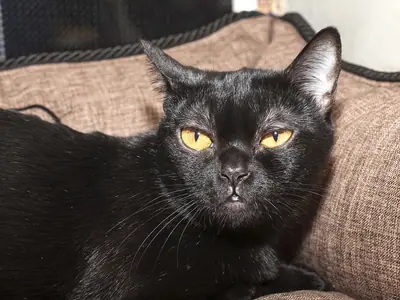
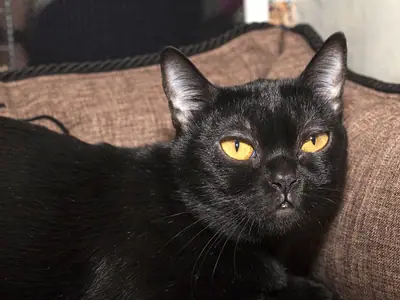
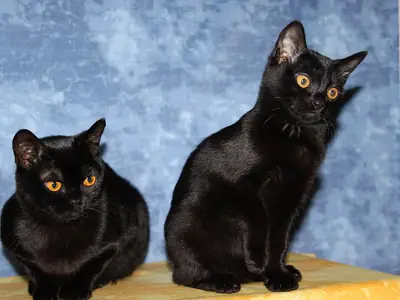
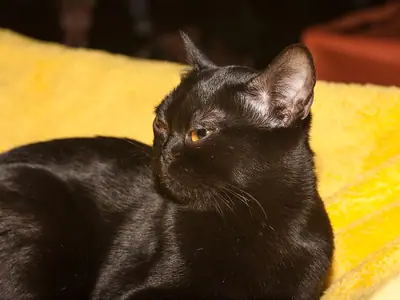
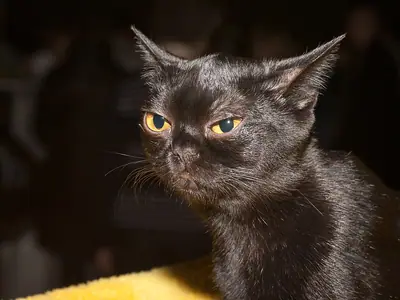
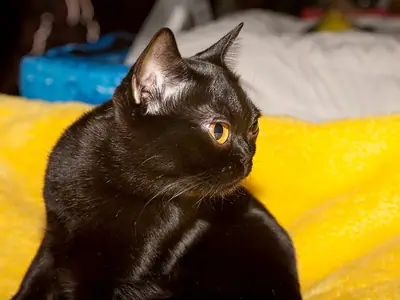
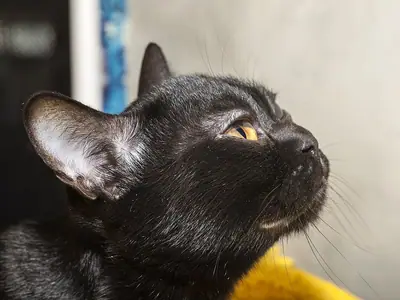
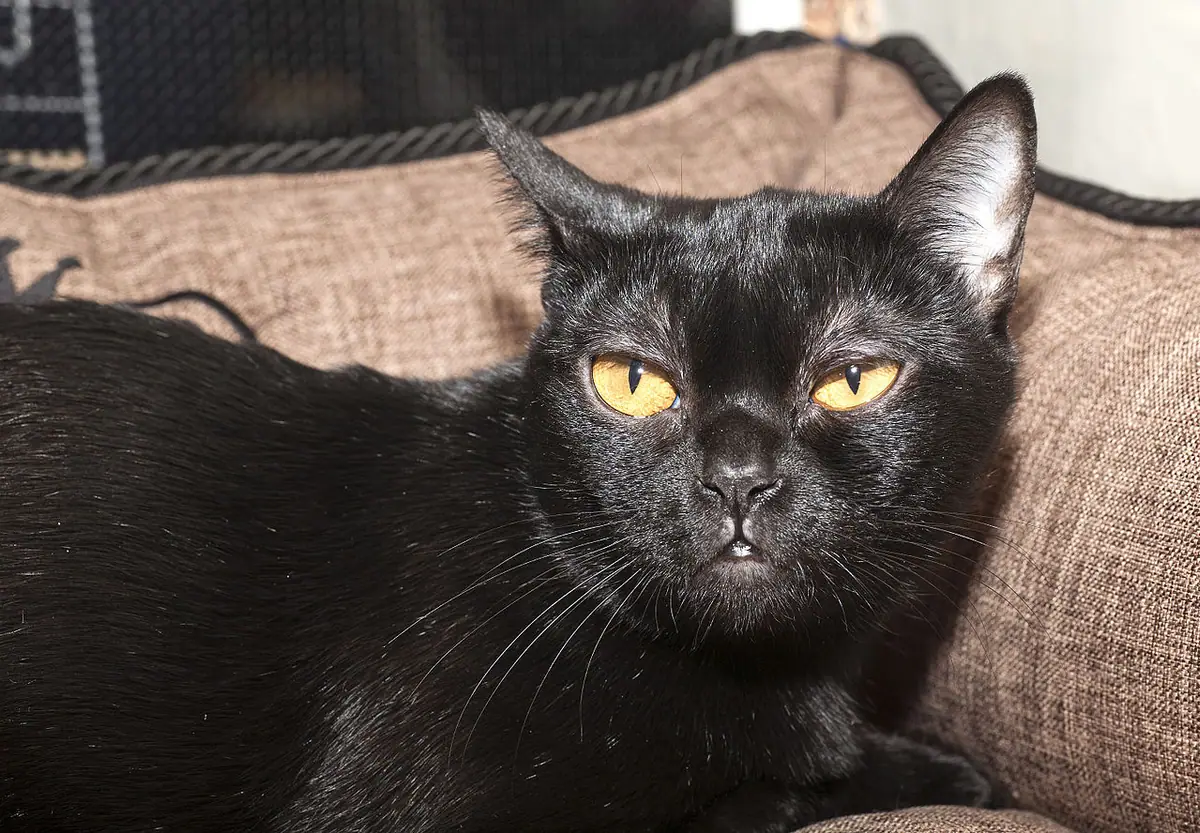
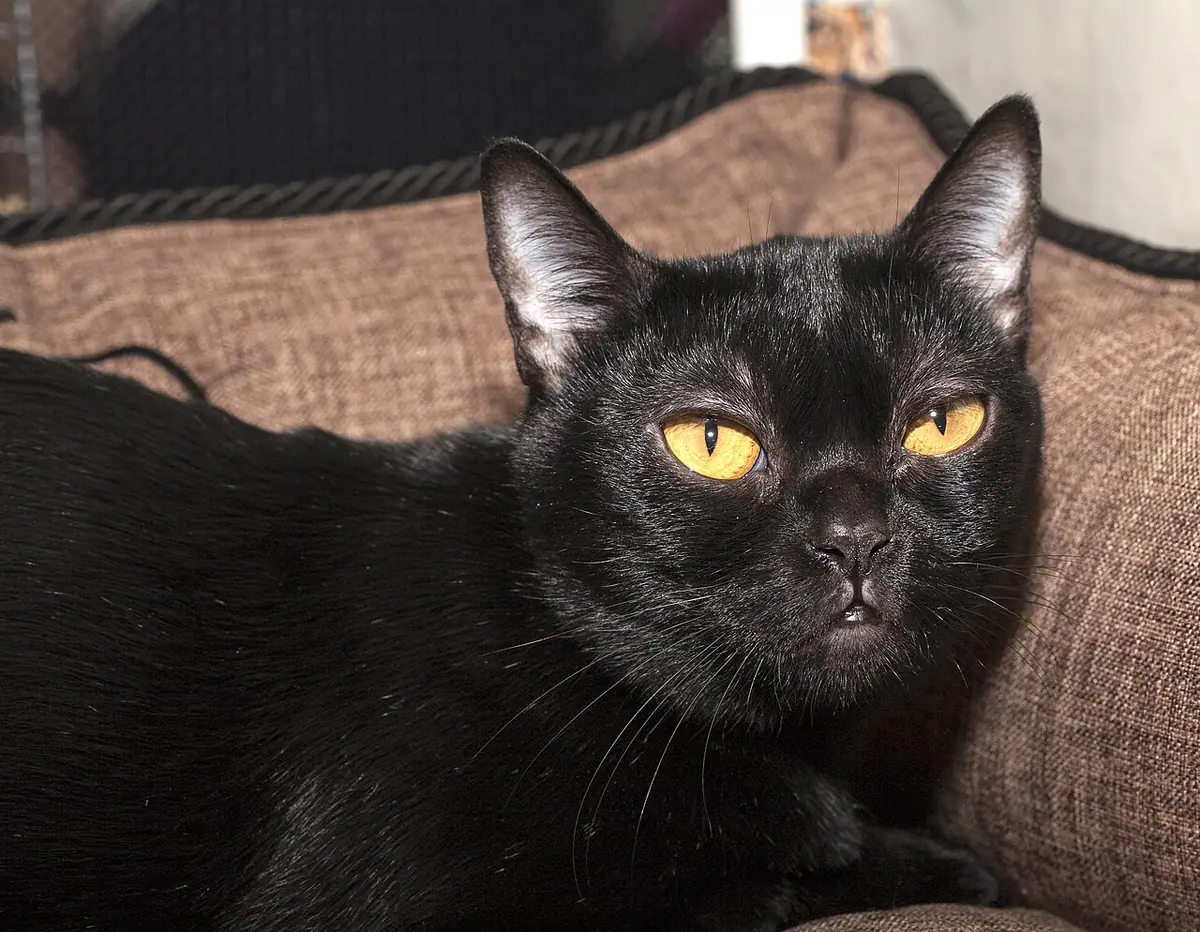
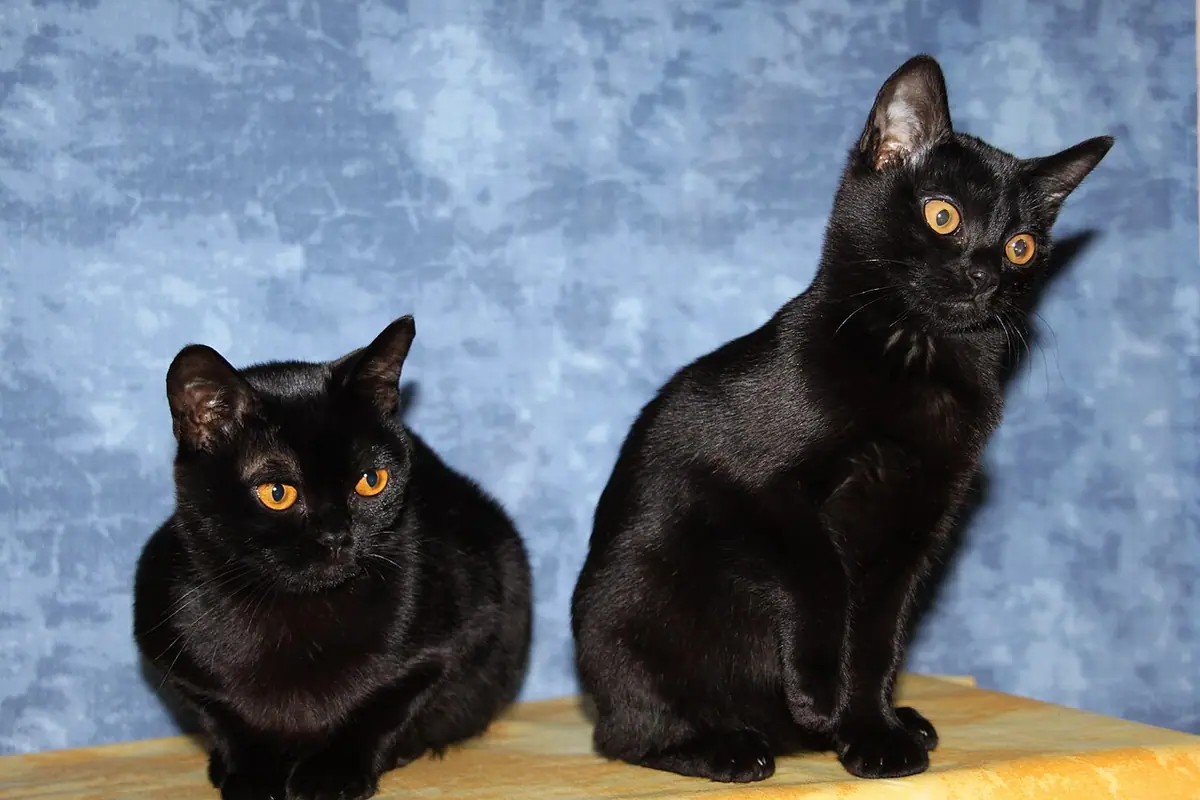
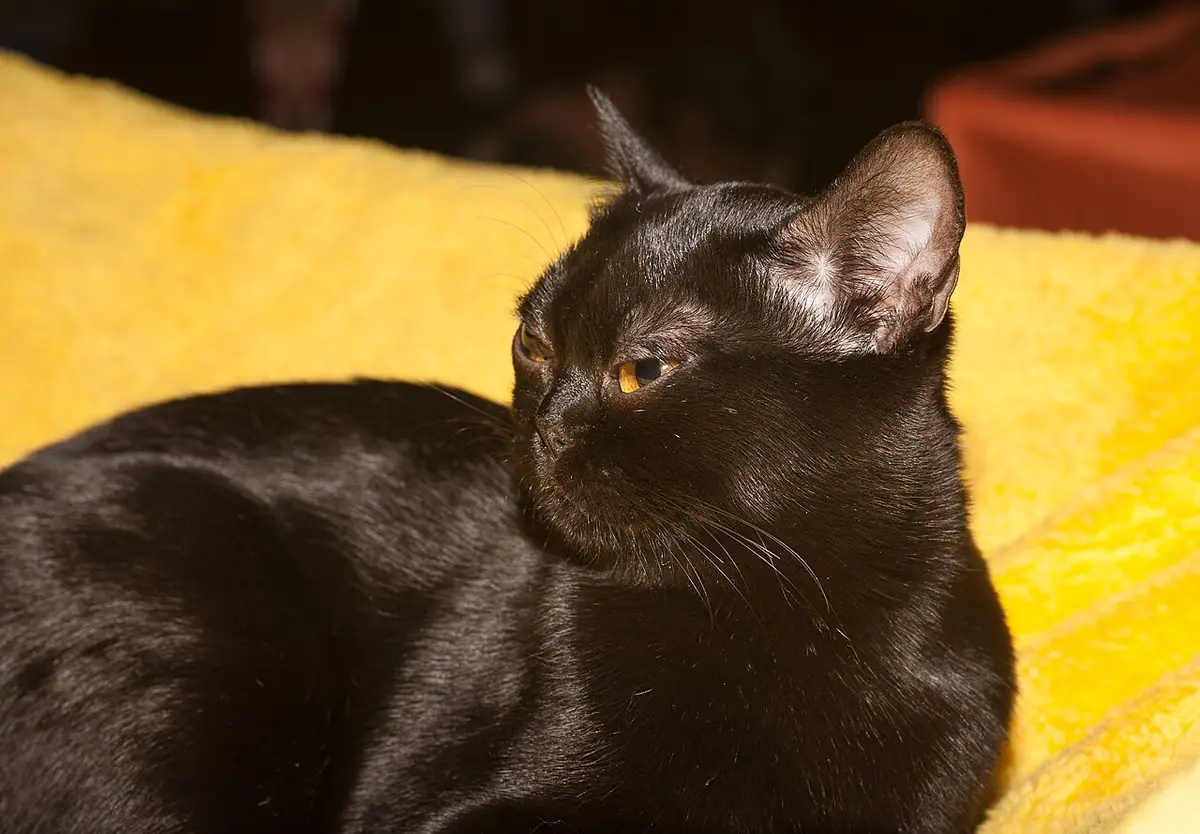
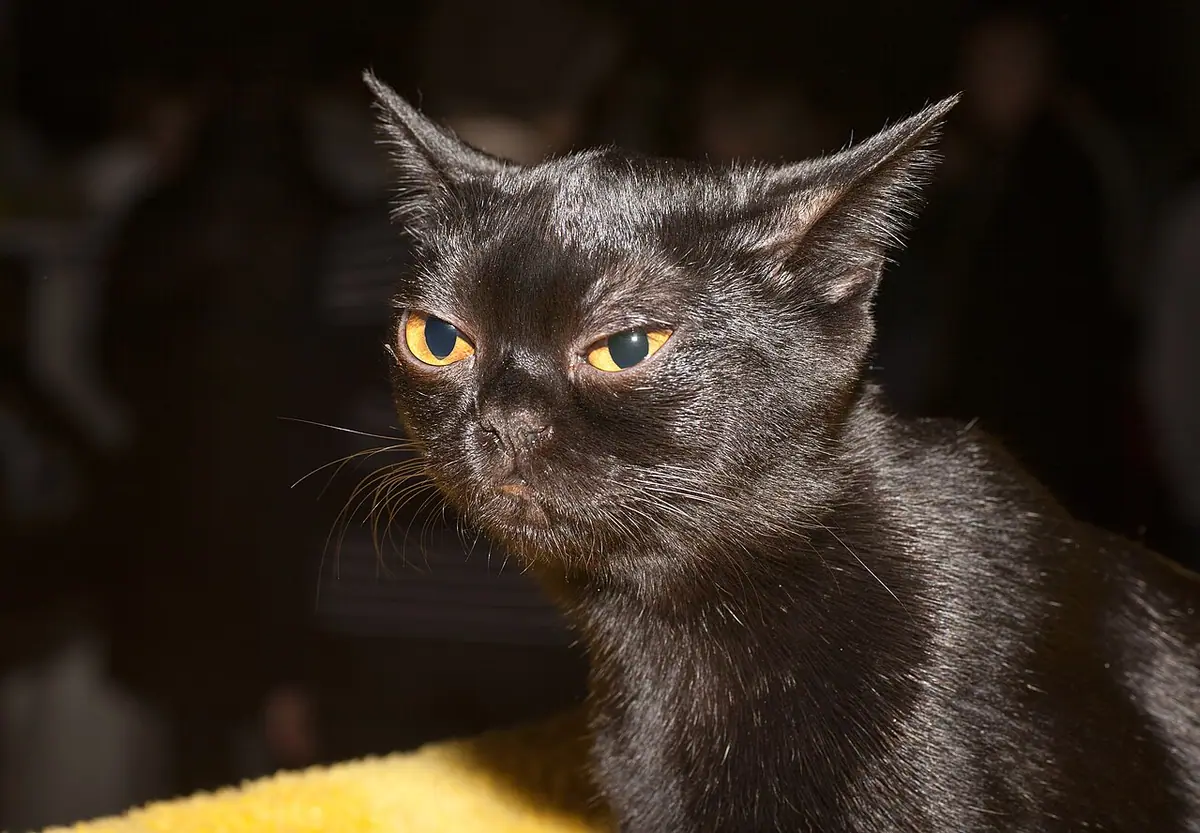
The Bombay was designed to look like a miniature black panther, with a gleaming "patent-leather" coat and brilliant copper-penny eyes [1]. Despite the wild name, it's a 100% domestic breed [1]. Bombays are affectionate, mischievous and mad about toys [1]. The breed is recognised by CFA and TICA [5], and holds preliminary FIFe recognition for 2023–2027 [2].
Contents (10 sections)
Quick facts
- Origin
- United States (Kentucky, 1966), from Burmese x black American Shorthair
- Weight
- no data
- Lifespan
- no data
- Coat
- short, glossy
- Energy
- moderate
Details & sources
Traits (scale 1–5)
- Energy
- 3/5
- Shedding
- 2/5
- Grooming needs
- 1/5
- Good with kids
- 5/5
- Vocal
- 3/5
- Independence
- 2/5
Basis: Editorial estimate based on CFA's description, not a measurement
Registry recognition
| CFA | Yes |
|---|---|
| TICA | Yes |
| FIFe | Preliminary |
| GCCF | — |
GCCF: pending verification.
History
In 1966 Kentucky breeder Nikki Horner set out to combine two popular breeds, the American Shorthair and the Burmese [1]. She began by breeding a black American Shorthair male to a Burmese female [1]. CFA accepted the Bombay for registration in 1970 and for championship in 1976 [1]. The name was inspired by India's black leopards and the city of Bombay [1].
Appearance
Photo gallery
7 photos · tap to enlarge- (enlarge, photo 1/7)
- (enlarge, photo 2/7)
- (enlarge, photo 3/7)
- (enlarge, photo 4/7)
- (enlarge, photo 5/7)
- (enlarge, photo 6/7)
- (enlarge, photo 7/7)
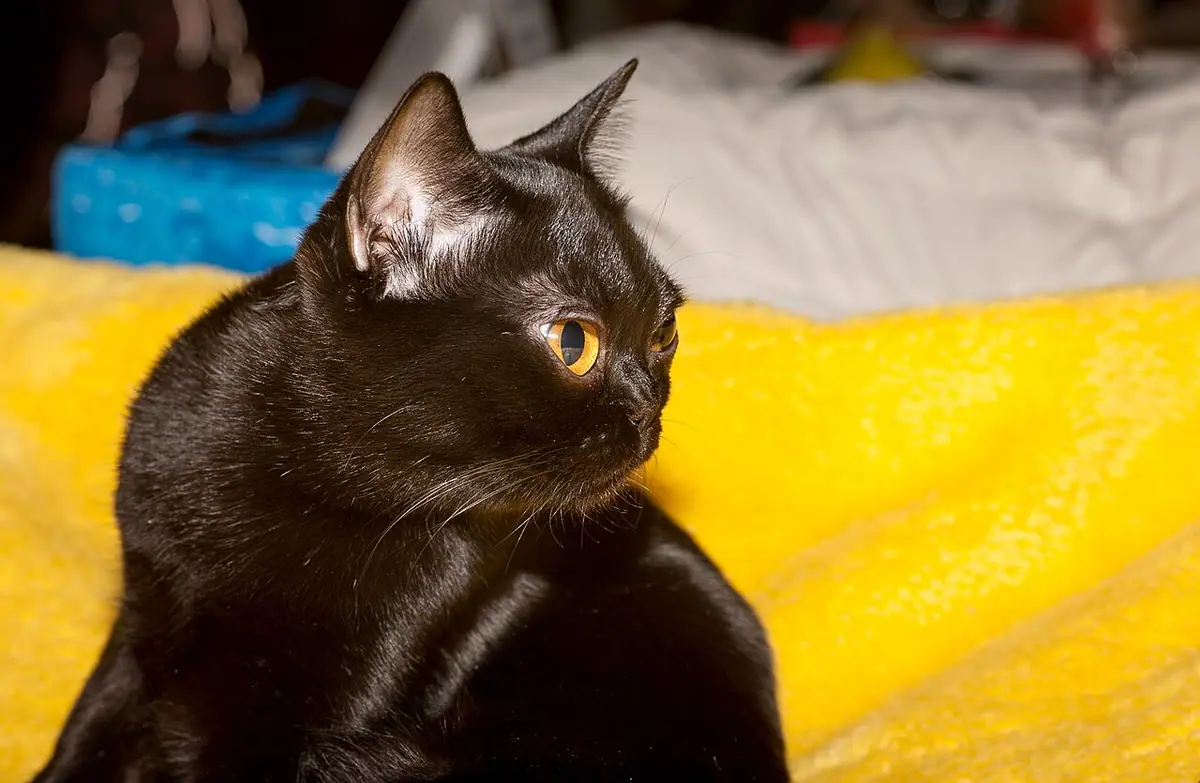
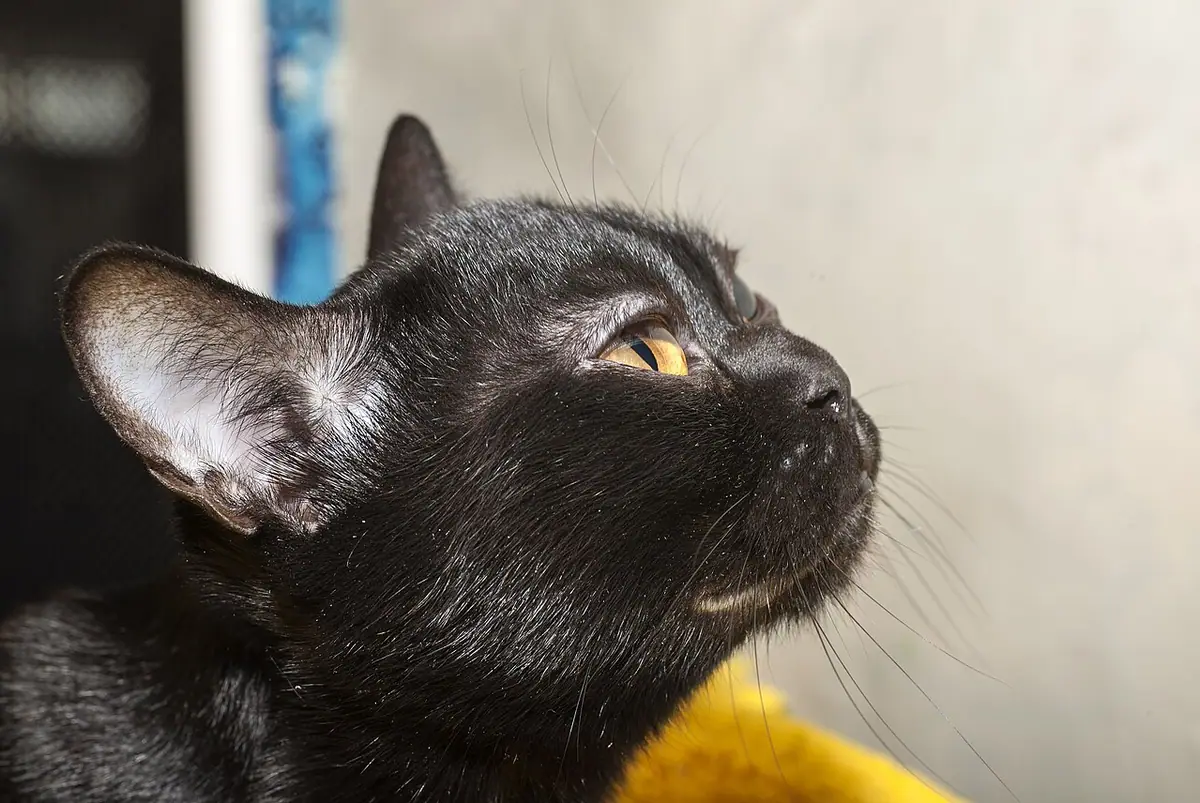
.jpg)
Photos: Wikimedia Commons – author & licence shown when enlarged and on the Photo credits page.
Temperament
Bombays are described as part cat, part dog and part clown [1]. They balance the American Shorthair's easygoing nature with the Burmese's curious, lap-loving personality [1]. Neither hyperactive nor placid, they adapt to almost any home [1]. They're sure every visitor has come to see the cat [1]. Expect head-butts, kisses and night-time snuggles [1]. Children love the devotion, and with proper introductions Bombays bond quickly with dogs and other pets [1].
Care
Health
- Eyes: some have overly teary eyes needing regular wiping [1].
- HCM: hypertrophic cardiomyopathy has been found in Bombays; responsible breeders test before breeding [1].
- Lifespan: we found no reliable breed-specific data.
Ask the breeder about the parents' heart screening, and talk to your vet about any specific concern.
Don't confuse with…
- Vietnamese domestic cat in black (mèo mun): non-pedigree cats can be solid black too; the Bombay is a registered pedigree breed [1].
- Burmese: a parent breed with a similar build, in sable, champagne, platinum or blue [3].
- Black Oriental Shorthair: svelte, with a wedge head and very large ears [4].
Ask your vet. This information is for reference only and does not replace a veterinary diagnosis.
Fun facts
Frequently asked questions
How can I tell a Bombay from a black domestic cat?
Looks alone won't settle it. Bombays have a very glossy, close-lying black coat, a rounded head, a short broad muzzle and gold-to-copper eyes [1].
Is a Bombay easy to care for?
Very. Shedding is moderate to minimal; use a rubber curry brush two or three times a month. A quick bath helps if needed, and Bombays usually take it well [1].
Are Bombays good with kids and dogs?
Yes. They're very affectionate, given to head-butts and night-time snuggles, and if properly introduced they bond quickly with dogs and other pets [1].
Similar breeds


Breed photos: Wikimedia Commons (CC0 / CC BY / CC BY-SA) – authors & licences on the Photo credits page.
References
- CFA, Bombay (breed profile & standard)
- FIFe, Breeds (BOM Bombay, preliminary recognition 2023–2027)
- CFA, Burmese (breed profile & standard)
- CFA, Oriental (breed profile & standard)
- TICA, Browse All Breeds (Bombay listed)
Accessed: 2026-10-02
Written by Catopidia from the sources above. Photos credit their author and licence under each image and on the Photo credits & licences.