Cat breed · Isle of Man
Manx
Mèo Manx (mèo cụt đuôi đảo Man)

The Manx is an ancient breed from the Isle of Man, famous for having no tail and for a body so round it's jokingly called a "bowling ball with fur" [1]. Manx are gentle, placid and affectionate, with occasional bursts of spontaneous play [1]. The breed is recognised by CFA [1], TICA [2], FIFe [4] and GCCF [3]. The gene behind taillessness can come with a set of health problems known as Manx syndrome; please read the note below before choosing a cat.
Contents (10 sections)
Quick facts
- Origin
- Isle of Man, in the Irish Sea
- Weight
- ~3.6–5.4 kg
- Lifespan
- ~12–16+ years
- Coat
- short or long
- Energy
- moderate
Details & sources
Traits (scale 1–5)
- Energy
- 3/5
- Shedding
- 3/5
- Grooming needs
- 2/5
- Good with kids
- 5/5
- Vocal
- 2/5
- Independence
- 3/5
Basis: Editorial estimate based on CFA and TICA descriptions, not a measurement
Registry recognition
| CFA | Yes |
|---|---|
| TICA | Yes |
| FIFe | Yes |
| GCCF | Yes |
History
The Manx originated on the Isle of Man in the Irish Sea, where visiting sailors recorded tailless cats in the sixteenth century [1]. CFA thinks taillessness most likely began as a mutation in the island's native shorthairs and then spread across the island [1]. TICA adds that the island's isolation and resulting inbreeding made the trait common [2]. The longhair gene was probably introduced during Viking rule [1]. Manx appeared at the first cat shows in Britain and were registered by CFA from 1906 [1]; TICA recognised both the Manx and the Cymric for championship in June 1979 [2].
Appearance
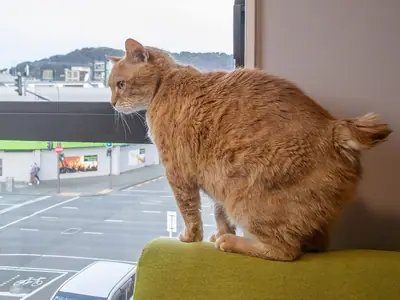
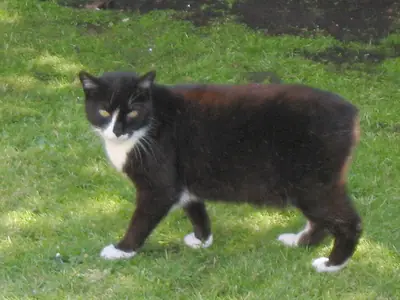
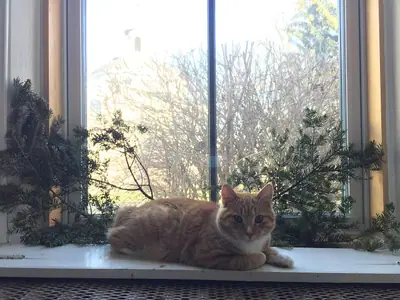
- Tail: the ideal show cat is tailless, with just a dimple where the tail would be, but tailed and partially tailed Manx do occur [1][2].
- Body: short and rounded with great depth of flank and surprising weight. The hind legs are longer than the forelegs, so the rump sits higher than the shoulders in a continuous arch [1].
- Head: very round, with rounded cheeks, large round eyes and medium ears [1].
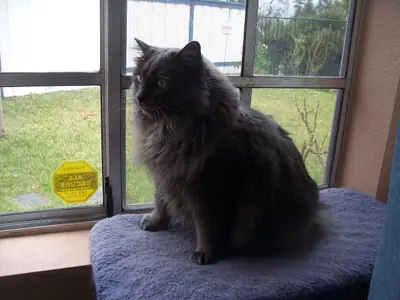
- Coat: thick and well padded in both shorthair and longhair [1]. The longhair is known as the Cymric [2].
- Weight: males average 10–12 lb, females slightly less [1]. TICA says Manx take up to five years to mature fully [2].
Photo gallery
5 photos · tap to enlarge- (enlarge, photo 1/5)
- (enlarge, photo 2/5)
- (enlarge, photo 3/5)
- (enlarge, photo 4/5)
- (enlarge, photo 5/5)

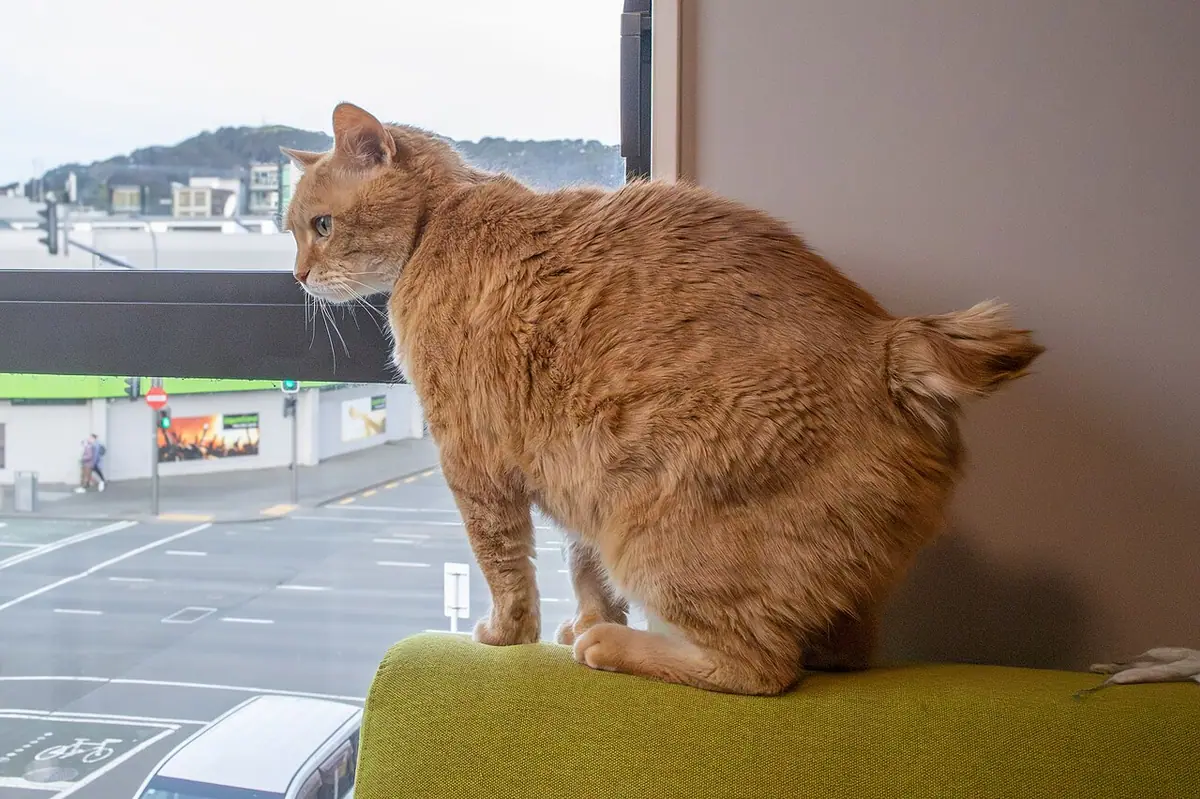
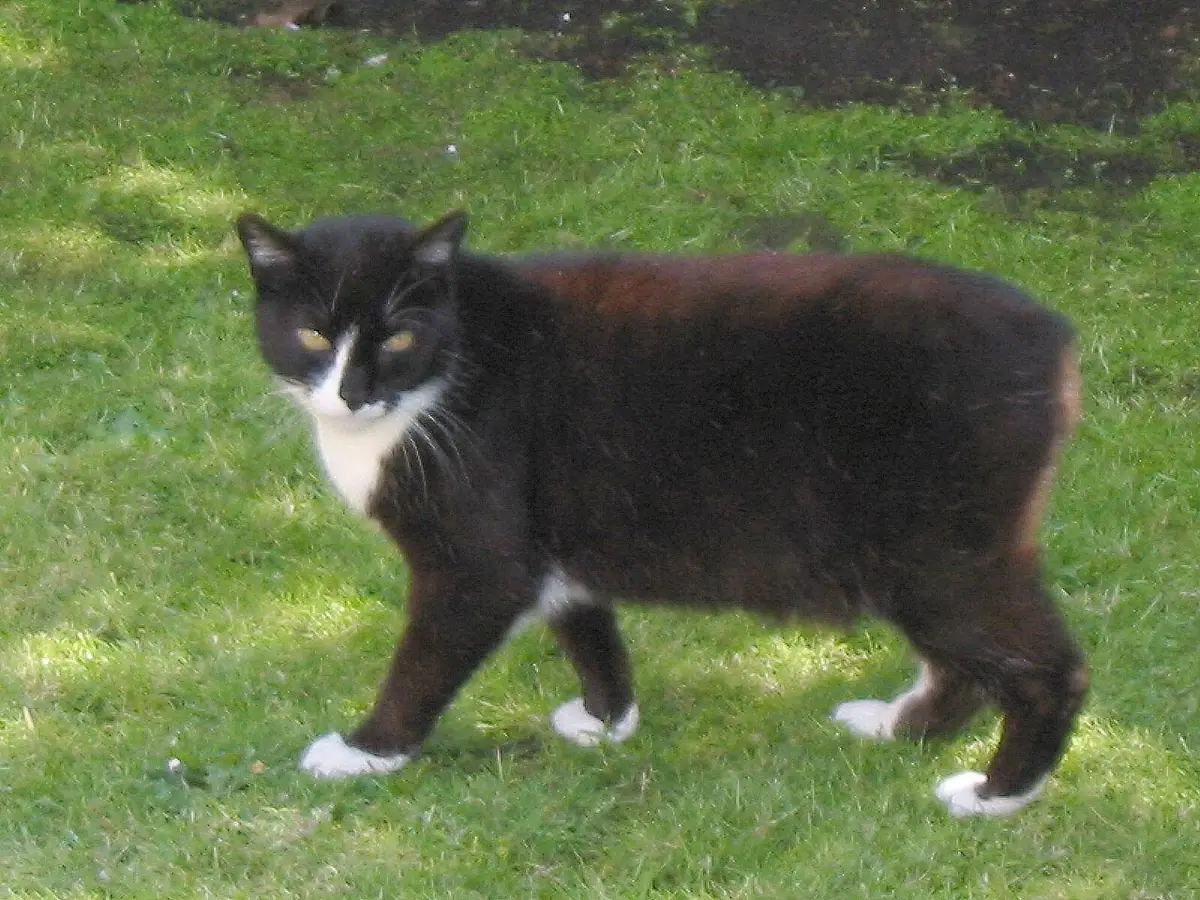
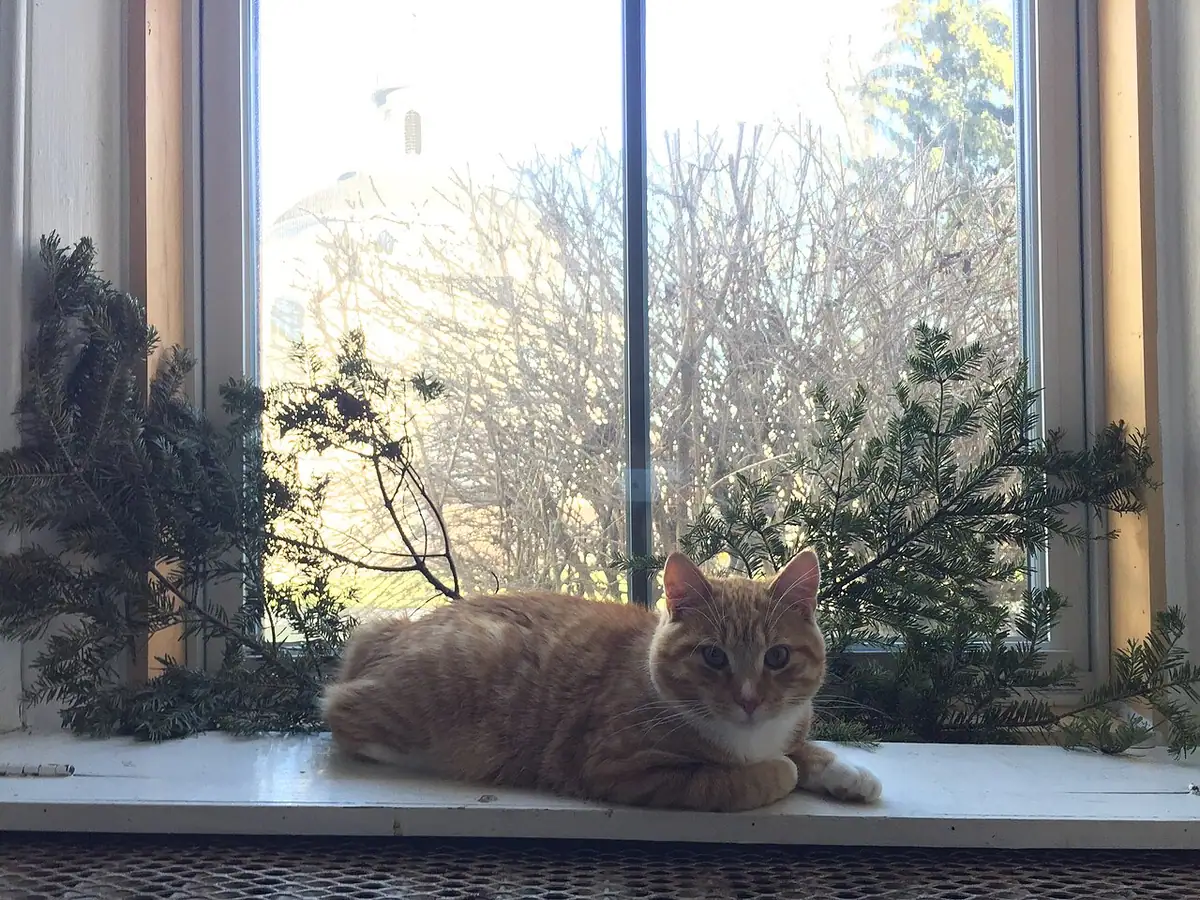
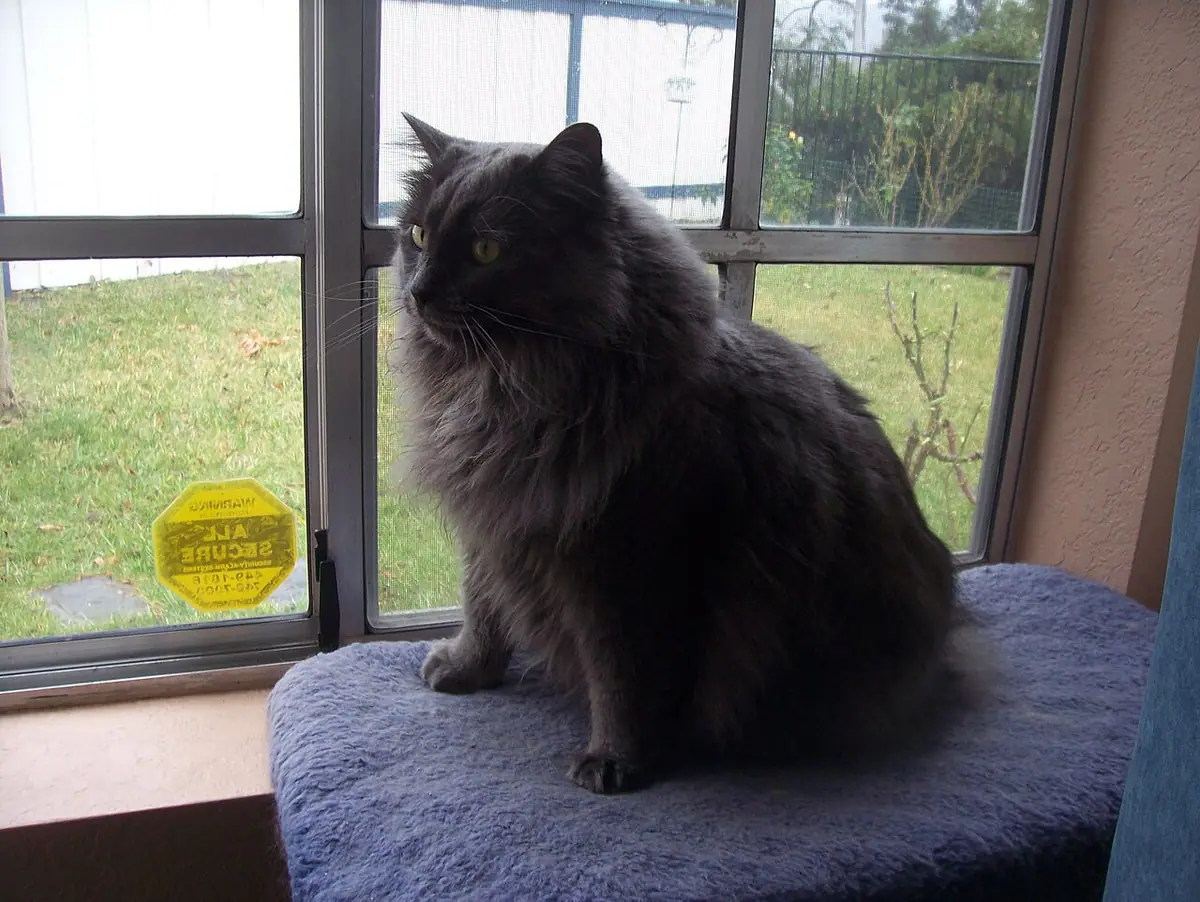
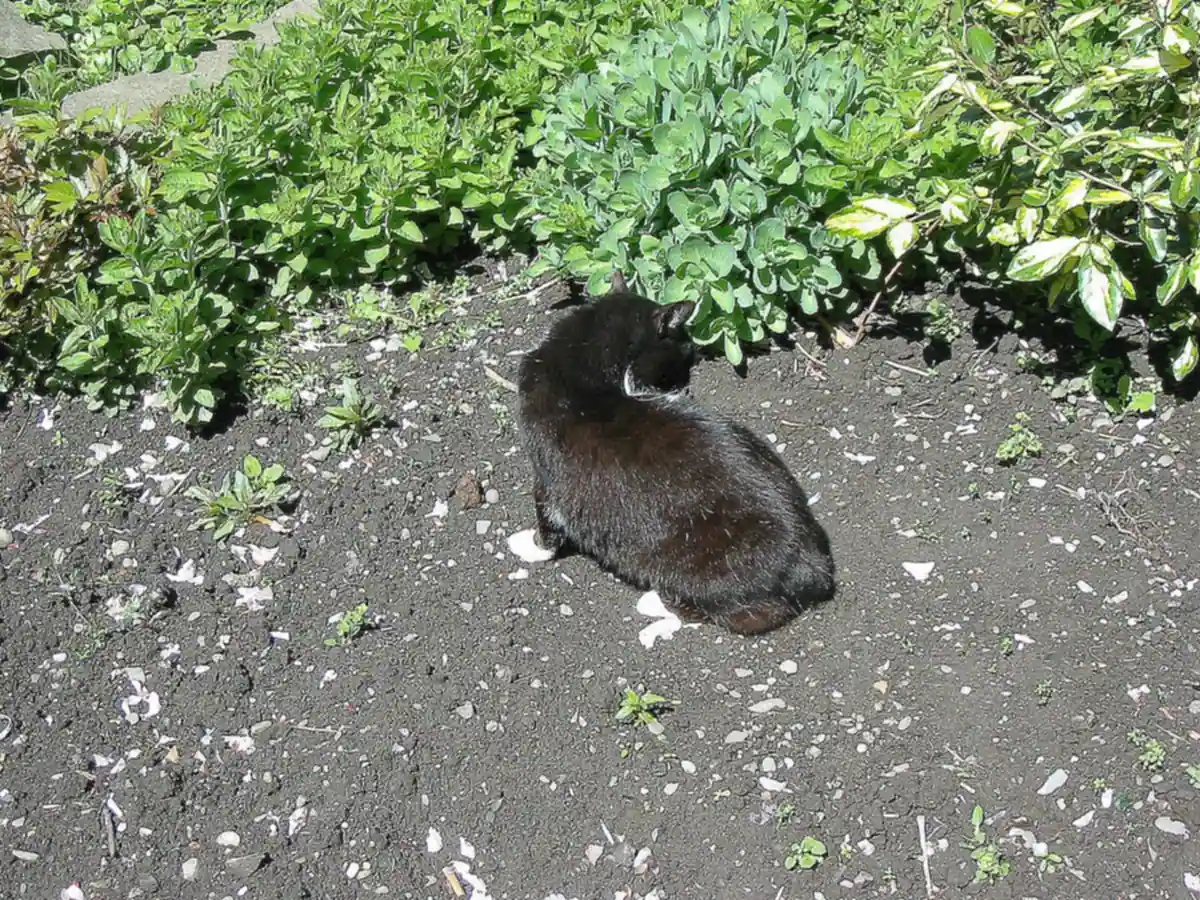

Photos: Wikimedia Commons – author & licence shown when enlarged and on the Photo credits page.
Temperament
Manx are affectionate and intelligent and tend to bond strongly with one or two family members, so they may take a while to accept newcomers [1]. They love fetch and will politely bring you something to throw [1]. They usually get along with dogs and other cats and are patient and tolerant with children of all ages [1]. They chat with chirps, trills and purrs without being loud [1]. Most of the time they're couch companions, but those powerful back legs can launch them to the top of the fridge in a single bound [1].
Care
- Coat: not prone to matting. Groom shorthairs with a comb or brush two or three times a month; comb longhairs weekly with a wide-toothed comb, especially under the legs and on the sides of the face [1].
- Handling: always support the hindquarters when lifting, and teach children not to poke where the tail would be [2].
- Watch: keep an eye on gait and toileting, especially in kittens [1][6].
Health
- Manx syndrome: hind-leg, bladder and colon problems in tailless cats, usually evident before four months of age [1]. Completely tailless cats are affected most often [5]. There is no cure, only supportive care [6].
- Tail arthritis: cats with short, kinked tails are prone to arthritis in the abnormal tail joints [5].
- Keeping the gene pool healthy: CFA says testing and monitoring kittens, plus regular use of tailed Manx in breeding, help maintain a healthy, diverse gene pool [1].
- Lifespan: GCCF estimates 12–14 years [3] and TICA 16+ years [2]. These are registry estimates; we found no breed-specific study.
Have a vet examine any kitten before you buy [5], and talk to your vet about any specific concern.
Don't confuse with…
- Japanese Bobtail: a short tail from a different gene, with no known associated abnormalities [8].
- Cymric: the longhaired Manx [2]; FIFe lists it as a separate breed [4].
- Kurilian Bobtail: another short-tailed breed [4].
Ask your vet. This information is for reference only and does not replace a veterinary diagnosis.
Fun facts
Frequently asked questions
Are all Manx cats tailless?
No. Manx can have full tails, partial tails or none; only completely tailless cats can be shown [1]. Tailed and partially tailed Manx have the same personality and are often more affordable [1].
What is Manx syndrome?
It's an array of problems with the hind legs, bladder and colon of a tailless cat, caused by abnormal development of the end of the spine and spinal cord [1][6]. Signs can include an abnormal gait, incontinence and constipation; there is no cure, only supportive care [6]. Ask breeders about Manx syndrome in their lines [1].
Similar breeds


Breed photos: Wikimedia Commons (CC0 / CC BY / CC BY-SA) – authors & licences on the Photo credits page.
References
- CFA, Manx (breed profile & standard; Breed Future section on Manx syndrome)
- TICA, Manx (breed profile)
- GCCF, Cat Breeds (Manx breed card)
- FIFe, Breeds (MAN Manx and CYM Cymric, fully recognised; Manx a founding breed of 1949)
- Science for Animal Welfare (UFAW), Manx syndrome (updated 6 May 2026)
- Katherman AE (Veterinary Partner, VIN). Manx Syndrome in Cats (revised 16 May 2023)
- DeForest ME, Basrur PK (1979). Malformations and the Manx syndrome in cats. Can Vet J 20(11):304–314
- CFA, Japanese Bobtail (breed profile & standard)
Accessed: 2026-10-02
Written by Catopidia from the sources above. Photos credit their author and licence under each image and on the Photo credits & licences.