Cat breed · United States
Selkirk Rex
Mèo Selkirk Rex

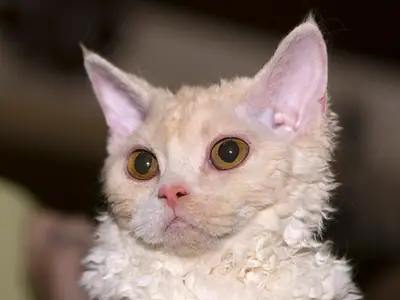
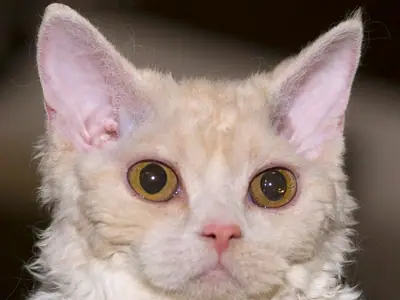
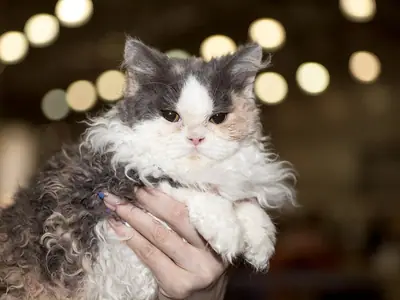
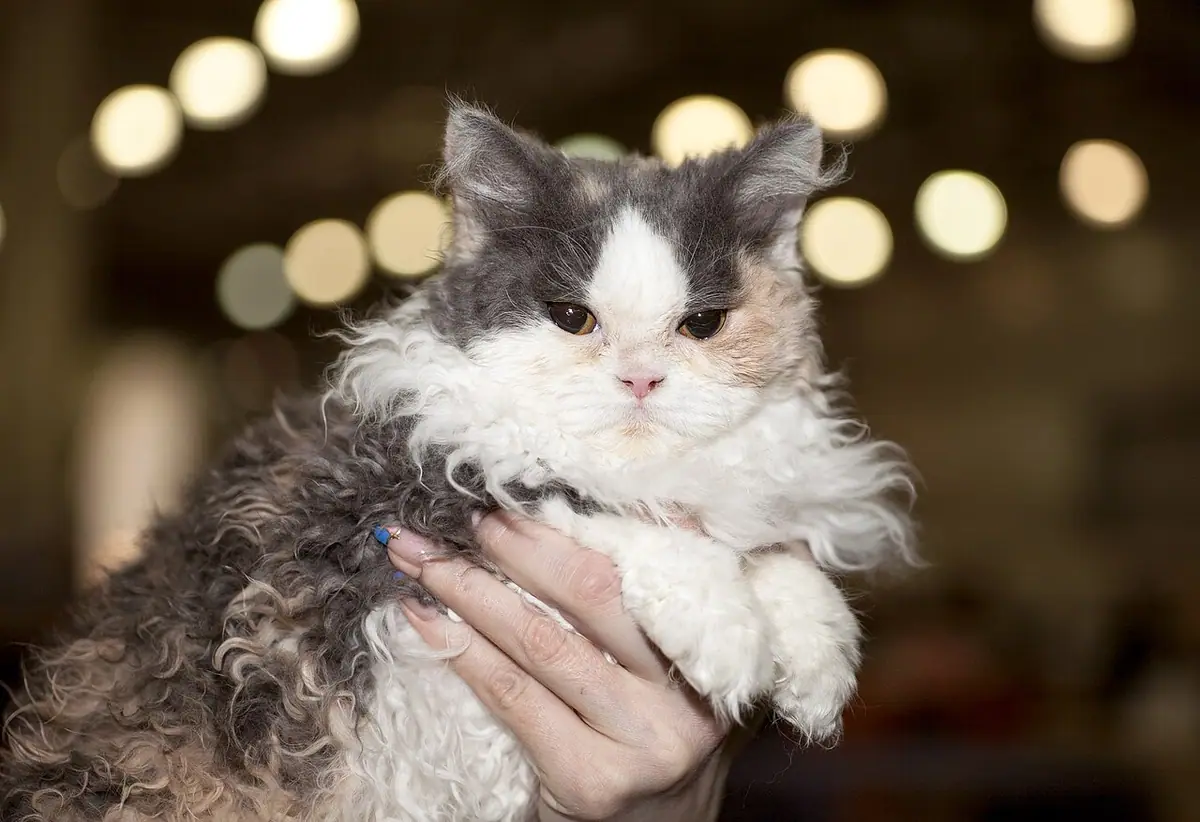
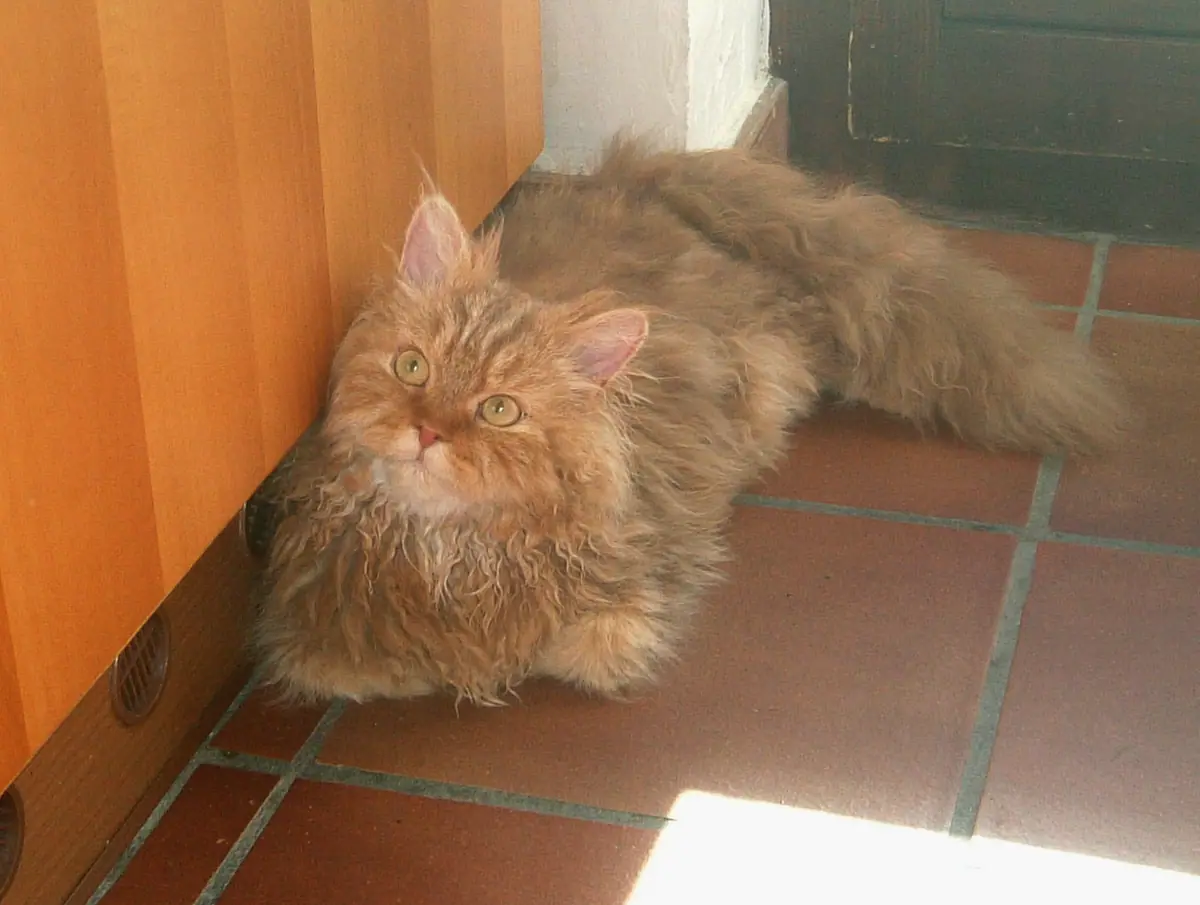
The Selkirk Rex is sometimes called "the cat in sheep's clothing", thanks to a coat of loose individual curls that go every which way, like a permanent bad hair day [1]. It's a medium to large, solidly built cat with a round head and round, luminous eyes [1]. Selkirks are patient, affectionate lap cats [1][2]. The breed is recognised by CFA [1], TICA [2], FIFe [4] and GCCF [3].
Contents (10 sections)
Quick facts
- Origin
- Montana, USA; from a curly-coated kitten born in the mid-1980s (1986 per CFA, 1987 per TICA)
- Weight
- ~4.1–7.3 kg
- Lifespan
- ~10–15+ years
- Coat
- curly, short or long
- Energy
- moderate
Details & sources
Traits (scale 1–5)
- Energy
- 3/5
- Shedding
- 3/5
- Grooming needs
- 3/5
- Good with kids
- 4/5
- Vocal
- 2/5
- Independence
- 2/5
Basis: Editorial estimate based on CFA and TICA descriptions, not a measurement
Registry recognition
| CFA | Yes |
|---|---|
| TICA | Yes |
| FIFe | Yes |
| GCCF | Yes |
History
The breed began with a spontaneous mutation in a litter born in Montana, USA; CFA gives the year as 1986 and TICA as 1987 [1][2]. The foundation female, with curly whiskers and a coat that looked permed, was adopted by Persian breeder Jeri Newman and named Miss DePesto [1][2]. Bred to a black Persian male, she produced three curly kittens out of six, showing the new rex gene to be dominant [1]. TICA accepted the breed into its New Breed programme in 1990 and granted championship status in February 1994 [2]. CFA accepted it for registration in 1992 and for championship in 2000 [1]. TICA credits the British Shorthair, Persian and Exotic with shaping the breed's temperament [2].
Appearance
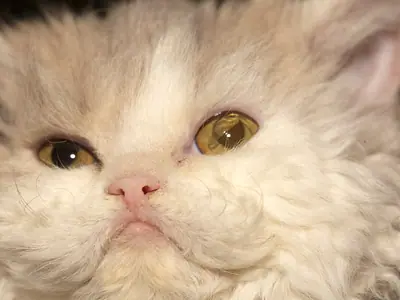
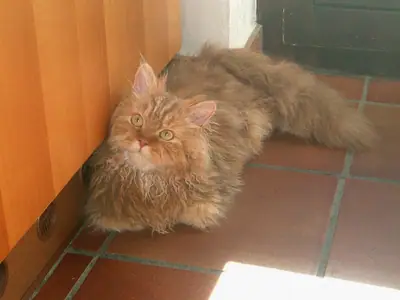
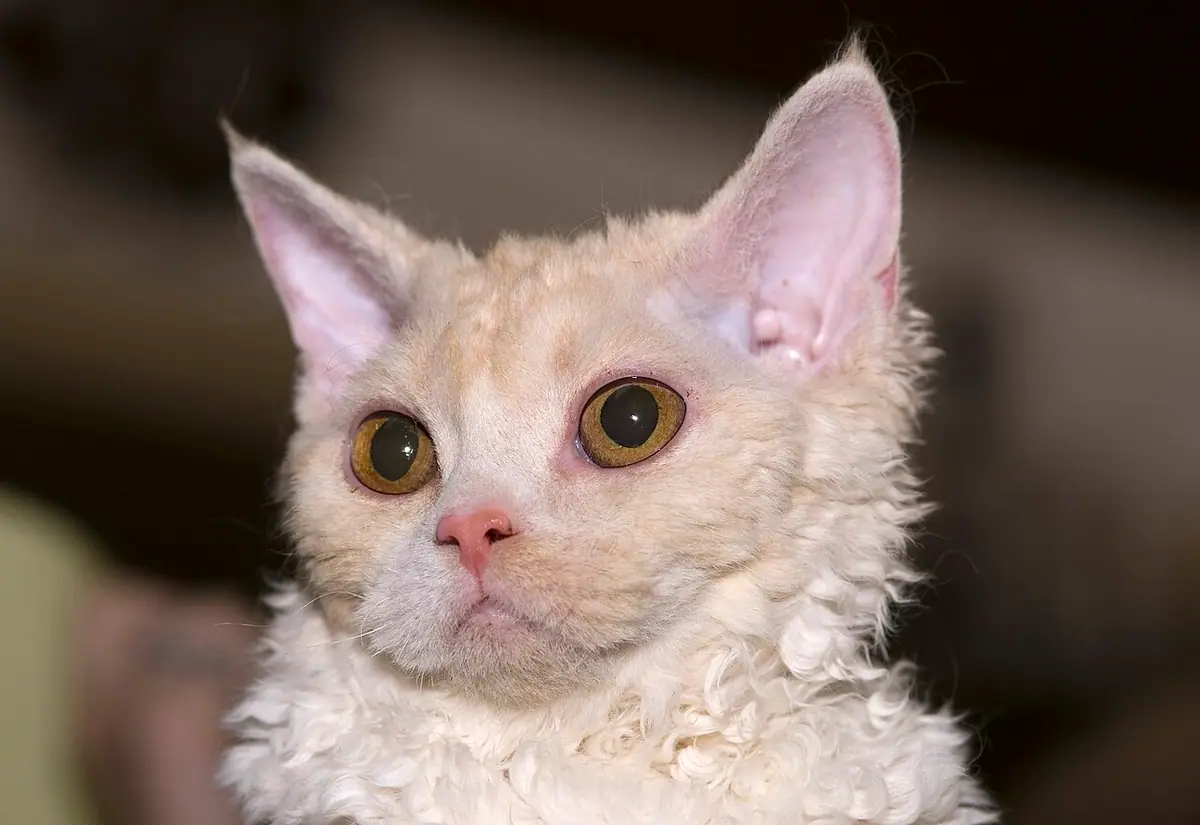
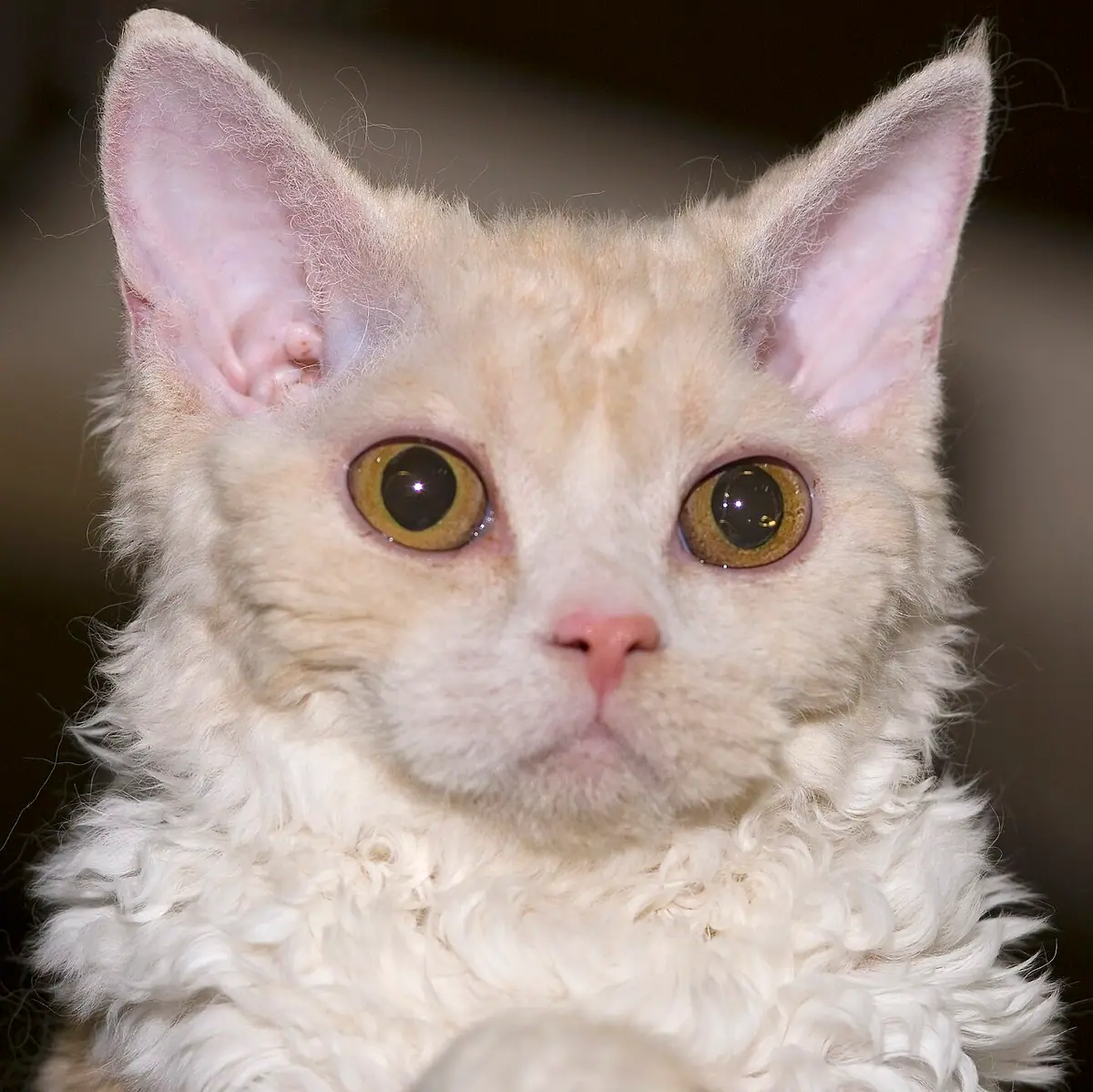
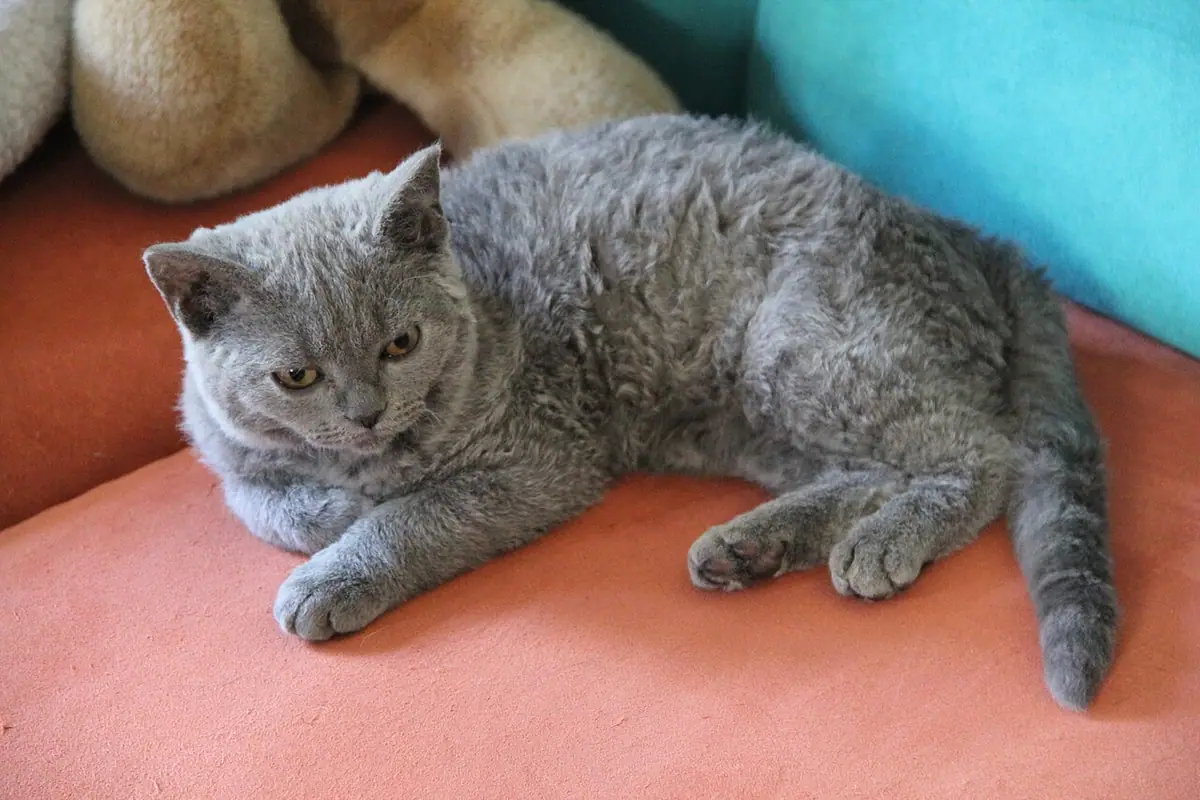
- Coat: well-defined individual curls, short and slightly crisp or long and loose, unlike the Cornish Rex's tight marcel wave or the Devon's soft waves [1]. The curls are most prominent on the neck, tail, flanks and underside [2].
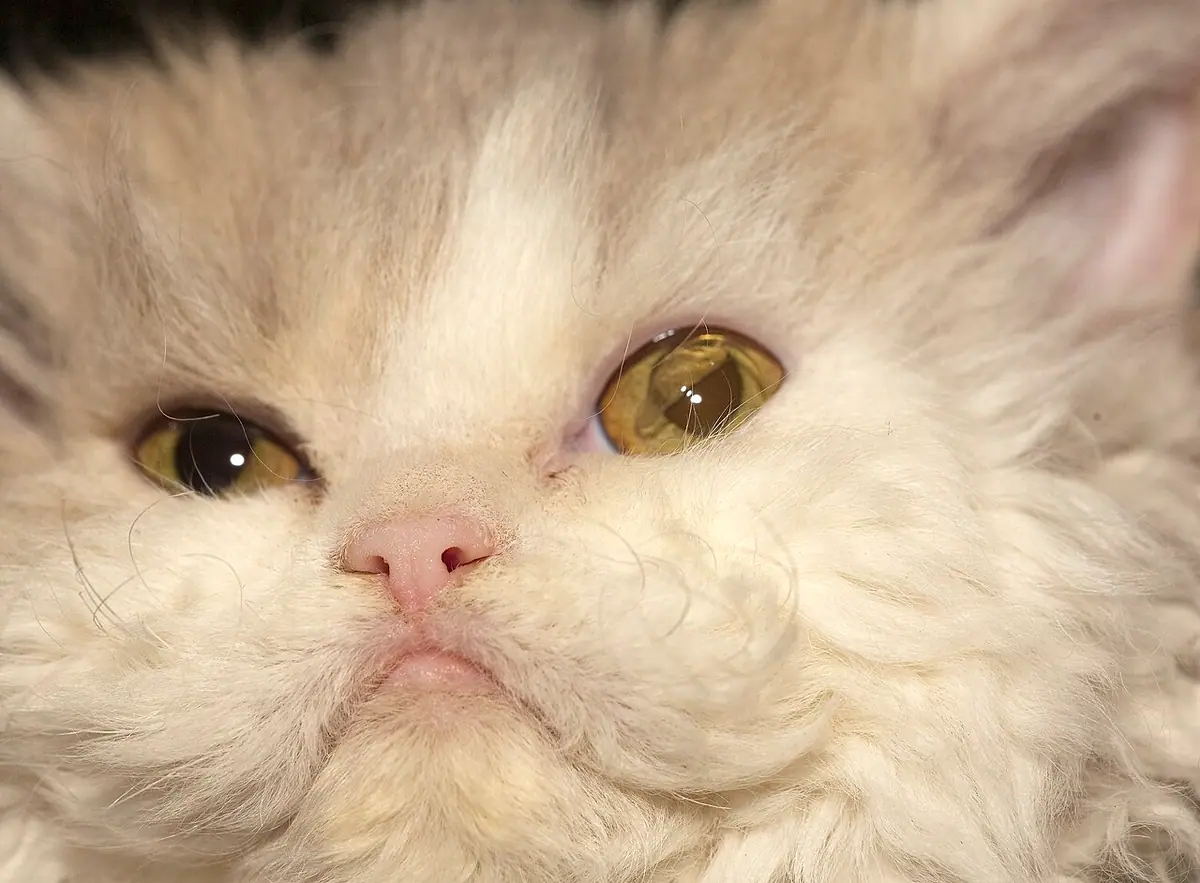
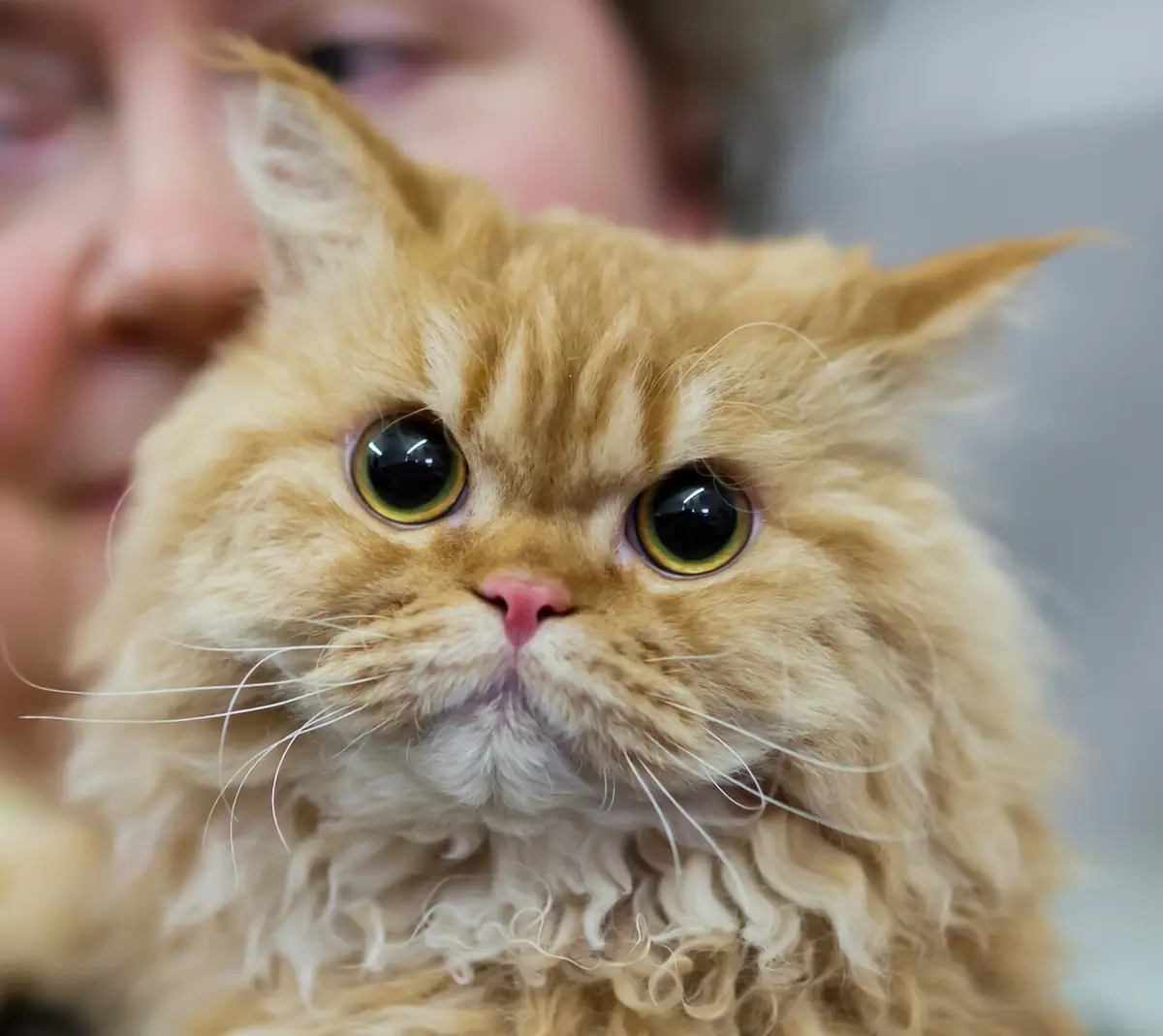
- Whiskers and eyebrows: curly and fragile [1][2].
- Head: round and full-cheeked, with prominent whisker pads that make the muzzle look square; round eyes set well apart [1].
- Body: medium to large, muscular and heavy-boned [1]. Adult males weigh 12–15 lb [1].
- Two coat lengths: shorthairs have the same length all over; longhairs have face-framing ruffs and plumy tails [1].
Photo gallery
7 photos · tap to enlarge- (enlarge, photo 1/7)
- (enlarge, photo 2/7)
- (enlarge, photo 3/7)
- (enlarge, photo 4/7)
- (enlarge, photo 5/7)
- (enlarge, photo 6/7)

- (enlarge, photo 7/7)
.jpg)
Photos: Wikimedia Commons – author & licence shown when enlarged and on the Photo credits page.
Temperament
CFA notes that Miss DePesto earned her name by pestering for attention, and her descendants often do the same: politely asking for your time, then jumping into a lap if their needs aren't soon met [1]. Selkirks are more interactive than active, and their idea of heaven is a warm lap [1]. They're not especially vocal but will "talk" back if you start a conversation [1]. They do well with children and other animals, as long as children handle them gently [1][2]. TICA notes they are very social and dislike being left alone for long periods [2].
Care
- Coat: CFA suggests combing once or twice a month [1]; TICA suggests a couple of times a week [2]. Fluff the curls with gentle finger-scratching [1][2].
- Bathing: rarely needed; let the coat air-dry somewhere warm, as blow-drying gives a poodle look [2].
- Basics: trim nails, clean ears and brush teeth regularly [2].
Health
- Generally healthy: CFA says the breed has no breed-specific health concerns [1].
- Parent-breed conditions: breeders typically screen for polycystic kidney disease (PKD), hip dysplasia and hypertrophic cardiomyopathy (HCM), because British Shorthairs and Exotics are allowable outcrosses [1].
- Blood type: incompatibility can occur, so breeders usually test blood type before mating [1].
- Lifespan: GCCF estimates about 15 years [3] and TICA 10–15+ years [2]. These are registry estimates; we found no breed-specific study.
Ask breeders for the parents' PKD and HCM screening results, and talk to your vet about any specific concern.
Don't confuse with…
- Devon Rex: soft waves and very large ears [5].
- Cornish Rex: a tight, close-lying wave on a slender body [6].
- LaPerm: also curly, but with a modified-wedge head [7].
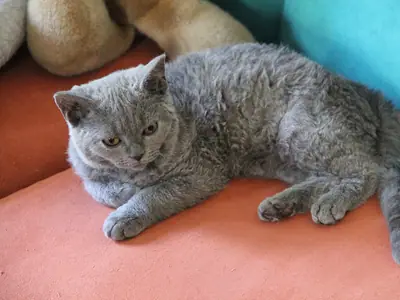
- British Shorthair: a similarly sturdy build, but straight-coated [8].
Ask your vet. This information is for reference only and does not replace a veterinary diagnosis.
Fun facts
Frequently asked questions
How is the Selkirk Rex different from the Devon and Cornish Rex?
According to CFA, the Cornish has a tight marcel wave and the Devon soft waves, while the Selkirk has well-defined individual curls, short and slightly crisp or long and loose [1]. The Selkirk is also larger, sturdier and rounder-headed [1]. Unlike the Cornish and Devon genes, the Selkirk curl gene is dominant [2].
Does a Selkirk Rex need a lot of grooming?
Advice varies: CFA says combing once or twice a month is enough [1], while TICA suggests combing a couple of times a week to prevent tangles [2]. Blow-drying gives a poodle look [2]; fluff the curls gently with your fingers instead [1].
Do Selkirk Rex cats shed?
Yes. TICA says Selkirks do shed, so regular combing to remove dead hair is recommended [2].
Similar breeds

Breed photos: Wikimedia Commons (CC0 / CC BY / CC BY-SA) – authors & licences on the Photo credits page.
References
- CFA, Selkirk Rex (breed profile & standard)
- TICA, Selkirk Rex (breed profile)
- GCCF, Cat Breeds (Selkirk Rex breed card)
- FIFe, Breeds (SRL/SRS Selkirk Rex Longhair/Shorthair, fully recognised)
- CFA, Devon Rex (breed profile & standard)
- CFA, Cornish Rex (breed profile & standard)
- CFA, LaPerm (breed profile)
- CFA, British Shorthair (breed profile & standard)
Accessed: 2026-10-02
Written by Catopidia from the sources above. Photos credit their author and licence under each image and on the Photo credits & licences.